Keep the Bank Topped Up: 5 Marine Chargers (2026)
Five marine battery chargers for a 25 to 40 ft coastal cruiser doing a charger refit, sorted by what working marine electricians actually install. We read the Victron, ProMariner, NOCO Genius, and Battery Tender specs, then cross-referenced Compass Marine / MarineHowTo, Panbo, Practical Sailor, Cruisers Forum, and The Hull Truth. Three honesty points organize the guide. Most chargers labeled lithium-compatible drop absorption voltage to 14.4 to 14.6V but keep a lead-acid duration timer underneath that still degrades LiFePO4 cells; Victron Blue Smart is the only sub-$200 marine charger that exposes absorption duration via the VictronConnect app. A shore charger and a DC-DC charger do two different jobs, dockside versus underway, and half of lithium upgraders buy the wrong one. And the Compass Marine teardown of the NOCO Genius line is real: it can read 100 percent at 12.53V with no float stage, yet it stays as the Budget pick on roughly 1,600 reviews.
- 01 Victron Blue Smart IP67 Marine 12V 25A , the IP67 marine shore charger with Bluetooth-app-configurable absorption duration, $157
- 02 ProMariner ProNautic 1240P 40A 3-bank , the US-market brand-of-record 40A 3-bank for full electrical refit, $701 on Amazon (West Marine pricing has varied historically; check both at purchase)
- 03 NOCO Genius GENPRO10X1 1-Bank 10A Onboard , the budget volume seller at 1,600 Amazon reviews, with the documented working-pro caveats, $125
- 04 Victron Orion-Tr Smart 12/12-30 Isolated DC-DC , the DC-DC alternator-protection charger for the LiFePO4 refit, $218
- 05 Battery Tender Plus 12V 1.25A (Winter Storage) , the 21,443-review volume seller for AGM and flooded winter storage on the hard, $59
Not sure what size you need? Our Sailboat Battery Bank & Solar Calculator sizes your house bank, solar array, and charge controller from your onboard loads. →
Free toolRunning new wire for it? Our Marine DC Wire-Gauge Calculator sizes the gauge for your load and run, checking both voltage drop and ampacity the ABYC way. →
How they compare.
| Rank | Product | Best for | Price | Our score |
|---|---|---|---|---|
| 01 | Victron Blue Smart IP67 Marine 12V 25A (app-configurable absorption)
Top Pick
| 25 to 40 ft coastal cruiser shore-power refit, AGM or LiFePO4 | $157
Buy → | 9.2/10 |
| 02 | ProMariner ProNautic 1240P 40A 3-bank (full refit) | 35 to 45 ft cruiser multi-bank install, US brand-of-record | $701
Buy → | 8.8/10 |
| 03 | NOCO Genius GENPRO10X1 1-Bank 10A Onboard (budget) | Budget single-bank install with documented caveats | $125
Buy → | 7.6/10 |
| 04 | Victron Orion-Tr Smart 12/12-30 Isolated DC-DC | LiFePO4 alternator-side refit, ground-loop protection | $218
Buy → | 9.0/10 |
| 05 | Battery Tender Plus 12V 1.25A (Winter Storage only) | AGM or flooded winter storage 60-plus days on the hard | $59
Buy → | 7.4/10 |
Prices are current Amazon prices at time of publication and can change. Scores reflect our editorial evaluation, not vendor input.
Our #1 pick: Victron Energy Blue Smart Marine Battery Charger IP67 12V 25A (Float, Trickle Charger and Desulfator for Boat, ATV, RV, Lithium and Deep Cycle Batteries).
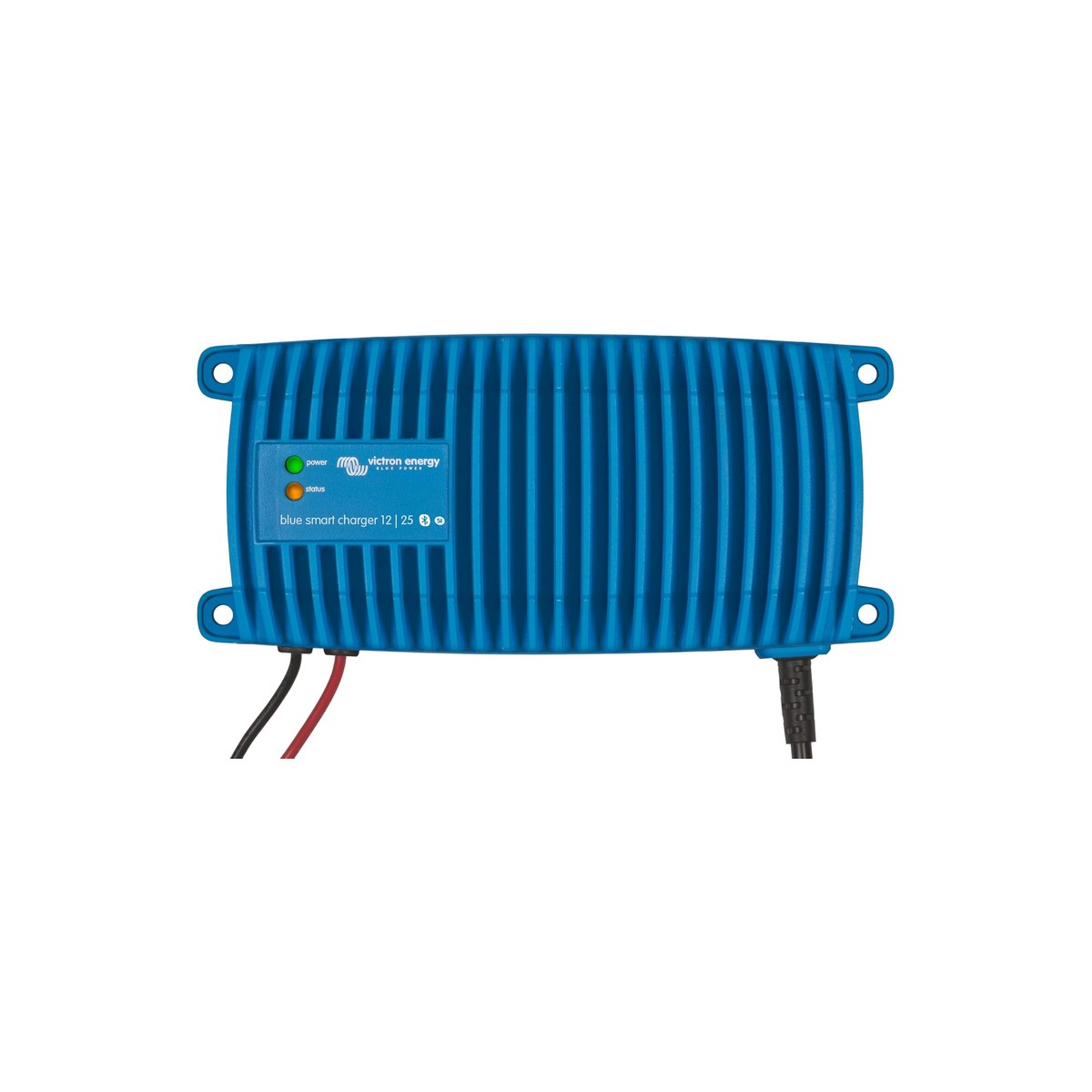
Victron Energy Blue Smart Marine Battery Charger IP67 12V 25A (Float, Trickle Charger and Desulfator for Boat, ATV, RV, Lithium and Deep Cycle Batteries)
The Victron Energy Blue Smart Marine Battery Charger IP67 12V 25A is the marine lithium battery charger we would buy first for a 25 to 40 ft coastal cruiser refit, and it earns the Top Pick because it is the only IP67-rated, single-bank, marine-specific shore charger under $200 that exposes absorption duration as a user-configurable parameter via the VictronConnect Bluetooth app. Two higher-priced exceptions also expose the parameter and deserve naming: Sterling Pro Charge Ultra Plus (front-panel custom profiles, $350-plus tier, no app needed), and Mastervolt ChargeMaster Plus (front-panel 0 to 1440 minute maximum-absorption timer, higher tier). For most other chargers the lithium-compatible label (ProMariner ProNautic, NOCO Genius, Newmar) means the charger lowered absorption voltage to 14.4V; it does NOT mean the charger shortened absorption duration from the 3-hour lead-acid cycle that degrades LiFePO4 cells. The Victron Blue Smart adaptive minimum is 30 minutes in standard mode (Battle Born's 2022 LFP manual specifies 30 minutes for a two-battery parallel connection; the older 2021 FAQ guidance cited 15 to 20 minutes per parallel string); Expert Mode via VictronConnect allows shorter. That parameter access at this price point and IP67 enclosure is what justifies the Top Pick. The IP67 enclosure rating is submersion to 1 meter for 30 minutes, the right marine spec for condensation, bilge splash, and deck washdown service; the lower IP65 rating (jet-spray only) is the car charger variant under the same Blue Smart family name. The 25A bulk output fits the 10 to 12 percent rule for a 200 to 400 amp-hour house bank (the typical cruiser sweet spot), and the 7-step adaptive algorithm handles AGM, flooded, gel, and LiFePO4 with the user-configurable parameter access on every profile. Two honesty points on the Top Pick. First, the out-of-box default is the lead-acid profile, and the owner MUST connect via VictronConnect on the dock and explicitly select Li-ion mode plus verify the absorption voltage and duration before plugging into a LiFePO4 bank. Compass Marine has documented owner cases where the app step was skipped and the charger held 14.6V absorption indefinitely on lithium. Second, 25A is materially below the ProNautic 1240P 40A and is the wrong size class for a 35-plus ft cruiser running a 400-plus amp-hour bank with a thruster; for that build, the ProNautic 1240P at rank 2 is the right call. For the single-house-bank coastal cruiser refit where the owner wants the parameter access that makes lithium-compatible actually mean lithium-safe, this is the shore charger we would buy and the right default for the persona this guide serves. Some veteran marine electricians (Rod Collins of Compass Marine, Panbo testers, Practical Sailor) charge LiFePO4 at 13.8V absorption instead of the manufacturer 14.4V spec, claiming 2x cycle life on documented multi-thousand-cycle bench packs. The Victron Blue Smart lets you program that lower voltage via app. We are not endorsing the 13.8V hack as a default recommendation (your battery warranty may disagree), but the field results are documented and the parameter access matters.
- + VictronConnect Bluetooth app exposes absorption duration as a configurable parameter, not just absorption voltage. Adaptive absorption stage minimum is 30 minutes in standard mode (or shorter via VictronConnect Expert Mode); Battle Born's 2022 LFP manual revision specifies 30 minutes for a two-battery parallel connection, with the older 2021 FAQ guidance citing 15 to 20 minutes per parallel string. Two other shore chargers in the $200 to 500 tier also expose absorption duration as a user-configurable parameter: Sterling Pro Charge Ultra Plus does it from the front panel (custom profiles, no app required, $350-plus tier), and Mastervolt ChargeMaster Plus does it from the front panel (0 to 1440 minute maximum-absorption timer). ProMariner ProNautic and Newmar do NOT expose absorption duration. The Victron Blue Smart IP67 is the only IP67-rated, single-bank, marine-specific shore charger under $200 that exposes the parameter via Bluetooth app
- + IP67 enclosure rating is submersion to 1 meter for 30 minutes, the right marine spec for a real boat environment where condensation, bilge splash, and deck washdowns are routine. The lower-tier IP65 rating (jet-spray only) is a car charger spec the brand still sells under the same Blue Smart family name, and the IP67 marine variant is the one you actually want for shore-power install on a boat
- + 25A bulk output is appropriate for 200 to 400 amp-hour banks per the 10 to 12 percent rule (200Ah times 10 percent equals 20A minimum, 400Ah times 12 percent equals 48A; 25A sits in the middle of that band for a typical mid-size cruiser house bank). 7-step adaptive algorithm with the eight pre-programmed profiles plus the user-configurable Li-ion setting handles AGM, flooded, gel, and LiFePO4 chemistry with the parameter access on every profile
- + 4.3 stars across 187 Amazon owner reviews with 5-year manufacturer warranty (matched by the ProNautic ProNauticP Series at 5 years per the manufacturer's own manual; the NOCO GENPRO10X1 carries 3 years per retailer documentation; the Battery Tender Plus winter-storage pick carries 10 years but is a different product class). Victron's European-engineering reputation in the cruising community is the most-cited brand recommendation on Compass Marine, Panbo, and Cruisers Forum for any owner doing a 2024-onward lithium-compatible refit
- × Out of the box the default profile is lead-acid. The owner MUST connect via VictronConnect on the dock and explicitly select Li-ion mode plus verify the absorption voltage and duration match the battery spec sheet (14.4V or 14.6V absorption at 15 to 20 minutes duration for typical LiFePO4). Compass Marine has documented owner cases where the app step was skipped and the charger held 14.6V absorption indefinitely on a lithium pack. Open the app or buy the wrong charger
- × 25A is materially below the ProNautic 1240P's 40A and is the wrong size class for a 35 to 45 ft cruiser running a 400-plus amp-hour bank plus a thruster and a windlass; for the full multi-bank refit at that size, the ProNautic 1240P at rank 2 is the right call. For a single-bank 200 to 400 amp-hour cruiser house bank, 25A is the cruising sweet spot
- × Single-bank output only. If you need three physically isolated charging outputs for a start plus house plus thruster wiring (the typical 35-plus ft cruiser pattern), the ProNautic 1240P 3-bank at rank 2 is the right call. The Blue Smart IP67 is single-bank by design and the right answer for the single-house-bank coastal cruiser
Runner-up: ProMariner ProNautic 1240P 12V 40A 3-Bank Battery Charger (Model 63140, the ProNauticP Series 40-amp 3-bank for full electrical refit).
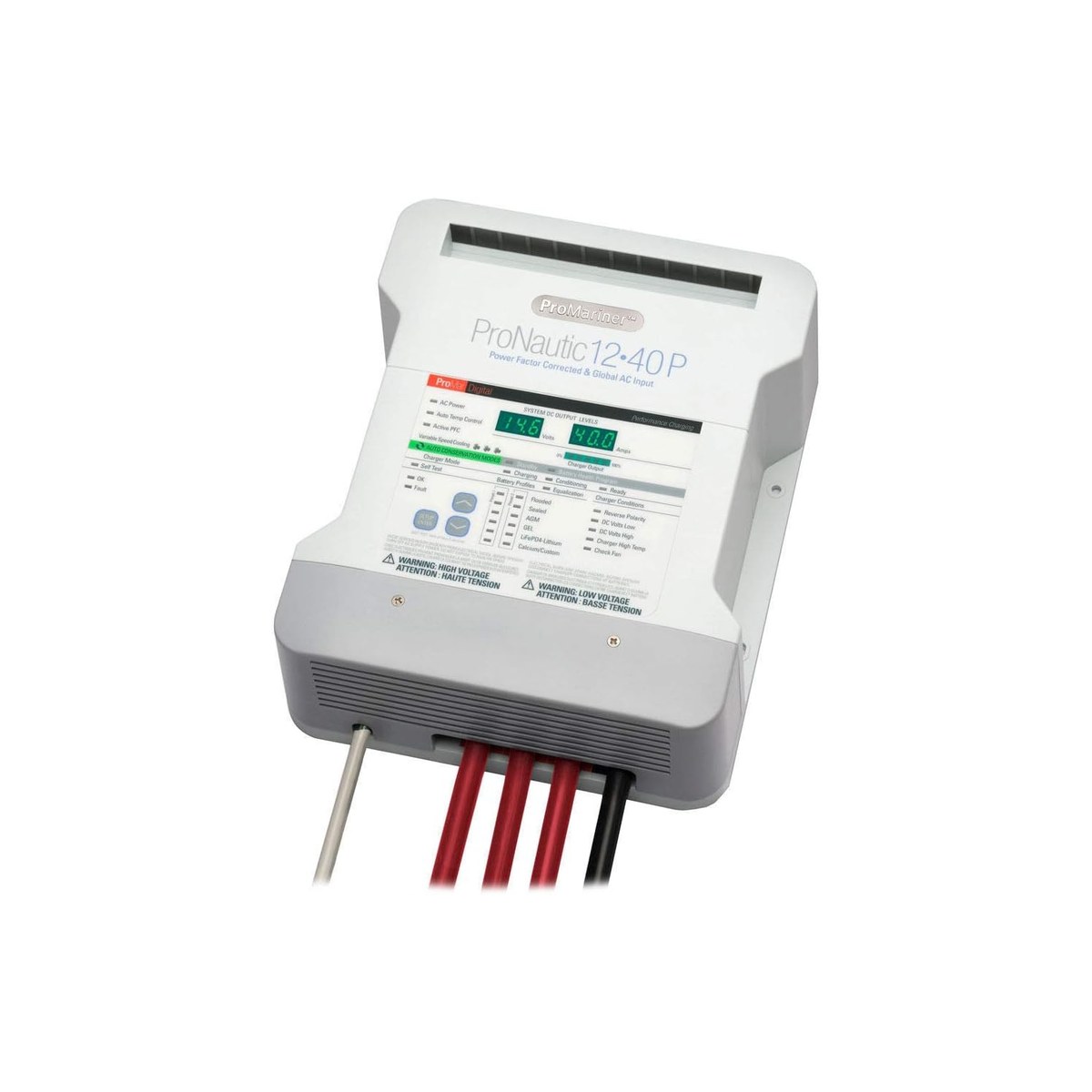
ProMariner ProNautic 1240P 12V 40A 3-Bank Battery Charger (Model 63140, the ProNauticP Series 40-amp 3-bank for full electrical refit)
The ProMariner ProNautic 1240P is the US-market brand-of-record 40-amp 3-bank shore charger and the runner-up for the 35 to 45 ft cruiser doing a full electrical refit with multi-bank wiring (start plus house plus thruster or windlass). The three physically isolated output banks are the central buying reason: each bank is independently chemistry-matched and the 40A bulk output is sized for a 400-plus amp-hour house bank per the 10 to 12 percent rule. ProMariner is the US-market default for traditional 3-stage shore chargers on coastal cruisers, and the West Marine, Defender, and local chandlery service network is the practical advantage no Chinese-direct manufacturer or European brand matches in the US market for warranty service and replacement. The 4.6 stars across 74 Amazon owner reviews is a healthy signal at this price tier, and the 5-year ProMariner manufacturer warranty per the ProNauticP Series manual plus the SafetyShield-plus reverse-polarity and shore-power surge protection is the install-on-a-boat reliability the brand is built around. The IBEX 2010 Innovation Award for the ProNauticP design family is a 15-year-old industry trade-show acknowledgment that reflects the platform's foundational maturity rather than recent innovation; ProMariner has continued to use the award in marketing language, but the design has not won comparable awards since. The line is now owned by Navico (Lowrance and Simrad parent), which keeps the US warranty service network intact. Three honesty points on the Runner-up. First, pricing on Amazon and West Marine has varied historically and the channel advantage moves around (Amazon currently $701; West Marine has run from $422 to $710-plus at different snapshots). The practical advice is check both before purchase rather than assume one is always cheaper. We keep the Amazon link here for owners outside the chandlery network and the affiliate revenue funds the next guide, but we will not pretend either channel is always the right price for everyone. Second, the ProNautic LiFePO4 mode is a voltage-only adjustment without user-configurable absorption duration; the 3-hour lead-acid absorption duration timer runs underneath the Li-mode voltage selector. For a drop-in LiFePO4 battery with an internal BMS-managed absorption cutoff the ProNautic is workable; for a DIY prismatic LFP pack without a smart BMS, the ProNautic Li mode is not the safe call (Compass Marine has documented this across the ProMariner lineup). Third, the ProNautic line is commercial-spec; the recreational-grade ProSport sub-line is a different product, sold at a lower price tier, and forum reports of ProSport units running hot under sustained bulk charging on oversized banks are out there. We are not extending the ProSport reputation to the ProNautic line. For the cruiser specifically doing a 35-plus ft multi-bank electrical refit who wants the US brand-of-record with the chandlery service network, the ProNautic 1240P is the runner-up we would buy.
- + Three physically isolated output banks (typical wiring is start plus house plus thruster or windlass), each independently chemistry-matched, the default ProMariner ProNautic 1240P wiring pattern on a 35 to 45 ft cruiser refit. The 40A bulk output is sized for a 400-plus amp-hour bank per the 10 to 12 percent rule, the right size class for a serious cruiser house bank with a high-draw 12V load profile
- + Adaptive 3-stage charging with up to 12 chemistry profiles including a LiFePO4 selection at 14.6V absorption and 14.4V float. ProMariner is the US-market brand-of-record for traditional 3-stage shore chargers on coastal cruisers; the West Marine, Defender, and local chandlery service network is the practical advantage no Chinese-direct manufacturer or European brand matches in the US market for warranty service and replacement
- + 4.6 stars across 74 Amazon owner reviews with a 5-year ProMariner manufacturer warranty per the ProNauticP Series Instruction Manual (matched by the Victron Blue Smart, longer than the NOCO's 3-year, shorter than the Battery Tender Plus 10-year for winter storage). The West Marine, Defender, and local chandlery service network is the practical advantage no Chinese-direct manufacturer or European brand matches in the US market for warranty service and replacement. The ProNautic line is positioned as commercial-spec with higher thermal margins; the recreational-grade ProSport sub-line is a different product and a different warranty period and has a thinner reputation among forum owners who push the unit to its rated bank size
- + Galvanic isolation built in (SafetyShield-plus reverse-polarity and shore-power surge protection), 4-stage adaptive algorithm with documented temperature compensation, and the IBEX 2010 Innovation Award for the ProNauticP design family (a 15-year-old recognition that reflects platform maturity rather than recent innovation). ProMariner is now owned by Navico (Lowrance and Simrad parent), which keeps the US warranty service network intact
- × Pricing on Amazon and West Marine has varied historically and the channel advantage moves around between marketplaces. At time of writing Amazon shows $701 and West Marine shows pricing that runs comparable to higher. ProMariner enforces minimum-advertised-price loosely and the third-party Amazon market and chandlery channel pricing both fluctuate; the practical advice is check both before purchase rather than assume one is always cheaper
- × The ProNautic LiFePO4 mode is a voltage-only adjustment (14.6V absorption, 14.4V float) without user-configurable absorption duration. The 3-hour lead-acid absorption duration timer runs underneath the Li-mode voltage selector; for a drop-in LiFePO4 battery with an internal BMS-managed absorption cutoff the ProNautic is workable because the BMS protects the cells, but for a DIY prismatic LFP pack without a smart BMS the ProNautic Li mode is not the safe call. Compass Marine has documented this pattern across the ProMariner lineup
- × $701 Amazon price (or $422 to $528 West Marine) is the multi-bank price tier and is the wrong size class for a single-bank 25 to 35 ft cruiser where the Victron Blue Smart IP67 25A at $157 delivers a more flexible, app-configurable shore charging solution at less than a quarter of the price. The ProNautic 1240P is the right call only when you need the 3-bank wiring; otherwise the Top Pick covers the use case
Budget pick: NOCO Genius GENPRO10X1 1-Bank 10A Onboard Battery Charger (12V Waterproof Marine Charger with Overcharge Protection and Temperature Compensation, the volume seller in the onboard marine charger category).
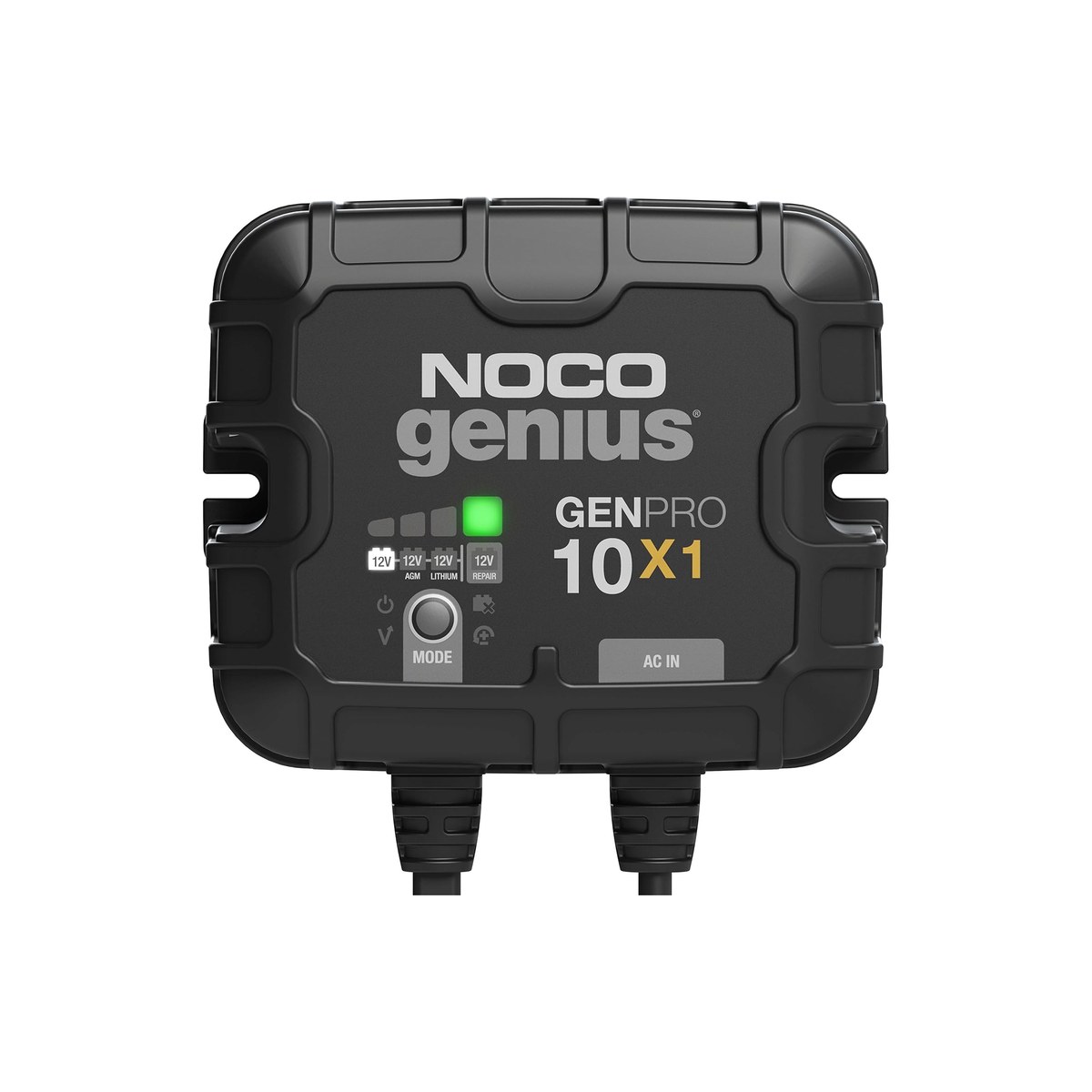
NOCO Genius GENPRO10X1 1-Bank 10A Onboard Battery Charger (12V Waterproof Marine Charger with Overcharge Protection and Temperature Compensation, the volume seller in the onboard marine charger category)
The NOCO Genius GENPRO10X1 is the Amazon volume seller in the noco marine battery charger and onboard marine charger category and the budget pick for the cost-conscious owner who wants the strongest review-count signal in the lineup at the lowest entry price. The 1,600 Amazon reviews across 4.8 stars is the second-highest review count in this entire guide (only the Battery Tender Plus winter-storage pick exceeds it), and the IP68 waterproof rating plus the 4-stage automatic charging algorithm plus the 3-year NOCO manufacturer warranty per retailer documentation is the right marine-grade hardware spec at the $125 budget price. The 1-bank single-output design fits the coastal cruiser persona (single house bank plus a starting battery) or a small powerboat with a single starting battery without the bass-tournament multi-bank wiring complexity that the GENPRO10X2 and GENPRO10X3 variants serve, and the 10A bulk output is sized for a 100 amp-hour bank per the 10 percent rule. We are NOT going to pretend the volume seller is not the volume seller. What working pros want you to know about NOCO: the charge-state display is wildly optimistic, and the charger has no true float stage. Rod Collins of Compass Marine documented a NOCO Genius G3500 displaying 100 percent SoC at 12.53V actual battery voltage (roughly 8.8 percent actual LiFePO4 SoC), and the float-stage absence means the charger cycles between full-charge cutoff and re-bulk in a way that allows AGM and LFP batteries to discharge significantly between cycles. That is the chronic-undercharging failure mode that sulfates AGM banks over a season and the exact reason the editorial spine of this guide opens with 'most batteries die from chronic undercharging, not chemistry.' If you buy this charger, ignore the display and measure voltage with a multimeter on the battery terminals. NOCO has declined to publish absorption duration specs (calling them proprietary in published support responses), which is the spec that matters most for the lithium-compatibility question. The ProMariner ProSport 6 at $140 to $160 is the better budget option if available in your channel; the NOCO is the right call when you want the Amazon volume seller at the lowest price and you accept the workflow caveats. For the budget single-bank install on a small powerboat or a coastal cruiser starting battery where the owner is comfortable measuring battery voltage rather than trusting the on-charger display, the NOCO Genius GENPRO10X1 is the budget pick we would buy.
- + Amazon's volume leader at 1,600 reviews across 4.8 stars, the strongest review-count signal of any onboard NOCO marine charger and the second-highest review count in this entire guide (only the Battery Tender Plus winter-storage volume seller exceeds it). At the $125 price tier, the review-count signal is the cleanest available read on whether the product actually works out of the box for the buyer who installs it
- + IP68 waterproof rating (dust-tight and submersion to 1.5 meters for 30 minutes, marginally better than IP67), 4-stage automatic charging algorithm with overcharge protection and temperature compensation, and a 3-year NOCO manufacturer warranty per retailer documentation. The hardware build is the right marine-grade spec at the budget price; the trade-off is in the firmware and the absorption-stage algorithm
- + 1-bank single-output design fits the coastal cruiser persona (single house bank plus a start bank, or a single starting battery on a small powerboat) without the bass-tournament-rig multi-bank wiring complexity that the GENPRO10X2 and GENPRO10X3 variants serve. The right NOCO Genius slot for a non-bass-boat audience at the budget tier
- + 10A bulk output sized for a 100 amp-hour bank per the 10 percent rule, the right entry-level size for a single starting battery or a small 100 amp-hour house bank. For larger banks (200 to 400 amp-hours) the 10A undersizes the charger and the volume seller is the wrong call at scale; the Top Pick at 25A or the Runner-up at 40A is the right amperage class for a serious cruiser house bank
- × What working pros want you to know: NOCO chargers display a charge-state percentage that is wildly optimistic. Rod Collins / Compass Marine documented a NOCO Genius G3500 displaying 100 percent SoC at 12.53V actual battery voltage (roughly 8.8 percent actual LiFePO4 SoC). If you buy this charger, ignore the display and measure voltage with a multimeter on the battery terminals. The trade-fit ProMariner ProSport 6 at $140 to $160 is the better budget option if available in your channel
- × Float stage is documented as missing or undocumented across Compass Marine teardowns of the NOCO Genius onboard line. The charger cycles between full-charge cutoff and re-bulk in a way that allows AGM and LFP batteries to discharge significantly between cycles, the chronic-undercharging failure mode that sulfates AGM banks over a season. NOCO has declined to publish absorption duration specs (calling them proprietary in published support responses), which is the spec that matters most for the lithium-compatibility question
- × The Li-ion mode is a voltage-only adjustment without user-configurable absorption duration, the same trade-off as the ProNautic Li mode plus the additional float-stage absence. For a drop-in LiFePO4 battery with an internal BMS the charger is workable as long as the owner accepts the SoC-display read-against-multimeter workflow. For DIY prismatic LFP, the Victron Blue Smart Top Pick is the right call at $157 with the parameter access NOCO does not offer
Also worth considering.
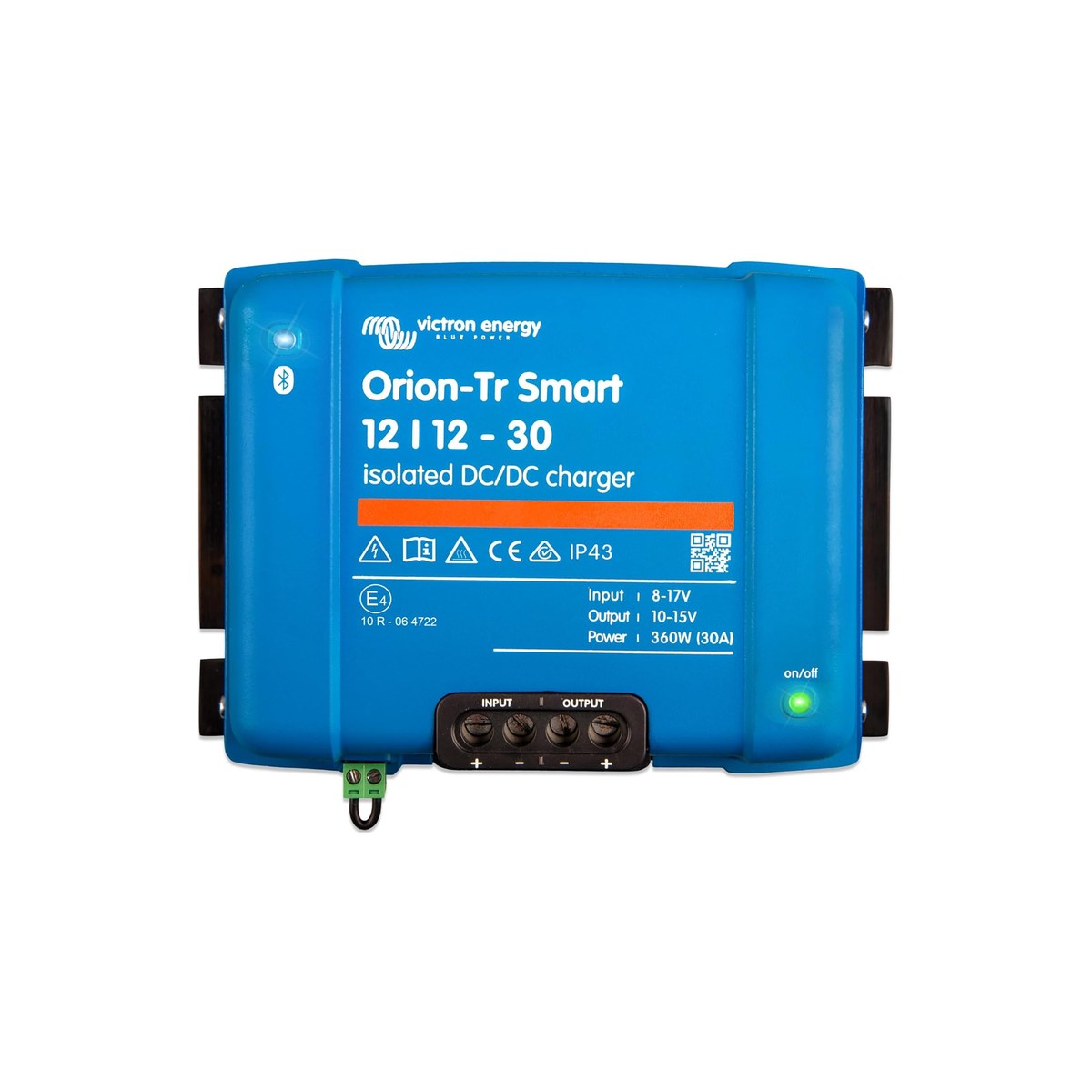
Victron Energy Orion-Tr Smart DC to DC Charger Bluetooth 12/12-Volt 30A 360-Watt Isolated (DC-DC Specialty for the LiFePO4 alternator-side refit)
The Victron Energy Orion-Tr Smart 12/12-Volt 30A Isolated DC-DC charger is the 2024-onward operator-consensus default for the marine LiFePO4 refit alternator-side charging slot, and the right answer for any 25 to 40 ft cruiser running a LiFePO4 house bank where the engine charge path needs the absorption-duration and chemistry-correct protection that no shore charger provides underway. The Marine Batteries guide explicitly raised the 'you need a DC-DC charger for the lithium upgrade' honesty hook; this is the actual product that answers it. The Isolated variant of the Orion-Tr Smart 30A is the critical marine-specific spec: galvanic isolation between the input and output grounds is mandatory for marine to prevent the ground-loop corrosion that accelerates aluminum outdrive and bonding-strap pitting on a sterndrive or metal-hulled boat. The cheaper Non-Isolated variant of the same 30A unit is the volume seller on Amazon and earns 897 reviews against the Isolated version's 812, but the non-isolated unit is the wrong call for marine and the methodology section calls this out explicitly. Victron specs the Isolated unit at 30A output delivery (rated by output rather than input draw, the opposite framing from Sterling), with the caveat that real-world delivery in hot engine rooms or with input voltage under 13.5V regularly derates to 22 to 28A continuous per Victron community testing. The 30A is a lab ceiling, not a floor. 4.4 stars across 812 Amazon owner reviews, Bluetooth-app configuration of every charging parameter including the absorption duration that matters most for LiFePO4 chemistry, and built-in alternator detection that starts charging only when the engine is running (preventing starter-battery drain). Sterling Power BB1230 is the historical pre-2022 default and remains a workable pick for owners who want a UK-engineered DC-DC without Bluetooth; the documented Sterling 'rated by draw, not delivery' spec means a BB1230 nameplate-30A unit actually delivers roughly 23 to 25A continuous from the start battery, real but somewhat overstated as a gotcha across cruiser forums. Redarc BCDC1225D is the RV and 4WD overlanding default and is NOT a marine pick: zero documented saltwater installs across marine forums and not IP-rated for the marine environment. Victron launched the Orion XS 12/12-Volt 50A in September 2024, a complete redesign with fanless construction, 4AWG cable acceptance, IP65 enclosure (water jets but NOT submersion), and ~$328 street pricing. Critical caveat: the Orion XS 50A is NON-ISOLATED only as of this writing. An isolated marine variant has been announced but is not shipping (the Orion XS 12/12-70A unveiled at Metstrade 2025 is also non-isolated). Installing the non-isolated Orion XS on a sterndrive, metal-hull, or shore-power marina install creates the exact ground-loop corrosion risk this guide warns against in the Don't Bother With section. If you need 50A throughput AND your boat is outboard-only with engine and house battery negatives sharing a common ground, the Orion XS is worth considering. For any sterndrive, inboard, or saltwater marina install where galvanic isolation matters, the Orion-Tr Smart 30A Isolated at rank 4 remains the correct call and the DC-DC pick we would buy.
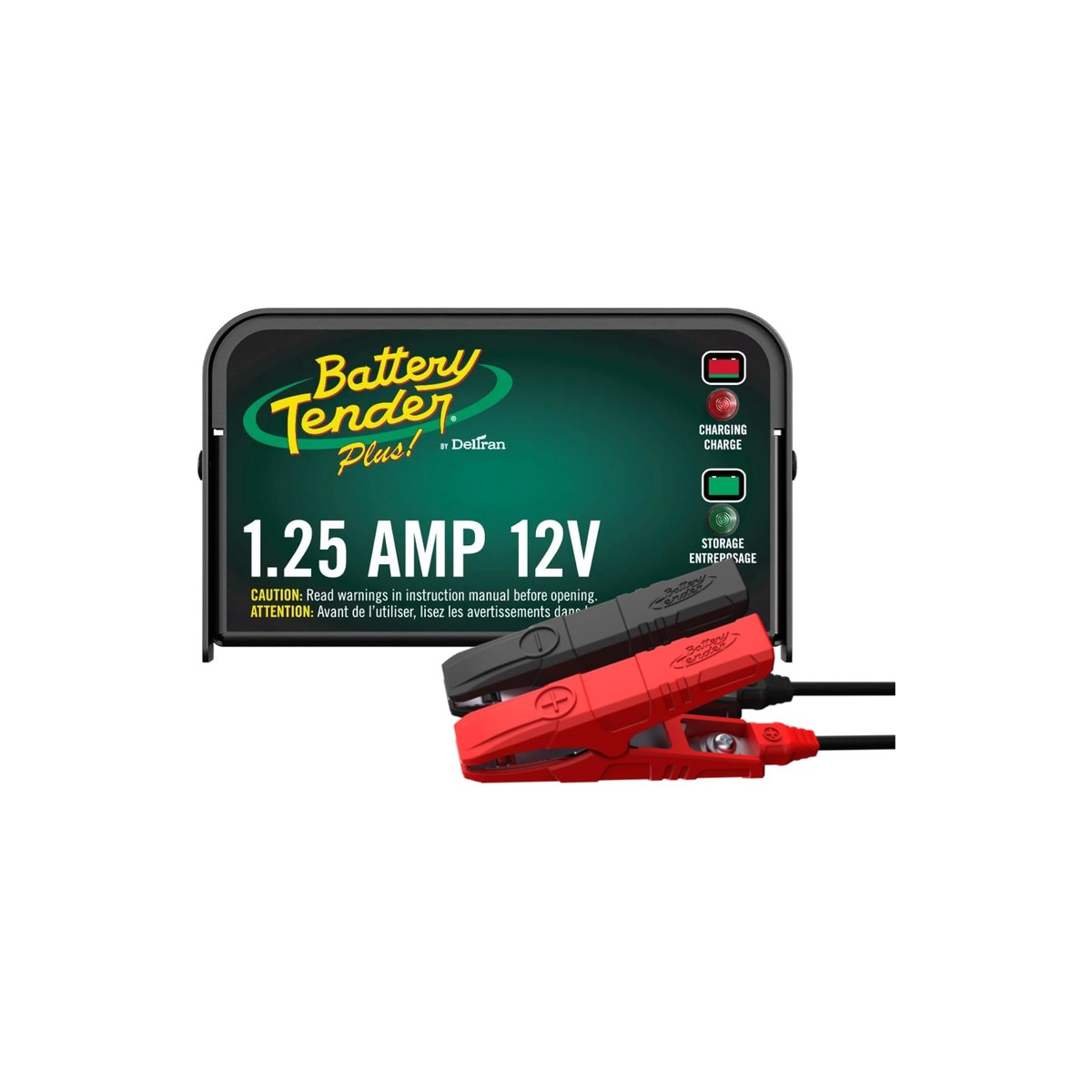
Battery Tender Plus 12V 1.25A 4-Step Smart Battery Charger and Maintainer (Winter Storage for AGM and flooded starting batteries on the hard)
The Battery Tender Plus 12V 1.25A is the boat battery maintainer volume seller in the marine battery maintainer category and the right answer for off-season winter storage of an AGM or flooded marine starting battery. 21,443 Amazon owner reviews at 4.7 stars is the strongest review-count signal in this guide by a wide margin and one of the highest review counts of any battery-related product on Amazon, period. The 4-step adaptive maintenance algorithm (initialization, bulk, absorption, float) plus the sealed plug-and-leave install plus the 10-year Deltran manufacturer warranty is the right tool for a starting battery sitting unattended in unheated storage for 60-plus days. Two honesty points on this slot. First, active cruisers running a slip return weekly do NOT need a separate winter-storage charger. The Top Pick Victron Blue Smart IP67 25A holds a chemistry-correct float voltage indefinitely on a starting battery between trips and handles the maintenance role through the in-season cycle. The Battery Tender Plus is specifically the boat-on-the-hard slot, for owners hauling out for the winter or storing the boat unplugged at a dry-stack for an extended period. Second, the Battery Tender Plus is automotive-grade, not marine-rated (the product title leads with 'Car and Motorcycle' and the marketing primary use case is winter storage of cars, motorcycles, ATVs, and lawn mowers). It works for a marine starting battery in dry storage; it is NOT the correct call for an active LiFePO4 house bank or for a deep-cycle bank that needs in-season cycle support. The standard Battery Tender Plus is lead-acid only (AGM and flooded compatible, NOT LiFePO4 compatible); Deltran sells a separate Battery Tender Lithium variant for LFP applications, not covered in this guide. For the cruiser whose boat sits 60-plus days on the hard each off-season and needs the cheapest reliable plug-and-leave trickle maintainer for a single AGM or flooded starting battery, this is the winter-storage pick we would buy.
Skip this guide if...
Four audiences should skip this guide. First, bass-tournament rig owners with 24V or 36V serial-wired trolling-motor banks: a multi-bank ProMariner ProSport, Dual Pro Professional Series, Minn Kota MK Precision On-Board, or NOCO GENPRO10X3 (the 3-bank GENPRO variant the GENPRO10X1 budget pick is the 1-bank version of) is the right charger family, and the coastal-cruiser persona in this guide is the wrong fit for that wiring pattern. Second, owners of liveaboard sailboats running a full-time inverter-charger combination (Victron MultiPlus, Magnum, Mastervolt Combi) at the $1,500 to $4,000 price tier where the inverter and the charger live in one panel-mount unit: that is a different product class and a different install pattern with AC distribution requirements, outside the standalone-shore-charger scope of this guide. Third, off-grid solar-only cruisers who do not have shore power as a regular charging source: the right product is a solar charge controller (Victron SmartSolar MPPT) plus a DC-DC charger for engine charging, NOT a shore charger. The DC-DC Specialty pick at rank 4 of this guide is one of two parts of that build; the solar controller is a separate guide. Fourth, owners of portable power stations (EcoFlow, BLUETTI, Goal Zero) using the term 'charger' for the AC input brick that recharges the power station: that is a different product from a marine shore charger and is not in scope here.
Don't bother with.
- × Skip Lithium-compatible labels without user-configurable absorption durationMost chargers in the $200 to 500 tier that ship with a lithium mode (ProMariner ProNautic, NOCO Genius, Newmar) drop absorption voltage to 14.4 or 14.6V and keep the underlying lead-acid absorption duration timer (2 to 4 hours of bulk-and-absorption per cycle) running underneath. For drop-in LiFePO4 batteries with internal BMS-managed absorption cutoff the workaround is the BMS protects the cells; for DIY prismatic LFP packs without a smart BMS the lithium-mode label is misleading and degrades the cells anyway. Rod Collins of Compass Marine documented this pattern explicitly: do not use these lithium settings to charge prismatic LFP cells. Two higher-priced exceptions DO expose absorption duration: Sterling Pro Charge Ultra Plus (front-panel custom profile, $350-plus tier) and Mastervolt ChargeMaster Plus (front-panel 0 to 1440 minute maximum-absorption timer). The Victron Blue Smart IP67 Top Pick is the only sub-$200 IP67 marine-specific option that exposes the parameter via Bluetooth app. That parameter access at $157 is the difference between lithium-compatible-on-the-label and lithium-safe-in-practice.
- × Skip Non-isolated DC-DC chargers on marine installsThe Victron Orion-Tr Smart 12/12-30 is sold in two variants: Isolated and Non-Isolated. The Non-Isolated unit is roughly $50 cheaper, has more Amazon reviews (897 vs 812 for the Isolated variant), and is the wrong call for any marine application with submerged metal in saltwater. Marine installs need galvanic isolation between the engine ground and the house ground to prevent ground-loop corrosion at the bonding strap, a known failure mode that accelerates aluminum outdrive pitting and bonding-strap dissolution on sterndrives, metal-hulled boats, and any boat tied to shore power at a busy marina. Repair costs vary widely by outdrive type but galvanic-corrosion damage can easily reach four figures. The non-isolated unit creates a current path between the two grounds that is fine for an RV or 4WD overlanding install (no submerged metal in saltwater) and wrong for a marine install. Buy the Isolated variant. The methodology section walks through the reason.
- × Skip Generic Chinese-direct shore chargers under $80 marketed as marineThe sub-$80 12V multi-stage chargers marketed on Amazon as marine (no-name brands, generic plastic housings, no IP rating disclosed, no warranty service path) deliver inconsistent absorption voltage, no documented thermal cut-off, and a typical failure rate inside the first 18 months of saltwater service. The motor windings and power-electronics tolerances are wound and assembled to a price point that does not survive marine environment exposure: condensation, vibration, saltwater corrosion, and intermittent shore-power surge events. The Battery Tender Plus at $59 in this guide is the price floor where a charger actually works for a marine starting battery, and the Victron Blue Smart IP67 Top Pick at $157 is the floor where a real marine shore charger with parameter access actually exists. Anything below $80 marketed as marine is buy-twice-cry-twice across iboats, The Hull Truth, and Reddit r/boating threads from 2022 forward.
- × Skip Pool dewatering or RV converter chargers repurposed for marine shore chargingPool dewatering chargers, RV power converter chargers (WFCO, Progressive Dynamics 9100 series, Parallax), and outdoor solar 12V chargers are built for different duty cycles and different environments than marine shore service. The RV converter charger at the front of every camper is a constant-voltage power supply with a 14.4V hold and no proper absorption duration cycle; it works for an AGM coach battery in an RV that gets driven every weekend and fails for a marine starting battery sitting at shore power for months. The pool dewatering chargers are 120V continuous-duty motor chargers, the wrong voltage and the wrong duty profile for a marine 12V install. None of these are designed for the marine IP rating, the marine vibration spec, or the marine shore-power surge protection that real marine chargers provide. Buy a charger designed for marine shore service.
- × Skip Trolling motor multi-bank chargers for cruiser shore charging serviceMulti-bank chargers tuned for 24V or 36V serial-wired bass-tournament trolling-motor banks (Dual Pro Professional Series, Minn Kota MK Precision On-Board, ProMariner Pro Tournament Elite, NOCO GENPRO10X3) are a different product family from the coastal-cruiser house-bank shore charger this guide covers. The trolling motor charger is designed to charge 12V batteries wired in series to deliver 24V or 36V to a trolling motor; the cruiser shore charger is designed to charge a single 12V house bank plus a separate 12V starting battery from a single AC input. The wiring patterns are not compatible across audiences. If you have a bass boat, the GENPRO10X3 budget variant or the Dual Pro Recreational Series is the right pick (and probably the reason the GENPRO10X family is so well represented on Amazon at high review counts). For the cruiser persona this guide serves, the multi-bank trolling motor charger is the wrong family.
- × Skip Buying a charger before sizing the house bank and the charging systemThe right marine charger for your boat is a function of three things, in order: (1) the house bank chemistry and capacity in amp-hours (AGM at 200 amp-hours needs roughly 20 to 25A of bulk; LiFePO4 at 400 amp-hours needs 40A or more of bulk plus the parameter-access requirement for absorption duration); (2) whether you have an alternator-side charging path that needs DC-DC protection (LiFePO4 always; AGM rarely unless the alternator is undersized); (3) whether you have multiple banks that need physically isolated outputs (start plus house plus thruster on a cruiser; just start plus house on a small powerboat). Buying a charger before answering those three questions produces a unit that either undersizes the bank (chronic undercharging, sulfation on AGM, BMS-imbalance on LFP) or oversizes the alternator load (the alternator melts during the bulk charge underway on a lithium house bank without DC-DC protection). Size the bank first, decide on shore plus DC-DC plus solar architecture second, buy chargers third. The methodology section walks through the sizing decision tree.
How we picked.
Sources we read and the methodology we used
We did not test these marine battery chargers across a season on our boat. The sites that claim they did mostly did not either; the closest thing to authoritative independent test data is the Practical Sailor archive (Mastervolt Combi 12/200-100 won their Best Choice inverter-charger comparison) and the Compass Marine teardowns Rod Collins publishes on MarineHowTo. What we did is read the Victron Energy, ProMariner ProNautic, NOCO Genius, and Battery Tender manufacturer specs and warranty documentation directly, then cross-referenced those manufacturer claims against Compass Marine (Rod Collins), Panbo (Ben Stein), Practical Sailor archives, Cruisers Forum, The Hull Truth, SailboatOwners.com, and Battle Born install guides on charger compatibility, absorption duration algorithms, lithium-mode false-claim patterns, and DC-DC vs shore-charger separation. We discarded sources that could not be attributed to a named owner, a dated publication, or a specific test methodology, and we report both sides where manufacturer guidance and owner consensus diverge.
Lithium-compatibility labels mean voltage, not duration: the load-bearing editorial pivot
The single most-important piece of forum-cited honesty in this guide is on lithium-compatibility: the label means the charger lowered absorption voltage to 14.4V; it does NOT mean the charger shortened absorption duration from the 3-hour lead-acid cycle that degrades LiFePO4 cells. Only the Victron Blue Smart family exposes absorption duration as a user-configurable parameter via app. The Compass Marine teardown of the ProMariner ProNautic Li mode documented exactly this pattern: 14.6V absorption voltage selectable, 2 to 4 hour absorption duration unchanged, holds the cells at 14.6V for the full duration which degrades LFP cells over time. Battle Born install documentation specifies LiFePO4 needs 15 to 20 minutes absorption per parallel battery string, not hours. The Victron Blue Smart IP67 Top Pick is the only sub-$200 IP67-rated single-bank marine shore charger that exposes absorption duration as a user-configurable parameter via the VictronConnect Bluetooth app; you can dial absorption duration down to 30 minutes in standard mode (or shorter via Expert Mode). For drop-in LiFePO4 batteries with internal BMS-managed absorption cutoff, ProMariner and NOCO Li modes are workable because the BMS protects the cells. For DIY prismatic LFP packs without smart BMS, the Victron Blue Smart at the sub-$200 price tier is the only marine-rated option that does not require the absorption-duration workaround.
Shore charger vs DC-DC alternator charger: do I need both?
The next most-important point is the shore-vs-DC-DC architecture decision: shore charger handles dockside and mooring; DC-DC charger handles underway alternator-side charging into a LiFePO4 bank without melting the alternator. Half the cruisers doing the lithium upgrade buy a shore charger and then wonder why the battery does not charge underway. If you coastal-cruise and the boat sits on a slip between trips, you need shore only. If you anchor out or run distance between marinas, you need both. The decision-tree question is binary and worth resolving before you pick a charger. A LiFePO4 bank without a DC-DC charger between the alternator and the house bank is the alternator-melting failure mode: the LiFePO4 low internal resistance pulls the alternator into full-output bulk mode for hours without rest, melts the windings, and costs $1,200-plus in alternator replacement plus a tow. For AGM banks, the DC-DC charger is generally not required because the AGM alternator load is much more forgiving; AGM cruisers with a high-output alternator should still consider an external regulator (Balmar MC-618 or Wakespeed WS500) but a DC-DC charger is overkill.
The shortlist: five design families for a coastal-cruiser refit
The shortlist started with the design families that working marine electricians on Compass Marine, Panbo, Cruisers Forum, and The Hull Truth actually recommend for a 25 to 40 ft coastal cruiser doing a charger refit: marine-rated IP67 shore charger with user-configurable absorption duration via app (the Victron Blue Smart IP67 25A at $157, the only consumer-tier on board marine battery charger option exposing the parameter), US-market 40A 3-bank shore charger for multi-bank cruiser refit (the ProMariner ProNautic 1240P at $701 Amazon (West Marine pricing has varied historically; check both at purchase)), budget 1-bank 10A onboard battery charger boat install with the strongest Amazon review count in the category (the NOCO Genius GENPRO10X1 at $125 with the Compass Marine teardown caveats), isolated DC-DC alternator-side charger for the LiFePO4 refit (the Victron Orion-Tr Smart 12/12-30 Isolated at $218), and the volume-seller trickle maintainer for AGM and flooded winter storage on the hard (the Battery Tender Plus 12V 1.25A at $59 with 21,443 Amazon reviews).
Four alternatives we considered: Orion XS, ProSport 6, Sterling BB1230, Mastervolt ChargeMaster
We considered four additional picks worth knowing about. First, the Victron Orion XS 12/12-50A DC-DC charger launched in late 2024 at $320 on Amazon, a complete redesign with fanless construction, 4AWG cable acceptance, and marine-hardened build; if you specifically need 50A throughput for a 600-plus amp-hour bank, the Orion XS is the newer model, and the methodology-section worth-knowing for the cruiser doing the high-output LiFePO4 refit. Second, the ProMariner ProSport 6 at $140 to $160, the recreational-grade alternative to the NOCO budget slot and the Compass Marine alternative recommendation if you specifically want a documented float stage at the budget tier; we did not include it as a numbered pick because the Amazon review-count signal at this writing is materially below the NOCO 1,600, but it is the better budget option if available in your channel and we name it explicitly in the NOCO dek. Third, the Sterling Power BB1230 DC-DC charger at $280 to $300, the pre-2022 default for the alternator-side LiFePO4 refit slot before the Victron Orion-Tr Smart took over operator consensus in 2024 onward; the documented 'rated by draw, not delivery' spec (BB1230 draws 30A but delivers roughly 23 to 25A continuous) is the practical reason cruisers shifted to the Victron, but Sterling remains a workable pick for owners who specifically want a UK-engineered DC-DC without Bluetooth. Fourth, the Mastervolt ChargeMaster Plus at $800-plus, the European-high-end tier shore charger for the 45-plus ft cruiser where space, weight, and budget are not constraints; outside the price tier this guide serves and outside the persona budget profile.
How the lineup is defended: role separation across the five picks
The lineup is one IP67 marine shore charger (Victron Blue Smart Top Pick at $157, the parameter-access leader), one 40A 3-bank shore charger (ProMariner ProNautic Runner-up at $701 Amazon and $422 to $528 West Marine, the US brand-of-record for full refit), one budget volume seller (NOCO GENPRO10X1 at $125 with the documented working-pro caveats), one Isolated DC-DC alternator-side specialty (Victron Orion-Tr Smart at $218, the 2024-onward operator default for LiFePO4 refit), and one winter-storage maintainer (Battery Tender Plus at $59, the 21,443-review volume seller for AGM and flooded storage on the hard). Two-Victron-pick role separation: the Blue Smart IP67 25A handles dockside and mooring shore charging into the house bank; the Orion-Tr Smart 12/12-30 Isolated handles underway alternator-side charging into the same bank when the boat is off the dock. Different jobs, different products, defended by role separation rather than brand preference. The same two-brand-pick defensibility shape we used for two-3M-picks on Marine Sealants (different substrates), two-Star-brite-picks on Boat Cleaners (different substrates), and two-Rule-picks on Marine Bilge Pumps (Rule-Mate Auto Sense automatic plus Rule 4000 manual emergency). We picked Victron in each marine charging slot because Bluetooth-app-configurable absorption duration is the spec that matters most for LiFePO4 chemistry, and neither ProMariner nor Sterling nor Mastervolt nor Newmar at this price tier matches the parameter access on either the shore-side or the alternator-side.
The Top Pick earns the rank on the IP67 marine rating, the 7-step adaptive algorithm, and the user-configurable absorption duration via app. The Runner-up earns the slot on the 3-bank physical isolation and the US brand-of-record service network at the multi-bank price tier. The Budget Pick earns the slot on review-count signal and the editorial-honesty framing of the documented Compass Marine caveats. The DC-DC Specialty earns the slot on Isolated-variant marine safety and 2024-onward operator consensus. The Winter Storage pick earns the slot on the 21,443-review volume signal and the specific use case of AGM and flooded storage on the hard. The single most-important honesty point this guide makes is on the lithium-compatibility label: voltage-only is not duration-controlled, and only the Victron Blue Smart exposes the duration parameter you actually need to keep LiFePO4 cells healthy at 2-plus thousand cycles.
FAQs.
Q01 Do I need a 40-amp charger for my 200 amp-hour house bank?
+
Q02 Will a lithium-compatible charger really work with my new LiFePO4 bank?
+
Q03 Is the Victron Orion-Tr Smart Isolated worth $50 more than the Non-Isolated variant?
+
Q04 Should I unplug my shore charger before starting my engine?
+
Q05 What is the difference between a 3-stage shore charger and a DC-DC alternator charger? Do I need both?
+
Q06 Why does my charger say 100 percent charged when my boat will not start?
+
Q07 Can I plug a Battery Tender Plus into my LiFePO4 house bank for winter storage?
+
Q08 What charger should I buy if I am still on lead-acid flooded batteries?
+
If you, then this.
- IF you have a 25 to 40 ft coastal cruiser doing a shore-power refit on a 200 to 400 amp-hour AGM or LiFePO4 house bank, want the only consumer-tier shore charger with user-configurable absorption duration via app, and want the IP67 marine-grade enclosure ratingGET Victron Energy Blue Smart Marine Battery Charger IP67 12V 25A$157 →
- IF you have a 35 to 45 ft cruiser doing a full electrical refit with multi-bank wiring (start plus house plus thruster or windlass) on a 400-plus amp-hour bank, and want the US-market brand-of-record with the West Marine service networkGET ProMariner ProNautic 1240P 12V 40A 3-Bank Battery Charger (Amazon and West Marine pricing varies; check both at purchase)$701 →
- IF you are budget-tight on a single starting battery or a small house bank under 100 amp-hours, want the Amazon volume seller with the strongest review-count signal in the onboard charger category, AND you are willing to measure battery voltage with a multimeter rather than trust the on-charger SoC displayGET NOCO Genius GENPRO10X1 1-Bank 10A Onboard Battery Charger$125 →
- IF you are doing a LiFePO4 alternator-side refit and need the Isolated DC-DC charger to safely charge the house bank from the engine alternator underway without melting the alternator or pushing the wrong absorption profileGET Victron Energy Orion-Tr Smart 12/12-Volt 30A Isolated DC-DC Charger$218 →
- IF your boat sits on the hard or unplugged from shore power for 60-plus days each off-season, and you need a sealed plug-and-leave maintainer to keep a single AGM or flooded starting battery topped off through winter storage (NOT for LiFePO4)GET Battery Tender Plus 12V 1.25A 4-Step Smart Battery Charger and Maintainer$59 →
- IF you specifically need 50A DC-DC throughput for a 600-plus amp-hour LiFePO4 house bank AND your boat is outboard-only with engine and house battery negatives on a common ground (NOT for sterndrive, metal-hull, or shore-power marina installs where galvanic isolation matters; the XS is non-isolated only)GET Victron Energy Orion XS 12/12-Volt 50A DC-DC Battery Charger with EMC Enhancements (September 2024 redesign; IP65 enclosure; non-isolated only)$328 →
- IF you have a bass-tournament rig with 24V or 36V serial-wired trolling-motor banks and need a multi-bank charger sized for trolling-motor serviceGET NOCO GENPRO10X3 3-bank 30A variant, Dual Pro Recreational Series, or Minn Kota MK Precision On-Board (outside the coastal-cruiser persona of this guide)varies →
Boat Gear: The Complete Guide
The whole-boat picture →Every system on a 20 to 45 ft coastal boat, organized in one place, with the one guide we trust for each.