Best Marine Anchors: 5 That Actually Hold (2026)
Five primary anchors for a 25 to 32 ft coastal cruiser, picked by design family and substrate fit. We read the Rocna, Fortress, Mantus, and Manson manufacturer specifications, the Lloyd's Register SHHP certification standard, Morgan's Cloud anchor research, the SV Panope independent test channel, and every Cruisers Forum, Trawler Forum, YBW Forum, and r/sailing thread we could find on shank bends, set failures, and substrate mismatch. The single most-asked question, what anchor for my boat, has an answer that depends on bottom type, displacement, and how often you anchor overnight. The single most-important honesty point: manufacturer size charts are widely considered optimistic by owners who actually anchor overnight, and the size you buy should probably step up one notch from what the chart says.
- 01 Mantus M1 Anchor Galvanized , the modern roll-bar scoop with the highest Amazon review count in the guide, Amazon's Choice at $311 for the 17 lb
- 02 Rocna Vulcan , the modern roll-palm scoop owners associate with cruising, ~$500 for the 9 kg / 20 lb
- 03 Extreme Max BoatTector Cube Anchor , pontoon and lake-boat DAY anchor for soft mud only, NOT a cruising primary, $81 with 720 reviews
- 04 Fortress FX-16 , the soft mud and sand specialist, Chesapeake's answer at $296 for the aluminum 10 lb
- 05 Manson Supreme Galvanized , the Lloyd's SHHP-certified roll-bar scoop, long-standing Delta and CQR replacement on production cruisers, $247 for the 25 lb
Working out your ground tackle? Our Anchor Size & Scope Calculator sizes the anchor for your boat and gives you the scope and rode to deploy for the conditions. →
How they compare.
| Rank | Product | Best for | Price | Our score |
|---|---|---|---|---|
| 01 | Mantus M1 Anchor Galvanized (17 lb)
Top Pick
| General-purpose primary, mixed bottoms, 25 to 30 ft cruiser | $311
Buy → | 9.2/10 |
| 02 | Rocna Vulcan (9 kg / 20 lb) | Modern roll-palm scoop, firm sand and mixed bottoms | ~$500
Buy → | 9.0/10 |
| 03 | Extreme Max BoatTector Cube (19 lb) | Pontoon and lake DAY anchor, soft mud only (not for cruising primary) | $81
Buy → | 7.8/10 |
| 04 | Fortress FX-16 (10 lb) | Soft mud and sand specialist, Chesapeake mud kedge or alternate primary | $296
Buy → | 8.8/10 |
| 05 | Manson Supreme Galvanized (25 lb) | Lloyd's SHHP-certified roll-bar scoop, Delta and CQR replacement on production cruisers | $247
Buy → | 8.7/10 |
Prices are current Amazon prices at time of publication and can change. Scores reflect our editorial evaluation, not vendor input.
Our #1 pick: Mantus M1 Anchor Galvanized, 17 lb (modern roll-bar scoop, the original Mantus design).
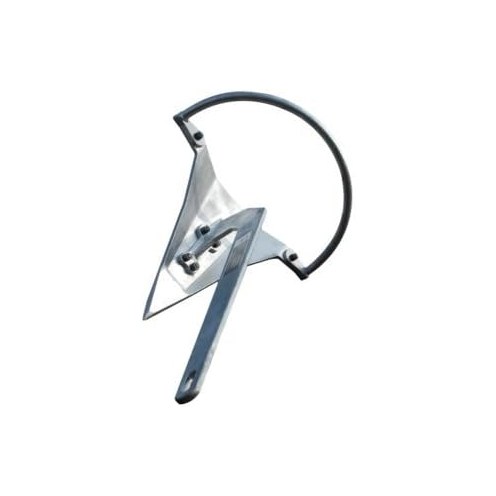
Mantus M1 Anchor Galvanized, 17 lb (modern roll-bar scoop, the original Mantus design)
The Mantus M1 Galvanized at 17 lb is the modern roll-bar scoop anchor we'd buy first for a 25 to 30 ft coastal cruiser doing weekend coastal use and occasional overnight at anchor. The 4.8 star rating across 163 Amazon owner reviews is the highest review count of any primary cruising anchor in this guide, and the Amazon's Choice badge surfaces the M1 consistently for marine-anchor searches. The size variant picker means a single ASIN covers 8 lb tender size up to 17 lb cruiser primary. The roll-bar geometry self-rights the anchor on the bottom and pulls the fluke into a fast set in firm sand, sand over mud, and typical mixed bottoms, the conditions most coastal cruisers actually anchor in. Two honesty points on the M1: the 17 lb size sits at the ceiling for 25 to 30 ft fair-weather work and owners on 30 to 32 ft cruisers doing routine overnight in 30-plus knot conditions upsize to the 25 lb in a separate ASIN; and the roll-bar scoop design class as a whole shares a documented mud-pack reset risk after 180-degree wind shifts in sticky mud (the Morgan's Cloud 2019 finding centered on the Rocna and extended to the Manson Supreme; Morgan's Cloud was more cautiously favorable about the Mantus, but the reset risk applies to roll-bar scoops generally). For the 25 to 30 ft cruiser who anchors mostly in mixed bottoms and wants the modern roll-bar scoop design with the strongest review-count signal on Amazon, the Mantus M1 at 17 lb is the primary anchor we'd buy and the right default for the persona this guide serves.
- + 4.8 stars across 163 Amazon owner reviews with the Amazon's Choice badge, the highest review count of any primary cruising anchor in this guide
- + Modern roll-bar scoop geometry that self-rights and sets quickly in firm sand, sand over mud, and typical mixed bottoms, the design class owners on Cruisers Forum and SV Panope tests rate alongside Rocna and Manson Supreme for general-purpose primary holding
- + Three-piece bolt-together construction means the anchor disassembles for storage in a locker or rode bag, the practical advantage on a 25 to 30 ft boat where bow-roller geometry varies
- + Single ASIN covers the 8 lb, 13 lb, and 17 lb size variants in one Amazon listing, so the size-up decision (8 lb for tenders and small fishing boats, 13 lb entry, 17 lb cruiser primary) is a radio button rather than a separate purchase
- × Marginally undersized for the upper end of the 25 to 32 ft persona on overnight stays in 30-plus knot conditions; the SailboatOwners.com and CruisersForum sizing consensus is that owners on 30 to 32 ft cruisers doing routine overnight coastal use upsize to the 25 lb Mantus M1 in a separate ASIN, and the 17 lb is the ceiling for 25 to 30 ft fair-weather work
- × The roll-bar geometry shares a potential failure mode with other roll-bar scoops: in sticky mud after a 180-degree wind shift, mud can pack around the roll-bar and prevent tip-down reset. Morgan's Cloud documented this on the Rocna in 2019 and extended the concern to the Manson Supreme as a similar design; the same article was cautiously favorable about the Mantus as a potential improvement, but the reset risk is a known characteristic of the roll-bar scoop design class generally and is worth knowing for any anchorage where 180-degree wind shifts in sticky mud are likely
- × Mantus markets the M1 as a strong performer in grass and weed, and one 2025 YBW Forum owner report echoes that for light grass; owner experience in heavier kelp and grass beds is mixed, and for kelp-dominant Pacific Northwest anchorages owners commonly carry a secondary grapnel-style anchor regardless of which roll-bar scoop is on the bow
Runner-up: Rocna Vulcan High-end Boat Anchor, 9 kg / 20 lb (modern roll-palm scoop, no roll-bar, galvanized).
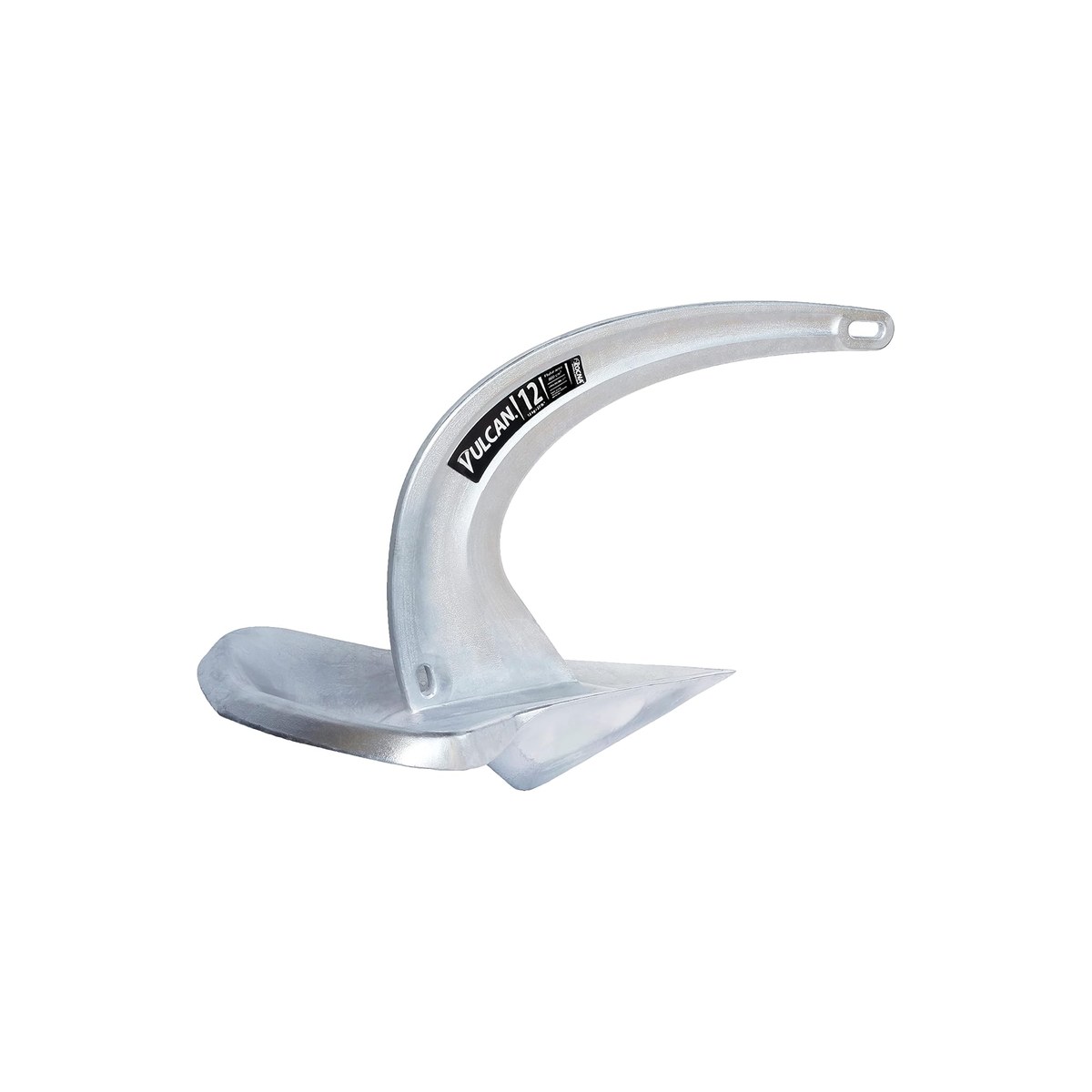
Rocna Vulcan High-end Boat Anchor, 9 kg / 20 lb (modern roll-palm scoop, no roll-bar, galvanized)
The Rocna Vulcan at 9 kg or 20 lb is one of the most frequently discussed modern scoop anchors on cruising forums, and the runner-up rather than the top pick because the brand price gap runs roughly 50 to 70 percent above the Mantus M1 17 lb in current Amazon pricing (May 2026), without a holding-performance advantage we can source to a specific SV Panope or Practical Sailor head-to-head test. The Vulcan design has a strong reputation in firm sand and mixed bottoms, and the no-roll-bar geometry may avoid the roll-bar mud-packing reset risk Morgan's Cloud documented on the Rocna Original and Manson Supreme; Morgan's Cloud's full analysis of the Vulcan's reset performance is paywalled past the executive summary, and the publicly visible text records at least one Hood Canal owner reporting the Vulcan also failing to reset in sticky tidal mud, so the no-roll-bar advantage is design theory rather than a settled finding. Two further honesty points: first, the shank bend issue is real and documented in a Cruisers Forum thread titled 'Rocna Vulcan bent shank' (2022 through 2025), which confirms the flat-plate I+V shank bends under lateral rock-snag loads more readily than the Rocna marketing suggests; this is a substrate-specific concern for rocky anchorages, not a sand-or-mud-bottom worry. Second, the 9 kg size in the persona's upper range (28 to 32 ft displacement) is mildly underspec'd per CruisersForum and TrawlerForum sizing consensus, which steps up to the 12 kg / 26 lb Vulcan for the same boat class. The same ASIN covers both sizes via the variant picker. For the cruiser who wants the Rocna brand and the no-roll-bar geometry and is willing to pay for it, this is the runner-up modern scoop we'd buy, sized one step up from the canonical 9 kg recommendation if your boat sits at 28 ft or larger.
- + Modern roll-palm scoop design (no roll-bar) that owners on Cruisers Forum and Jeanneau Owners Forum praise in firm sand and typical good-holding-ground mixes (sand over mud), where the Vulcan sets quickly and holds at high loads
- + Single ASIN covers the entire Vulcan size range from 4 kg (9 lb) to 55 kg in one Amazon listing, so the upgrade path from this canonical 9 kg pick to the 12 kg (26 lb) cruiser-consensus size is a radio button rather than a separate purchase
- + Galvanized steel construction with the Rocna manufacturing reputation, and no roll-bar geometry may avoid the roll-bar mud-packing reset risk Morgan's Cloud documented on the Rocna Original and Manson Supreme; we say 'may' because Morgan's Cloud's full analysis of the Vulcan's reset performance is paywalled and the publicly visible text records at least one Hood Canal owner reporting the Vulcan also failing to reset in sticky tidal mud
- + 108 owner reviews on Amazon at 4.7 stars, with consistent forum reputation across the Trawler Forum, Cruisers Forum, and Jeanneau Owners Forum cruising communities
- × Documented shank-bend failure mode under lateral rock-snag loads: a Cruisers Forum thread titled 'Rocna Vulcan bent shank' (2022, active through 2025) confirms shank bends occur when the anchor is fouled sideways against rocks, and a YBW Forum owner has documented a measurable shank bend after snagging between boulders. The flat-plate I+V shank geometry Rocna promotes as bend-resistant bends more readily than a round-bar shank under lateral loads; this is the failure mode worth knowing for owners who anchor in rocky areas
- × Mild sizing concern for the upper end of the persona: Rocna's chart shows the 9 kg covers an 8 m / 26 ft boat to ~5 t displacement, while CruisersForum and TrawlerForum consensus consistently recommends the 12 kg (26 lb) variant for any 28 to 32 ft boat over ~4 t displacement
- × Roughly 50 to 70 percent more expensive than the Mantus M1 17 lb at the same size class in current Amazon pricing (prices fluctuate; as of May 2026 the M1 17 lb is $311 and the Vulcan 9 kg is ~$500). The brand price gap is not matched by a holding-performance advantage we can source to a specific independent test
Budget pick: Extreme Max 3006.6652 BoatTector Zinc-Plated Cube Anchor, 19 lb (pontoon and lake-boat day anchor for soft mud only).
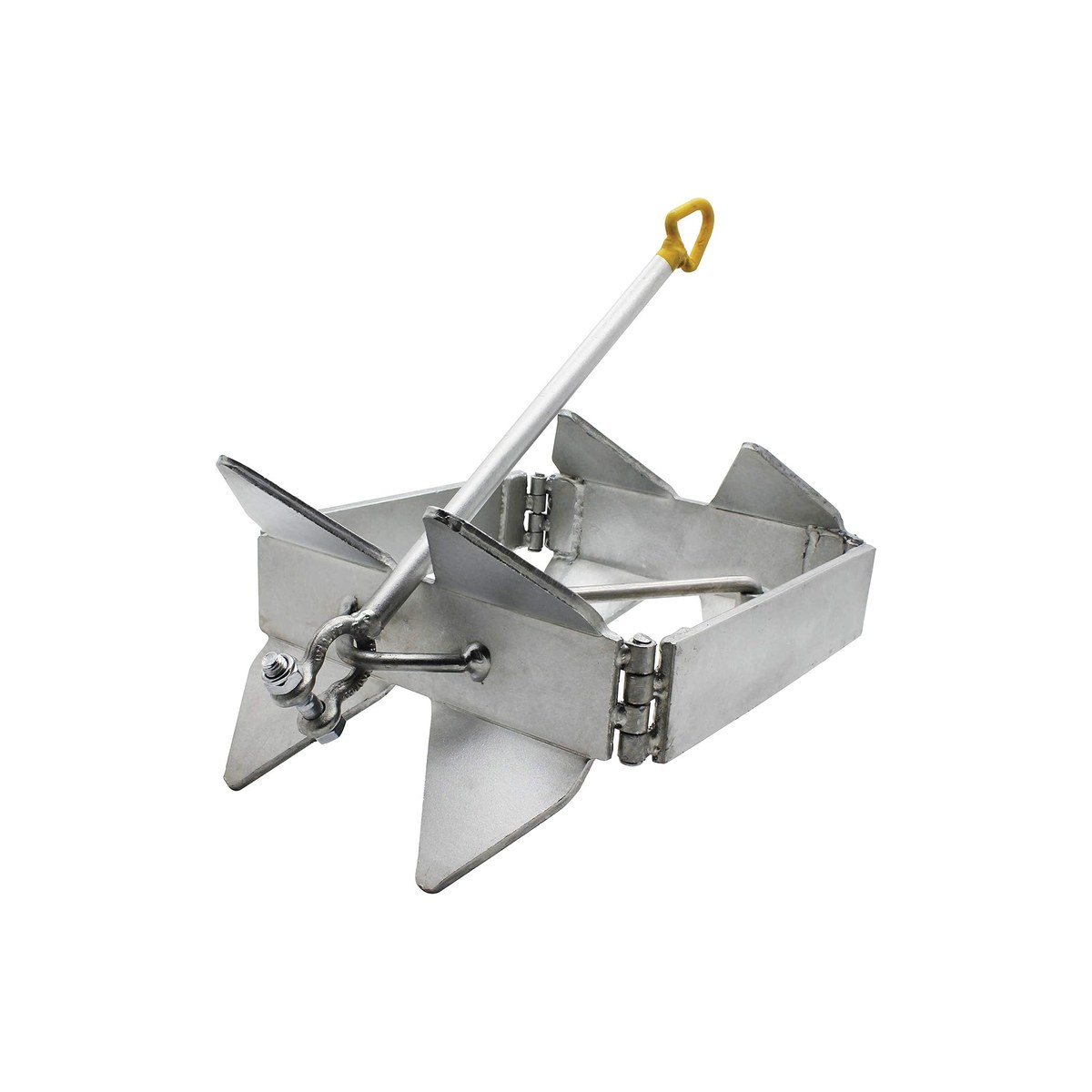
Extreme Max 3006.6652 BoatTector Zinc-Plated Cube Anchor, 19 lb (pontoon and lake-boat day anchor for soft mud only)
The Extreme Max BoatTector at 19 lb is the casual day anchor for pontoon and lake-boat owners who wanted to know what to buy, NOT a primary cruising anchor and explicitly NOT a substitute for any of the four other picks in this guide. As a pontoon boat anchor it is the volume seller on Amazon by a wide margin: the 720 review count is the strongest social-proof signal of any anchor we surveyed, and that backs the answer for owners searching for the best pontoon boat anchor or the best anchor for pontoon use. The rating is genuine for the use case the BoatTector is actually built for: short-scope day anchoring on a pontoon or runabout in soft midwest reservoir mud, the freshwater calm-conditions environment where the box boat anchor folding design and snag-resistant retrieval matter. This shallow water boat anchor design uses wide friction surfaces rather than fluke penetration, which is why it works in muck and stumps where a scoop or fluke might foul. As a best lake boat anchor pick for casual day use, this is the volume answer the audience actually buys. Where the BoatTector is the wrong tool: any saltwater service (the zinc plating wears through fast), any overnight or storm-aware anchoring (the cube relies on weight rather than penetration and breaks loose easily in wind shifts), any hard bottom (drags on packed clay and gravel), and any cruising primary role on a 25-plus foot coastal boat (cube anchors are not part of the cruising anchor conversation in forums or in independent test reviews like SV Panope). The honest positioning is that the BoatTector earns its slot in this guide because the pontoon and lake-boat audience is real, the 720 reviews prove it, and the alternative is leaving casual users to buy worse cube anchors or the wrong product class entirely. For that audience and that audience only, the BoatTector at $81 is the right budget anchor we'd buy. For everyone else, the Mantus M1, Rocna Vulcan, Fortress FX-16, or Manson Supreme is the correct pick.
- + The strongest review-count signal on Amazon for any boat anchor at 720 owner reviews, roughly 4.4 times the Mantus M1's 163 and 6.6 times the Rocna Vulcan's 108, with a 4.7 star rating that backs the volume-seller status for pontoon and lake-boat owners
- + Folding cube design holds in soft mud, muck, and sticky clay where penetrating anchors might wedge in stumps, the practical advantage on midwest reservoir and lake bottoms where snag-resistant retrieval matters more than absolute holding power
- + Lowest price by a wide margin at $81, roughly one-fourth the price of the next-cheapest anchor in this guide and the right price tier for a casual lake-boat or pontoon owner upgrading from the cheap mushroom or stamped Danforth that came with the boat
- + Folds flat for in-boat storage at 22.25 x 8 x 4.5 inches collapsed (vs 15 x 12 x 8 inches deployed), the storage advantage on a pontoon where deck space is limited
- × The wrong product class for a primary cruising anchor on a 25 to 32 ft coastal boat, full stop. Owner consensus across Cruisers Forum, Trawler Forum, and SV Panope's testing community is that cube and box anchors are not recommended as primary or even secondary anchors for coastal overnighting; the SV Panope channel does not include box anchors in its comparative reviews at all, which is itself a signal
- × Zinc-plated finish (not hot-dip galvanized) makes the BoatTector unsuitable for saltwater service as a serious working anchor; the plating wears through quickly and the steel underneath corrodes in marine environments
- × Drags and rolls on hard sand, packed clay, gravel, or rock, the substrates where the cube relies on weight rather than penetration and where wind shifts can break the hold easily; not the right anchor for any conditions with significant fetch, tidal flow, or overnight storm risk
Also worth considering.
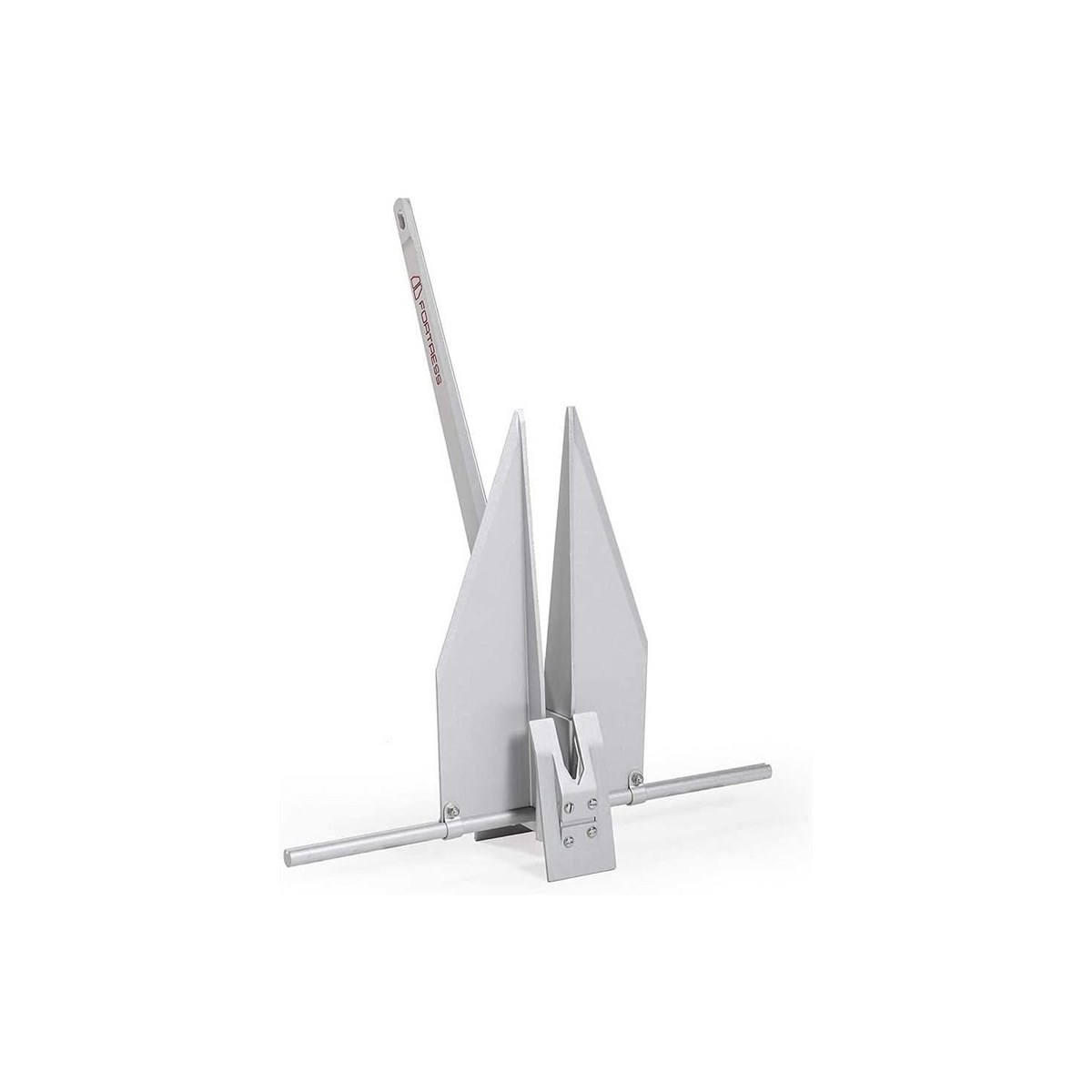
Fortress Marine Anchors FX-16 (10 lb Aluminum-Magnesium Fluke, rated for 33 to 38 ft boats)
The Fortress FX-16 at 10 lb is the soft-mud and sand specialist boat fluke anchor in this lineup, and the right answer for any owner whose primary anchorages are Chesapeake-style soft bottoms or sand-over-mud mixes. The Fortress is the modern aluminum-magnesium development of the original Danforth fluke anchor design, and the aluminum fluke anchor geometry delivers the highest holding-power-per-pound of any anchor design on the market. Owner reports on Cruisers Forum and Chesapeake-specific threads consistently position the FX-16 (one size above the Fortress-recommended FX-11 for 28 to 32 ft boats) as a deliberate oversize 'mud monster' choice for the best anchor for sand and soft mud where holding power matters more than absolute weight. As a sand boat anchor it has no peer in this guide for holding power per pound. The 10 lb FX-16 is rated for 33 to 38 ft per Fortress's own chart, and the one-size-up convention is intentional in soft mud where light weight reduces hull-roller wear and bow trim while still providing more than enough holding. For owners asking what is the best anchor for muddy bottom, this is the answer for the kind of soft Chesapeake mud where penetrating fluke geometry outperforms scoop designs. Where Fortress is the wrong tool: heavy grass and weed beds (the flukes clog with vegetation and 'ski' along the top, the MacGregorSailors and CruisersForum consensus is direct on this failure mode), very hard sand or compacted gravel (the light weight can 'skip' without digging unless backed down aggressively), and rock or coral bottoms (the aluminum flukes can bend if misused against hard substrates). The FX-16 also serves as the standard secondary or kedge for any boat in this size class whose primary is a scoop or plow; the aluminum weight makes it practical to stow as a backup on the foredeck or in a rode bag. For a coastal cruiser anchoring primarily in soft bottoms, this is the Fortress we'd buy and the right complement to a scoop primary if your cruising area runs heavy on mud.
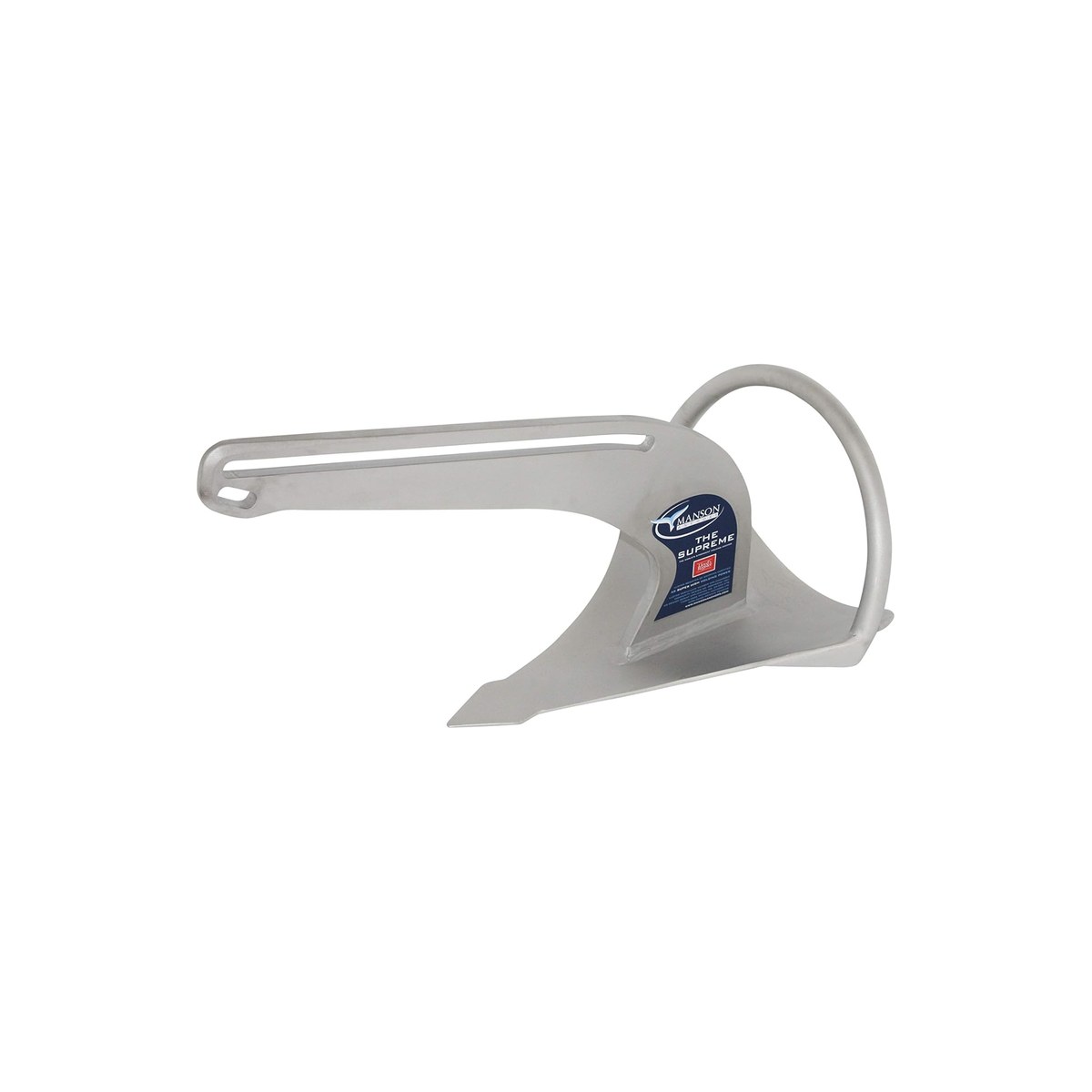
Manson Supreme Galvanized Anchor, 25 lb (modern roll-bar scoop, Lloyd's Register SHHP certified, shock-absorbing shank slot)
The Manson Supreme at 25 lb is a modern roll-bar scoop anchor in the same design family as the Mantus M1 and Rocna. It is not a plow; the original Bruce, CQR, and Delta are the plow design class, and the Supreme, Rocna, and Mantus are all roll-bar scoops. What makes the Supreme worth a separate slot in this guide is not a different substrate specialty but three brand-and-build differentiators: it is the only anchor in this guide that carries Lloyd's Register SHHP certification, the third-party structural validation that most cruising-rated anchors do not carry; the shank has a slot that allows the rode attachment to move along the shank under shock load, a design choice owners say smooths chain-load spikes in a way the rigid-shank Rocna and Mantus do not; and Manson has been the production-cruiser Delta-and-CQR replacement of choice since around 2007 per Jeanneau Owners Forum and YBW Forum threads we read. The 25 lb size is the consensus pick for a 25 to 32 ft coastal cruiser per the MacGregor forum thread on Manson sizing, with Manson and Force4 sizing both rating the 11 kg / 25 lb Supreme for boats up to 30 ft, and some forum sources extending the range to 35 ft for lighter-displacement boats. Where the Supreme overlaps with the Mantus M1 and Rocna: it is a roll-bar scoop with the same set behavior in firm sand, sand over mud, and typical mixed bottoms; Morgan's Cloud notes in 2019 that the Supreme shares the Rocna's roll-bar reset failure mode in sticky mud after 180-degree wind shifts because the designs are 'so close.' Where the Supreme underperforms: very soft mud (Fortress FX-16 holds better as a kedge), and any heavy-weed or kelp anchorage where any roll-bar scoop can pack with vegetation. Owner reports flag occasional manufacturing variability, with a Cruisers Forum thread titled 'Rocna or Manson Supreme?' noting one owner's Supreme that was 'very hard to set'; 31 Amazon reviews are the lowest count of any anchor in this guide, but the SHHP certification and the long Delta-replacement track record carry the pick.
Skip this guide if...
Three audiences should skip this guide. First, sub-18 ft jon boats or aluminum fishing skiffs used on small inland lakes with no overnight anchoring: the primary anchors here are sized and priced for 25 to 32 ft coastal cruisers, and a sub-18 ft boat needs a 7 to 10 lb Fortress FX-7, a small box anchor, or a 5 to 8 lb folding grapnel instead. Second, offshore or bluewater cruisers running extended passages on boats 32 ft and up where the right answer is heavy-steel Rocna or Mantus M2 sizes well beyond this guide's range, or a Spade as a primary bower; the Spade in particular is the anchor Morgan's Cloud has recommended over the Rocna since around 2016 for serious cruising, and we cover it as a worth-knowing alternative in the FAQ rather than as a numbered pick because of its limited US Amazon availability. Third, sailors who anchor primarily in heavy kelp, severe rock, or strong tidal current (Pacific Northwest cruising, Maine cruising, parts of British Columbia): the substrate matrix for those waters is different enough that this guide's mixed-bottom default picks are not the optimal fit, and the right reading is a region-specific cruiser-community discussion rather than a national-default guide.
Don't bother with.
- × Skip Cast iron mushroom boat anchor as a primary anchor on any boat over 14 ftThe mushroom boat anchor is designed for permanent moorings and very small boats, and it relies on slow burial over weeks in soft mud to hold. Used as a primary anchor that has to set quickly and hold against wind shifts, mushrooms drag on anything but dead-calm conditions in soft mud. The Trawler Forum and r/boating documentation is consistent: owners report dragging incidents when mushrooms were used as primaries on 16 to 20 ft boats in any wind, any current, or any non-soft-mud bottom. The 20 lb cast iron mushroom marketed as a small-boat primary anchor is a substrate-mismatch product, and the dragging failure mode is documented across multiple forum archives.
- × Skip Cheap 'Danforth-style' budget flukes under $30 (Seachoice Utility class) as a primary anchor for any boat over 22 ftThe Seachoice Utility at $18 with thousands of Amazon reviews is a real product and is the right answer for a dinghy or tender lunch-hook backup on a small boat. It is not a primary anchor for a 24-plus foot boat: the stamped mild-steel build deforms under heavy holding loads, the flukes and stocks bend in real-world set conditions, and the anchor fails to set or reset in mixed or grassy bottoms. The owner-community consensus across r/boating, iboats, and SailboatOwners.com is direct: budget stamped Danforth-style anchors under $30 are acceptable as a tender or lunch hook, never as a primary on a 25-plus foot cruiser. The structural deformation failure mode is documented across all of these forums.
- × Skip Bruce-style claw anchor copies under $60The original Bruce design from the 1970s is a respected anchor type, but the budget copies sold on Amazon under $60 lack the casting quality and fluke geometry of the original Bruce. Numerous Trawler Forum threads document Bruce copies dragging in higher winds, holding poorly, and failing to reset after wind shifts. Many cruisers explicitly say claw anchors are obsolete compared with modern scoops (Rocna Vulcan, Mantus M1) and should not be chosen as a primary on a new build or refit boat, especially the cheapest stamped copies. The modern scoop picks in this guide are the design replacements that fix the Bruce design's weaknesses.
- × Skip DIY concrete-block anchors for any boat over 14 ftConcrete blocks rely on dead weight rather than substrate penetration, and dead weight on a hard or sloping bottom slides easily. The Facebook lake-boating groups and r/boating archive document multiple cases of concrete block anchors dragging dramatically in moderate wind or failing to retrieve; once a block slides, retrieval can be impossible without diving on it. The time and material cost of building a concrete anchor exceeds the dollar saving versus any of the picks above by a wide margin, and the failure mode (dragging plus loss) is the worst outcome on the list. The general rule from cruising forums: a designed anchor with a properly engineered fluke or scoop provides materially more holding per pound than weight alone, because the anchor pulls itself into the bottom under load instead of riding on top of it.
- × Skip Undersized 'lunch hooks' marketed for primary use on boats they were not designed forSmall fluke and grapnel anchors marketed as a 'primary anchor for 20 to 30 ft boats' at weights below the design family's actual cruising threshold are an owner-flagged trap on Cruisers Forum. The marketing optimism fails owners when conditions exceed light wind and short scope: the anchor drags, the holding margin disappears, and the failure is a size-class mismatch dressed up as a price-point advantage. If a product page claims a primary-anchor rating that is two or more sizes below the manufacturer's own published chart for that boat length, treat the rating as marketing copy rather than engineering specification.
- × Skip No-name polished stainless anchor showpieces of unknown metallurgyPolished stainless anchors of unknown manufacturer, unknown alloy, and unusual fluke geometry are documented on Trawler Forum and Cruisers Forum threads as 'look great on the bow but perform badly,' especially the cheaply-imported variants. Stainless anchors as a category are a cosmetic upgrade over galvanized for non-coastal use; the no-name stainless showpieces add the additional risk of hidden crevice corrosion (which stainless is famously prone to in salt environments) and fluke geometry that may not match any tested anchor design. Buy a known anchor design from a known manufacturer in galvanized steel, or pay the Spade price gap for a tested stainless option if that aesthetic matters to you.
How we picked.
Sources we read and the methodology we used
We did not test these anchors across a calendar season on our boat. The sites that claim they did mostly did not either. What we did is read the Rocna, Fortress, Mantus, and Manson manufacturer specifications and sizing charts directly, the Lloyd's Register SHHP certification standard that Manson Supreme carries, Morgan's Cloud's anchor research from 2016 forward (one of the most thorough independent anchor-design analyses available in English, alongside Practical Sailor's multi-year anchor test program and the Peter Smith anchor research database), and the SV Panope independent anchor test channel on YouTube (the most-cited independent test source in English-language sailing forums). Then we cross-referenced those manufacturer claims and independent test findings against Cruisers Forum, Trawler Forum, Sailboat Owners Forum, YBW Forum, Jeanneau Owners Forum, MacGregor Sailors, r/sailing, r/boating, r/Pontoons, and iboats threads on shank bend failures, set difficulties, reset performance under wind shifts, and substrate-specific holding patterns. We discarded sources that could not be attributed to a named owner, a dated publication, or a specific test methodology, and we report both sides where manufacturer guidance and owner consensus diverge (most notably on sizing, where owners across multiple forums consistently recommend stepping up one size from the manufacturer's chart for cruising use).
The Rocna Vulcan shank bend and sticky-mud reset failure: the load-bearing editorial honesty points
The documented 2022 through 2025 Cruisers Forum thread on Rocna Vulcan shank bends under lateral rock-snag loads and the Morgan's Cloud 2019 article on Rocna reset failures in sticky mud (and the extension of that concern to the Manson Supreme as a similar roll-bar scoop design) are the two single most-important pieces of forum-cited honesty in this guide.
The shortlist: roll-bar scoop, scoop-without-roll-bar, fluke, and box-anchor
The shortlist started with the design families that owners on Cruisers Forum, Trawler Forum, and Morgan's Cloud actually recommend for a 25 to 32 ft coastal cruiser: modern roll-bar scoop (Mantus M1, Manson Supreme, and the Rocna Original family, three roll-bar scoops with different brand histories, weight ranges, and certifications), modern roll-palm scoop without a roll-bar (Rocna Vulcan), aluminum fluke (Fortress FX-series), and cube or box (Extreme Max BoatTector for the pontoon and lake-boat audience).
Why we left the Spade out as a numbered pick
We considered the Spade as a sixth pick. The Spade is the most-praised modern scoop in SV Panope tests and Morgan's Cloud has recommended it over the Rocna as a best bower since around 2016, which is a real reason to consider it for any owner whose anchorages include sticky mud or significant tidal-creek wind shifts where roll-bar reset is the concern. Two friction points kept Spade out of this guide as a numbered pick: the SpadeAnchorUSA distributor's limited Amazon availability, and the $350-plus galvanized-S60 price tier that sits above the Mantus M1 and Manson Supreme at similar holding capacity. If you are a first or second anchor upgrade buyer and you anchor in mostly sand and mixed bottoms, the Mantus M1 and Manson Supreme cover the roll-bar scoop tier competently. If you anchor in tidal creeks where roll-bar reset is a known failure mode and you are willing to pay the brand high-end, the Spade is the honest upgrade.
How the lineup is defended: substrate-and-job framing across the five picks
The substrate-and-job framing organizes the rankings. Every anchor in this guide is the right tool for at least one substrate-and-boat-type combination and the wrong tool for at least one other. The Mantus M1 17 lb earns the top pick by combining the strongest Amazon review signal (163 reviews, 4.8 stars, Amazon's Choice) with the modern roll-bar scoop design and a price point roughly 50 to 70 percent below the Rocna Vulcan 9 kg in current Amazon pricing. The Rocna Vulcan runs runner-up because the brand price gap does not buy a holding-performance advantage we can source to a specific independent test in the substrates a coastal cruiser anchors in most often. The Extreme Max BoatTector earns its budget slot because the 720 reviews prove the pontoon and lake-boat audience is real, and the alternative is letting that audience buy worse cube anchors; the framing is explicit that the BoatTector is a day anchor for soft mud only and not a cruising primary. The Fortress FX-16 and Manson Supreme round out the lineup: Fortress as the soft-mud and sand specialist that can serve as either a primary on the right cruising ground or as a backup kedge; Manson Supreme as the Lloyd's SHHP-certified roll-bar scoop alternative with the longest Delta and CQR replacement track record on production cruisers.
The sizing rule: step up one size from manufacturer charts for cruising use
The single most-important honesty point this guide makes is on sizing: manufacturer charts are widely considered optimistic by owners who anchor overnight, and the size you buy should step up one notch from what the chart says for displacement cruisers in the 28 to 32 ft range. The size-chart FAQ section of this guide is the consensus rule we'd follow, and the same ASIN variant pickers for Rocna Vulcan and Manson Supreme make the size-up decision a single radio button.
FAQs.
Q01 What is the best boat anchor size chart for my boat?
+
Q02 What boat anchor type is best for my bottom condition?
+
Q03 How does a boat anchor actually hold?
+
Q04 How do I tie a boat anchor knot? Should I use a knot or a shackle?
+
Q05 Should I buy stainless steel or galvanized?
+
Q06 What boat anchor chain size do I need?
+
Q07 Are high-priced swivels and complex connectors worth it?
+
Q08 How much scope do I need?
+
Q09 Why did my anchor drag after I thought it was set?
+
Q10 What is the Spade anchor and should I consider it?
+
Q11 Can I use a single anchor for everything, or do I need a second?
+
If you, then this.
- IF you want a general-purpose primary anchor for mixed bottoms on a 25 to 30 ft coastal cruiserGET Mantus M1 Anchor Galvanized 17 lb$311 →
- IF you want the modern roll-palm scoop design from the brand cruising forums recommend mostGET Rocna Vulcan 9 kg / 20 lb~$500 →
- IF you have a pontoon or lake boat, anchor only in calm soft-mud lakes, and never overnightGET Extreme Max BoatTector 19 lb$81 →
- IF you anchor primarily in Chesapeake-style soft mud or sand and want a soft-bottom specialistGET Fortress FX-16$296 →
- IF you want the Lloyd's Register SHHP-certified roll-bar scoop (the only one in this guide with third-party structural validation) or you are replacing a CQR or Delta on a production cruiserGET Manson Supreme Galvanized 25 lb$247 →
- IF your boat is 28 to 32 ft displacement or you anchor overnight regularly in 30-plus knot conditionsGET Same picks above, sized one step up (Vulcan 12 kg / 26 lb in the same ASIN, Manson Supreme 35 lb in the same ASIN)varies →
- IF you want a secondary or kedge anchor to complement a scoop primaryGET Fortress FX-16 (soft mud kedge) or Manson Supreme 25 lb (grass and weed bottoms)$247 to $296 →
Boat Gear: The Complete Guide
The whole-boat picture →Every system on a 20 to 45 ft coastal boat, organized in one place, with the one guide we trust for each.
- ABYC H-40: Anchoring, Mooring & Strong Points (standard overview) · American Boat & Yacht Council
- West Advisor: Selecting the Right Anchor · West Marine
- Anchor sizing chart by boat length and displacement · Mantus Marine