The Beacon That Brings Help: 5 EPIRBs & PLBs (2026)
An EPIRB and a personal locator beacon do two different jobs, which is why both are here. An EPIRB is the beacon your boat carries: registered to the vessel, able to float free and self-activate as she goes down, broadcasting a 406 MHz distress signal that the Cospas-Sarsat satellites relay to the Coast Guard. A PLB is the one a crew member clips to a life jacket, registered to the person and held by hand. Offshore boats carry both. We read Practical Sailor's beacon comparisons, the Cruisers Forum and Trawler Forum EPIRB-versus-PLB threads, OutdoorGearLab's bench reviews, NOAA's registration rules, and the ACR and Ocean Signal datasheets. The load-bearing point most listings hide: a satellite messenger like a Garmin inReach is not a distress beacon, an unregistered beacon can delay the Coast Guard's response by hours, and the popular ACR ResQLink 400 has a front button owners report setting off by accident.
- 01 ACR GlobalFix V5 AIS EPIRB (B0C5P85X1K) , the Top Pick and best all-around EPIRB, 406 MHz plus AIS plus Return Link Service, 10-year user-replaceable battery, the vessel's primary distress beacon, ~$920
- 02 Ocean Signal rescueME PLB1 (B00T0UPYGQ) , the Runner-up and best PLB, smallest in class, 7-year battery, spring-flap button guard, the one to clip on every crew life jacket, ~$385
- 03 Ocean Signal rescueME EPIRB1 (B00T0UQ05K) , the Best Value EPIRB, the smallest 406 beacon for boating, manual deploy, no AIS but the same satellite distress path, ~$685
- 04 ACR ResQLink View PLB (B07PPJGFKK) , the PLB with a digital display that shows your GPS coordinates and transmit status, buoyant, 28-hour operation, ~$470
- 05 ACR GlobalFix V6 GPS EPIRB (B0C9P531LZ) , the non-AIS ACR EPIRB for boats that want the GlobalFix platform and Return Link Service without paying for AIS, ~$745
How they compare.
| Rank | Product | Best for | Price | Our score |
|---|---|---|---|---|
| 01 | ACR GlobalFix V5 AIS EPIRB (B0C5P85X1K, ~$920)
Top Pick
| the vessel's primary beacon; AIS plus 406 plus RLS, 10-year user-replaceable battery, the be-found-and-be-seen flagship | $920
Buy → | 9.4/10 |
| 02 | Ocean Signal rescueME PLB1 (B00T0UPYGQ, ~$385) | the crew's personal beacon; smallest in class, 7-year battery, best false-activation guard | $385
Buy → | 9.2/10 |
| 03 | Ocean Signal rescueME EPIRB1 (B00T0UQ05K, ~$685) | a smaller, cheaper EPIRB that drops the AIS extra but keeps the full 406 satellite path | $685
Buy → | 8.8/10 |
| 04 | ACR ResQLink View PLB (B07PPJGFKK, ~$470) | the PLB buyer who wants an on-unit display of GPS fix and transmit status | $470
Buy → | 8.6/10 |
| 05 | ACR GlobalFix V6 GPS EPIRB (B0C9P531LZ, ~$745) | the GlobalFix platform without AIS; RLS and the ACR dealer network at a lower price than the V5 | $745
Buy → | 8.4/10 |
Prices are current Amazon prices at time of publication and can change. Scores reflect our editorial evaluation, not vendor input.
Our #1 pick: ACR GlobalFix V5 AIS EPIRB (RLB-44, 406 MHz Cospas-Sarsat with built-in AIS transmitter and Return Link Service, multi-constellation GNSS, 10-year user-replaceable battery, white and infrared strobe, NFC app, available in Category 1 float-free or Category 2 manual, ASIN B0C5P85X1K).
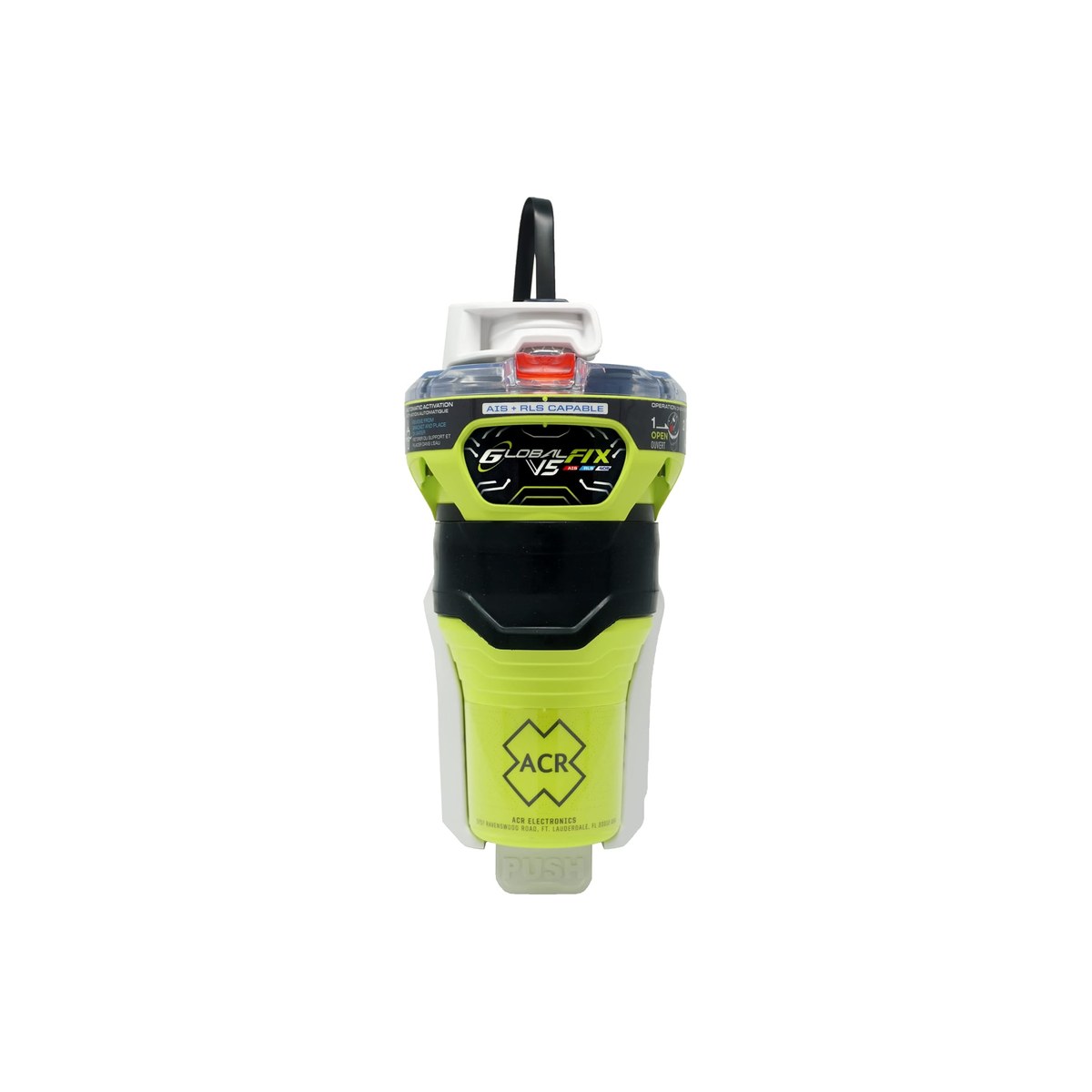
ACR GlobalFix V5 AIS EPIRB (RLB-44, 406 MHz Cospas-Sarsat with built-in AIS transmitter and Return Link Service, multi-constellation GNSS, 10-year user-replaceable battery, white and infrared strobe, NFC app, available in Category 1 float-free or Category 2 manual, ASIN B0C5P85X1K)
The do-everything boat beacon: 406, AIS, and a battery you can replace.
Who it's for: the cruiser who wants a single beacon on the vessel that does everything an offshore boat could ask of an EPIRB. It sends the 406 MHz satellite distress alert that summons the Coast Guard, it adds a local AIS alert so nearby boats see you immediately, and it confirms the alert was received through Return Link Service. If you are outfitting one boat with one primary beacon, this is the one to mount.
What we found: forum consensus on Cruisers Forum and The Hull Truth treats the GlobalFix V5 as the one to beat, and the load-bearing reasons are the AIS local alert and Return Link Service that the older V4 lacked, plus a multi-constellation GNSS receiver; the battery is user-replaceable at 10 years, as the V4's was too. ACR is the dominant US beacon brand with the deepest dealer network. The honest caveat owners raise: the AIS only helps within VHF range of an AIS-listening vessel, so it is high value coastal and marginal alone offshore, where the satellite path is doing the real work either way.
Bottom line: this is the right Top Pick for the boat that wants the most capable EPIRB and will register it properly with NOAA. Buy the Category 1 float-free version if the boat could sink unattended; buy Category 2 manual if you will always be aboard to deploy it. If you do not need AIS, the non-AIS GlobalFix V6 or the compact Ocean Signal EPIRB1 send the same 406 distress signal for less, and a marine dealer is usually cheaper than Amazon and handles the registration form.
- + Carries a built-in AIS transmitter on top of the 406 MHz satellite path, so the moment it activates it also broadcasts an AIS alert to every AIS-equipped vessel within roughly 5 to 10 nautical miles, showing the beacon on their plotter as a man-overboard target located to within about 33 feet, the fastest possible local rescue in trafficked water
- + The real upgrades over the older GlobalFix V4 are the AIS transmitter, Return Link Service, and a multi-constellation GNSS receiver (GPS, Galileo, GLONASS); the V5 battery is user-replaceable at the 10-year mark, as the V4's was, and on the many sealed-battery competitors that must go back for factory service that service often costs $260 to $325, enough that owners total a beacon rather than service it
- + Return Link Service lights a blue confirmation indicator once the Cospas-Sarsat system has received and located your alert, so you know the signal got through; multi-constellation GNSS fixes position in minutes and the strobe includes an infrared element visible to SAR night-vision
- + Made by ACR Electronics, the dominant US beacon brand, with the deepest dealer and service network; sold through West Marine, Defender, and The GPS Store as well as Amazon, and the Category 1 version self-deploys via a hydrostatic release if the boat sinks before anyone can reach it
- × It is the most expensive beacon here, about $920 in Cat II manual form on Amazon, with the Category 1 float-free version running higher (roughly $1,000-plus on Amazon), and the AIS feature it costs more for only helps when another AIS-listening vessel is within VHF range, typically 5 to 10 nautical miles; alone in mid-ocean, the AIS adds nothing the 406 satellite alert does not already do
- × Like every EPIRB it must be registered to the vessel with NOAA before it is anything more than an expensive light, and the Category 1 float-free version adds a hydrostatic release unit that is a separate wear item needing replacement about every two years
- × Marine chandleries frequently sell the V5 for $600 to $700, well under the Amazon third-party price; if you are not in a hurry, calling Defender or West Marine is usually cheaper and they help with the NOAA paperwork
- × ACR's recent model naming is genuinely confusing (a V5 AIS sits alongside a non-AIS V6 GPS), so confirm you are buying the AIS version and the deployment category, Cat 1 or Cat 2, that matches your boat before you check out
Runner-up: Ocean Signal rescueME PLB1 (406 MHz Cospas-Sarsat personal locator beacon, 66-channel GPS, 7-year battery, 24-plus-hour transmit, retractable antenna, spring-flap button cover, registered to the person, ASIN B00T0UPYGQ).
Ocean Signal rescueME PLB1 (406 MHz Cospas-Sarsat personal locator beacon, 66-channel GPS, 7-year battery, 24-plus-hour transmit, retractable antenna, spring-flap button cover, registered to the person, ASIN B00T0UPYGQ)
The smallest 406 PLB, with the button cover that resists false alarms.
Who it's for: every person aboard, and the first beacon a short-handed or solo sailor should buy. A PLB is registered to you, not the boat, and clips to a life jacket so that if you go in the water, you carry your own way to call for rescue. The rescueME PLB1 is the one the forums name because it is the smallest and the hardest to set off by accident.
What we found: the best PLBs cluster around three names, and the Ocean Signal rescueME PLB1 wins on the details that matter, smallest size, a 7-year battery against ACR's 5, and a spring-flap button guard. That last point is decisive: OutdoorGearLab no longer recommends the competing ACR ResQLink 400, whose front-mounted button is prone to accidental activation in a pocket or bag, a pattern documented by owners and in ACR's own activation guidance. The PLB1's deliberate two-step activation is why pros pick it.
Bottom line: buy this as the personal beacon for each crew member, alongside, not instead of, a vessel EPIRB on an offshore boat. If you want a screen that shows your GPS fix, step to the ACR ResQLink View; if you want local AIS on the person, the ResQLink AIS adds it. For most boaters, the rescueME PLB1 at about $385 is the right answer, and it is one of the best PLBs sold at any price.
- + Among the smallest PLBs in its class and marketed as the smallest, small enough to live permanently in a life-jacket pocket; the spring-loaded flap over the activation button is the design owners and reviewers cite as the gold standard for preventing the accidental activations that plague front-button beacons
- + A 7-year battery, two years longer than ACR's 5-year PLBs, with a 66-channel GPS and 24-plus hours of transmit, all in a unit that retails around $385, the best value among genuine 406 personal beacons
- + Registered to the person rather than the boat, so it goes wherever you go: your boat, a friend's boat, a delivery, the dinghy; OutdoorGearLab and marine forums consistently name it the PLB to buy for exactly this reason
- + A genuine Cospas-Sarsat distress beacon with no subscription, ever; once registered with NOAA it routes straight to government search-and-rescue, unlike a satellite messenger that depends on a private call center and a paid plan
- × No AIS, so it does not show up on nearby vessels' plotters the way the GlobalFix V5 does; if you specifically want a personal beacon that also alerts local AIS traffic, ACR's ResQLink AIS is the unit, at a higher price
- × No digital display; it tells you it is working through LED flashes, not a screen of coordinates the way the ACR ResQLink View does
- × A PLB must be held antenna-up with a clear view of the sky to transmit well, which is harder in the water than a hands-free EPIRB; it is a backup to a vessel EPIRB, not a replacement for one on an offshore boat
- × Like all beacons it needs NOAA registration, and the battery is not user-replaceable: a PLB battery service at the 7-year mark is dealer-only, typically about $100 to $200, well under an EPIRB's
Budget pick: Ocean Signal rescueME EPIRB1 (406 MHz Cospas-Sarsat EPIRB, 66-channel GPS, manual deploy, retractable antenna, marketed as the smallest EPIRB for boating, registered to the vessel, ASIN B00T0UQ05K).
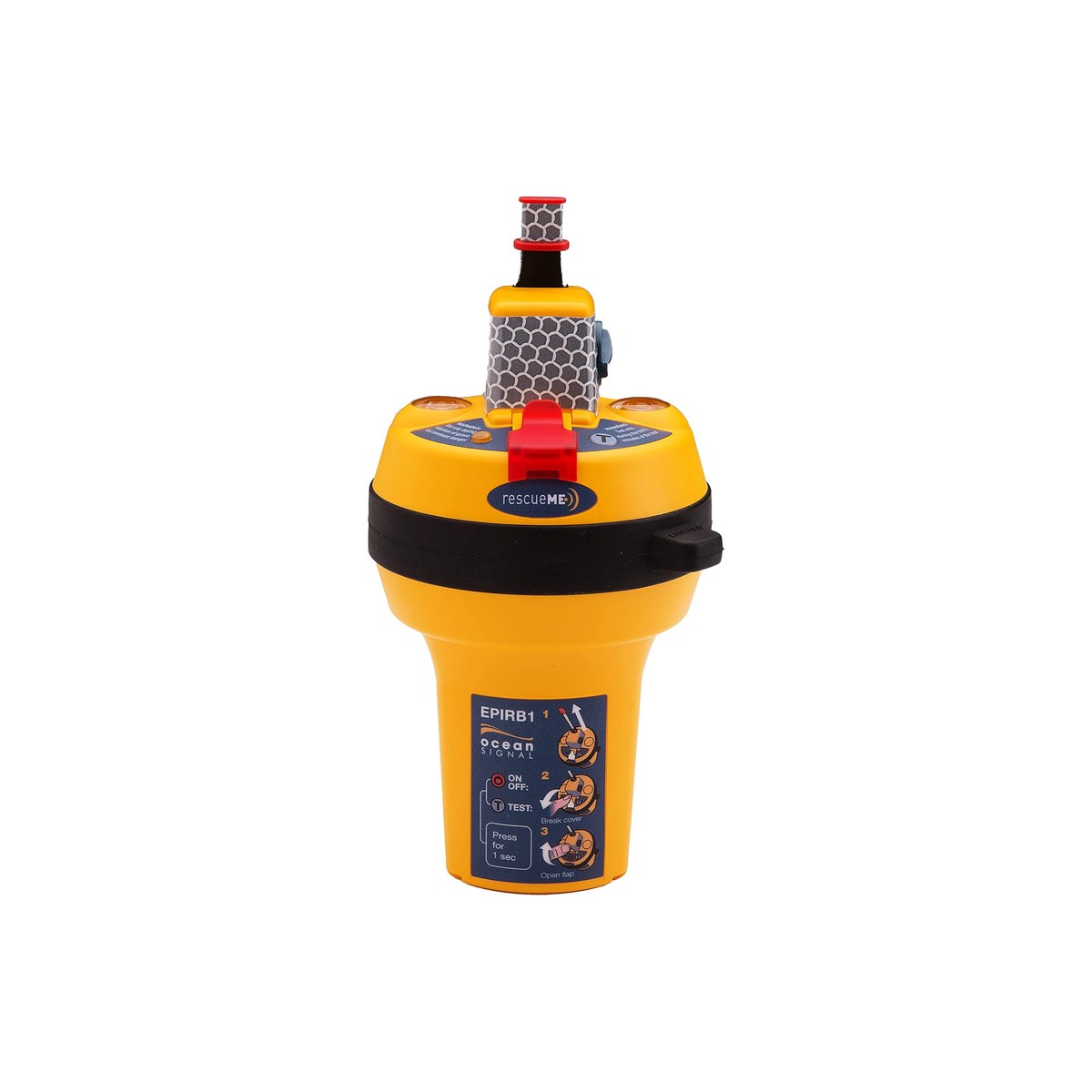
Ocean Signal rescueME EPIRB1 (406 MHz Cospas-Sarsat EPIRB, 66-channel GPS, manual deploy, retractable antenna, marketed as the smallest EPIRB for boating, registered to the vessel, ASIN B00T0UQ05K)
The smallest EPIRB, same 406 distress path, no AIS upcharge.
Who it's for: the boat that wants a real vessel EPIRB and the full satellite rescue path, but has looked at the AIS upcharge on the GlobalFix V5 and decided it is not worth it for where they cruise. The rescueME EPIRB1 is the smallest 406 beacon for boating, and it sends the identical Cospas-Sarsat distress alert for less money.
What we found: the satellite distress path is the same across every certified 406 EPIRB; what you pay more for on the flagship is AIS, Return Link Service, and a user-replaceable battery. Drop those and the Ocean Signal EPIRB1 is a fully capable, name-brand vessel beacon at about $685. The honest note from the harvest: Ocean Signal tends to price its EPIRBs close to ACR without matching the feature set, so this earns its place on size and this listing's price, not on out-spec-ing the V5.
Bottom line: a sound value EPIRB for the cost-conscious boat that still wants a genuine Cospas-Sarsat beacon registered to the vessel. If you want AIS or a float-free Category 1 deployment, step up to the GlobalFix V5; if you want the cheapest path to the ACR platform without AIS, the GlobalFix V6 below is the alternative. Either way, register it with NOAA and verify the deployment category before you buy.
- + Marketed as the smallest EPIRB on the market, easy to bracket-mount at the helm or stow in a grab bag; it broadcasts the same 406 MHz distress signal to Cospas-Sarsat that every beacon here does, so the satellite rescue path is identical to the pricier units
- + Around $685, well under the GlobalFix V5; you give up AIS and Return Link Service, not the core satellite alert, which makes it the value EPIRB for owners who decided the AIS extra is not worth it for their cruising area
- + A 66-channel GPS for a fast position fix and a retractable antenna; Ocean Signal is one of the two real marine-beacon makers, so this is a name-brand 406 beacon, not a gray-market unit of unknown provenance
- + Lighter and smaller than the ACR EPIRBs, which matters if it is going on a small boat's limited helm real estate or into a kayak-camping style ditch kit on a tender
- × No AIS, so unlike the GlobalFix V5 it will not put a man-overboard target on nearby vessels' plotters; in trafficked coastal water that local alert is genuinely useful and you are giving it up to save money
- × The Amazon listing is a manual-deploy unit; if you want a Category 1 float-free EPIRB that self-activates when the boat sinks, confirm the exact variant or buy through a chandlery that stocks the float-free version with its hydrostatic-release bracket
- × No Return Link Service confirmation light on this generation, so you do not get the visual confirmation that your alert was received the way the ACR units provide
- × Ocean Signal's EPIRBs are priced at or near the ACR units while offering fewer features, so the only reason to choose this over a GlobalFix is size and the lower price of this specific listing, not capability
Also worth considering.
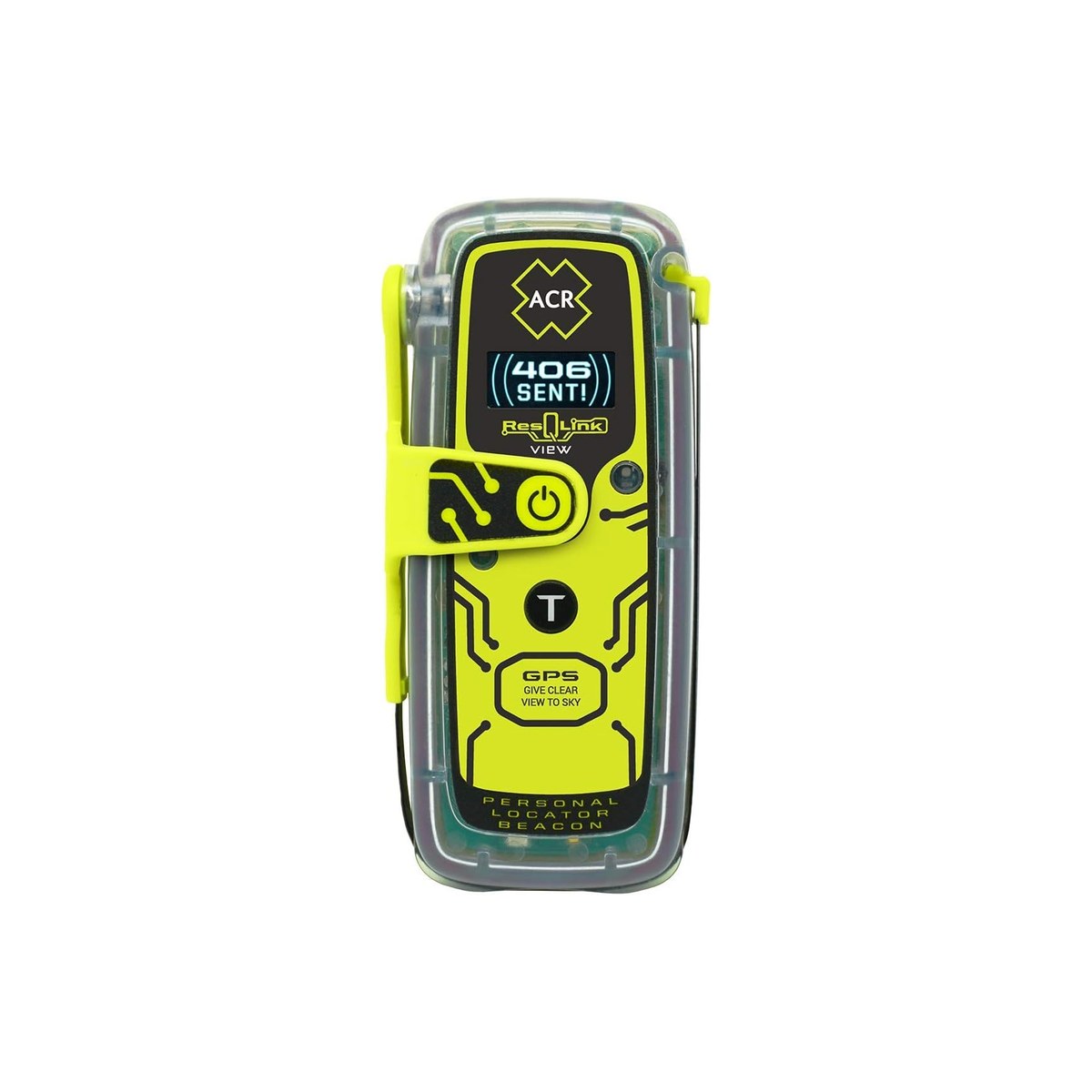
ACR ResQLink View PLB (PLB-425, 406 MHz Cospas-Sarsat personal locator beacon with a digital display, buoyant, 5-year battery, 28-hour operation, registered to the person, ASIN B07PPJGFKK)
The PLB with a screen that shows your GPS fix and transmit status.
Who it's for: the PLB buyer who wants on-unit feedback instead of reading LED flashes. The ACR ResQLink View (PLB-425) is the personal beacon to buy when you want a screen. It suits the methodical skipper who wants visible reassurance the device is doing its job during an activation, the ACR-loyal owner already inside that dealer and service network, or anyone who specifically wants the unit to confirm a GPS fix and show it is transmitting at the worst moment of their boating lives, rather than trusting a pattern of flashing lights.
What we found: where the Ocean Signal rescueME PLB1 reports status through LED flashes, the View has a small digital display that shows your GPS coordinates and confirms the unit is transmitting, which some owners find genuinely reassuring. It is buoyant, runs about 28 hours, and carries the same 406 MHz Cospas-Sarsat type approval as every beacon here, so the satellite rescue path is identical. The trade-offs against our best-PLB pick are real but modest: a 5-year battery versus the PLB1's 7-year, a slightly larger package, and about $85 more at its $470 price. ACR's deep US dealer network and the View's display are the two reasons to pick it.
Bottom line: it is a strong PLB, and the rescueME PLB1 simply wins on size, battery life, and the button guard for most buyers. Choose the View when the on-unit display matters to you, or when you already run an ACR fleet and want one service relationship. Register it to the person with NOAA, clip it to a life jacket, and it does exactly what a personal beacon should. If the screen does not sway you, save the $85 and buy the PLB1 instead; the satellite distress path is the same either way.
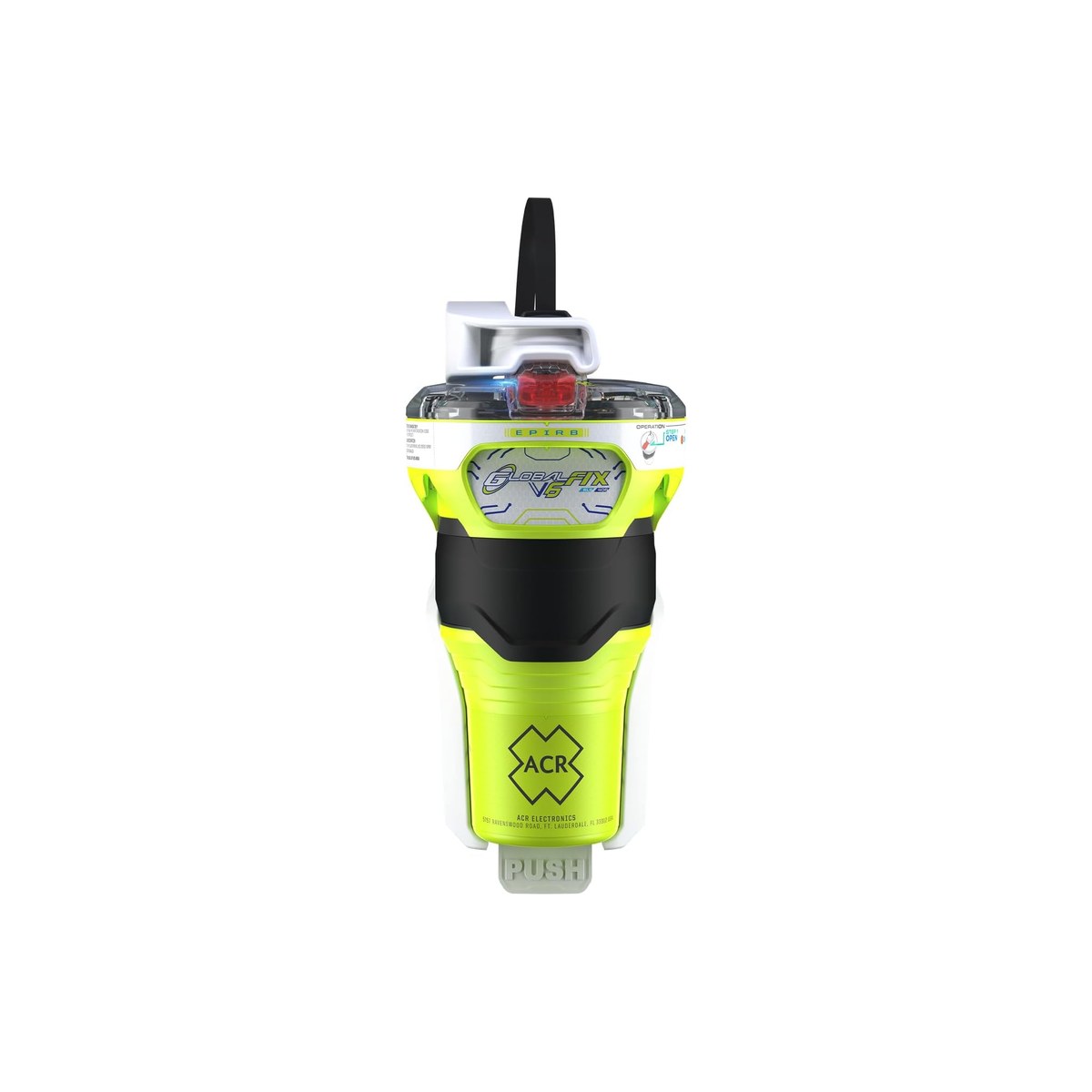
ACR GlobalFix V6 GPS EPIRB (406 MHz Cospas-Sarsat EPIRB with GPS and Return Link Service, NFC app, no AIS, available Category 1 or Category 2, ASIN B0C9P531LZ)
The GlobalFix platform and ACR dealer network, without paying for AIS.
Who it's for: the buyer who wants the ACR GlobalFix vessel EPIRB and its Return Link Service and dealer support, but does not want to pay extra for the V5's AIS. This is the owner who decided the local AIS alert is not worth it on their water, yet still values the ACR platform, the NFC app, and the deepest US dealer and service network in the category. It is a natural step up in support from the Ocean Signal EPIRB1 at a similar capability level, for a vessel that wants the brand behind the beacon.
What we found: the GlobalFix V6 GPS is the non-AIS member of ACR's current EPIRB line, sitting below the V5 AIS at about $745 on Amazon. It keeps the GlobalFix platform, GPS, Return Link Service confirmation, and the NFC app, and drops the AIS transmitter, the single feature separating it from our Top Pick. One honest caution: ACR's naming is confusing, with a higher-numbered V6 that has fewer features than the V5, because the V5 is the AIS flagship and the V6 is the GPS-only model. Confirm the deployment category you want, Category 1 float-free or Category 2 manual, and verify the exact model on the listing before you check out.
Bottom line: registered to the vessel with NOAA, it is a fully capable 406 MHz Cospas-Sarsat beacon. The only reasons to choose it over the cheaper Ocean Signal EPIRB1 are the ACR dealer network and Return Link Service, and the only reason to choose it over the V5 is to skip paying for AIS. If neither of those applies to your boat, the Ocean Signal EPIRB1 covers the same satellite distress path for less money, and the V5 adds the coastal AIS alert for a bit more.
Skip this guide if...
You might not need a 406 beacon at all, though fewer boats than you would think. If you only ever day-sail inside a harbor or a small lake within easy VHF range of a marina and the Coast Guard, a fixed or handheld VHF with DSC, plus a phone, covers most emergencies, and a beacon is arguably over-buying. The honest line, though, is that the moment you leave sight of land, cross shipping lanes, or sail at night or in fog, a registered EPIRB on the boat and a PLB on each crew member are the cheapest serious insurance you can buy. The other reason to pause: a satellite messenger you may already own, a Garmin inReach, a ZOLEO, or a SPOT, is NOT a substitute. Those route an SOS through a private company's call center on a paid subscription, with no guaranteed government search-and-rescue tasking, which is a different and slower path than the Cospas-Sarsat distress alert an EPIRB or PLB sends. Carry a messenger for two-way texting if you like, but do not let it replace a real beacon offshore.
Don't bother with.
- × Skip ACR ResQLink 400 (B07V6CWS26, ~$410) as your PLB pickIt is a real, type-approved 406 PLB and it works, but its SOS button sits exposed on the front of the unit, and owners and reviewers, including OutdoorGearLab, document accidental activations in pockets and bags, and OutdoorGearLab no longer recommends it. A false EPIRB or PLB alert launches a real Coast Guard response and can cost you a fine. For the same money and less risk, the Ocean Signal rescueME PLB1 has a spring-flap button guard and a longer battery. Buy the PLB1 instead, or the ResQLink View if you want the ACR display.
- × Skip Satellite messengers sold near the beacon listings (Garmin inReach, ZOLEO, SPOT)These are not Cospas-Sarsat distress beacons. They send messages and SOS calls over commercial Iridium or Globalstar networks, route the SOS through a private call center, and require a paid subscription; there is no guaranteed government search-and-rescue tasking the way a 406 beacon gets. Practical Sailor is blunt that a messenger is no substitute for a PLB or EPIRB. They are excellent for two-way texting and float plans, and a fine complement, but never a replacement for a real beacon offshore.
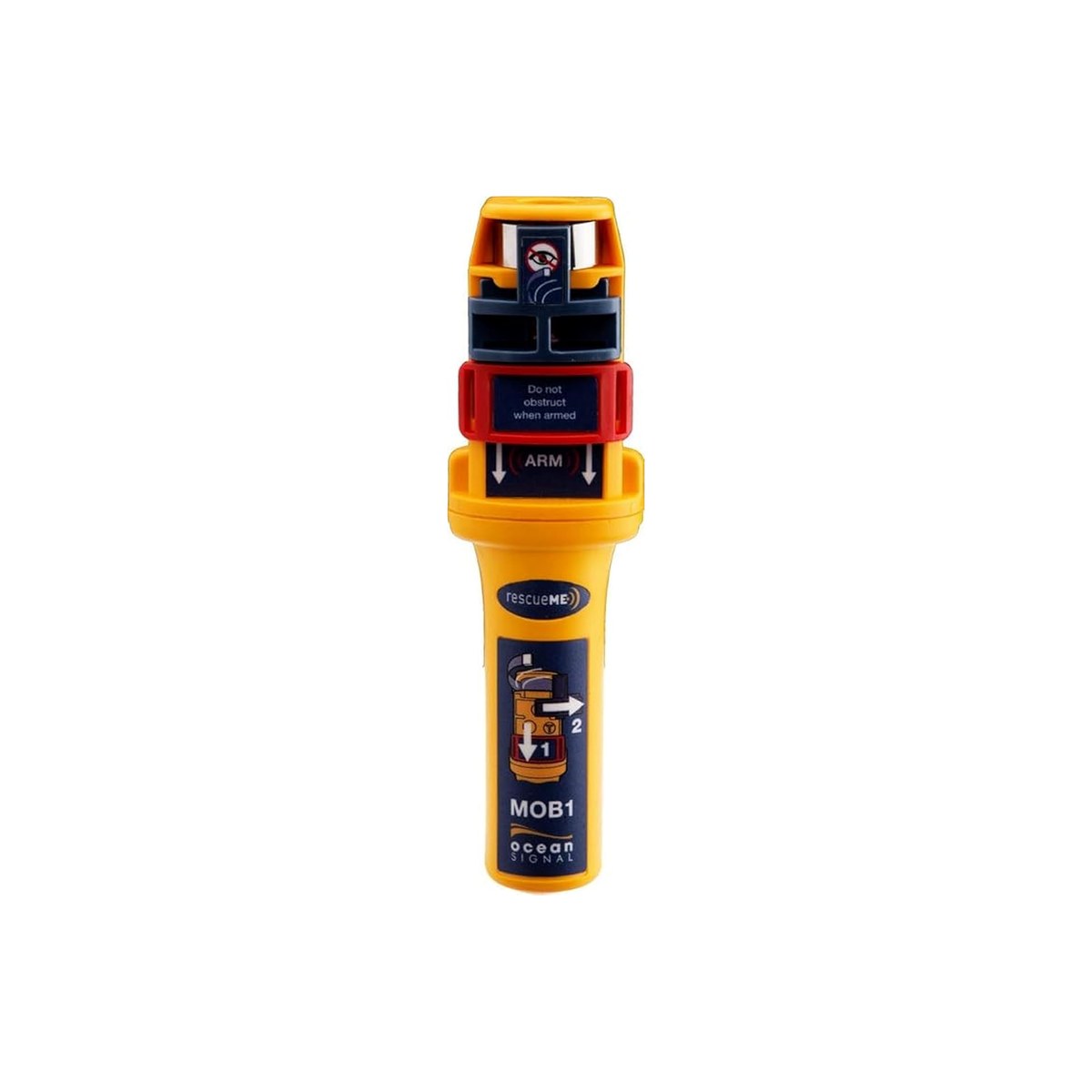
- × Skip AIS-only man-overboard devices (Ocean Signal MOB1, ACR OLAS) mistaken for a beaconAn AIS MOB device alerts your own boat and nearby vessels over VHF-range AIS when a crew member goes overboard, which helps, but it does not transmit a 406 MHz satellite distress signal to the Coast Guard. It is a man-overboard recovery tool for the boat you fell off, not a way to summon search-and-rescue if no one is left aboard or no AIS-equipped vessel is near. Carry one in addition to a PLB if you want, not instead of one.
- × Skip Anything sold as a Garmin EPIRBGarmin does not make a 406 MHz Cospas-Sarsat EPIRB; it makes the inReach satellite messenger, which is a different category covered above. A listing using Garmin and EPIRB together is either a mislabeled messenger or an accessory. If you want a 406 EPIRB, the names are ACR, Ocean Signal, and McMurdo.
- × Skip Unbranded or non-406 emergency locators at suspiciously low pricesA genuine EPIRB or PLB is a type-approved Cospas-Sarsat 406 MHz device from ACR, Ocean Signal, or McMurdo, and it is registered with NOAA. A cheap emergency locator that does not state 406 MHz Cospas-Sarsat type approval is not a distress beacon and will not summon rescue; it may be a whistle-and-light novelty or a non-certified import that catches beacon search traffic.
How we picked.
Who this guide is for and how we researched it
We wrote this for the owner of a 28 to 45 ft cruising sailboat or trawler that goes beyond sight of land, coastal passages, overnight runs, the occasional offshore leg, who needs a registered 406 MHz distress beacon so search-and-rescue can find the vessel or a crew member in the water. We do not run a lab. What we did was read the owner-level signal across Cruisers Forum, Trawler Forum, The Hull Truth, YBW, and Sailing Anarchy, plus Practical Sailor's beacon comparisons, OutdoorGearLab's bench reviews, NOAA's registration rules and the Cospas-Sarsat program documentation, and the ACR and Ocean Signal datasheets and FCC filings. Then we ranked by consistency of complaint and consistency of praise, and cross-checked every pick against live Amazon and marine-chandlery availability.
EPIRB vs personal locator beacon: the boat versus the person
The first and most important decision is EPIRB vs personal locator beacon, and it is not either-or. An EPIRB is registered to the vessel, can be ordered as a float-free unit that self-activates as the boat sinks, runs about 48 hours, and has a brighter strobe; it is the boat's beacon. A PLB is registered to the person, is small enough to clip to a life jacket or harness, runs about 24 hours, and must be held antenna-up by hand; it is the crew's beacon. Practical Sailor's guidance is the line we follow: a 406 EPIRB should be the vessel's mainstay, with a PLB as the ideal backup. Coastal-only boaters often carry a PLB alone; offshore boats carry both, an EPIRB on the vessel and a PLB on each crew member's life jacket. That is why this guide covers both and why the Top Pick is an EPIRB and the Runner-up is a PLB.
EPIRB categories: Category 1 float-free vs Category 2 manual
Among the EPIRB categories, Category 1 mounts in a bracket with a hydrostatic release unit that auto-deploys the beacon when it is submerged roughly 1.5 to 4 meters, which is the right call for an offshore boat that could sink before anyone reaches the beacon. Category 2 is a manual unit you grab and switch on, cheaper and fine for a boat that is always crewed and inshore. The catch most listings bury: the hydrostatic release unit is a separate wear item from the battery, and it is replaced about every two years (newer 3-year units exist), while the battery service runs on a 5 or 10 year cycle. A float free EPIRB in Category 1 form gives you the best odds in an unattended sinking, but budget for that HRU on its own replacement schedule. Several Amazon EPIRB listings are the Category 2 manual variant; if you specifically want Category 1, confirm the exact model or buy through a chandlery that brackets it correctly.
Is the AIS feature worth it on an EPIRB or PLB?
An AIS-equipped beacon like the GlobalFix V5 adds a local AIS transmitter on top of the 406 satellite path. When it activates, it shows up as a man-overboard target on the plotter of any AIS-equipped vessel within roughly 5 to 10 nautical miles, located to within about 33 feet, which can bring an immediate rescue from a nearby boat without waiting on the satellite-to-Coast-Guard chain. Owner consensus is trending toward yes, with one honest caveat: AIS only helps if another AIS-listening vessel is within VHF range, typically 5 to 10 nautical miles at sea level. In a busy coastal area or a crewed-rally context, that local alert genuinely earns its keep; alone in mid-ocean, it adds little the satellite alert is not already doing. The AIS feature is cheap to include and worth having coastal, but it should not be the deciding factor for a boat that mostly sails empty water, where any certified 406 beacon does the core job equally.
The registration reality: free, required, and faster rescue
Every 406 beacon has to be registered before it is anything more than an expensive light, and EPIRB registration is free and legally required in the US. You register an EPIRB to the vessel and a PLB to the person through NOAA at the national beacon registration database, and you must re-register every two years. The reason it matters is concrete: registration ties your beacon's unique ID to your vessel details, emergency contacts, and float plan, so the Coast Guard knows whose alert it is and who to call. NOAA documents that unregistered beacons delay rescue, potentially by hours, because search-and-rescue cannot immediately identify the vessel or rule out a false alarm, and that unregistered beacons have cost mariners their lives. When you register your EPIRB with NOAA you also avoid the fines that come with an unregistered or improperly transferred beacon, and a beacon belongs to the vessel or person it is registered to, so a used unit needs to be re-registered to its new owner before it is useful.
Battery and service: the hidden lifetime cost
The sticker price is not the whole cost. Battery replacement for an EPIRB is brutally priced because the cells are sealed and the unit must be re-tested: owners on YBW and The Hull Truth report $260 to $325 or more for an EPIRB (a PLB runs less, about $150 to $200), enough that after a false activation many conclude it is cheaper to buy a new beacon with a fresh battery than to service the old one. That is the single strongest argument for a user-replaceable battery, which the GlobalFix V5 and the older V4 both have, over the many sealed-battery competitors that must go back to a service center. Two more service notes from the harvest: self-testing drains the sealed battery, and ACR caps the number of lifetime self-tests, so do not over-test your beacon; and the hydrostatic release unit on a Category 1 EPIRB is replaced on its own roughly two-year schedule, separate from the battery. Factor the battery and HRU service into the lifetime cost when you compare a $385 PLB against a $920 AIS EPIRB.
Why a Garmin inReach is not an EPIRB
The most dangerous confusion in this category is treating a satellite messenger as a distress beacon. A Garmin inReach, ZOLEO, or SPOT communicates over commercial Iridium or Globalstar networks, routes an SOS through a private company's call center (Garmin's IERCC, for example), and requires a paid subscription; there is no direct insertion into the Cospas-Sarsat system and no guaranteed government search-and-rescue tasking. Practical Sailor is blunt that these private systems lack the direct SAR integration of a 406 beacon and require manual escalation that introduces delay. A 406 EPIRB or PLB, by contrast, transmits a dedicated distress frequency straight to the international Cospas-Sarsat satellite network, which alerts the Coast Guard directly, with no subscription. Messengers are excellent for two-way texting, weather, and float plans, and they make a fine complement to a beacon, but they are never a replacement for one offshore. If a listing blurs the line, read for the words 406 MHz and Cospas-Sarsat.
Why these picks, and where to buy them
Two brands make the real marine beacons a US recreational buyer should consider, ACR Electronics and Ocean Signal, with McMurdo a thinner third on US Amazon. ACR is the dominant US brand with the deepest dealer and service network, which is why three of the five picks, including our Top Pick, are ACR; Ocean Signal wins on smallest-size and, crucially for the PLB, the spring-flap button guard that makes the rescueME PLB1 the best PLB here. We sent the ACR ResQLink 400 to the Don't bother section despite it being a competent beacon, because its front-button accidental-activation pattern is well documented and a false alert is a serious, costly event. On channel: 406 beacons sell heavily through West Marine, Defender, The GPS Store, and Milltech Marine, which add value on Category 1 brackets, hydrostatic-release service, and registration help; Amazon often matches the chandlery price on PLBs like the rescueME PLB1 and ResQLink View, but third-party EPIRB listings can run well above dealer pricing, so for an EPIRB, call Defender before you check out. We verified live Amazon listings for all five picks so the links are real, and we would still tell a friend to price the EPIRB at a chandlery and let them handle the NOAA form.
FAQs.
Q01 EPIRB vs PLB: which one do I actually need?
+
Q02 What is an EPIRB, and what does the satellite system actually do?
+
Q03 Do I have to register my beacon, and how?
+
Q04 Category 1 vs Category 2: which EPIRB should I buy?
+
Q05 Is the AIS feature on the GlobalFix V5 worth the extra money?
+
Q06 Is a Garmin inReach or other satellite messenger as good as an EPIRB?
+
Q07 How much does it cost to replace the battery, and how long do beacons last?
+
Q08 Why is the Ocean Signal rescueME PLB1 the best PLB and not the ACR ResQLink 400?
+
Q09 Why only five picks, and what about McMurdo or the SOLAS brands?
+
If you, then this.
- IF You want one do-everything EPIRB on the boat: 406, AIS, and a user-replaceable batteryGET ACR GlobalFix V5 AIS EPIRB$920 →
- IF You want the best personal beacon to clip on every crew life jacketGET Ocean Signal rescueME PLB1$385 →
- IF You want a real vessel EPIRB but do not need AIS, at the lowest priceGET Ocean Signal rescueME EPIRB1$685 →
- IF You want a PLB with a display that shows your GPS fix and transmit statusGET ACR ResQLink View PLB$470 →
- IF You want the ACR GlobalFix platform and dealer network without paying for AISGET ACR GlobalFix V6 GPS EPIRB$745 →
Boat Gear: The Complete Guide
The whole-boat picture →Every system on a 20 to 45 ft coastal boat, organized in one place, with the one guide we trust for each.