Get Seen: 3 AIS Transponders We'd Run in 2026
Three Class B SOTDMA AIS transponders that earn their spots for the 28 to 42 ft coastal or near-offshore cruiser who already has a chartplotter and wants to transmit, not just receive, so commercial traffic sees you and not only the other way around. We read Panbo's Ben Ellison on SOTDMA versus CSTDMA, the Cruisers Forum, Trawler Forum, YBW, and Sailing Anarchy AIS-recommendation threads, Practical Sailor's Class B comparison, the Raymarine support forum on the AIS700's VSWR and GPS-puck quirks, and the FCC's 47 CFR 80.231 MMSI rule. The load-bearing honesty point: a transponder is only as useful as the MMSI you are legally barred from programming yourself, and the cheapest 5-watt unit here keeps you just as visible as the priciest one when the install is clean.
- 01 em-trak B951 Class B SOTDMA (B0BS6PCT98) , the Top Pick for the brand-agnostic cruiser, 5W SOTDMA, universal NMEA, IPX7, the cheapest SOTDMA box and the one forums name when they say it just works, ~$724
- 02 Garmin AIS 800 (B07G7Q2N8H) , the Runner-up for Garmin-ecosystem owners who want a built-in VHF splitter in the box, 5W SOTDMA, seamless N2K display, ~$928
- 03 Raymarine AIS700 (B07CLGSYZQ) , the pick for committed Raymarine Axiom owners who respect the dedicated-GPS-puck and VSWR install quirks, 5W SOTDMA, ~$997
How they compare.
| Rank | Product | Best for | Price | Our score |
|---|---|---|---|---|
| 01 | em-trak B951 (B0BS6PCT98, ~$724)
Top Pick
| brand-agnostic cruiser, any chartplotter, dedicated AIS antenna or quality splitter, zero-drama install | $724
Buy → | 9.2/10 |
| 02 | Garmin AIS 800 (B07G7Q2N8H, ~$928) | Garmin-chartplotter owner who wants a built-in VHF splitter and one-box N2K integration | $928
Buy → | 8.8/10 |
| 03 | Raymarine AIS700 (B07CLGSYZQ, ~$997) | Raymarine Axiom owner who reads the GPS-puck and VSWR notes before installing | $997
Buy → | 8.0/10 |
Prices are current Amazon prices at time of publication and can change. Scores reflect our editorial evaluation, not vendor input.
Our #1 pick: em-trak B951 Class B AIS Transceiver (5W SOTDMA, NMEA 2000 and NMEA 0183, IPX6/IPX7 immersion-rated, internal GPS with external antenna option, no built-in splitter on the B951, SRT-AIS OEM transceiver engine, ASIN B0BS6PCT98).
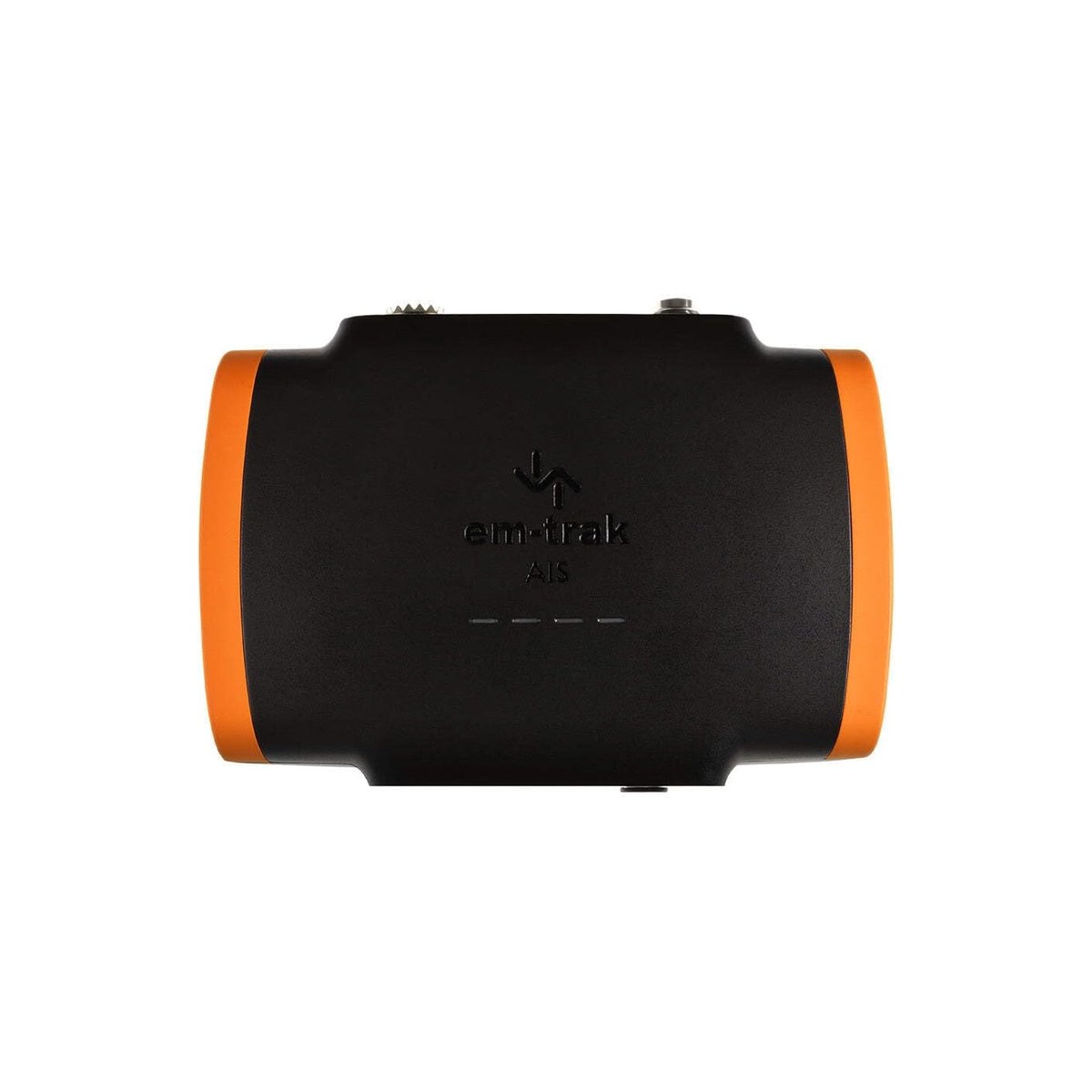
em-trak B951 Class B AIS Transceiver (5W SOTDMA, NMEA 2000 and NMEA 0183, IPX6/IPX7 immersion-rated, internal GPS with external antenna option, no built-in splitter on the B951, SRT-AIS OEM transceiver engine, ASIN B0BS6PCT98)
The brand-agnostic 5W SOTDMA box that just works on any chartplotter.
Who it's for: the 28 to 42 ft coastal or near-offshore cruiser who wants a reliable standalone Class B SOTDMA transponder that speaks standard NMEA 2000 and 0183 to any chartplotter brand without ecosystem lock-in, who is running a dedicated AIS antenna or a quality AIS-rated splitter, and who values an it-just-works reputation and immersion sealing over a built-in splitter or a phone app. The B951 is the brand-agnostic performance buy: the box that disappears into the install and transmits for years.
What we found: em-trak (SRT Marine Systems) is the world's largest AIS maker and supplies the OEM transceiver engines behind several other brands, so the SRT-AIS engine inside the B951 is a proven design. Forum consensus on Trawler Forum, Cruisers Forum, and YBW is unusually one-sided in its favor, with multi-year, trouble-free service the recurring theme. SOTDMA 5W gives you the 2nd transmit priority that keeps you visible in crowded lanes where a 2W CSTDMA unit can be crowded out. The install gotchas are universal to the category: the internal GPS struggles under a metal hardtop (external antenna p/n 304-0055, ~$67 fixes it), and there is no built-in splitter, so plan a dedicated AIS antenna or a Digital Yacht SPL2000.
Bottom line: this is the right Top Pick for the cruiser who wants the least drama and the broadest compatibility, and it happens to be the cheapest genuine SOTDMA unit here. If you specifically want a built-in VHF splitter, the Garmin AIS 800 is the runner-up; if you are deep in the Raymarine Axiom ecosystem, the AIS700 integrates well once you respect its quirks. For everyone else, the B951 at ~$724 is the answer, ideally bought from a marine dealer who programs your MMSI before it ships.
- + Made by SRT Marine Systems, which markets itself as the world's largest AIS manufacturer and supplies transceiver engines to Simrad, B&G, and others under OEM agreements; the widely adopted SRT-AIS engine inside the B951 is a proven implementation, and forum reliability threads on Trawler Forum, Cruisers Forum, and YBW consistently end with em-trak as the go-to reference for it just works, with multi-year, trouble-free service the recurring theme (one owner: I installed it last year and so far it just sits there and works)
- + SOTDMA 5W with universal NMEA 2000 and NMEA 0183, so it integrates cleanly with every major chartplotter brand without brand loyalty; no orientation-sensitive GPS gotcha, no VSWR firmware quirk, no proprietary network dependency, which is exactly why it carries fewer one-star reviews than the ecosystem-locked competition
- + IPX6 and IPX7 immersion-rated, more rugged than most competitors in the category, and the least expensive genuine SOTDMA unit in this guide at ~$724 (and ~$689 at Defender), so the cheapest box is also the most universally compatible one
- + Free ProAIS2 software (Windows and Mac) handles configuration and VSWR diagnostics; once the MMSI is programmed and a good GPS fix is confirmed (the 30 to 40 dBHz range the ProAIS2 software calls healthy), the B951 is genuinely set-and-forget with no firmware that needs babysitting
- × No built-in VHF antenna splitter on the B951 specifically; you must either run a dedicated AIS antenna (the cleanest solution, recommended by em-trak and by AIS specialists) or buy a quality AIS-rated zero-loss splitter such as the Digital Yacht SPL2000. If a built-in splitter matters to you, step up to the em-trak B953 (splitter) or B954 (WiFi plus splitter)
- × Internal GPS antenna is designed to work through fiberglass but will struggle if mounted directly under a metal hardtop, a radar dome, or stainless hardware; the documented fix is the em-trak external GPS antenna (p/n 304-0055, ~$67 at Defender), but you should test the GPS fix quality in the intended location before permanent mounting
- × No WiFi, Bluetooth, or phone-app connectivity on the B951; if you want AIS data on a phone app over WiFi you need the em-trak B952 (WiFi/BT) or a separate NMEA WiFi gateway, so the bare B951 is a chartplotter-only proposition
- × Rarely stocked on Amazon and mostly sold through marine chandleries (Defender, GPS Store, West Marine); we verified an Amazon listing at $723.90, but availability can be intermittent and an authorized dealer is the better channel because they program the MMSI at point of sale
Runner-up: Garmin AIS 800 Class B Transceiver (010-02087-00, 5W SOTDMA, internal GPS with external antenna connector, built-in VHF antenna splitter, NMEA 2000 and NMEA 0183, Silent Mode, ASIN B07G7Q2N8H).
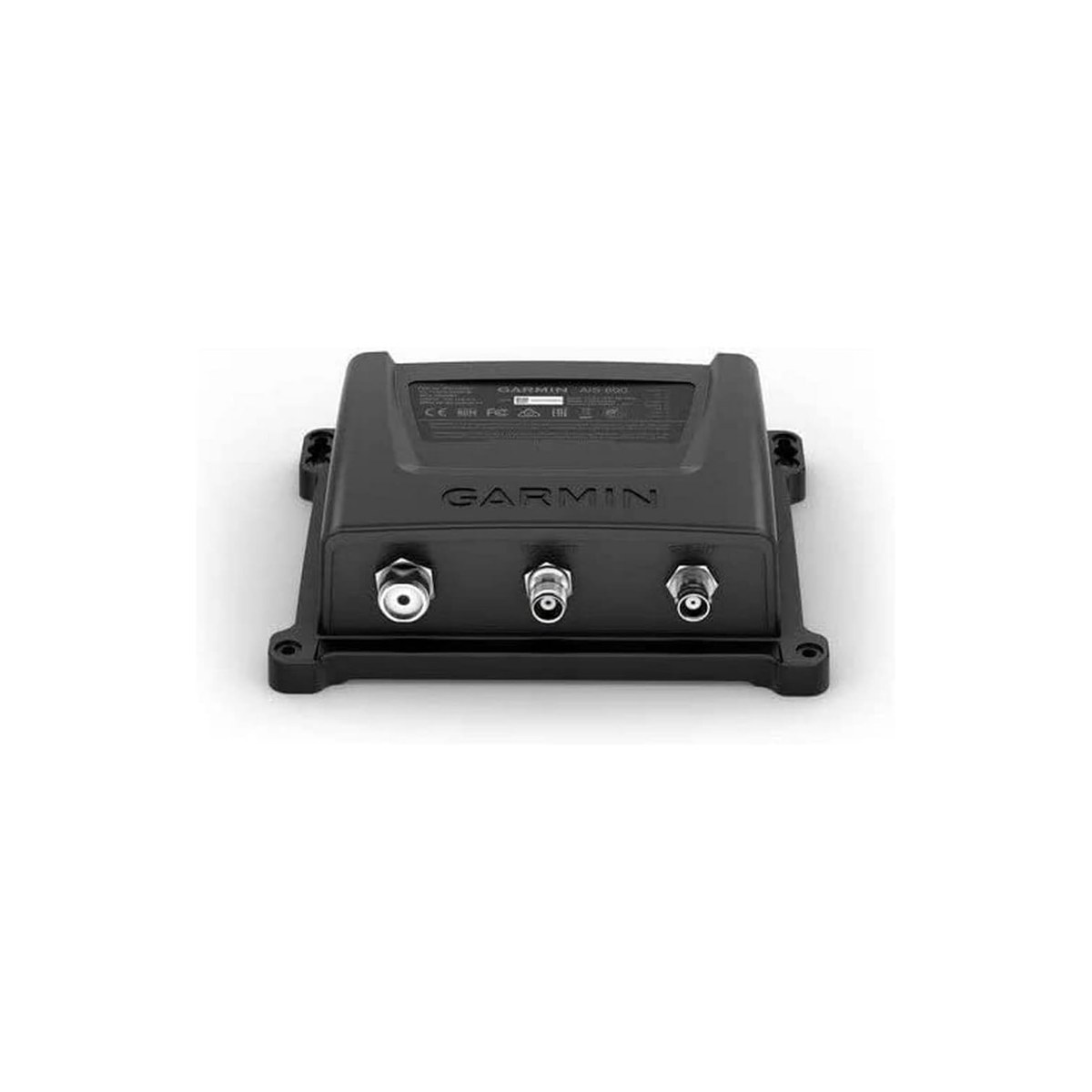
Garmin AIS 800 Class B Transceiver (010-02087-00, 5W SOTDMA, internal GPS with external antenna connector, built-in VHF antenna splitter, NMEA 2000 and NMEA 0183, Silent Mode, ASIN B07G7Q2N8H)
Built-in VHF splitter and seamless Garmin integration in one box.
Who it's for: the Garmin-chartplotter owner who wants the transponder to integrate seamlessly on the Garmin marine network and who values a built-in VHF antenna splitter so a single masthead antenna serves both the VHF radio and the transponder. If your helm is already Garmin and you would rather not run a second antenna cable, the AIS 800 is the one-box answer.
What we found: the built-in splitter is a real convenience advantage over the base em-trak B951, and Garmin-network integration is genuinely plug-and-play, with AIS targets appearing on charts and radar automatically. SOTDMA 5W matches the lineup. The two documented gotchas are both about the internal GPS: it is orientation-sensitive (mount it face-up, and metal hulls require the external GPS antenna), and the unit ships in Silent Mode until the MMSI is programmed, which fools installers into thinking a non-transmitting unit is working. Neither is a reliability problem; both are documented in Garmin's own manual and resolved by following it.
Bottom line: this is the right runner-up for Garmin owners who want the splitter and the seamless integration in a single box, and it is worth the premium over the B951 specifically for those two things. If you are brand-agnostic, the em-trak B951 is the more forgiving and cheaper install; if you want AIS on a phone app, plan to add a NMEA WiFi gateway. Buy it from a dealer who programs the MMSI, and mount it face-up or add the external GPS antenna.
- + Built-in VHF antenna splitter is the genuine differentiator over the base em-trak B951, letting you share one masthead antenna between the VHF radio and the transponder without buying and wiring a separate splitter; on a sailboat with a single masthead antenna this removes a real cost and complexity item
- + Seamless Garmin ecosystem integration: plug it into the NMEA 2000 backbone and Garmin chartplotters automatically detect and display AIS targets on charts and radar (one owner: I have a Garmin AIS 800 wired into my Garmin marine network so I see AIS targets on charts and in radar and transmit my position, I love it); it also works with other brands via standard N2K PGNs
- + SOTDMA 5W like the rest of the lineup, with internal GPS plus an external GPS antenna connector included, so under-hardtop and metal-hull installs have a clean path to a good fix
- + Forum reports note it installs easily (the Garmin 800 is easy to install, I have installed several on other boats), and Garmin's global dealer and support network is deep
- × Internal GPS is orientation-sensitive; Garmin's manual states the device should be mounted face-up horizontally or with the LEDs facing up for best GPS sensitivity, and owners have reported GPS lock failures on vertical, non-optimal mounts. On a metal-hull boat Garmin requires an external GPS antenna outright
- × Ships in Silent Mode (receive-only) until a valid MMSI is programmed; several installers have been confused when the unit appeared to work but was not actually transmitting. This is correct FCC behavior, but it catches anyone who skips the programming step
- × No WiFi or Bluetooth, so sending AIS data to phone apps requires adding a separate NMEA WiFi gateway; if a built-in phone-app path matters, the Vesper Cortex (in Also worth considering) or an em-trak B952 plus app is the better fit
- × When the shared VHF radio is transmitting, AIS reception is momentarily interrupted, which is inherent to any antenna-splitter setup (including the built-in one) and not specific to Garmin
Budget pick: Raymarine AIS700 Class B Transceiver (FLIR E70476, 5W SOTDMA, built-in VHF antenna splitter, dedicated external GPS puck included, SeaTalkNG / NMEA 2000 and NMEA 0183, configured via ProAIS2 software, ASIN B07CLGSYZQ).
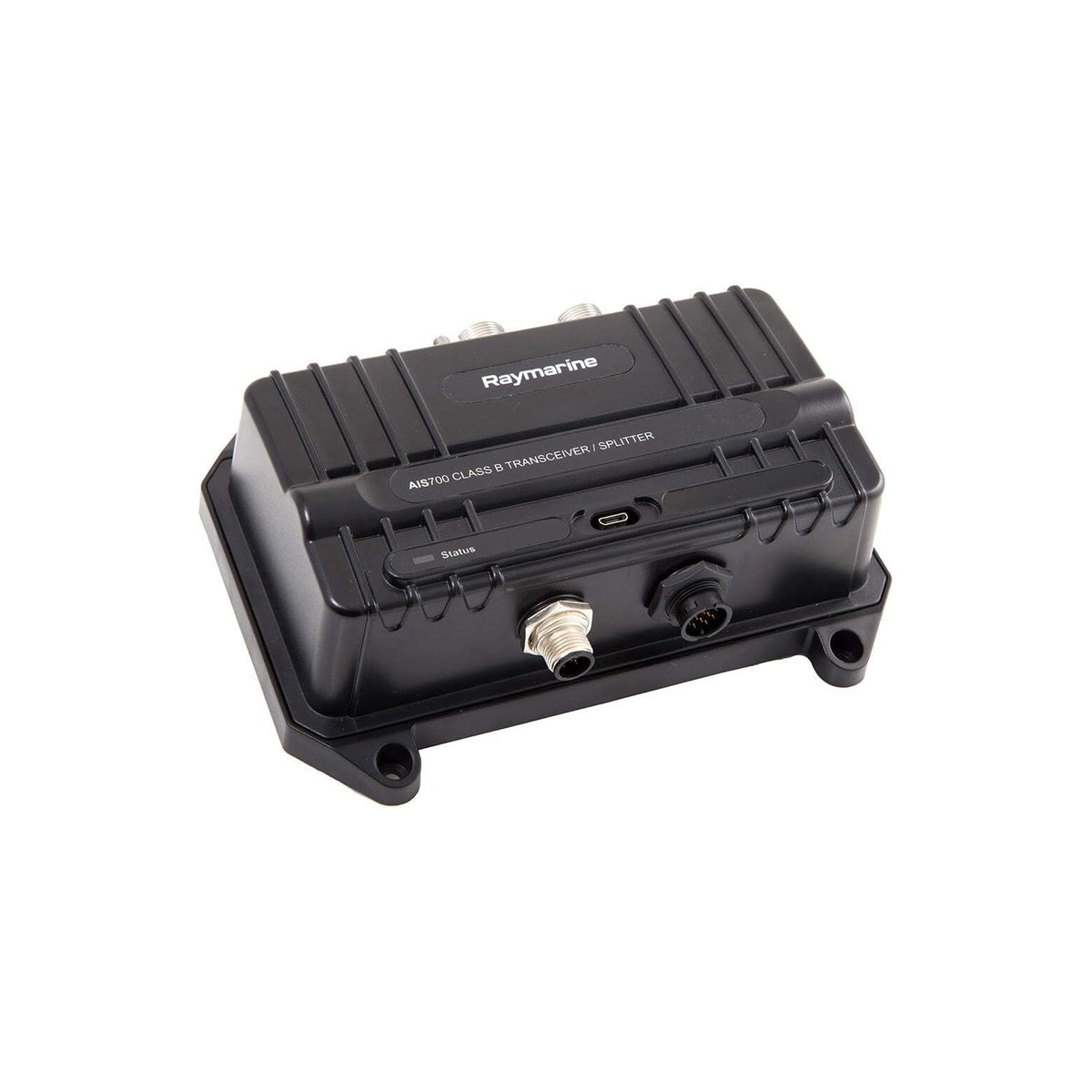
Raymarine AIS700 Class B Transceiver (FLIR E70476, 5W SOTDMA, built-in VHF antenna splitter, dedicated external GPS puck included, SeaTalkNG / NMEA 2000 and NMEA 0183, configured via ProAIS2 software, ASIN B07CLGSYZQ)
The Axiom-ecosystem transponder, if you respect its install quirks.
Who it's for: the committed Raymarine Axiom and LightHouse owner who wants tight SeaTalkNG integration and a built-in VHF splitter, and who is willing to mount the dedicated GPS puck with clear sky view, check antenna VSWR before powering up, and program the MMSI through ProAIS2 software. If your helm is Raymarine and you do the homework, the AIS700 is the natural fit.
What we found: the AIS700 is not a bad unit, but it is an opinionated Raymarine-ecosystem product, and that explains its lower retailer ratings compared with the em-trak and Garmin. The complaints cluster around four documented, solvable issues: it needs its own GPS puck and cannot share the MFD's (assume otherwise and it will not transmit); its GPS is not published to the N2K network; fresh installs frequently trip an Antenna VSWR fault at 162 MHz that suppresses transmission until the antenna or cabling is sorted; and there is a USB-power quirk plus ProAIS2-only MMSI programming. These are install-knowledge problems, not reliability failures, which is precisely why unprepared buyers leave one-star reviews and prepared Raymarine owners are satisfied.
Bottom line: pick the AIS700 if you are genuinely in the Raymarine ecosystem and you read the GPS-puck and VSWR notes before you start. If you are brand-agnostic, the em-trak B951 is a more forgiving install for less money; if you are on Garmin, the AIS 800 is the cleaner choice. As with every unit here, buy from a dealer who programs your MMSI, and verify you are actually transmitting on MarineTraffic after the install.
- + Integrates cleanly with Raymarine Axiom and LightHouse MFDs over SeaTalkNG, with a built-in VHF antenna splitter, so for a boat already on a Raymarine network it drops into the ecosystem the way the Garmin AIS 800 does for Garmin
- + SOTDMA 5W like the rest of the lineup, with the dedicated GPS puck included in the box, so once mounted correctly it has a reliable, isolated position source for transmission
- + When properly installed it does exactly what it promises; the low retailer ratings are install-driven, not reliability-driven, so a Raymarine owner who reads the requirements gets a solid transponder
- × Requires its own dedicated GPS puck (Raymarine p/n R62241, supplied) and CANNOT share the MFD's GPS; owners who assume they can use the chartplotter's position end up with a unit that cannot determine its own position and therefore will not transmit, which is the single biggest source of its one-star reviews
- × The AIS700's GPS position is not published onto the NMEA 2000 / SeaTalkNG network, so collision-alarm features on network devices need an independent GPS source on the network; in mixed-brand ecosystems this is a real friction point
- × Antenna VSWR faults are common on fresh installs: a VSWR above roughly 2:1 at the 162 MHz AIS frequency (from incompatible cable, a degraded connection, or a VHF antenna tuned for 156 MHz) triggers an alarm and suppresses transmission; you should check VSWR with ProAIS2 before relying on it
- × MMSI can only be programmed via ProAIS2 Windows software (not from the Axiom MFD), and there is a documented USB-power quirk where leaving a USB cable connected to an active laptop while powering the unit off drops it into error mode (solid red LED) until USB is disconnected before main power
Also worth considering.
Vesper Cortex V1 (010-02814-20, Class B SOTDMA smartAIS hub plus wireless/wired VHF handset, DSC VHF radio, anchor watch, cellular remote monitoring, WiFi gateway; Garmin-acquired 2022; sold through marine chandleries, ~$1,999 for the M1 hub plus H1 handset)
The do-everything AIS, VHF, and monitoring hub, if you accept a software-first product.
Who it's for: the cruiser who genuinely wants smartAIS collision avoidance, anchor watch, cellular remote monitoring, and multi-room VHF handset capability in one integrated system. The Vesper Cortex V1 is the most ambitious product in the category, and it suits the owner who is comfortable maintaining firmware and troubleshooting a software-driven product rather than installing a simple standalone box and forgetting it. If you want the all-in-one monitoring hub and accept the maintenance reality, this is the unit; if you want bulletproof and install-and-forget, the em-trak B951 is the better fit.
What we found: it is the only product here that bundles a Class B SOTDMA transponder, a full DSC VHF radio, anchor watch, smartAIS collision alarms, and cellular remote vessel monitoring into a single software-defined hub. Panbo's Ben Ellison, who tested it extensively, praised it as among the most innovative marine electronics he had tried in years and rated the AIS and monitoring functions as genuinely excellent. The honest caveats are the handset and the support: owners across Trawler Forum and Cruisers Forum document PTT (push-to-talk) button failures on both tethered and wireless handsets (one owner had the transmit button go bad twice), the wireless charging cradle is prone to contact corrosion, and post-Garmin-acquisition support is consistently rated poor.
Bottom line: firmware 2.1 and later improved stability substantially, so a unit bought today is in much better shape than at launch. It sells through Defender, West Marine, and GPS Store rather than Amazon at about $1,999 for the M1 hub plus one H1 handset. It is the right pick for the cruiser who wants the all-in-one monitoring system; it is the wrong pick for anyone who wants a bulletproof, install-and-forget transponder, and the PTT failure pattern is a genuine concern for offshore use. For a simpler, cheaper transmit-and-be-seen box, the B951 wins.
Digital Yacht Nomad 2 (portable Class B+ SOTDMA transponder, internal GPS, WiFi, supplied GV30 combination VHF/GPS antenna, 12V/cigarette-lighter powered; sold through marine chandleries, ~$843)
The only genuinely portable Class B transponder, for charter and backup, not as a primary.
Who it's for: the charter captain, delivery skipper, or owner who needs to move a transponder between boats, wants a plug-in-anywhere backup, or wants to test AIS without a permanent install. The Digital Yacht Nomad 2 is the only genuinely portable AIS transponder we would consider, so it suits the person who values flexibility over a fixed install. It is the wrong pick for the owner looking for the primary fixed transponder on a boat that stays on one vessel year-round, where a permanently mounted unit and external antenna do the job better.
What we found: it is a Class B+ SOTDMA unit upgraded to 5W in January 2025, with an internal GPS, WiFi output, and a supplied GV30 combination VHF/GPS antenna, 12V powered. Within its intended use case it works well: testers saw it appear on MarineTraffic and Vessel Finder promptly, with about 5 NM reception on the supplied rubber-duck antenna indoors and 15-plus NM when the antenna was mounted externally. The drawbacks are exactly why it is here and not in the top three: antenna height is everything and the small antenna limits range, the main unit is not weatherproof and must live below decks, output is WiFi-only with no direct NMEA 2000 (you need a gateway), and the MMSI is dealer-only reprogrammable.
Bottom line: it sells through Defender and Digital Yacht USA at about $843, rarely on Amazon. Buy it as a backup or when you genuinely need portability between boats, where nothing else here competes. As the primary AIS transponder on a 35 ft cruiser making coastal passages, the antenna and weatherproofing constraints make it the wrong fit, and the em-trak B951 is the better answer at a lower price. Think of the Nomad 2 as the second transponder you keep in a bag, not the one you bolt in.
Skip this guide if...
You might not need a transponder at all. If your goal is only to SEE commercial traffic and other vessels on your chartplotter, an AIS receiver (receive-only) or the AIS-receive function already built into many VHF radios, including the Icom M94D handheld we cover in our Marine VHF guide, covers that for far less money; a transponder is what you buy when you also want to BE seen, which matters most when you cross shipping lanes, cruise in fog or at night, or anchor in a busy fairway. If you only ever day-sail in protected water with little commercial traffic and full visibility, the case for transmitting is weaker. And if you already run a Vesper Cortex or a VHF with AIS transponder built in, you have a transponder; adding another is duplicate hardware. The other reason to pause before buying: every transponder here requires a programmed MMSI you cannot enter yourself (47 CFR 80.231), so factor in getting an MMSI and having a dealer or qualified installer program it before the unit is anything more than an expensive receiver.
Don't bother with.
- × Skip AMEC Camino-108 (base, CSTDMA) in 2026At its historical $450 to $650 it was only marginally cheaper than the em-trak B951 (~$689 to $724), which is a strictly better product in every meaningful category: 5W SOTDMA versus 2W CSTDMA (so 2nd transmit priority instead of bottom-of-the-hierarchy), a newer GPS chipset, and modern connectivity. The 2017 SRT-versus-AMEC compliance controversy is resolved (the FCC found no faults and the products were never recalled), but the 2W CSTDMA architecture genuinely puts you at the lowest AIS transmit priority, which is exactly what you do not want in the congested anchorages and shipping lanes where being seen matters most. There is no SOTDMA version to step up to: every Camino-108 variant (108, 108W, 108S) is 2W CSTDMA, and the 108W only adds WiFi rather than changing the transmit scheme. AMEC has also discontinued the entire Camino-108 series effective March 2026, so it is no longer available new through authorized dealers, which only strengthens the case to skip it. As a primary purchase, a cheap AIS transponder that strands you at the bottom of the transmit priority hierarchy is a false economy; the only reason to consider one now is a used unit at a significant discount.
- × Skip Anything sold as an AIS ReceiverA receiver shows you other vessels' AIS targets but cannot transmit your own position, so it does the opposite of what a transponder does. It is the right product if all you want is to see traffic, but do not buy one expecting other boats to see you. Countless Amazon buyers confuse the two.
- × Skip VHF radios with AIS in the title (Standard Horizon GX-series and similar)Most VHF radios that advertise AIS are AIS-receive only: they display nearby targets on the radio screen but do not transmit your position. They are useful radios, but they are not transponders. If you want a VHF that also transmits AIS, that is a specific and rarer category; read the spec for AIS transmit, not just AIS.
- × Skip AIS MOB devices, personal AIS beacons, EPIRBs, and PLBsThese are distress and search-and-rescue devices on a completely different mission. An AIS MOB beacon alerts nearby vessels when a person goes overboard; an EPIRB or PLB is a satellite distress beacon. None of them is a navigation transponder that continuously broadcasts your vessel position, and the AIS-equipped safety beacons that show up in transponder searches belong in our separate EPIRBs and PLBs guide.
- × Skip Unbranded Class A AIS listings at $300 to $500Legitimate Class A transponders are 12.5W commercial units that cost $2,000 to $4,000-plus, require an FCC ship station license, and are designed for SOLAS vessels, not a recreational 38-footer. An unbranded Class A unit at a few hundred dollars is almost certainly a counterfeit or a receive-only device mislabeled to catch search traffic. A coastal cruiser wants Class B SOTDMA, not Class A.
How we picked.
Who this guide is for and how we researched it
We wrote this for the owner of a 28 to 42 ft coastal or near-offshore cruising sailboat or trawler who already has a chartplotter and wants to transmit, not just receive, so commercial traffic and other vessels see them on AIS. We do not run a lab and we do not have a boat to test these on; what we did was read the owner-level signal across The Hull Truth, Cruisers Forum, Trawler Forum, YBW, Sailing Anarchy, and Reddit r/sailing, plus Panbo's multi-year coverage (Ben Ellison's testing in particular), Practical Sailor's Class B comparison, the Raymarine support forum, and the manufacturers' own datasheets and FCC filings. Then we ranked by consistency of complaint and consistency of praise, and cross-checked every pick against live Amazon and marine-chandlery availability so the lineup is genuinely buyable.
Transponder vs receiver: the one decision that disqualifies most listings
The single most important distinction is transponder versus receiver, and it is where most buyers go wrong. A receiver only shows other vessels' AIS targets on your chartplotter; it cannot transmit your own position. A transponder both receives targets and transmits you, so commercial vessels and other boats see your name, course, and closest point of approach. Several whole categories of product turn up in AIS transponder searches and are not transponders: anything labeled an AIS receiver, standard VHF radios with AIS-receive display (the Standard Horizon GX-series, for example), AIS MOB and personal beacons (distress devices), EPIRBs and PLBs (satellite distress beacons), and unbranded Class A listings at a few hundred dollars (a real Class A unit is a $2,000-plus commercial product). If the goal is to be seen, you want a Class B transponder; if the goal is only to see others, a receiver is cheaper and fine.
SOTDMA vs CSTDMA and Class A vs Class B: what actually matters
Two spec decisions drive the choice. Class A versus Class B: recreational boats under 65 ft are not required to carry AIS in US waters, and Class A is the 12.5W commercial standard that costs $2,000 to $4,000-plus and needs an FCC ship station license; for a 28 to 42 ft cruiser, Class B is the correct and far cheaper choice. Within Class B, the modern standard is SOTDMA (Self-Organising TDMA, sometimes called Class B+), and all three of our picks use it. SOTDMA transmits at 5W versus 2W for the older CSTDMA, reserves its next transmit slots in advance instead of waiting for a free one, and sits at 2nd transmit priority behind Class A rather than 3rd. Panbo's Ben Ellison lands on the nuance that matters here: the faster SOTDMA update rate mainly benefits fast boats (above roughly 14 knots), while the 5W power and the 2nd transmit priority are present at any speed. At 7 knots the faster update rate barely matters, but that 5W power and priority advantage are always present, which is exactly what keeps you visible in a crowded anchorage or shipping channel where a 2W CSTDMA unit can be crowded out and effectively disappear. That priority gap is the core reason we send the budget 2W CSTDMA AMEC Camino-108 to the Don't bother section.
The MMSI reality: you are legally barred from programming it yourself
Every Class B transponder requires a programmed MMSI (a nine-digit Maritime Mobile Service Identity), and US law (47 CFR 80.231) is explicit that the owner or user may NOT enter it; the static data must be programmed by the vendor or a qualified installer, and the FCC label warns that entering an MMSI not properly assigned to you is a violation. So the order of operations is fixed: get your MMSI before you buy the transponder (for US-only operation it is free from BoatUS or US Power Squadrons (Sea Tow used to offer this but has withdrawn from the program); for international operation, Canada, Mexico, the Bahamas, you need an FCC Ship Station License at roughly $185 for a 10-year term, which includes an MMSI; the FCC adjusts that fee periodically, so check the current schedule), and then have an authorized US dealer program it at the point of sale, which is the strongest reason to buy through a marine dealer rather than a gray-market Amazon listing. Once programmed, the MMSI cannot be changed by the owner without returning the unit to the manufacturer or a certified dealer, and it belongs to the vessel, not the owner, so a new owner needs a new MMSI. A unit broadcasting with a null or incorrect MMSI is worse than useless: it can trigger false alerts, it is an FCC violation, and it cannot be identified by rescue services. After any install, verify you are actually transmitting by finding your boat on MarineTraffic or Vessel Finder within a few minutes of powering up.
Antenna: dedicated AIS antenna vs splitter, and the VSWR trap
You connect a transponder to a VHF antenna one of two ways. A dedicated AIS antenna, mounted as high as possible and, as a common installation best practice, at least two meters from the main VHF antenna, ideally tuned for the 162 MHz AIS band, is the cleanest install with no loss during VHF transmit and the best transmit performance; the trade-off is running a second antenna cable. A splitter shares one antenna between the VHF radio and the transponder and is the most common choice on cruising boats, but you must use a quality AIS-rated zero-loss splitter such as the Digital Yacht SPL2000, because a cheap non-AIS splitter can destroy the AIS receiver, and AIS reception is blocked while the VHF radio transmits. Either way, check your antenna's VSWR at 162 MHz, targeting 2:1 or lower, because most VHF antennas are tuned for 156 MHz and degrade at the AIS end of the band, and a high VSWR is exactly what trips the Raymarine AIS700's antenna fault alarm and suppresses transmission. The Garmin AIS 800 and Raymarine AIS700 include built-in splitters; the em-trak B951 does not, so it wants either a dedicated antenna or an SPL2000.
Why the em-trak tops it, and why the Raymarine's rating is low
The em-trak B951 is our Top Pick because the two things that make you visible to commercial traffic, SOTDMA 5W transmit and a clean install, come with no ecosystem strings attached. It speaks standard NMEA 2000 and 0183 to every chartplotter brand, it has no orientation-sensitive GPS gotcha and no VSWR firmware quirk, it is IPX7 immersion-rated, and it is the cheapest genuine SOTDMA unit here. The Raymarine AIS700's low retailer rating is not a reliability failure; it is an install-knowledge failure. The AIS700 needs its own dedicated GPS puck and cannot share the MFD's GPS, its GPS is not published to the N2K network, and fresh installs frequently trip a VSWR antenna fault that suppresses transmission until the cabling is sorted. Those are all solvable, but they are poorly documented at the point of sale, so unprepared buyers receive what looks like a broken unit and leave one-star reviews, while prepared Raymarine owners are satisfied. That is the honest reason the most expensive box in the lineup sits third.
Channel and availability: marine chandlery vs Amazon
AIS transponders are a marine-chandlery category more than an Amazon category. The em-trak B951, Vesper Cortex, and Digital Yacht Nomad sell mainly through Defender, GPS Store, West Marine, and Milltech Marine; the Garmin AIS 800 and Raymarine AIS700 are on Amazon (often through third-party sellers) as well as the chandleries. Marine-chandlery prices are generally stable and include US warranty support, while Amazon third-party AIS listings frequently involve gray-market imports with older firmware and complicated warranty situations. Because every unit here needs an MMSI programmed before it works, and because a US dealer will complete the MMSI programming form and program the unit at point of sale, buying through an authorized US dealer is the safer path even when an Amazon listing is a few dollars cheaper. We verified live Amazon listings for all three ranked picks so the affiliate links are real, but we would tell a friend to call Defender first.
FAQs.
Q01 What is the difference between an AIS transponder and an AIS receiver?
+
Q02 SOTDMA vs CSTDMA: does it actually matter for a recreational boat?
+
Q03 Do I need Class A, or is Class B enough?
+
Q04 How do I get an MMSI, and can I program it myself?
+
Q05 Why does the Raymarine AIS700 have lower reviews than the em-trak and Garmin?
+
Q06 Dedicated AIS antenna or a splitter to share my VHF antenna?
+
Q07 Is the Vesper Cortex worth $1,999 over a $724 em-trak B951?
+
Q08 How do I confirm my transponder is actually transmitting after I install it?
+
Q09 Why only 3 picks instead of 5?
+
If you, then this.
- IF Brand-agnostic cruiser, any chartplotter, wants the least drama and the best valueGET em-trak B951 (5W SOTDMA)$724 →
- IF Garmin chartplotter owner who wants a built-in VHF splitter in one boxGET Garmin AIS 800$928 →
- IF Committed Raymarine Axiom owner who will respect the GPS-puck and VSWR notesGET Raymarine AIS700$997 →
- IF Want AIS plus VHF plus monitoring in one hub, or need a portable unitGET Vesper Cortex V1, or the portable Digital Yacht Nomad 2 (marine chandleries)$843-1,999 →
Boat Gear: The Complete Guide
The whole-boat picture →Every system on a 20 to 45 ft coastal boat, organized in one place, with the one guide we trust for each.