Protect the Hull: 5 Boat Fenders We'd Buy in 2026
A boat fender is the cushion that keeps your hull off the dock, the piling, or the boat you are rafted to. It is also the gear owners most often buy wrong, almost always too small. On a 20 to 45 ft boat, a correctly sized cylindrical fender out-protects a premium brand bought a size down. The rule the industry agrees on is 1 inch of diameter for every 4 to 5 feet of boat, 2 inches for a round fender, and at least 1 fender per 10 feet of waterline with a floor of 3 per side. We read the owner threads on The Hull Truth and Cruisers Forum, the field tests at Practical Sailor and Boating Magazine, and the West Marine guides, then matched what owners run against what is buyable today. The picks split by job: cylindrical for the default, flat foam for curved hulls, a budget multipack for calm freshwater, and a rail-mount fender for pontoons.
- 01 Polyform HTM-Series cylindrical fender (B01H43QU22) , the Top Pick and do-everything default, a supple cylindrical fender sized to your boat across the HTM-1 to HTM-4 range, the owner-trusted standard, about $66 for the 8.5 inch HTM-2
- 02 Mission Sentry Boat Fenders 2-Pack (B0CVXSHKC8) , the Best Flat Fender, closed-cell foam that cannot deflate with a knot-free LockCAM strap, genuinely better on curved or tumblehome topsides, ~$158
- 03 Affordura Boat Fender 4-Pack with ropes (B08PVGQPY5) , the Best Value, four inflatable vinyl fenders and four lines for calm freshwater, a light boat, or spares, with a hard boundary against saltwater and tight slips, ~$86
- 04 Taylor Made Big B center-tube fender (B000MJKKM2) , the Best for rafting and pilings, a big 10 by 26 inch center-tube cylindrical fender that hangs off one line either way up, ~$96
- 05 Taylor Made Pontoon Fender (B00OJ50F3O) , the Best for pontoons, a rail-mounted fender that hooks under the rub rail so it cannot ride up the way a cylindrical does, ~$54
Sizing your fenders and lines? Our Boat Fender & Dock-Line Size Calculator gives you the fender diameter and count, plus the dock-line diameter and lengths, from your boat length and berth. →
How they compare.
| Rank | Product | Best for | Price | Our score |
|---|---|---|---|---|
| 01 | Polyform HTM-Series (B01H43QU22, ~$66 for the HTM-2)
Top Pick
| the do-everything default; supple cylindrical, sized to your boat, the owner-trusted standard, lifetime warranty that excludes UV | $66
Buy → | 9.4/10 |
| 02 | Mission Sentry 2-Pack (B0CVXSHKC8, ~$158) | curved or tumblehome topsides and knot-haters; closed-cell foam, cannot deflate, knot-free strap, non-marking | $158
Buy → | 9.0/10 |
| 03 | Affordura 4-Pack with ropes (B08PVGQPY5, ~$86) | calm freshwater, light boats, and spares; four vinyl fenders plus four lines, inside a hard boundary | $86
Buy → | 8.7/10 |
| 04 | Taylor Made Big B (B000MJKKM2, ~$96) | rafting, pilings, and high freeboard; a big center-tube fender that hangs horizontal or vertical on one line | $96
Buy → | 8.6/10 |
| 05 | Taylor Made Pontoon Fender (B00OJ50F3O, ~$54) | pontoons; rail-mounted so it cannot ride up and spin the way a cylindrical fender does on a tube | $54
Buy → | 8.5/10 |
Prices are current Amazon prices at time of publication and can change. Scores reflect our editorial evaluation, not vendor input.
Our #1 pick: Polyform HTM-Series Boat Fender (hole-through-middle one-piece molded PVC cylindrical fender, one line passes through the long axis, reinforced tube ends that resist line pull-through, supple one-piece construction, sized HTM-1 6.3 in by 15.5 in through HTM-4 13.5 in by 34.8 in with the HTM-2 at 8.5 in by 20.5 in shown, a roughly 2 PSI valve on the larger sizes, lifetime warranty that excludes UV breakdown, ASIN B01H43QU22).
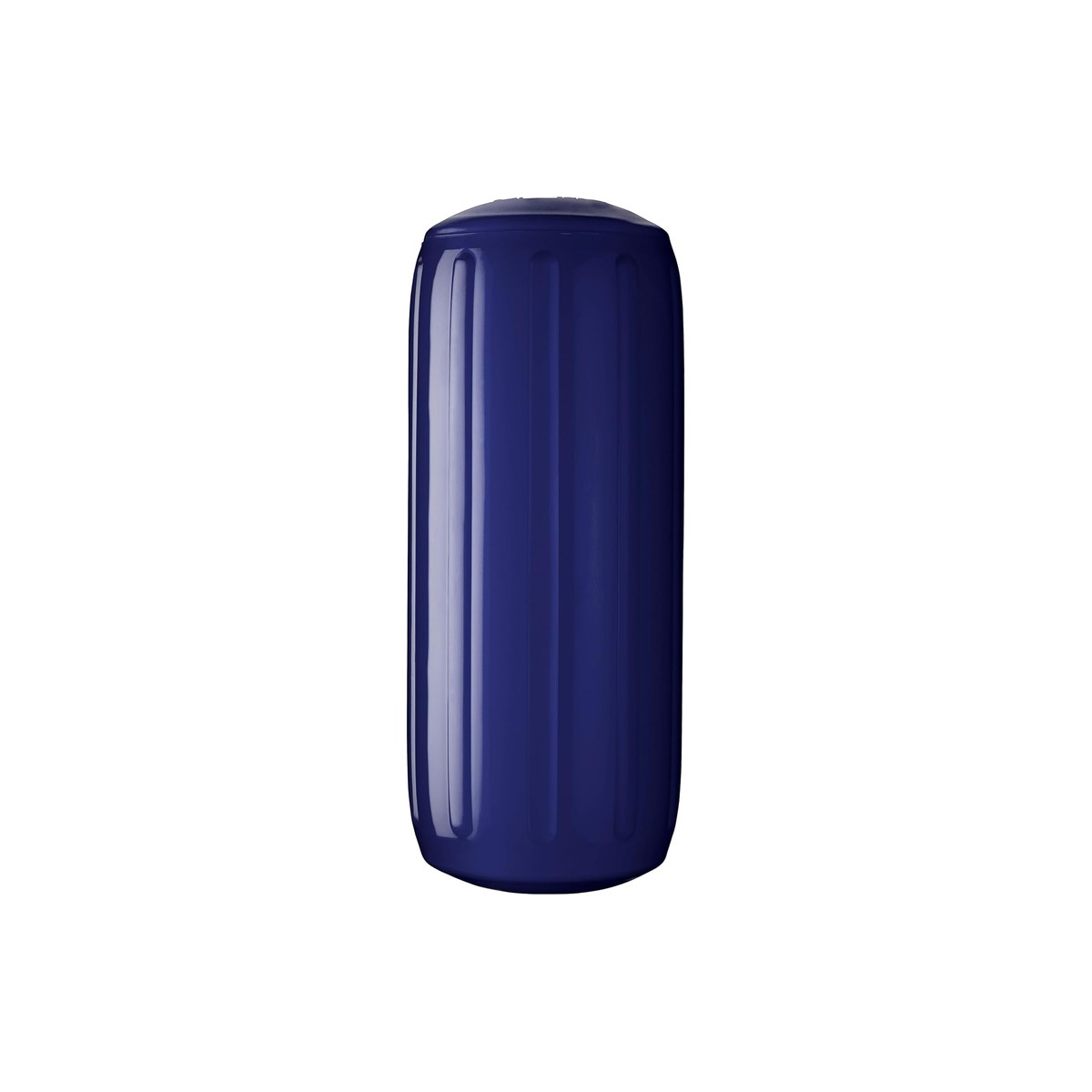
Polyform HTM-Series Boat Fender (hole-through-middle one-piece molded PVC cylindrical fender, one line passes through the long axis, reinforced tube ends that resist line pull-through, supple one-piece construction, sized HTM-1 6.3 in by 15.5 in through HTM-4 13.5 in by 34.8 in with the HTM-2 at 8.5 in by 20.5 in shown, a roughly 2 PSI valve on the larger sizes, lifetime warranty that excludes UV breakdown, ASIN B01H43QU22)
The fender most owners should buy, in the size most owners get wrong.
Who it's for: the owner of a 20 to 45 ft coastal boat who wants to buy the fender once, in the right size, and stop thinking about it. The Polyform HTM is the supple, one-piece cylindrical default the forums reach for at the slip and alongside, and the only real decision it asks of you is the size, which is the decision that matters most anyway.
What we found: across The Hull Truth, Cruisers Forum, and the West Marine and Defender guides, the recurring line is that Polyform is the trusted premium because of the supple material and the single-piece body, not the warranty, and that the HTM beats the equivalent two-eye G-series for a 20 ft and up primary set because it hangs cleaner and protects more surface. The G-series is the better choice for a light, trailered, or supplemental fender; the HTM is the one for the boat that lives in a slip.
Bottom line: get the diameter right first, sizing up to the boat length Polyform's chart lists, then buy the HTM in that size, about $66 for the 8.5 inch HTM-2. A correctly sized Polyform is the fender we would put on almost any 20 to 45 ft boat, and a correctly sized no-name fender still beats an undersized Polyform, which is how much the size matters.
- + The material is the whole case: Polyform's supple, single-piece PVC conforms to the hull and cleans up where the harder budget vinyl skids and scuffs, and owners describe the same fenders ground into lock walls and pilings for years with no failures
- + The HTM construction is the right one for a 20 ft and up boat: one line runs through the long axis so the fender hangs horizontally with even hull contact across close to its whole surface, the reinforced tube ends stop the line pulling through, and owners note it hangs lower and looks better in a cover without the dangling end loops of a two-eye fender
- + It is sold as a size range, HTM-1 through HTM-4, so you buy the diameter that matches your boat rather than whatever is cheapest on the shelf; Polyform rates the 6.3 inch HTM-1 for a 20 to 25 ft boat, the 8.5 inch HTM-2 shown for 25 to 30 ft, the 10.5 inch HTM-3 for 30 to 40 ft, and the 13.5 inch HTM-4 for 40 to 50 ft, which already builds in the size-up margin the rule of thumb leaves out
- + It is the owner-trusted standard with four decades behind it, and its air retention beats the budget field; the side-by-side that owners keep citing had four Taylor Made fenders unable to hold air while the Polyforms needed no filling
- × Do not buy it for the warranty: Polyform's lifetime warranty specifically excludes UV breakdown, which is the way fenders actually die, so the real reason to pay up is the supple material and the one-piece construction, not the warranty language
- × It is one fender per box, not a multipack, so fendering a whole boat to the one-per-ten-feet minimum costs noticeably more than a budget four-pack; the premium is per fender and it adds up across a full set
- × The colored options, navy and white included, chalk and fade faster than black under full sun, so in a high-UV slip you want a cover as the sacrificial layer or you accept a faded fender in two to three seasons
- × The larger sizes carry a valve and can be over-inflated: past about 2 PSI the fender goes rigid as a soccer ball and starts transferring impact to the hull instead of absorbing it, so hand-firm is the target, not hard
Runner-up: Mission Sentry Boat Fenders 2-Pack (flat closed-cell foam fender that hugs the hull, no valve and cannot deflate, LockCAM knot-free strap with a locking cam, non-marking material, sold as a pair, ASIN B0CVXSHKC8).
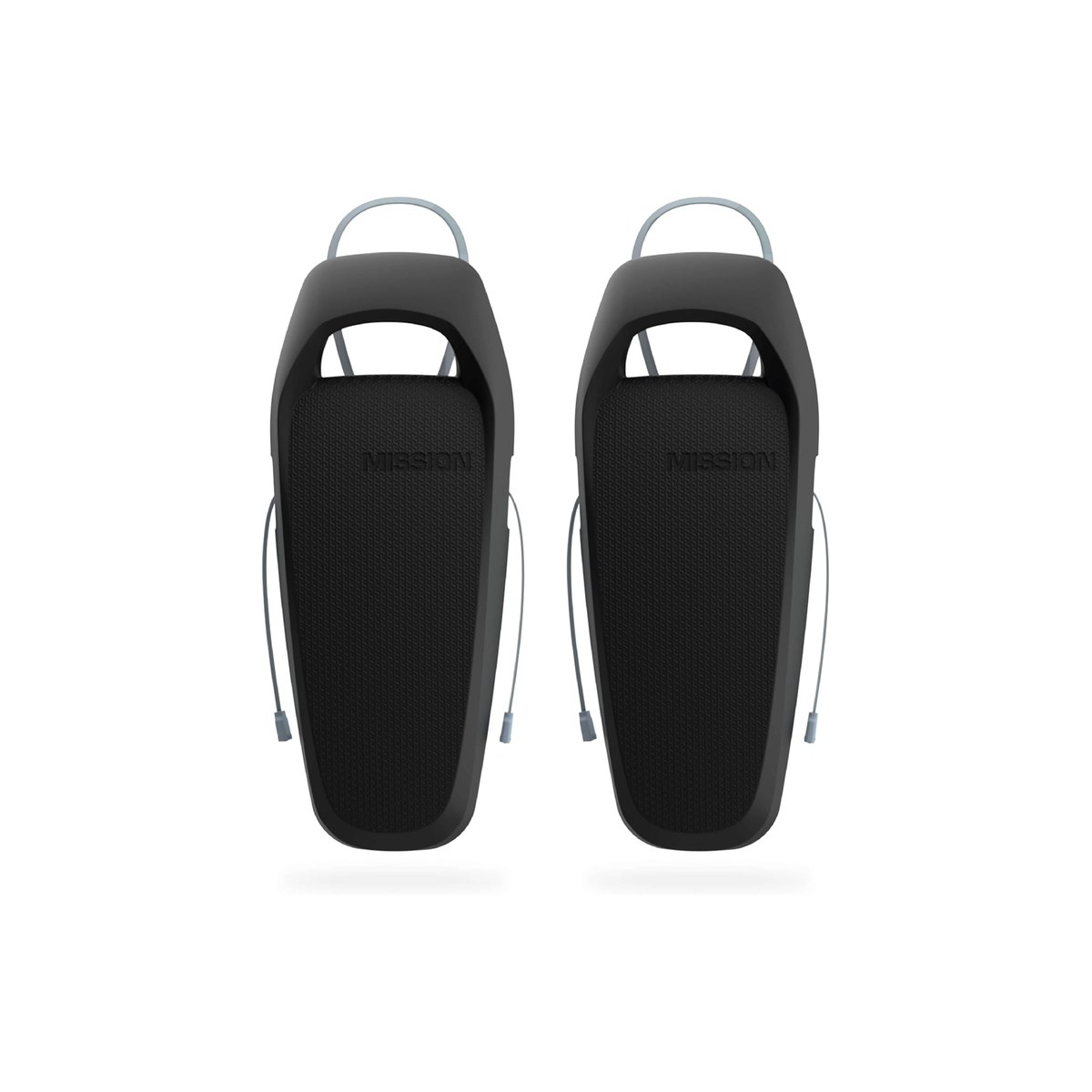
Mission Sentry Boat Fenders 2-Pack (flat closed-cell foam fender that hugs the hull, no valve and cannot deflate, LockCAM knot-free strap with a locking cam, non-marking material, sold as a pair, ASIN B0CVXSHKC8)
A flat closed-cell foam fender that cannot go flat and ties on knot-free.
Who it's for: the owner with curved or tumblehome topsides, or whose patience for re-tying fender lines has run out. The Sentry is the flat, or contour, boat fender category done properly: closed-cell foam that hugs the hull, spreads the load over a wider area than a round fender, and clips on with a knot-free LockCAM locking strap instead of a clove hitch you re-tie every time.
What we found: Mission sells the flat shape hard, and independent owners back the core claims, that it contours better and never deflates because there is no valve to weep air, while pushing back on the price. The material is non-marking, so it will not leave the black streaks or sticky plasticizer film cheap vinyl transfers to the gelcoat, and the line carries 1,082 reviews at 4.4 stars. The fairest read from the forums is that flat versus cylindrical is a real debate, not marketing, but that the flat fender wins on convenience and curved-hull coverage rather than on being universally better.
Bottom line: buy the Sentry 2-pack at $158 if you have curved or tumblehome topsides, or if you simply never want to tie a fender knot again and will pay for it, about $79 a fender against $66 for a single Polyform. For a flat-sided boat at a quiet slip, the cylindrical Polyform is the better value and does the same protective job for half the money.
- + This is true closed-cell foam, not an air fender, so there is no valve, it never deflates, and it cannot be over-inflated; the failure mode of every inflatable fender, the valve, simply does not exist on it
- + The flat shape contours to the hull and spreads impact over a wider area than a round fender's single contact line, which is a real advantage on curved or tumblehome topsides where a cylindrical fender only touches at one point
- + The LockCAM strap cinches and locks without a knot, the modern answer to the most common owner gripe, fenders that will not stay where you put them; there is no clove hitch to re-tie every time you move it
- + The material is non-marking, so it will not leave the black streaks or the sticky plasticizer film cheap vinyl can transfer to the gelcoat, and the line has 1,082 reviews at 4.4 stars behind it
- × It is pricey per fender: $158 for a two-pack is about $79 a fender against roughly $66 for a single correctly sized Polyform, so this is not the value play and it is overkill on a plumb-sided boat at a simple slip
- × It is less adaptable than a cylindrical fender: it does not hang as naturally horizontal across a piling, and for raft-up standoff at maximum beam a round or ball fender is still the better tool
- × It is not a universal upgrade; the honest case for it is curved topsides plus a hatred of knots, and if your boat is flat-sided and your slip is calm a correct-size Polyform does the same protective job for half the money
- × Its 4.4 star rating is the lowest of our picks, and the critical reviews cluster on price-versus-foam-density expectations rather than on a failure, but it is the one pick here some owners feel they overpaid for
Budget pick: Affordura Boat Fender 4-Pack with 4 ropes (four inflatable PVC vinyl cylindrical fenders, 6.5 in diameter, ribbed twin-eye, lines included, Amazon's Choice, ASIN B08PVGQPY5).
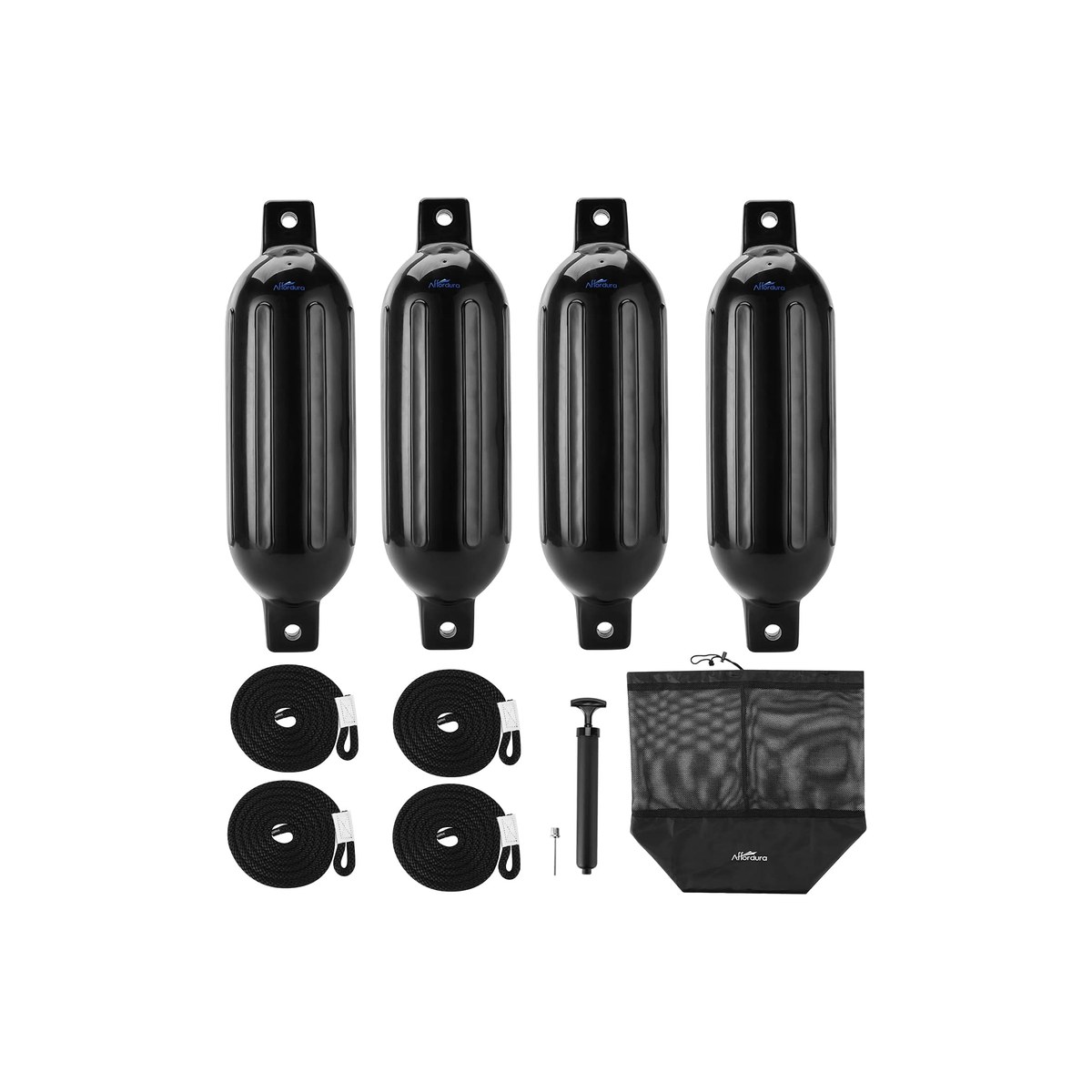
Affordura Boat Fender 4-Pack with 4 ropes (four inflatable PVC vinyl cylindrical fenders, 6.5 in diameter, ribbed twin-eye, lines included, Amazon's Choice, ASIN B08PVGQPY5)
Four fenders and four lines for the price of one premium fender.
Who it's for: the owner of a calm-freshwater home dock, a light boat under about 25 ft, or anyone who needs supplemental fenders or spares. Four 6.5 inch fenders and four lines for about $86 is genuinely good value, roughly $21 a fender against $66 for a single Polyform, as long as you stay inside the conditions these are built for and do not ask them to survive saltwater or a wake-blown slip.
What we found: the budget-fender consensus is not that cheap fenders never work, it is that they fail when they are undersized or left out in the sun in salt and surge. Owners have run sized-up budget sets for seasons on calm water without trouble, and the Affordura's 1,696 reviews at 4.6 stars, an Amazon's Choice, bear that out, while the same fenders on a heavy boat in a wake-blown saltwater slip are the ones that chalk, leak, and film the gelcoat.
Bottom line: buy the Affordura 4-pack at about $86 for a calm freshwater dock, a light boat, or spares, and buy them a size up if anything; the kemimoto four-pack near $51 is the cheaper alternative. If your boat is heavy or you keep it in salt water in a tight slip, this is the wrong economy and the correctly sized Polyform is the right spend.
- + Four 6.5 inch fenders plus four ropes for about $86 works out to roughly $21 a fender against $66 for a single Polyform, which makes this the cheapest way to fender a small boat to the one-per-ten-feet minimum
- + The lines are included, so there is no separate fender-line purchase, and the ribbed twin-eye vinyl is the standard, sensible budget cylindrical shape for a lighter boat
- + It is the proven budget default: Amazon's Choice with 1,696 reviews at 4.6 stars, which is far more owner signal than any other multipack, and the kemimoto four-pack is a cheaper alternative near $51 if you want to spend even less
- + The 6.5 inch diameter is correctly sized for boats up to roughly 25 ft on the manufacturer-chart sizing, which happens to be exactly the calm-water, lighter-boat audience these are right for
- × The hard boundary: these are not for saltwater, a tight slip with wake and surge, a boat much over 25 to 28 ft, or an exposed mooring, because the UV and chafe resistance of budget vinyl runs out in one to two seasons in those conditions
- × Budget vinyl is the category that can leave a sticky film on the gelcoat: as cheap PVC ages it bleeds plasticizer to a tacky surface that transfers under heat and friction, the failure owners describe as the fender melting onto the gelcoat, so rinse them and keep them covered
- × They are inflatable, so the valve is the failure point and a cheap valve weeps air; expect to top them up and check the pressure at the start of every season
- × The thin-wall vinyl compresses flatter than the one-piece Polyform under a heavy boat, so if the boat is heavy you either size up hard or step up to the Polyform rather than trusting a 6.5 inch budget fender
Also worth considering.
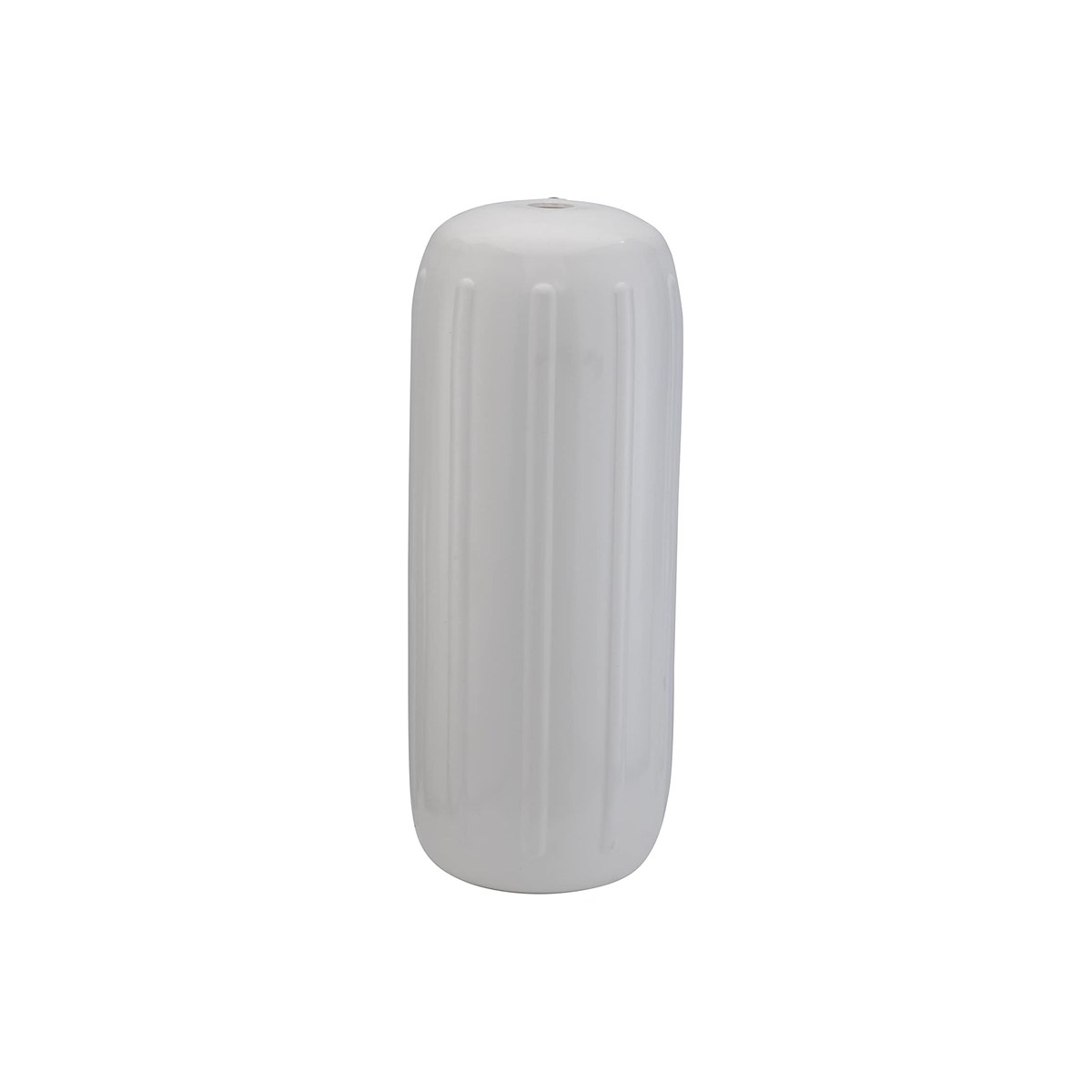
Taylor Made Big B Inflatable Boat Fender, 10 in by 26 in (a large center-tube cylindrical fender, not a round ball; one line passes through the center tube end to end so it hangs horizontally or vertically off a single line, ribbed marine-grade vinyl, football-needle valve, model 1032, ASIN B000MJKKM2)
The right tool for rafting, high freeboard, and pilings: a big center-tube fender that hangs off one line, either way up.
Who it's for: the boater who rafts up, ties to pilings, or has high freeboard and needs a large standoff at maximum beam, where a big fender that hangs horizontally beats the everyday cylindrical one. It is rated by Taylor Made for boats in the 35 to 50 ft range, so do not size it by the small-fender rule.
What we found: the Big B is often shelved with the round ball fenders, but it is actually a large 10 by 26 inch center-tube cylindrical fender: a line passes through the center tube end to end, so it hangs horizontally across a piling or vertically off a rail, whichever the situation needs. That is the case for it, rafting up to another boat, holding off a piling, or standing a high-freeboard hull off the dock at its widest point, all jobs the everyday slip fender does less well. The honest caveat is the valve: Taylor Made uses a football-needle valve that is simple but slow-leak prone, the consistent owner pattern behind the brand's softer air-retention reputation next to Polyform, so check the pressure each season and carry a needle.
Bottom line: this is not a do-everything fender, it is the rafting and pilings specialist at about $96. For everyday slip fendering the cylindrical Polyform is the better default, and the Big B is the extra fender you reach for when you raft up. The true round ball fender, for the owner who wants a sphere, is Polyform's A-series.
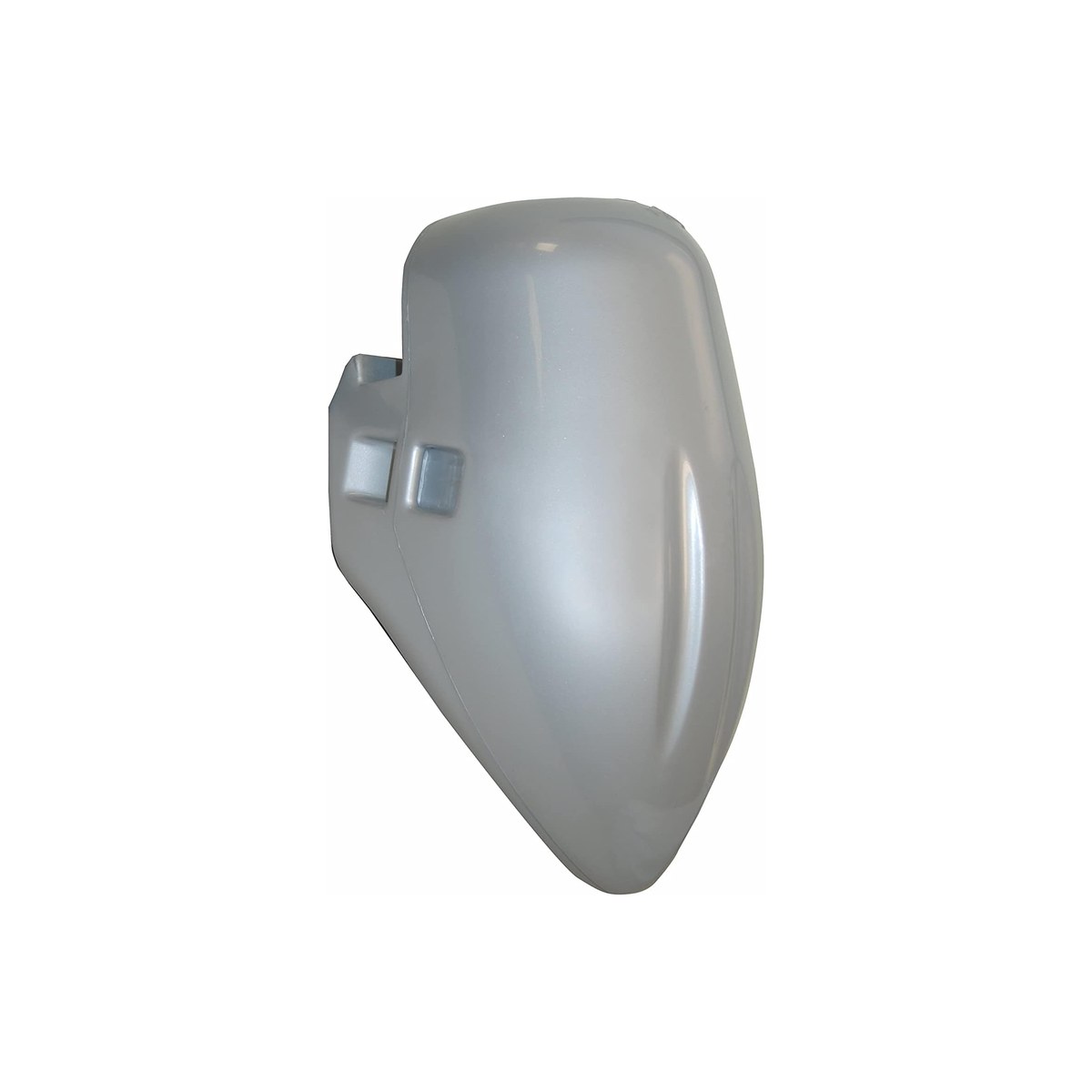
Taylor Made Pontoon Boat Fender, 9 in by 16 in (molded-in ridge hook that hooks under the rub rail, contoured to hug the rail profile, securing straps included, no drilling, American made, ASIN B00OJ50F3O)
The pontoon fender that will not ride up: it hooks under the rub rail instead of dangling off it.
Who it's for: the pontoon owner tired of cylindrical fenders riding up, spinning, and sliding out of position, who wants a rail-mounted fender that stays flat against the tube. A standard cylindrical fender fails on a pontoon because there is nothing to hold it flat against the round tube, so it rides up over the rub rail and spins.
What we found: the 9 by 16 inch Taylor Made pontoon fender solves that with a molded-in ridge hook that catches under the rub rail and a contoured back that hugs the rail profile, with securing straps included and no drilling required. Owners report eight seasons on the hook-style Taylor Made clips with no cracks or pop-offs, and it is the most tolerant of rail variation, which is why it is our universal pontoon pick. The rail-compatibility landmine is worth stating, because it sinks the obvious alternative: the purpose-built Mission Maven clips in seconds but its fixed clamp is not compatible with Barletta or Bentley pontoons, whose QX-style rails are not the standard 1.25 inch round top rail the Maven needs.
Bottom line: before buying any clamp-style pontoon fender, confirm you have a 1.25 inch round top rail and a gap under the rub rail. The Taylor Made hook-style fender at about $54 sidesteps the whole problem and is the safer buy if you are not sure what rail you have. On a pontoon, skip the cylindrical picks entirely.
Skip this guide if...
You might not need carried fenders first, or you might need something else alongside them. If you keep the boat on a fixed home dock or a slip you own, the bigger upgrade is often dock-side bumpers mounted to the dock or the piling, the always-on backstop for the dozens of small knocks that chew the finish every week, with carried fenders as the active system on top; most home-dock owners benefit from both, while a marina-slip or transient owner needs only the carried fenders. If the boat is a pontoon, skip the cylindrical picks entirely and buy a rail-mounted fender that will not ride up. And if your real problem is fenders sliding out of position, that is a line-and-clip problem, not a fender problem: tie low to a cleat or a rail base, never a lifeline, with a clove hitch for a quick stop or a round turn and two half hitches for an overnight blow, and rig a fender line bow-to-stern if you have no attachment points. Buy fenders by getting the diameter right first; the brand is the second decision, not the first.
Don't bother with.
- × Skip Undersized fenders, any brandThis is the most common and most regretted fender mistake, and it is worse than buying a cheap brand. A G-4 on a 30 ft boat is worse than a G-5 no-name, because a fender that is too small gets crushed flat, leaves no space between hull and dock, and passes the impact straight into the gelcoat, and an undersized inflatable can burst on a hard hit in summer heat. Owners call them tampon-sized fenders for a reason. Buy the diameter the size rule says, one inch per four to five feet, then go one size bigger if you are unsure. West Marine's own advice is to buy the biggest fenders you can stow.
- × Skip Cheap thin-wall vinyl with no UV or chafe marginThe no-name pool of thin-wall vinyl bumpers undercuts the honest budget multipacks and quietly skips the things that matter: wall thickness, UV stabilizer, and a valve that holds. They split in a season, compress flat under any real load, and are the tier that leaves the sticky plasticizer film melted onto the gelcoat under heat and friction. This is a different thing from a sized-up Affordura or kemimoto pack used on calm water, which is the honest budget floor; it is the sub-tier below that, where saving a few dollars is a gamble that almost never pays.
- × Skip Pool-toy-grade inflatables sold into marine searchesA whole category of sub-fifteen-dollar inflatables shows up in boat-fender searches that are pool toys in everything but the listing title: thin seams that split, no marine-grade vinyl, no real valve. They are not fenders in any sense that protects a hull, and the first time one is loaded between a heavy boat and a dock it fails. If the price looks too good to be a marine fender, it is not a marine fender.
- × Skip Loose cylindrical fenders on a pontoonCylindrical and ball fenders ride up over the rub rail and spin out of position on a pontoon tube, because nothing holds them flat against the round side. On a pontoon you want a rail-mounted fender that hooks under the rub rail, like the Taylor Made pick above, not a loose fender hung off the rail. This is the one boat type where the standard cylindrical answer is the wrong answer.
- × Skip Colored fenders bought for looks if UV life mattersColor is the first thing to go on a fender left in full sun. Colored fenders chalk and fade in two to three high-UV seasons, faster than black, and a faded fender is a cosmetic loss you paid extra for. If longevity in a sunny slip matters more than matching the boot stripe, buy black or buy a UV-treated cover as the sacrificial layer; the cover is cheaper to replace than the fender.
- × Skip Hanging fenders from lifelines, and cheap plastic clipsTwo rigging shortcuts that cost more than they save. Lifelines and their stanchions are not built to take fender load and will bend or work loose, so fenders tie to a cleat or a rail base, never to a lifeline. And cheap plastic snap clips crack in cold and let go in surge at exactly the moment the fender is doing its job. Use 3/8 inch braid as a minimum and, if you want clips, stainless ones rated for the displacement, not the hardware-store plastic.
How we picked.
Who this guide is for and how we researched it
We wrote this for the owner of a 20 to 45 ft coastal boat, plus the pontoon and runabout owner, who wants the fenders that actually protect the hull at the dock, alongside, and rafted up. Buyers search the same gear as a boat fender, a boat fender bumper, a marine boat fender, or boat fender dock protection, and the words are interchangeable: a fender and a bumper are the same cushion, and a dock bumper is just one mounted permanently to the dock instead of carried aboard. We did not write it for the owner shopping permanent dock-edge or piling bumpers as a building project, which is a related but separate buy we flag in the dock-side section.
We do not run a lab and we do not claim to have crush-tested fenders. What we did was read the owner-level signal on The Hull Truth, Cruisers Forum, Club Bennington for pontoons, and r/boating, alongside the field tests at Practical Sailor and Boating Magazine and the buying guides from West Marine, Defender, and Anchoring.com, then matched the consensus against what is buyable and correctly priced on US Amazon today. We ranked for the boat, not the brochure: size first, then type fit, then material and air retention, then the failure modes owners actually report over seasons. The one number we lead with everywhere is the size rule, because it is the decision that protects your hull, and the one most owners get wrong.
The size-to-boat rule, the one thing buyers get wrong
If you read one boat fender size guide, make it this one, because three independent authorities converge on the same numbers and there is no single standard boat fender size beyond them: you size to your boat. For a cylindrical fender, the rule of thumb is one inch of fender diameter for every four to five feet of boat length. For a round or ball fender, double it: two inches of diameter per four to five feet. And for quantity, you want at least one fender per ten feet of waterline, with a hard floor of three per side, plus a spare or two. Read that ratio as a floor, not a target: manufacturer charts like Polyform's, and the universal advice to err bigger, put most boats a fender size above the bare ratio, which is exactly what the worked examples below do.
Worked out against Polyform's own boat-length chart, that means a 22 ft boat wants a roughly 6 inch cylindrical fender, the 6.3 inch HTM-1 (rated 20 to 25 ft), and a G-4 is a size too small for it. A 28 ft boat wants the 8.5 inch HTM-2 (rated 25 to 30 ft) or a G-5, and a Taylor Made boat fender size chart lands in the same range. A 38 ft boat wants the 10.5 inch HTM-3 (rated 30 to 40 ft). The honest pattern across every forum is that most owners run one size small, usually to save money or stowage, and West Marine's standing advice is the opposite: get the biggest fenders you can stow.
The reason the rule matters is what happens when you break it. An undersized fender gets crushed flat under a heavy boat, which leaves no cushion between hull and dock and passes the impact straight into the gelcoat, and on a hard summer hit an over-stressed inflatable can burst. The opposite error is over-inflation: a fender pumped past about 2 PSI goes rigid as a soccer ball and also transfers force to the hull instead of absorbing it. The target is a fender sized up generously and inflated hand-firm, not hard. Get the diameter right and you can buy almost any honest brand; get it wrong and the best brand on the market still damages your boat.
Cylindrical vs ball vs flat vs pontoon-rail, and HTM vs two-eye
The boat fender types follow the job. A cylindrical or sausage fender is the do-everything default for a 20 to 45 ft boat at a slip or alongside, and it is what most owners should buy. A round or ball fender, the classic round boat fender or boat fender ball like Polyform's A-series, wins for rafting up, for high-freeboard boats, and for standing off a piling, where its bigger single standoff beats a cylinder; a large center-tube fender like the Taylor Made Big B does the same standoff job in a cylindrical shape, which is why we shelve it here even though it is not a true ball. A flat or contour fender like the Mission Sentry wins on curved and tumblehome topsides and for owners who want a knot-free strap and non-marking foam. And a pontoon needs a rail-mounted fender, because a cylindrical fender rides up over the rub rail and spins on the round tube. The owner consensus is simple: cylindrical wins on versatility, flat wins on convenience, ball wins on standoff, and pontoon is its own world.
Within cylindrical fenders, the eye configuration decides the fit. A two-eye fender has a molded eye at each end, is cheaper, and is the right choice on lighter boats under about 30 ft for general docking. A hole-through-middle fender, the HTM, runs one line through the long axis, which lets it hang horizontally on a single line with more even hull contact, and owners note it hangs lower and looks better in a cover without the dangling end loops of a two-eye. For a 20 ft and up primary set the HTM beats the equivalent two-eye G-series, which is why our top pick is the HTM; the G-series two-eye is the better pick for a light, trailered, or supplemental fender.
Inflatable vs foam, the valve, and the foam-fender terminology trap
First, clear up the words, because the labels mislead. Most of what gets called a foam fender is not foam at all: a Polyform or Taylor Made fender is an air-inflated one-piece molded PVC fender with a roughly 2 PSI valve, sealed on the small sizes and valved on the larger ones. A true solid closed-cell foam fender, with no valve and no air, is a distinct third category, and in this guide that is the Mission Sentry and the EVA budget bumpers, not the Polyform. So inflatable versus foam is really inflatable one-piece molded PVC versus solid closed-cell foam.
The trade is durability of the air system against bulk and price. The single biggest failure point of an inflatable fender is the valve: it weeps air from temperature swings and compression, and a cheap or complex valve weeps faster. Practical Sailor's finding is that the simplest valves outlast the complex ones, and the owner pattern is consistent that Taylor Made's football-needle valve is more leak-prone than Polyform's, with the often-cited side-by-side showing Taylor Mades unable to hold air while the Polyforms needed no filling. Solid foam never has this problem because it has no valve and cannot deflate, which is the whole appeal of the Mission Sentry, at the cost of bulk you cannot deflate to stow and a higher price. For a home dock that the fenders never leave, foam is the set-and-forget choice; for a boat tight on stowage, a quality inflatable that you check each season is the better fit.
Polyform vs Taylor Made vs budget multipacks, and where each is honest
The Polyform versus Taylor Made question is a material debate, not just brand loyalty. Polyform's compound is supple, which conforms to the hull and cleans up; Taylor Made's is harder, which resists grinding better but conforms less and, with the needle valve, holds air less reliably. Both are real, reputable fenders. Polyform's lifetime warranty is genuine but it excludes UV breakdown, so the right reason to pay the Polyform premium is the material and the single-piece body, not the warranty, and the right reason to consider Taylor Made is grind resistance or a specific shape like the Big B center-tube fender. The Taylor Made Super Gard is the sensible alternative if the Polyform you want is out of stock.
Budget multipacks are honest inside a boundary and a liability outside it. They are fine on calm freshwater, on smaller and lighter boats, at a home dock, when sized up and stored out of the sun; owners have run sized-up budget sets for full seasons without trouble. They fail in saltwater, in a tight slip with wake and surge, on a heavy boat, or on an exposed mooring, where the thin walls compress, the cheap valves leak, the color chalks within a season, and the worst of them bleed a sticky plasticizer film onto the gelcoat under heat and friction. The honest rule is that the budget gamble is less about the brand than about buying big enough and storing right; a sized-up Affordura on a calm freshwater dock is a smart buy, and the same fender on an eleven-ton boat in a wake-blown saltwater slip is the wrong tool.
Pontoons and dock-side bumpers, the two special cases
Pontoons are a separate world, and the deciding spec is not size, it is whether the fender clips to your rail. A cylindrical fender rides up and spins on a pontoon tube, so pontoon owners buy rail-mounted fenders that hook under the rub rail and sit flat against the tube. The Taylor Made hook-style fender is the most tolerant of rail variation and our universal pick; the purpose-built Mission Maven clips fast but its fixed clamp is incompatible with Barletta and Bentley pontoons, whose QX-style rails are not the standard 1.25 inch round top rail it needs. Before buying any clamp-style pontoon fender, confirm a 1.25 inch round top rail and a gap under the rub rail, or buy the hook-style fender that sidesteps the question.
Dock-side bumpers are the other case owners conflate with fenders, and the high-volume boat fender dock searches mix the two. A dock-side bumper mounts permanently to the dock, the piling, or the slip corner, a fixed line of defense you do not adjust every time you come in, best if you own the dock or use the same slip. A carried fender hangs from the boat and is the active system for docking, rafting, and transient stops. The honest answer is that a home-dock owner benefits from both: dock bumpers as the always-on backstop against the small daily knocks, and carried fenders as the system you actually place. A marina-slip or transient owner who never owns the dock needs only the carried fenders.
Covers, lines, and the failure modes owners report
Covers are the cheapest way to extend a fender's life, because they take the UV and the abrasion so the fender does not. Acrylic and UV-treated poly covers protect the gelcoat and the fender best and fade least, neoprene covers are snug and quick-drying and resist snagging on wood pilings, and fleece is the budget option that works for a season but traps grit that can then scratch the hull, so it needs washing. The point of a cover is that it is the sacrificial layer: it is far cheaper to replace a faded cover than a chalked fender.
Most fender failures are not the fender, they are the rig and the maintenance. The line and clip is where it goes wrong: tie low to a cleat or a rail base, never to a lifeline, with a clove hitch for a quick stop and a round turn and two half hitches for an overnight blow, and use 3/8 inch braid as a minimum with stainless clips rated for the load rather than hardware-store plastic that fails in cold and surge. Beyond that, the recurring owner complaints are a valve going flat that you should check every season, UV chalking that a cover prevents, a dirty fender that scratches gelcoat that a wash prevents, and the sticky plasticizer film from cheap aging vinyl that the better one-piece fenders largely avoid. None of these is the fender failing on its own; all of them are prevented by sizing up, rigging low, and keeping the fenders clean and covered.
FAQs.
Q01 What size boat fender do I need?
+
Q02 How many boat fenders do I need?
+
Q03 What is a boat fender, and is it the same as a bumper?
+
Q04 Are foam fenders better than inflatable ones?
+
Q05 Is Polyform worth the money over a budget multipack?
+
Q06 Why do my boat fenders keep sliding out of position or riding up?
+
Q07 How hard should I inflate a boat fender?
+
Q08 What is the difference between a two-eye and a hole-through-middle (HTM) fender?
+
If you, then this.
- IF One fender for everything at the slip and alongside, sized to the boatGET Polyform HTM-Series (size to your boat)$66 →
- IF Curved or tumblehome topsides, or you never want to tie a fender knot againGET Mission Sentry 2-Pack$158 →
- IF Calm freshwater, a light boat, or spares, on a budget, with lines includedGET Affordura 4-Pack with ropes$86 →
- IF Rafting up, tying to pilings, or standing a high-freeboard boat off the dockGET Taylor Made Big B center-tube fender$96 →
- IF A pontoon, where cylindrical fenders ride up and spin on the tubeGET Taylor Made Pontoon Fender$54 →
Boat Gear: The Complete Guide
The whole-boat picture →Every system on a 20 to 45 ft coastal boat, organized in one place, with the one guide we trust for each.