Best Satellite Communicators: 5 We'd Carry Offshore (2026)
A satellite communicator is the handheld that texts your family from 100 miles offshore and pushes an SOS long after the cell signal ran out. For a boat, one decision settles most of the argument: the network. Garmin inReach and ZOLEO ride Iridium, a 66-satellite constellation that links sat-to-sat and covers the whole planet, poles included. SPOT rides Globalstar, which leaves real dead zones in mid-ocean. Cross open water and that is the difference between a message that goes through and one that does not. We read the inReach-versus-ZOLEO threads on Cruisers Forum and The Hull Truth, plus field tests at OutdoorGearLab, Yachting World, and HikingGuy. The picks run from the ZOLEO near $119 to the Garmin inReach Mini 3 Plus near $450. The point most roundups skip: a communicator is not a distress beacon. Its SOS goes to a private call center on a paid subscription, not the free government Cospas-Sarsat network an EPIRB reaches. Offshore boats carry both.
- 01 Garmin inReach Mini 3 Plus (B0G4RST8LV) , the Top Pick and best all-around boat communicator, Iridium, color touchscreen, voice and photo messaging, works standalone, the one for the grab bag, ~$450
- 02 Garmin inReach Messenger (B0BFBZR4KW) , the Runner-up and best daily carry for a boat that already has a chartplotter, strong flat-panel antenna, month-long battery, cheapest Garmin, ~$200
- 03 ZOLEO (B0DFZ1YBGD) , the Best Value, same Iridium network, IP68 waterproofing, a permanent text number, and a number-keeping off-season suspend, ~$119
- 04 Garmin inReach Mini 2 (B09PSSSFPF) , the lighter, cheaper standalone with full on-device GPS, the value pick if you find one discounted, ~$250
- 05 SPOT X (B07DYC1PGR) , the only unit with a built-in keyboard and no phone required, two-way, but Globalstar coverage keeps it coastal, ~$200
How they compare.
| Rank | Product | Best for | Price | Our score |
|---|---|---|---|---|
| 01 | Garmin inReach Mini 3 Plus (B0G4RST8LV, ~$450)
Top Pick
| the do-everything boat handheld; Iridium, color touchscreen, voice and photo, standalone, best grab-bag device | $450
Buy → | 9.3/10 |
| 02 | Garmin inReach Messenger (B0BFBZR4KW, ~$200) | the daily carry for a boat with a plotter; best antenna, month-long battery, cheapest Garmin | $200
Buy → | 9.1/10 |
| 03 | ZOLEO (B0DFZ1YBGD, ~$119) | the best value; Iridium, IP68, a permanent text number, $4 off-season suspend | $119
Buy → | 9.0/10 |
| 04 | Garmin inReach Mini 2 (B09PSSSFPF, ~$250) | the lightest standalone with full on-device GPS; the discount-price value play | $250
Buy → | 8.7/10 |
| 05 | SPOT X (B07DYC1PGR, ~$200) | the only built-in keyboard, no phone needed; coastal only on Globalstar | $200
Buy → | 8.0/10 |
Prices are current Amazon prices at time of publication and can change. Scores reflect our editorial evaluation, not vendor input.
Our #1 pick: Garmin inReach Mini 3 Plus (Iridium two-way satellite communicator, 1.9-inch color touchscreen, on-device message composition, 30-second voice notes and photo sharing over the faster Iridium IMT data link, on-device GPS with basemap and TracBack, IP67, 125 g, interactive SOS to Garmin Response, ASIN B0G4RST8LV).
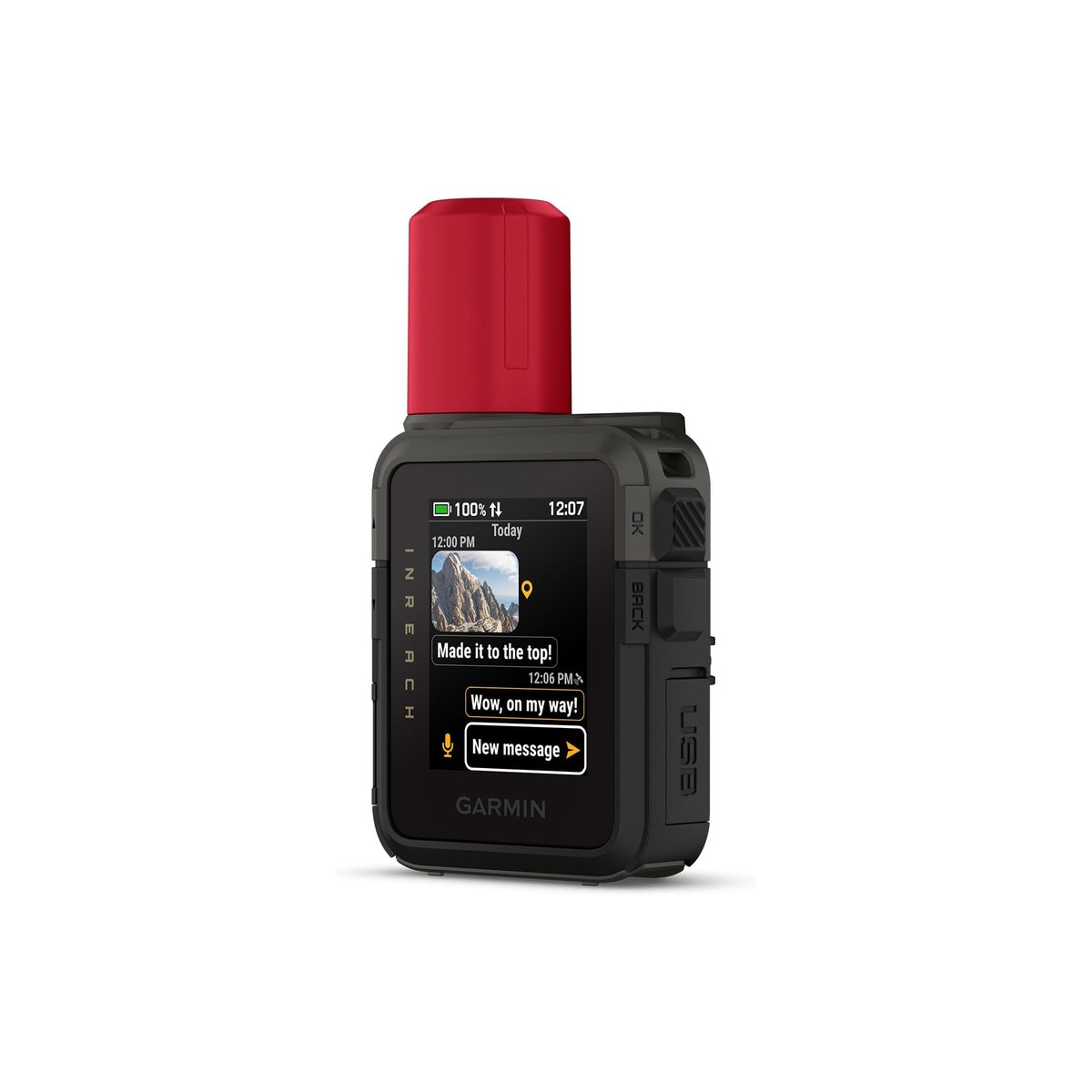
Garmin inReach Mini 3 Plus (Iridium two-way satellite communicator, 1.9-inch color touchscreen, on-device message composition, 30-second voice notes and photo sharing over the faster Iridium IMT data link, on-device GPS with basemap and TracBack, IP67, 125 g, interactive SOS to Garmin Response, ASIN B0G4RST8LV)
The boat handheld that works on its own: Iridium, a real screen, two-way SOS.
Who it's for: the cruiser who wants a single satellite handheld that does everything, and wants it to keep working when the phone does not. The Mini 3 Plus sends and receives text over Iridium from anywhere on Earth, lets you write that text on a real screen rather than through a phone app, and carries a basic basemap and full GPS for a position reference away from the helm. It is the device we would put in the ditch bag.
What we found: the touchscreen is the thing owners and testers single out. OutdoorGearLab scores it 83 out of 100 and calls the screen its biggest advantage for standalone use, and for a mariner that translates directly: composing a message in a pitching cockpit at 2 a.m. with cold hands is genuinely easier on the screen than thumbing through an app on a phone you have to keep awake. The faster IMT link also means a photo to a rescue coordinator actually goes through in a reasonable time, which the old inReach data path struggled with.
Bottom line: if you are buying one satellite communicator for the boat and you want it to be the unit you can grab and abandon ship with, this is the one. If your helm already has a chartplotter and you mostly want to text home and hold an SOS button, you can spend less, and the Messenger is the next entry for exactly that reason.
- + Runs on Iridium, the 66-satellite network that links satellite to satellite and covers the entire planet with no mid-ocean gaps, so a text from the middle of an ocean passage clears the same way it does in the harbor; owners report messages typically landing within a few minutes in open water with a clear view of the sky
- + The color touchscreen is the upgrade that matters on a boat: you can write a full message at the helm at night without pulling out a phone, keeping it lit, and draining its battery, which is exactly the moment a phone is below decks, wet, or dead
- + Works completely on its own, no paired phone required for messaging, navigation, or SOS, which is why it is the better grab-bag and abandon-ship device than the app-dependent units lower down this list
- + The newer Iridium IMT data link is meaningfully faster than the old short-burst path, so a photo of an injury or the boat's condition reaches Garmin Response in a minute or two during an SOS, and the SOS is two-way so you can describe the emergency and cancel a false alarm
- × It is the most expensive pick here, about $450 on the street against a $499 list price, and at that price a boat that already has a chartplotter at the helm is paying for on-device navigation it does not need; the Messenger below does the communicating for less than half the money
- × Battery life runs up to about two weeks at a ten-minute tracking interval in low-power mode, but it drops to roughly four days in the performance mode that turns on the voice notes and photos, well short of the Messenger's month either way, so budget a charge every few days on any passage where you lean on those features
- × Like every device here, the SOS only works on an active paid subscription, and the screen and IMT features add per-use charges for photo and voice messages on top of the monthly plan
- × IP67 means it survives a one-meter dunk for half an hour, not a dive; it is splash-proof and dunk-proof for a cockpit, not a unit you can take swimming
Runner-up: Garmin inReach Messenger (Iridium two-way satellite communicator, 35.9 dBm flat-panel antenna, up to 28-day battery, no on-device navigation, paired-phone messaging through the Garmin Messenger app, reverse-charges a phone, IPX7, 114 g, interactive SOS to Garmin Response, ASIN B0BFBZR4KW).
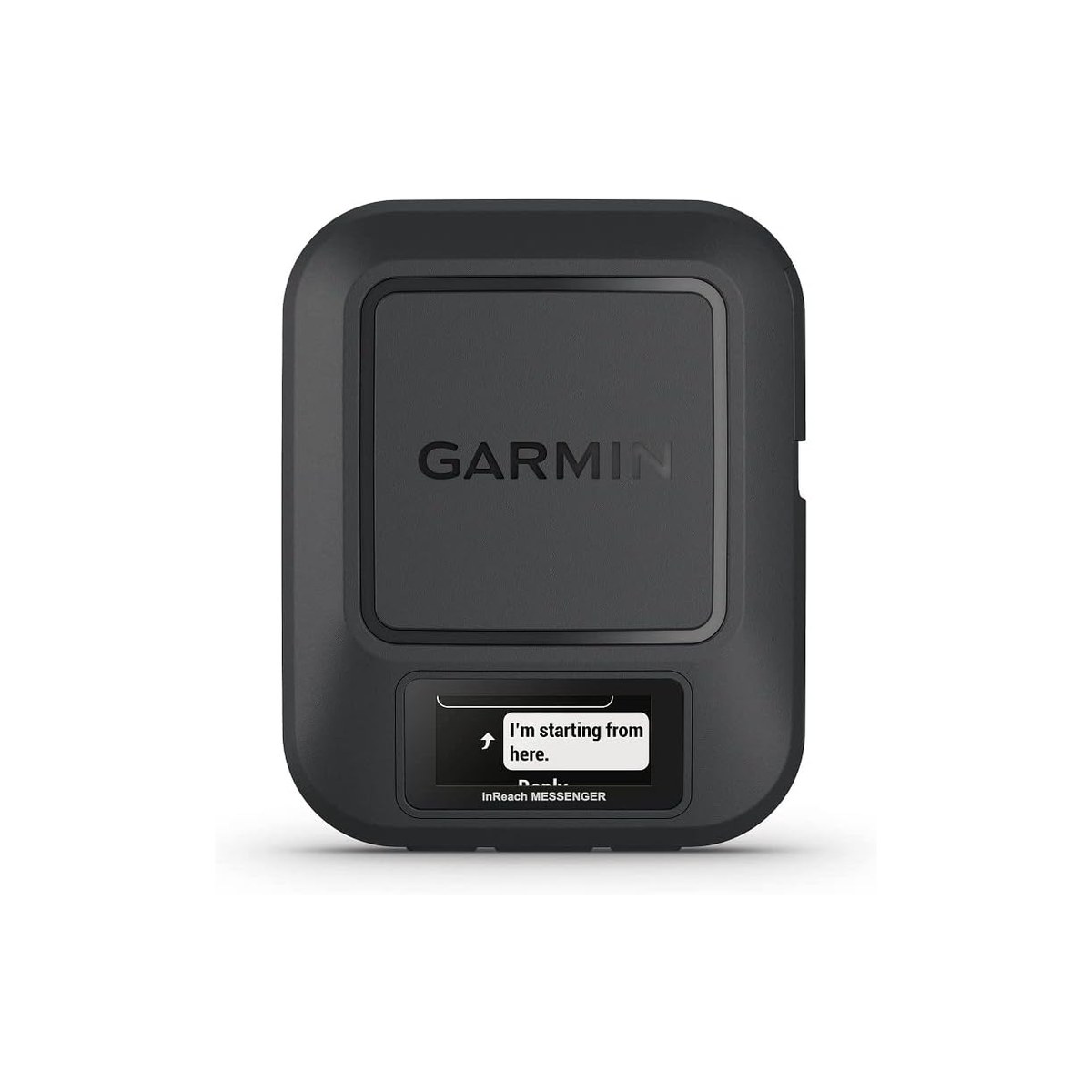
Garmin inReach Messenger (Iridium two-way satellite communicator, 35.9 dBm flat-panel antenna, up to 28-day battery, no on-device navigation, paired-phone messaging through the Garmin Messenger app, reverse-charges a phone, IPX7, 114 g, interactive SOS to Garmin Response, ASIN B0BFBZR4KW)
The smart daily carry for a boat with a chartplotter, month-long battery.
Who it's for: the boater whose helm already has a chartplotter and who wants the cheapest honest way onto Iridium. The Messenger does the two things a boat actually needs from a satellite handheld, two-way text and an SOS, and skips the on-device map you would never use because the plotter does it better. The antenna and the battery are where it quietly beats its more expensive siblings.
What we found: testers and owners keep coming back to the battery and the antenna. Up to 28 days on a charge is the kind of number that matters on a passage with limited power, and the 35.9 dBm flat-panel antenna, stronger than the Mini 2's 31.8 dBm helical, holds a signal in the obstructed sky angles, under canvas, in a wave trough, where a boat actually uses one of these. Yachting World rates it the budget pick of the Garmin line for marine use for exactly these reasons.
Bottom line: if you have a plotter and a phone you keep handy, the Messenger arguably makes more sense than the Top Pick. You give up the standalone screen, which matters most for the grab bag, and you save $250 and gain three weeks of battery. For a primary boat communicator that lives at the nav station, that is a good trade.
- + Same Iridium network as the Mini 3 Plus, so global coverage with no mid-ocean dead zones, at less than half the price; for a boat that only needs to text home and hold an SOS button, this is the value entry to Iridium
- + The strongest antenna among the standard inReach SBD units, a 35.9 dBm flat panel against the Mini 2's 31.8 dBm helical, which widens the patch of sky it can reach and helps it hold a link under a dodger, in a pilothouse, or on a heeling boat where body angle keeps blocking the view
- + By far the longest battery here, rated up to 28 days at a ten-minute tracking interval, so a crew member can keep it in a foul-weather jacket across a multi-week passage without a charge, and it can reverse-charge a phone in a pinch
- + The flat shape sits naturally on a dash or in a chart-table cubby rather than dangling off a pack, and the navigation it lacks is navigation a boat with a plotter does not miss
- × No on-device navigation and only a tiny status screen, so for anything beyond a canned check-in you are messaging through the Garmin Messenger app on a paired phone; lose or drown the phone and you are down to presets and SOS
- × Leaning on a phone is the real weakness on a boat, where phones get wet, get flat, and get left below; the Mini 3 Plus and Mini 2 keep composing without one
- × The small screen makes typing on the device itself tedious, fine for an SOS, painful for a conversation, so it is the worst of these for a chatty passage if the phone is unavailable
- × Same subscription requirement and same IPX7 splash rating as the rest of the Garmin line; the IP68 ZOLEO below is rated a little deeper
Budget pick: ZOLEO (Iridium two-way satellite communicator, app-paired messaging with a permanent dedicated SMS number and email address, automatic Wi-Fi, cellular, and satellite switching, hardware check-in and SOS that work without a phone, IP68 rated to 1.5 m for 30 minutes, 150 g, SOS to a GEOS-branded center operated by Global Rescue, ASIN B0DFZ1YBGD).
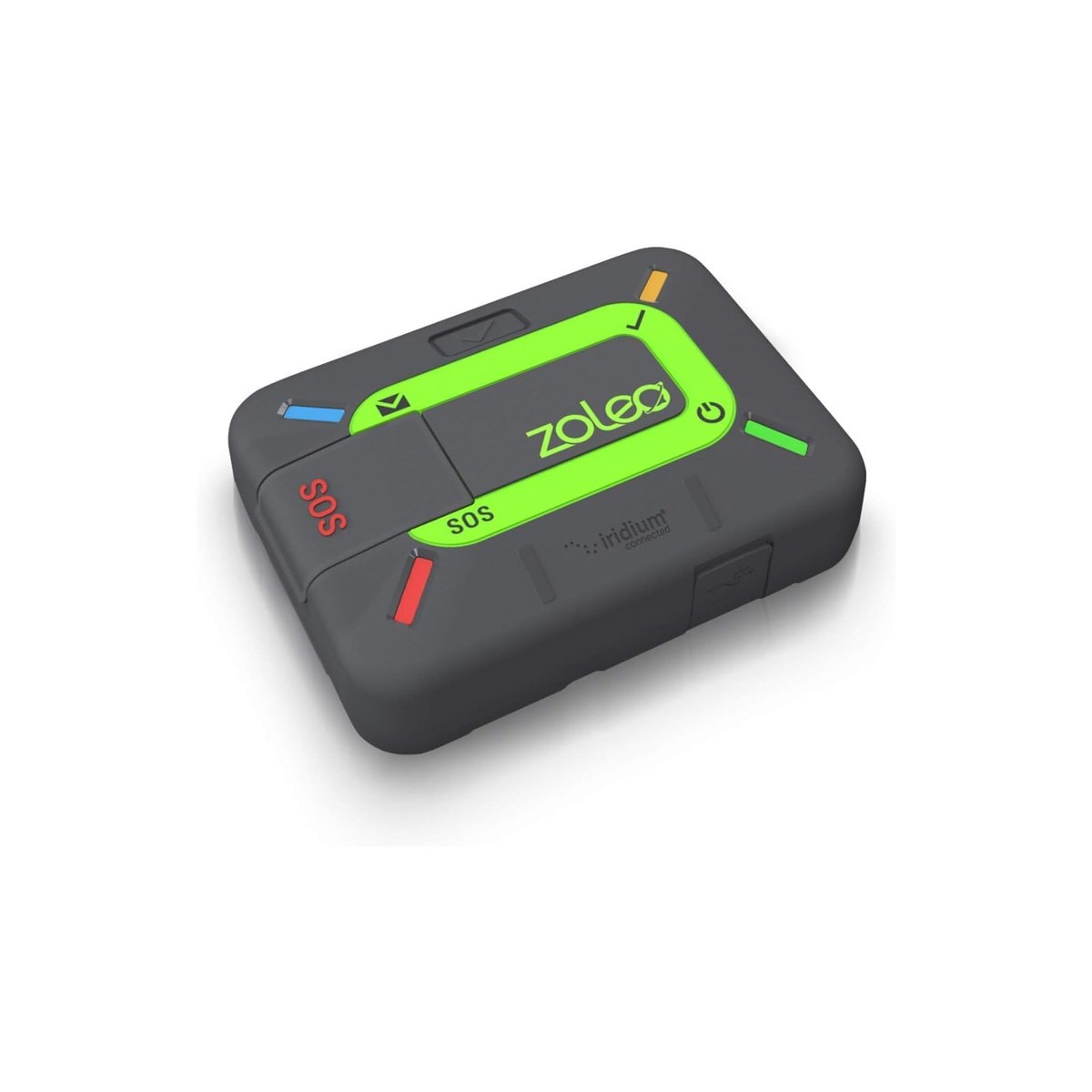
ZOLEO (Iridium two-way satellite communicator, app-paired messaging with a permanent dedicated SMS number and email address, automatic Wi-Fi, cellular, and satellite switching, hardware check-in and SOS that work without a phone, IP68 rated to 1.5 m for 30 minutes, 150 g, SOS to a GEOS-branded center operated by Global Rescue, ASIN B0DFZ1YBGD)
The value way onto Iridium: a real text number and deeper waterproofing.
Who it's for: the cost-conscious coastal cruiser, and the second person aboard who wants their own way to reach shore. ZOLEO puts you on the same Iridium network the Garmins use for the lowest price in this guide, and it does the staying-in-touch part better than any of them, because it hands your family a fixed phone number and email instead of an app they have to figure out.
What we found: the value case holds up under the subscription math, which is where these devices really cost money. ZOLEO's $4 off-season suspend keeps your number while you are hauled out, the app spends free Wi-Fi and cell messages before it ever touches a satellite credit, and the IP68 rating is a genuine, if small, marine edge over the Garmin IPX7. Owners on the cruising forums treat it as the sensible-money Iridium choice, and the field testers agree on the value framing.
Bottom line: if the Top Pick's $450 is more than the job is worth to you, or you are buying a second unit at $119 so each watch-stander has one, ZOLEO is the answer. You accept the phone dependence and a smaller message bundle, and in return you get the same global Iridium coverage as the Garmins and the lowest total cost of any device here across a five-month season.
- + The cheapest way onto Iridium: a $149 device that has been selling closer to $119, half the Mini 2 and a quarter of the Top Pick, on the same global network, so a budget does not force you onto Globalstar and its mid-ocean gaps
- + Gives you a permanent dedicated text number and an email address, so family and marina contacts reach you the same way every trip without learning an app, which owners repeatedly call the thing ZOLEO does better than inReach
- + Rated IP68 to a meter and a half for half an hour, a step deeper than the IPX7 Garmins, and the app automatically routes a message over Wi-Fi or cell when you have them and only burns a satellite credit when you do not, so a harbor with marina Wi-Fi costs nothing
- + The cheapest device to own across a season: $4 a month suspends the plan and keeps your dedicated number and email, which the free Garmin suspend cannot do because inReach gives you no dedicated number to hold onto; owners report open-water messages typically clearing within a few minutes
- × No on-device navigation and total dependence on a paired phone for messaging; without the phone you are left with the hardware check-in button and SOS, which is the same weakness as the Messenger and worse than the standalone Minis
- × The $20 Basic plan includes 75 messages, fewer than a chatty crossing wants, and overage runs 50 cents each; heavy texters move up to the $35 plan and lose some of the value argument
- × Its SOS routes to a private rescue-coordination center that ZOLEO still brands GEOS but now operates through Global Rescue, the same private call-center model as Garmin under a different name, so confirm the service is active before a trip
- × At 150 g it is the heaviest of the compact units, and the puck shape is less pocket-friendly than the flat Messenger, though none of these are heavy in absolute terms
Also worth considering.
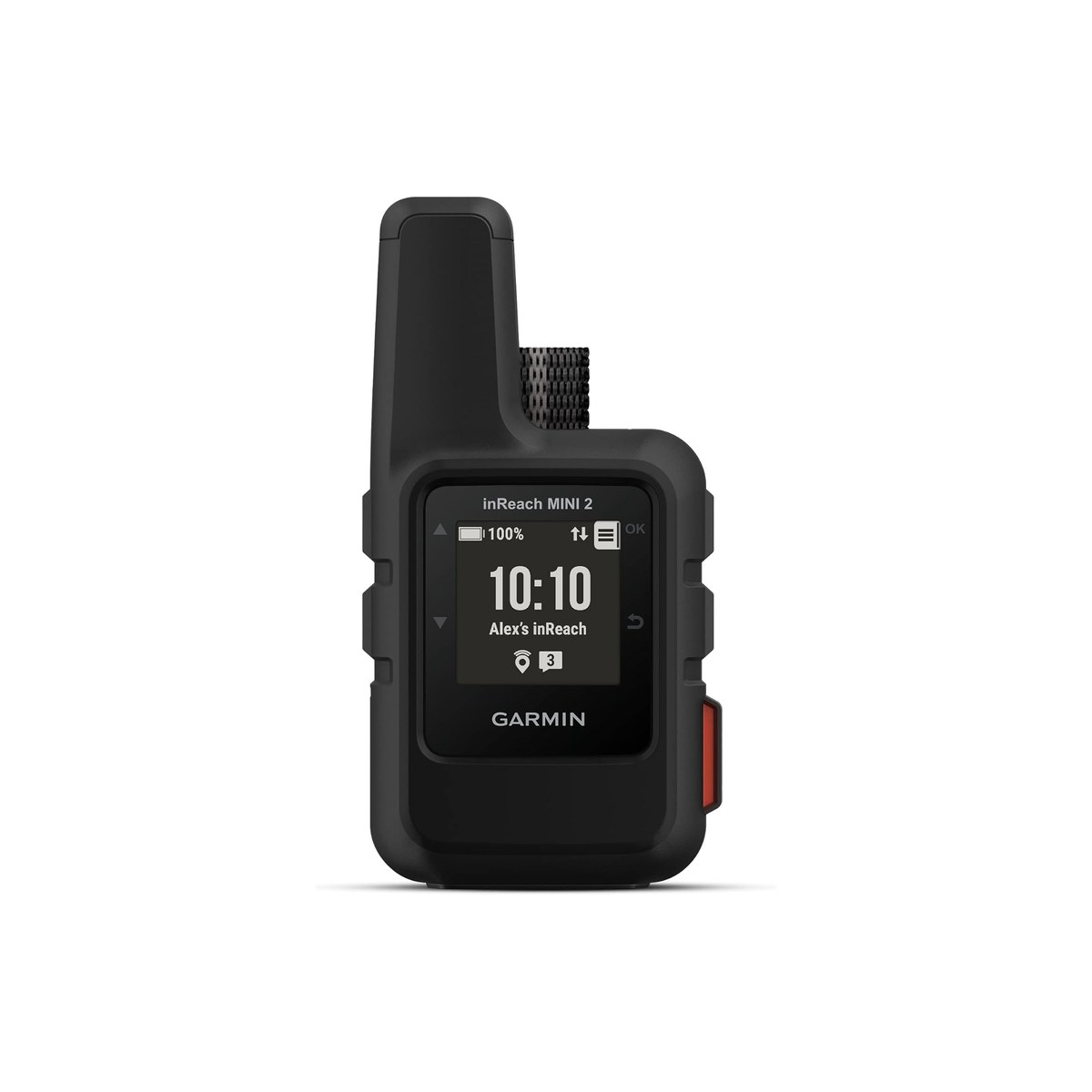
Garmin inReach Mini 2 (Iridium two-way satellite communicator, full on-device GPS with waypoints and TracBack, monochrome 0.9-inch screen, button navigation, works standalone, IPX7, 100 g, the lightest unit here, interactive SOS to Garmin Response, ASIN B09PSSSFPF)
The lighter, cheaper standalone, the value play if you find one discounted.
Who it's for: the boater who wants a unit that works without a phone but does not want to pay Mini 3 Plus money, and is happy with a small monochrome screen and buttons instead of a color touchscreen. The Mini 2 was the outright best standalone satellite messenger from 2022 through 2025, and at its current discounted price near $250 it is still the value way to get a compact communicator that composes messages without a phone.
What we found: it is the lightest device in this guide at 100 g, runs full on-device GPS with waypoints and TracBack, gets about two weeks of battery at a ten-minute tracking interval, and rides the same global Iridium coverage as the Top Pick. What you give up against the Mini 3 Plus is the screen and the speed: a small monochrome display and physical buttons make composing a message slow, there is no color basemap, and no voice or photo messaging.
Bottom line: HikingGuy's verdict, updated May 2026, is blunt and right for boaters too: if your Mini 2 works, save your money, and only step up to the Mini 3 Plus if the screen or photo-in-an-SOS matters to you. Buy the Mini 2 new-old-stock or on discount; if it is full price and the Mini 3 Plus is close, buy the newer one.
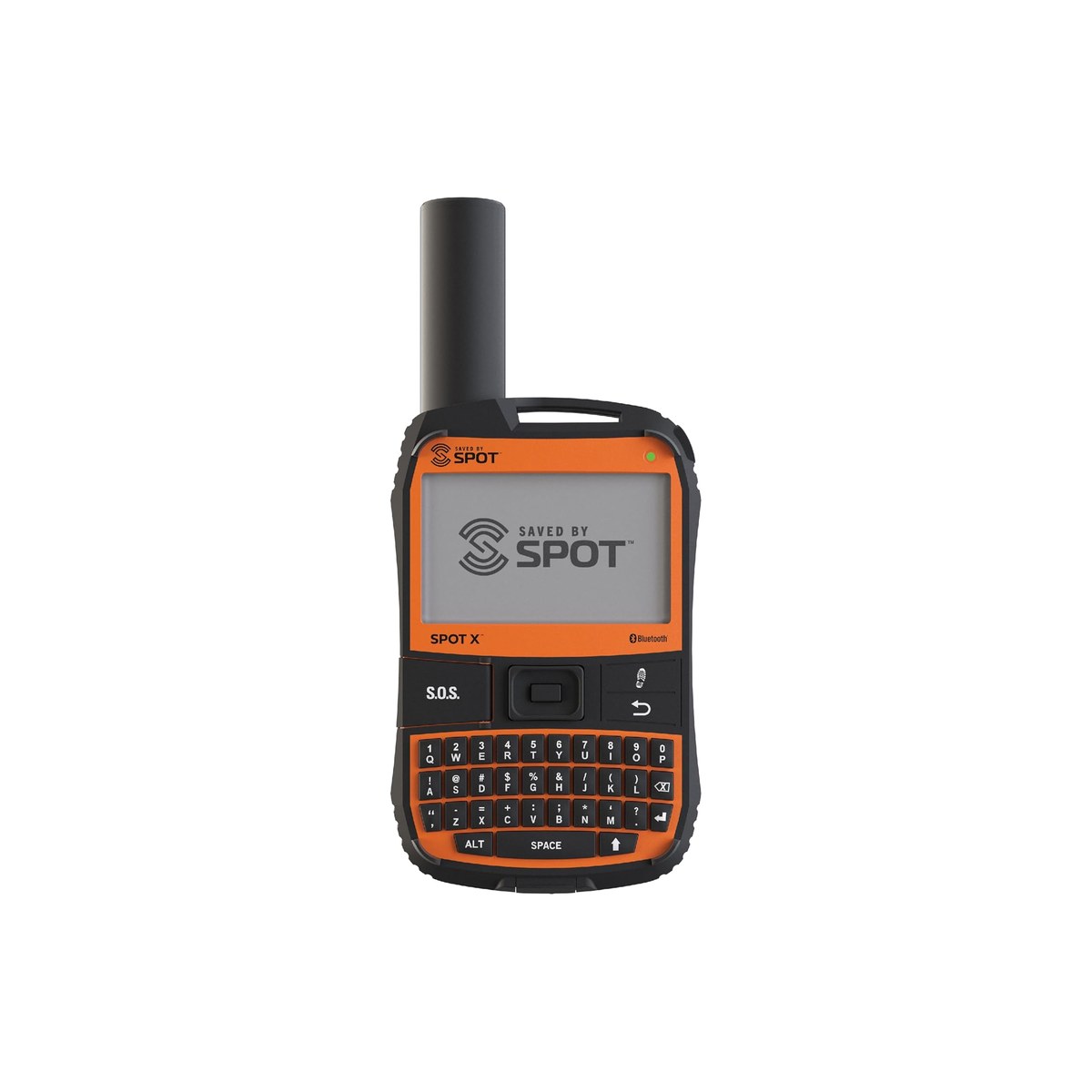
SPOT X with Bluetooth (Globalstar two-way satellite communicator, built-in physical QWERTY keyboard, works without a paired phone, dedicated SPOT phone number, IP67, 198 g, SOS to the Globalstar emergency response center, ASIN B07DYC1PGR)
The only one with a real keyboard and no phone needed, but Globalstar keeps it coastal.
Who it's for: the coastal boater who has confirmed Globalstar covers their water and wants to type a real message on the device itself without a paired phone, rather than the offshore passage-maker who needs global coverage. The SPOT X is the one device here you can type a full message on without a phone, thanks to its built-in QWERTY keyboard, and it comes with its own dedicated phone number so contacts can text you back.
What we found: it is two-way, it holds an SOS button, and for a coastal boater within reach of Globalstar's network it is a capable standalone unit at about $200. The catch is the network, and for a boat it is a real one. Globalstar uses a bent-pipe design that needs a satellite and a ground station in view at the same time, which leaves coverage gaps across mid-ocean and the higher latitudes that Iridium simply does not have. Every serious marine tester excludes Globalstar devices from offshore roundups for exactly this reason.
Bottom line: the SPOT X is fine for Gulf, US-coastal, and Caribbean cruising inside the covered area if you check the coverage map first; it is the wrong choice for an ocean passage, where one of the Iridium units above is the answer.
Skip this guide if...
You might not need a dedicated satellite communicator at all. If you only ever day-sail in protected water inside cell range, your phone already covers you, and the newest phones add a free emergency-only satellite SOS that is a reasonable last resort for a coastal afternoon, though it cannot text home, share your track, or pull a forecast. If you have Starlink aboard, that handles day-to-day connectivity but does not replace a communicator, because Starlink stays with the boat and needs ship power, while the whole point of a handheld is that it goes in the life raft and runs for weeks on its own battery. And if your real worry is summoning rescue when the boat is going down rather than texting home, the device you want is a registered EPIRB or PLB, not a messenger; the two do different jobs, and offshore boats carry both. Buy a satellite communicator when you want two-way contact and tracking beyond cell coverage, and pair it with a beacon rather than treating one as a substitute for the other.
Don't bother with.
- × Skip Motorola Defy Satellite LinkIt is cheap at about $50 and it is the wrong device for a boat. It does not ride Iridium or Globalstar; it uses geostationary satellites that sit fixed over the equator, so on a moving, heeling boat it regularly loses the signal when the antenna faces the wrong way, and it has no coverage at high latitudes. It also needs a paired phone to do anything, including SOS. Worse, the company behind the service, Bullitt, collapsed into insolvency in early 2024, and while the network was bought and kept running, the long-term future is uncertain, which is exactly the wrong foundation for safety gear. Skip it.
- × Skip SPOT Trace and other one-way trackersThe SPOT Trace and devices like it are location trackers, not communicators. They broadcast where you are to a preset contact list, but they have no SOS button and no two-way messaging, so you cannot call for help or confirm an emergency. They are fine for watching a vessel or trailer remotely; they are not personal safety equipment and do not belong in this category.
- × Skip A phone's free Emergency SOS via satellite, as your only offshore commsEmergency SOS via satellite on a recent iPhone or Pixel is a genuinely useful safety net and it is free, but it is emergency-only and one-way to a relay center; you cannot text family, share a track, get a forecast, or send a routine check-in. The iPhone version runs on Globalstar with its coverage gaps, and the service is region-limited. Treat it as a backstop on a coastal day trip, not as the comms plan for a passage, where a real two-way Iridium unit is the right tool.
- × Skip Iridium GO! and handheld satellite phones, as a messenger substituteThese are a different category, a satellite voice and data hotspot, not a handheld text-and-SOS communicator. They are the right tool if you specifically need voice calls offshore, for medevac coordination or a weather-routing service, but at $1,500 and up for the device plus $80 to $160 a month they are a complement to a communicator, not a replacement for one, and overkill for a boater who just needs to text home and hold an SOS.
- × Skip Any satellite communicator bought expecting it to work without a subscriptionEvery device in this category needs an active paid plan for its SOS and messaging to function; there is no satellite communicator that summons help for free. The device that does exactly that, alerts rescue services with no subscription, no app, and no monthly fee, is a 406 MHz EPIRB or PLB on the government Cospas-Sarsat network, which is a different product covered in our EPIRBs and PLBs guide. If the no-subscription part is what you are after, you want a beacon, not a messenger.
How we picked.
Who this guide is for and how we researched it
We wrote this for the owner or crew of a 25 to 45 ft coastal or offshore cruising boat who wants two-way contact and an SOS beyond cell coverage, not for the backcountry hiker, though the devices are identical and a lot of the published testing comes from the trail. We do not run a lab. What we did was read the owner-level signal where boaters actually argue these out, the inReach-versus-ZOLEO threads on Cruisers Forum, The Hull Truth, and Sailing Anarchy, alongside the bench testing at OutdoorGearLab, Switchback Travel, Yachting World, and HikingGuy, plus NOAA's distress rules and the manufacturers' own spec and plan pages. Then we ranked for the boat: global network first, because that is the decision that matters most offshore, then total cost including the subscription, then how well each unit holds up when the phone is wet or dead.
Iridium vs Globalstar: the network that decides everything
Before any feature comparison, ask one question: does the device cover the water you cruise? Two networks split this category. Iridium runs 66 low-orbit satellites that link to each other in space, forming a mesh that covers the entire planet, poles included, with no gaps; a message from the middle of an ocean can travel across the constellation in orbit before it ever touches a ground station. Garmin inReach and ZOLEO both use it. Globalstar, which SPOT uses, works differently: its satellites sit in low orbit too, but they are simple relays that need to see your device and a ground station at the same time, with no satellite-to-satellite links, so coverage is strong near shore and over populated regions and degrades across mid-ocean and the higher latitudes. SPOT's own coverage maps flag fringe zones in mid-ocean areas.
For a coastal boater inside roughly 200 to 400 nautical miles of a covered shoreline, the US East and Gulf coasts, the Caribbean, coastal western Europe, Globalstar works reliably most of the time, which is why the SPOT X stays in the lineup as a coastal pick. For anyone crossing open water, running to the Azores, or heading toward the poles, Globalstar leaves real dead zones and Iridium does not. That single fact is why four of our five picks are Iridium devices, and why we tell offshore boaters to ignore the price gap and stay on Iridium.
A communicator is not a distress beacon: the line that matters most
This is the most important safety point in the guide, and the one most product listings blur. A satellite communicator's SOS does not go to the Coast Guard directly. It goes to a private rescue-coordination center, Garmin Response for inReach, a GEOS-branded center now run by Global Rescue for ZOLEO, Globalstar's center for SPOT, which then phones the appropriate search-and-rescue authority on your behalf. That routing only works while your subscription is active, and the device transmits on commercial satellite frequencies, not the international distress frequency. A 406 MHz EPIRB or PLB is the opposite: it transmits straight to the government-run Cospas-Sarsat network monitored by NOAA and the Coast Guard, needs no subscription and no middleman, and a Category 1 EPIRB floats free and self-activates if the boat goes down before anyone can reach it.
Neither replaces the other, and experienced offshore crews carry both. The beacon is the no-subscription, government-network guarantee that summons a full rescue response, including the scenario where the boat sinks and nobody can press a button. The communicator is the two-way tool that lets you describe the problem, coordinate a tow instead of triggering a full SAR launch for a fixable issue, update your shore contacts, and cancel a false alarm. The honest layered kit for an offshore boat is a VHF radio, an EPIRB on the vessel, a PLB on each crew member, and a satellite communicator for everything short of a mayday. We cover the beacon half of that in our EPIRBs and PLBs guide.
What it really costs: the subscription behind the device price
The sticker price is half the story; the monthly plan is the rest, and it is where the value picture shifts. Garmin overhauled its plans in September 2024, scrapping the old annual contracts and the cheap seasonal suspend, which set off a wave of owner complaints from exactly the part-year boaters this category serves. Garmin walked much of it back on June 5, 2025: every consumer plan can now be suspended for up to twelve months at no charge and no reactivation fee, with the SOS disabled while suspended. The current tiers run from Enabled at $7.99 a month, which is pay-per-use at 50 cents a message, up through Essential at $14.99, Standard at $29.99, and Premium at $49.99, plus a one-time $39.99 activation. For a boater who uses the device five months a year, the Enabled plan plus the free off-season suspend is the cheapest way to keep a Garmin alive.
ZOLEO is the value leader on the running cost as well as the device. Its Basic plan is $20 a month for 75 satellite messages with unlimited check-ins and SOS, the In Touch plan is $35 for 300, and crucially the off-season suspend is $4 a month and keeps your dedicated number and email, which matters if you have handed that number to marina contacts. ZOLEO charges the same one-time $39.99 activation as Garmin, so the real saving is the device price, $119 to $149 against $200 to $450, not the setup fee. SPOT's flex plans start around $17 a month plus an annual fee, but you are paying that for the Globalstar network. Add it up across a five-month season and a few suspended months, and ZOLEO comes out the cheapest to own for a boater who messages regularly, though a light, SOS-only user can land cheaper on Garmin's $7.99 Enabled plan; the Garmin Messenger is close behind once the free suspend is in play, and the Mini 3 Plus costs the most up front but rides the same Iridium plans as the Messenger.
Standalone vs phone-dependent: why it matters more on a boat
Marine reviewers and hikers weigh this differently, and the boat use case tips it. The Mini 3 Plus and the Mini 2 compose messages on the device itself; the Messenger, ZOLEO, and SPOT X lean on a paired phone for anything past a canned check-in (the SPOT X is the exception with its built-in keyboard, but it is stuck on Globalstar). On a boat, phones get wet, get flat, and get left below decks, and the moment you most need to send a message is often the moment the phone is least available. That is the case for the standalone Mini 3 Plus as the grab-bag device: it keeps working when the phone does not.
The counter-argument is real too. A boat that already has a chartplotter does not need the Mini's on-device navigation, and a crew member who keeps a phone in a dry pocket gets the Messenger's month-long battery and stronger antenna for half the price. So the split we land on is this: the standalone Mini 3 Plus for the ditch bag and the single-device boat, the phone-paired Messenger or ZOLEO for the boat with a plotter and a habit of keeping a phone handy. Either way, test the Bluetooth pairing before you leave the dock and pre-program a few preset messages, because app reconnection hiccups are the most common gripe owners report about the phone-dependent units.
Do you still need one if you have Starlink?
Starlink is showing up on more cruising boats every season, and the honest answer from sailors who run both is that the two are complementary, not redundant. Starlink gives you broadband at anchor and on passage, but it stays bolted to the boat, it draws continuous power from the ship's system, and a dish is not going in the life raft. A 100 to 150 g satellite communicator does the things Starlink cannot: it goes over the side with the crew in an abandon-ship, it runs for weeks on its own battery when the boat loses power, it survives a soaking, and its single SOS button is far simpler to operate in a real emergency than a phone-based internet session.
The reasons offshore sailors give for keeping a handheld alongside Starlink are specific and consistent: the ditch bag, the dinghy run away from the boat, the Starlink outage or policy change, and the plain redundancy of a second, independent path to rescue. As more than one Atlantic-crossing skipper put it, going forward the daily traffic moves to Starlink, but the Iridium handheld stays aboard for the crossings. Treat Starlink as the connectivity upgrade and the communicator as the safety backstop that travels with the people, not the hull.
Sky view, waterproof ratings, and the gotchas owners report
Every device here, on either network, needs a clear view of the sky to transmit. In the trough of a big swell the horizon blocks the low satellites and a message waits a few minutes; under a fully enclosed dodger or inside a pilothouse the device may not get out at all, so the practical rule is to mount or hold it where it can see open sky, on deck, on a window, or on a dash. Iridium's polar-orbit geometry means a satellite is always overhead in clear sky, so delays are transient, not coverage gaps. The waterproof ratings sort out cleanly: the Garmin units are IPX7, good for a one-meter dunk for thirty minutes; the SPOT X is IP67; ZOLEO is IP68 to a meter and a half, the deepest here, a small but real marine edge. None of them is a dive computer.
Two more gotchas worth knowing. Accidental SOS happens across every brand, usually from a button pressed in a bag, so use the SOS lock cover; the upside of a two-way unit is that you can immediately text the response center and cancel before anyone launches. And the subscription auto-renews month to month, so set a calendar reminder to suspend at the end of the season, which since mid-2025 is free on the Garmin plans and $4 a month on ZOLEO. Suspending disables the SOS on every brand, so reactivate the plan before you next rely on the device, and never leave a suspended unit in the ditch bag as your emergency beacon. Cold knocks 20 to 30 percent off battery life near freezing, which matters more for a high-latitude passage than a summer coastal season.
Where to buy and confirming the model
Unlike the chandlery-heavy categories on this site, these portable satellite communicators are a mainstream Amazon category, and all five picks sell there at the prices we list, which is where our links go. The one thing to confirm at checkout is the exact model, because the names are close and the lineup moved in 2025: the Mini 3 Plus is the new color-touchscreen flagship and is distinct from the older Mini 2 and from the screen-less Messenger and Messenger Plus. We verified each unit as live and buyable on US Amazon before linking it. Whichever you choose, activate and test it on land first, send a message and confirm it lands, so the first time you rely on it is not an emergency offshore.
FAQs.
Q01 What is a satellite communicator, and how is it different from a satellite phone?
+
Q02 Iridium or Globalstar: which network do I need for a boat?
+
Q03 Is a satellite communicator enough, or do I also need an EPIRB or PLB?
+
Q04 Do I still need one if I have Starlink on the boat?
+
Q05 What does a satellite communicator really cost per year?
+
Q06 ZOLEO or Garmin inReach for a boat?
+
Q07 Can I get a satellite communicator that works without a subscription?
+
Q08 Is the iPhone's free Emergency SOS via satellite enough for coastal boating?
+
Q09 Is the Mini 3 Plus worth $200 more than the Mini 2?
+
If you, then this.
- IF One device for the boat, want it to work without a phone, grab-bag readyGET Garmin inReach Mini 3 Plus$450 →
- IF Boat already has a chartplotter, want the cheapest Iridium unit with the best batteryGET Garmin inReach Messenger$200 →
- IF Lowest cost to buy and own, or a second unit for the crew, on the global networkGET ZOLEO$119 →
- IF Want a standalone Iridium unit and found a Mini 2 discountedGET Garmin inReach Mini 2$250 →
- IF Coastal only, confirmed Globalstar coverage, want a real keyboard and no phoneGET SPOT X$200 →
Boat Gear: The Complete Guide
The whole-boat picture →Every system on a 20 to 45 ft coastal boat, organized in one place, with the one guide we trust for each.