Best RV WiFi Boosters & Extenders: The Honest Top 3 (2026)
A WiFi booster, more precisely a WiFi extender, grabs a weak or distant campground network with a stronger antenna and rebroadcasts it inside your rig. It makes a faraway signal reachable. It cannot make a slow park faster, because it can't create bandwidth the campground doesn't have. That one fact decides whether you need one at all. We verified every listing live on Amazon on June 16, 2026, and the category has hollowed out: KING shut down in 2025, the once-popular RedPort Halo is overpriced and poorly supported, and the Alfa CampPro is unavailable. Of what's left, the honest best buy for most RVers is not a dedicated extender at all but a $99 travel router that does the same job, adds a VPN, and rates 4.6 stars across more than 5,000 reviews.
- 01 GL.iNet Beryl AX (B0BPSGJN7T) , top pick, the $99 travel router that does WiFi-as-WAN + a VPN, 4.6/5,093, beats every dedicated extender
- 02 Winegard ConnecT 2.0 WF2 (B079WWGB32) , best for long range, roof-mounted high-gain antenna, but 2.4 GHz only and no VPN, 3.9/214, ~$180
- 03 WAVLINK AC1200 Outdoor (B0DR5PQ9LS) , the budget outdoor dual-band repeater, DIY web-UI setup, 3.8/136, ~$99
How they compare.
| Rank | Product | Best for | Price | Our score |
|---|---|---|---|---|
| 01 | GL.iNet Beryl AX (B0BPSGJN7T)
Top Pick
| best for most: a $99 Wi-Fi 6 travel router that rebroadcasts campground WiFi and adds a VPN, the deepest-proven device here | $98.99
Buy → | 8.7/10 |
| 02 | Winegard ConnecT 2.0 WF2 (B079WWGB32) | best for long range: the roof-mounted antenna that reaches a distant park signal, but 2.4 GHz only, no VPN, and pricier | $179.60
Buy → | 7.6/10 |
| 03 | WAVLINK AC1200 Outdoor (B0DR5PQ9LS) | best budget outdoor: dual-band, weatherproof, PoE-powered, for the DIY-inclined; not RV-purpose-built | $99.00
Buy → | 7.4/10 |
Prices are current Amazon prices at time of publication and can change. Scores reflect our editorial evaluation, not vendor input.
Our #1 pick: GL.iNet GL-MT3000 (Beryl AX) Portable Travel Router, Wi-Fi 6, 2.5G WAN, Built-in VPN (WireGuard/OpenVPN) for RV / Marina / Hotel WiFi (ASIN B0BPSGJN7T).
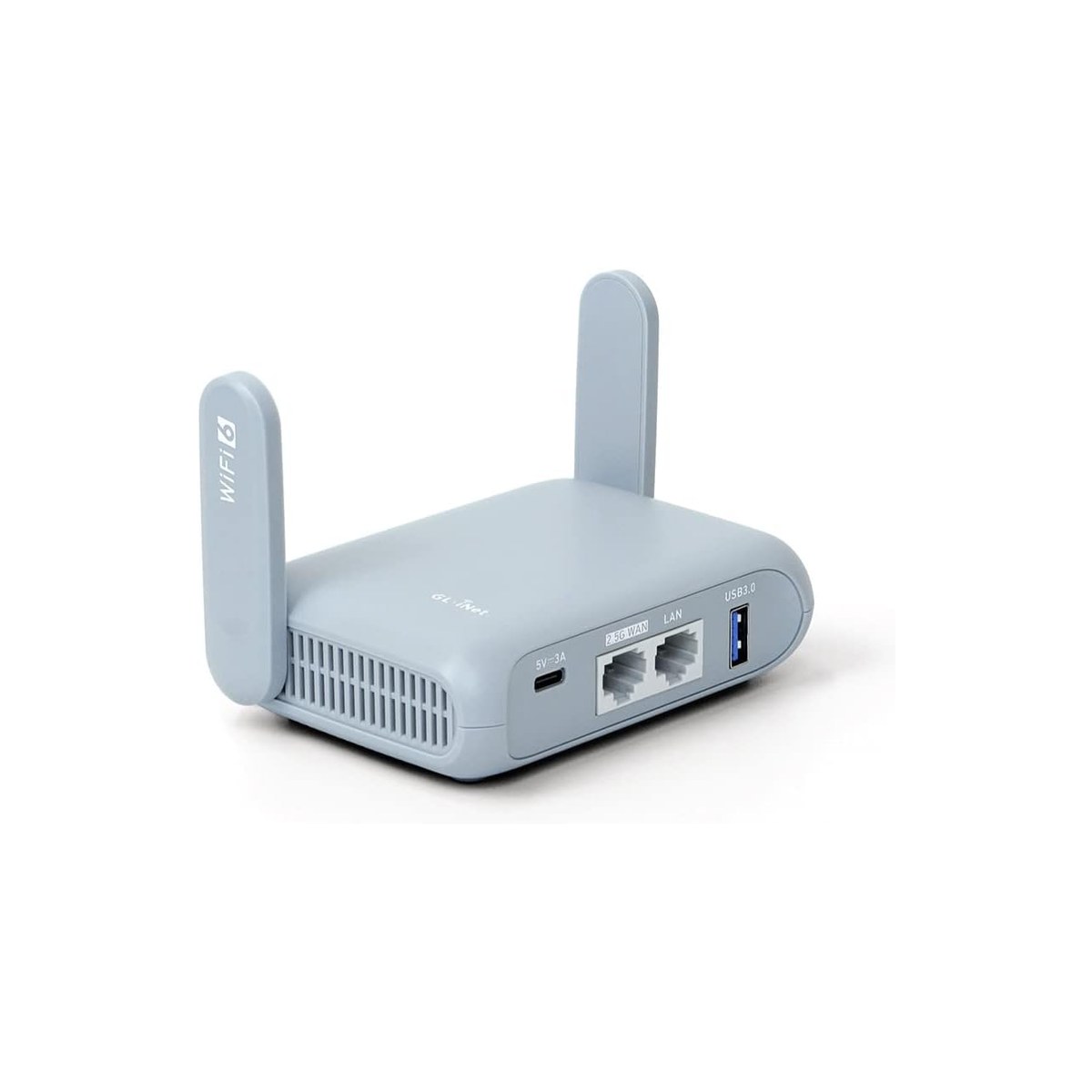
GL.iNet GL-MT3000 (Beryl AX) Portable Travel Router, Wi-Fi 6, 2.5G WAN, Built-in VPN (WireGuard/OpenVPN) for RV / Marina / Hotel WiFi (ASIN B0BPSGJN7T)
The $99 travel router that beats every dedicated RV extender.
Who it's for: Almost every RVer who wants to use campground or marina WiFi from inside the rig, parked within reasonable range of the access point. The GL.iNet Beryl AX is a pocket-sized Wi-Fi 6 travel router, not a dedicated extender, but in WiFi-as-WAN mode it does the same job, it connects to the park network and rebroadcasts it as your own private one, and it adds a VPN and works at hotels and marinas too.
What we found: It is the best-rated, most-proven device in this whole category by a wide margin, 4.6 stars across more than 5,000 reviews at about $99, where the surviving dedicated extenders sit at 3.8 to 3.9 stars. It is dual-band, runs WireGuard and OpenVPN so every device on it is encrypted on a shared park network, and it is the same WiFi-as-WAN approach our RV internet guide recommends, in the cheaper Wi-Fi 6 model. The honest limit is range: its internal antennas reach roughly as far as a laptop would, not the hundreds of feet a roof antenna can.
Bottom line: Buy the Beryl AX if you park within a hundred feet or two of a decent access point, which is most campground and marina situations, and you want VPN security and a device that works far beyond the RV. If you need to pull a signal from clear across a big park, step up to the roof-mounted Winegard below for its antenna. For everyday internet, pair it with a cellular plan, WiFi is the fallback.
- + The best-rated, most-proven device in this category by a wide margin, 4.6 stars across more than 5,000 reviews at about $99
- + WiFi-as-WAN mode rebroadcasts the park network as your own, and built-in WireGuard and OpenVPN encrypt every device on a shared network
- + Dual-band Wi-Fi 6, pocket-sized, and it works at hotels, marinas, and cruise terminals too, not just campgrounds
- × Internal antennas only, so it reaches roughly as far as a laptop would, not the hundreds of feet a roof-mounted antenna can cover
- × Minor setup learning curve versus a plug-it-in roof unit, you configure WiFi-as-WAN and the VPN once
- × Not weatherproof, it is an indoor device, so it cannot mount outside to chase a faraway signal
Runner-up: Winegard ConnecT 2.0 WF2 (WF2-335) Router and WiFi Extender, Long-Range Roof-Mounted Outdoor RV WiFi, High-Gain 2.4 GHz Antenna (ASIN B079WWGB32).
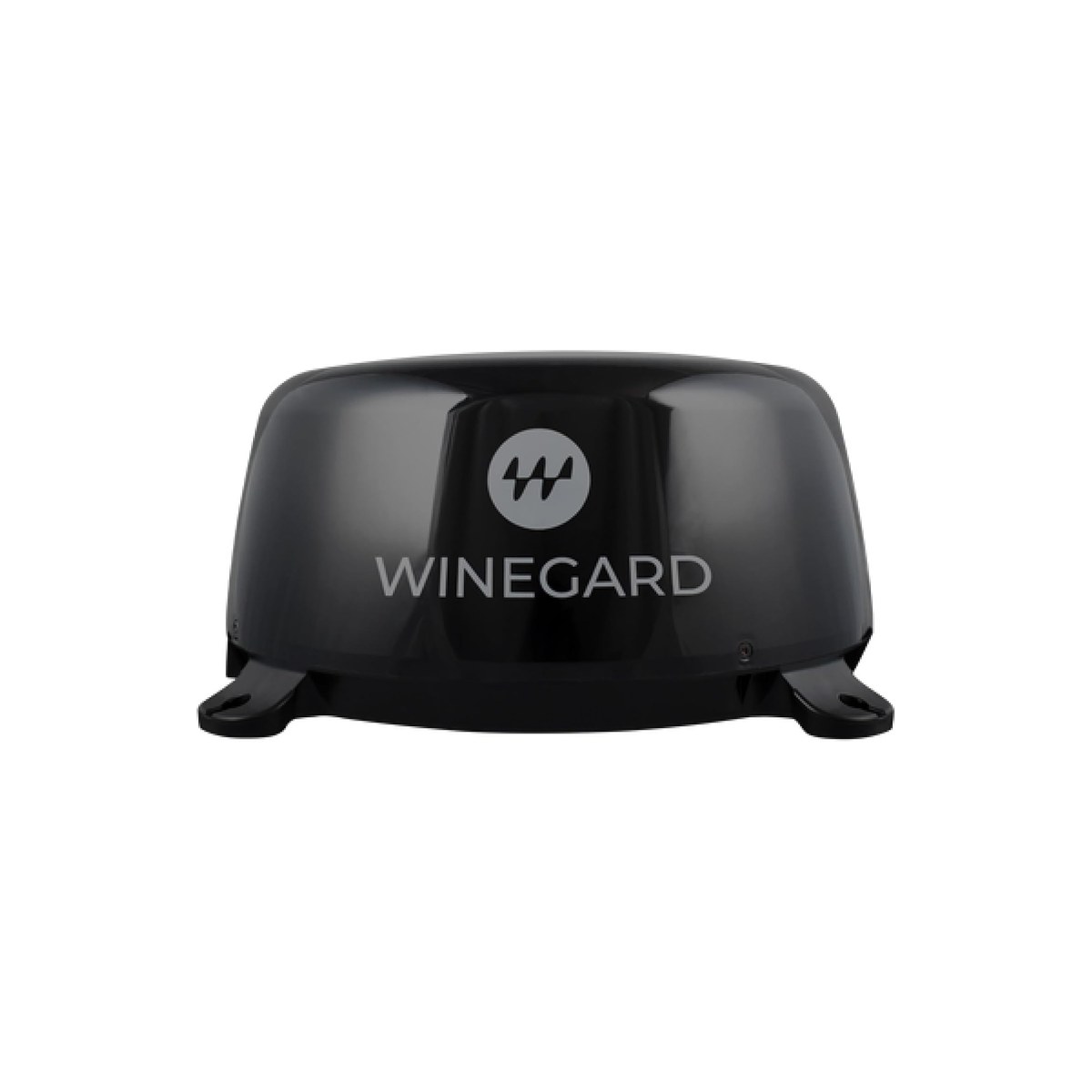
Winegard ConnecT 2.0 WF2 (WF2-335) Router and WiFi Extender, Long-Range Roof-Mounted Outdoor RV WiFi, High-Gain 2.4 GHz Antenna (ASIN B079WWGB32)
The roof-mounted antenna for reaching a signal across a big park.
Who it's for: The RVer parked at the back of a big campground or a marina where the access point is hundreds of feet away and the signal barely reaches the rig. The Winegard ConnecT 2.0 WF2 is the roof-mounted answer, a weatherproof dome with three high-gain antennas that physically captures a distant WiFi signal a travel router's internal antennas cannot, then rebroadcasts it inside as your own network.
What we found: Range is its real advantage, the roof dome reaches farther toward a far access point than any indoor device here, and it is the turnkey RV install many rigs already have from the factory. But two honest catches keep it second: it is 2.4 GHz only, so it literally cannot see the 5 GHz networks a growing number of premium parks and marinas now run, and at 3.9 stars across 214 reviews, often sold by third parties around $180 with thin stock, it is a pricier, dated unit. It has no built-in VPN.
Bottom line: Buy the Winegard WF2 only if your problem is genuinely range, a good park signal that won't reach your distant site, and the park runs 2.4 GHz WiFi. For most people parked closer in, the Beryl AX is cheaper, dual-band, and adds a VPN. Confirm the park isn't 5 GHz only before you buy, and run a VPN app on your devices since this unit has none.
- + Roof-mounted dome with three high-gain antennas physically reaches a distant access point a travel router's internal antennas cannot
- + Turnkey RV install, weatherproof and roof-mounted, the unit many rigs already have from the factory
- + Creates a secure local network inside the rig that the whole family shares from one reached signal
- × 2.4 GHz only (the WF2-335 model), so it cannot see the 5 GHz networks a growing number of premium parks and marinas now run; the pricier ConnecT 5G variant adds dual-band
- × At 3.9 stars across 214 reviews, often sold by third parties near $180 with thin stock, it is a pricier and dated unit
- × No built-in VPN, so you run a VPN app on each device separately for security on the park network
Budget pick: WAVLINK AC1200 Outdoor WiFi Extender, Dual-Band Long-Range WiFi Repeater, 4x7dBi Antennas, PoE, IP65, AP/Repeater/Mesh Modes (ASIN B0DR5PQ9LS).
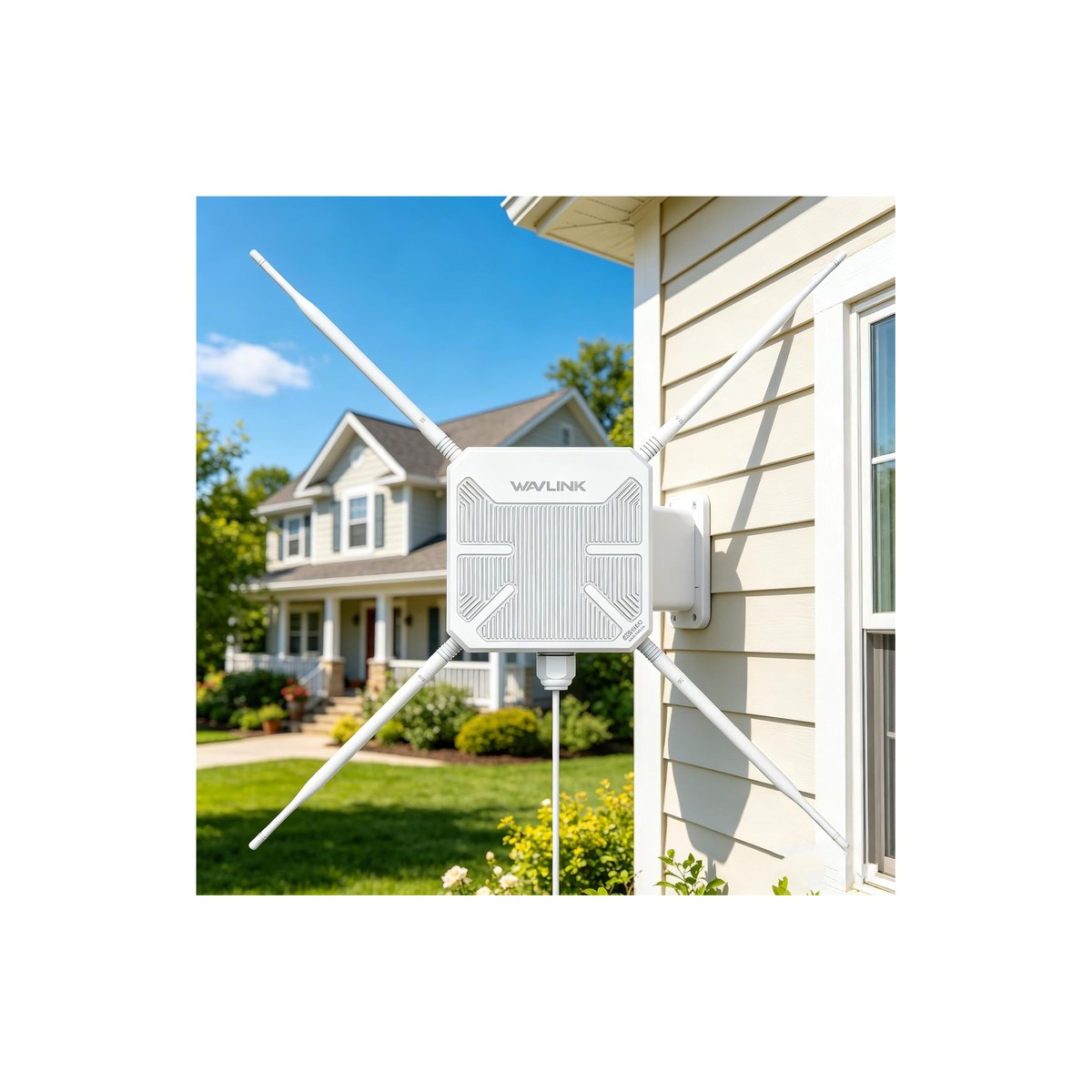
WAVLINK AC1200 Outdoor WiFi Extender, Dual-Band Long-Range WiFi Repeater, 4x7dBi Antennas, PoE, IP65, AP/Repeater/Mesh Modes (ASIN B0DR5PQ9LS)
The cheap dual-band outdoor unit, if you'll set it up yourself.
Who it's for: The technically inclined RVer who wants outdoor range on a budget and does not mind a web-interface setup and an Ethernet run. The WAVLINK AC1200 is an outdoor, weatherproof access point with four high-gain antennas that can run in repeater mode to grab and rebroadcast a campground signal, the cheapest way to get real outdoor reach without paying Winegard or kit prices.
What we found: For about $99 it is dual-band, so unlike the Winegard it can see 5 GHz park networks, it is IP65 weatherproof, and it is powered over a single Ethernet cable so it mounts outside cleanly. At 3.8 stars across 136 reviews it is competent but unremarkable, and the honest catches are real: it is not purpose-built for RVs, so there is no roof-mount hardware, the repeater setup runs through a web interface rather than an app, and WAVLINK ships many near-identical listings that muddy which one you are buying.
Bottom line: Buy the WAVLINK if you want outdoor, dual-band range, you are comfortable configuring a repeater through a browser, and you can run an Ethernet cable to mount it outside. If that sounds like a project you would rather skip, the Beryl AX is simpler and adds a VPN for the same money. Like every unit here, it cannot fix a slow, crowded park network, only reach a good one from farther away.
- + Dual-band, so unlike the Winegard it can see and grab 5 GHz park networks, at about $99
- + IP65 weatherproof with four high-gain antennas, and PoE-powered over a single Ethernet cable so it mounts outside cleanly
- + Runs as an access point, repeater, or mesh node, flexible for outdoor coverage beyond just the rig
- × Not purpose-built for RVs, there is no roof-mount hardware and the repeater setup runs through a web interface, not an app
- × At 3.8 stars across 136 reviews it is competent but unremarkable, and WAVLINK ships many near-identical listings that muddy which one you are buying
- × Like every unit here, it cannot fix a slow, crowded park network, only reach a good one from farther away
Skip this guide if...
Skip a WiFi booster entirely if your campground WiFi is slow rather than just distant, because no extender can create bandwidth a crowded park doesn't have, run a speed test next to the office and if it crawls there, only cellular or Starlink will help. Skip it too if you are a boondocker, there is no campground WiFi to extend out on BLM land. And if reliable everyday or work internet is the goal, buy a cellular hotspot or router first, campground WiFi is a fallback, not a foundation, see our RV internet guide.
Don't bother with.
- × Skip KING WiFi boosters (WiFiMax, Swift, Falcon)KING was the best-known name in RV WiFi boosting, and you will still find the WiFiMax, Swift, and Falcon for sale on Amazon and at Camping World, but the company shut its doors in 2025. What is left is orphaned inventory: no warranty, no support, no firmware updates, and the Falcon's roof antenna was 2.4 GHz only anyway. At around $130 it is priced against the GL.iNet Beryl AX, which costs less, rates far higher, and comes from a company that still exists. Don't buy a dead brand.
- × Skip The RedPort Halo extenderThe Halo shows up in plenty of older RV WiFi roundups, which is why people still search for it, and it is still sold, around $445 direct from RedPort and a few marine dealers, though it is scarce on Amazon. The problem is not that it is dead, it is that it is a poor value: the RV internet authorities report the maker stopped cooperating with reviewers, and the original Halo was widely flagged as rebranded Alfa hardware sold for considerably more. At more than four times the price of the Beryl AX, skip it.
- × Skip Chasing the Alfa CampPro right nowThe Alfa WiFi CampPro 3 is a genuine long-range kit, an outdoor tube antenna feeding an indoor router, and when it is in stock it is a reasonable rival to the Winegard for reaching distant signal. But at our June 2026 check it was Currently Unavailable on Amazon with no buy box, and the older CampPro 2 is a single-band model and superseded. If it comes back in stock and you need maximum range it is worth a look, but don't pay a third-party markup to get one today.
- × Skip Buying a WiFi booster when you meant a cell boosterThese are different devices for different problems, and the shared word booster causes the most expensive mistake in this category. A WiFi extender grabs an existing WiFi network, a campground's or marina's, and rebroadcasts it. A cell signal booster like a weBoost amplifies a weak cellular tower signal so your phone or hotspot works. If your problem is no bars on your phone out in the country, you want a cell booster, not anything on this page, see our RV cell signal booster guide.
- × Skip Expecting an extender to fix a slow, crowded park networkThis is the myth that drives most one-star reviews. An extender rebroadcasts the campground's existing signal with a stronger antenna, so it can reach a distant network, but it cannot give you more speed than the park already has. On a Friday night when a hundred rigs are streaming through one tired DSL line, a booster just shows you more bars of the same one-to-five-megabit crawl. The test: run a speed test standing next to the office, and if it is slow there, no gear fixes it.
How we picked.
Sources we read and how we picked
We started from the question buyers actually have, which is not which booster has the best specs but whether any of these will make campground WiFi usable. We read the RV mobile-internet authorities, the RV owner forums where people report what actually worked at real parks, and the manufacturer pages, then we verified every product live on Amazon on June 16, 2026, price, rating, review count, and crucially whether it is still in stock and from an active company, because this category is full of discontinued gear.
That last check reshaped the guide. Two of the brands you will see in older roundups, KING and RedPort Halo, are gone, and the Alfa CampPro was unavailable at our check, so the honest field narrowed to three buyable products. We rank on fit and proof: the best-supported, best-rated tool for the most common situation leads, even though it is a travel router rather than a dedicated extender, because in this category the dedicated extenders are mostly the weaker, older, or dead options.
What a WiFi extender does, and the one thing it can't
A WiFi extender, whether a roof dome, an outdoor antenna kit, or a travel router in repeater mode, does one thing: it connects to an existing WiFi network with a better antenna than your phone has, then rebroadcasts that signal as a new network inside your rig. That is genuinely useful when a good park or marina network is too far away, or too blocked by trees and your rig's metal walls, to reach from your site. It works in both directions, so the whole rig shares one reachable connection.
Here is the one thing no extender can do: create bandwidth the campground doesn't have. It rebroadcasts the park's signal, it does not add capacity to the park's internet line. So if the campground's connection is a saturated DSL line crawling at one to five megabits on a busy evening, a stronger antenna just gives you more bars of that same crawl. The practical test the authorities recommend: run a speed test standing next to the office or access point. Fast there means an extender can help you reach it. Slow there means the problem is the park, and only cellular or Starlink will fix it.
WiFi booster vs cell booster vs travel router
The word booster causes the costliest confusion in RV internet. A WiFi extender, this guide, grabs an existing WiFi network and rebroadcasts it. A cell signal booster amplifies a weak cellular tower signal for your phone or hotspot, a completely different device for a different problem, covered in our separate cell-booster guide. If you have no cell bars out in the country, no WiFi extender helps, because there is no WiFi to extend. If the campground has WiFi you just can't reach from your site, an extender is the right tool.
The third option, and the one we lead with, is a travel router used in WiFi-as-WAN mode. It connects to the campground network as its source and rebroadcasts it exactly like a dedicated extender, but it adds a VPN, works at hotels and marinas, and costs less. A dedicated outdoor unit like the Winegard still wins on raw range, its roof antenna reaches farther than a travel router's internal one. But for most RVers, parked within a reasonable distance of the access point, the travel router is the smarter, cheaper, more secure buy, which is why our RV internet guide recommends one too.
Why a VPN matters on any park network
Campground and marina WiFi is shared, open, and a soft target. The FBI's complaint center logged 859,532 cybercrime reports in 2024, and a 2023 consumer survey found that roughly one in four frequent public-WiFi users reported a security problem. The common attacks on open park networks are evil-twin hotspots that mimic the real network name, traffic snooping on unencrypted connections, and exploits against devices running old firmware. Verifying the exact network name with the office, and never banking on an open network without protection, are basic, free precautions.
A VPN is the real fix, and it is the quiet reason the travel router leads this guide. The GL.iNet Beryl AX runs WireGuard and OpenVPN at the router level, so every device that joins it is encrypted on the park network automatically, configured once. The dedicated extenders here, the Winegard and the WAVLINK, do not include a VPN, so on those you would run a VPN app on each phone, tablet, and laptop separately. If you do anything sensitive on campground WiFi, that difference alone is worth the price of the router.
FAQs.
Q01 Do RV WiFi boosters actually work?
+
Q02 What is the difference between a WiFi booster and a cell signal booster?
+
Q03 Why is campground WiFi so slow, and can a booster fix it?
+
Q04 What happened to the KING and Halo WiFi boosters?
+
Q05 Is a travel router better than a dedicated RV WiFi extender?
+
Q06 Do I need a VPN on campground WiFi?
+
If you, then this.
- IF you are parked within range of a decent park or marina network and want VPN securityGET GL.iNet Beryl AX (B0BPSGJN7T; travel router, WiFi-as-WAN, built-in VPN)$98.99 →
- IF you need to reach a signal from far across a big park and it runs 2.4 GHzGET Winegard ConnecT 2.0 WF2 (B079WWGB32; roof-mounted high-gain antenna)$179.60 →
- IF you want cheap outdoor dual-band range and will configure it yourselfGET WAVLINK AC1200 Outdoor (B0DR5PQ9LS; weatherproof PoE repeater)$99.00 →
- IF the park WiFi is slow even standing next to the officeGET not a booster: only cellular or Starlink adds real speed, see our RV internet guidevaries →
- IF you have no cell bars on your phone out in the countryGET not a WiFi booster: a cell signal booster is the tool, see our RV cell booster guidevaries →
- IF you work from the rig and need reliable everyday internetGET a cellular hotspot or router as your primary connection, see our RV internet guidevaries →
RV & Van Gear: The Complete Guide
The whole-rig picture →Every system in a van, RV, or camper, organized in one place, with the safety and weight floor and the one guide we trust for each.
- Getting better WiFi in an RV: long-range extenders and the limits of campground WiFi · Mobile Internet Resource Center
- The Ultimate Guide to RV WiFi Extenders: extenders can't create bandwidth that isn't there · TechnoRV
- Best Wi-Fi Boosters and Extenders for Your RV: can't exceed the speed of the parent network · SatelliteInternet.com
- RV connectivity: travel routers, WiFi-as-WAN, and built-in VPN · GL.iNet
- The hidden risks of campground WiFi and how RVers can protect themselves · CamperFAQs