Best RV Internet Options: The 4 Ways to Get Online on the Road (2026)
There are four real ways to get internet in an RV, and the device you buy matters far less than the plan behind it. Cellular data through a hotspot or router covers the large majority of where RVers actually travel; Starlink fills the off-grid gaps for a price; campground WiFi is a weak fallback; and full-timers stack two of these for redundancy. The gear is the easy, imperfect part, almost every RV-internet device rates 3.6 to 4.1 stars, because the category is frustrating. We pulled the 2026 carrier plans and Starlink Roam tiers, read the mobile-internet authorities and forums, and verified every listing live on Amazon on June 14, 2026. The honest headlines: 'unlimited' plans throttle your hotspot after 200 to 250 GB; Starlink's real first-year cost runs two to six times its advertised price; and for heavy users two carrier plans often beat one 'unlimited' on coverage and cost. Pick your strategy first; the box is the last decision.
- 01 TravlFi JourneyGo LTE (B0F2TS9JG4) , top pick, the turnkey RV hotspot, device + pay-as-you-go data in one, no contract, 4.1/232, ~$159
- 02 GL.iNet Slate AX (B0B2J7WSDK) , the do-everything travel router (no modem, it needs a hotspot or Starlink to feed it), the glue + VPN for any source, 4.5/3,698, ~$120
- 03 Netgear Nighthawk M6 (B0BGV79FHT) , the power-user hotspot, bring your own carrier plan, 5G, 3.7/290, ~$310
How they compare.
| Rank | Product | Best for | Price | Our score |
|---|---|---|---|---|
| 01 | TravlFi JourneyGo LTE (B0F2TS9JG4)
Top Pick
| best for most: the turnkey hotspot with pay-as-you-go data and no contract, the simplest path online | $159.00
Buy → | 8.6/10 |
| 02 | GL.iNet Slate AX (B0B2J7WSDK) | the $120 do-everything travel router, the glue and VPN for any internet source, deepest-proven here | $119.99
Buy → | 8.5/10 |
| 03 | Netgear Nighthawk M6 (B0BGV79FHT) | the power-user hotspot: bring your own carrier plan and 5G speed, the priciest cellular pick here at $310, for control over simplicity | $309.99
Buy → | 8.0/10 |
Prices are current Amazon prices at time of publication and can change. Scores reflect our editorial evaluation, not vendor input.
Our #1 pick: TravlFi JourneyGo LTE RV WiFi Hotspot, Multi-Network Pay-As-You-Go Mobile Internet, No Contract (ASIN B0F2TS9JG4).
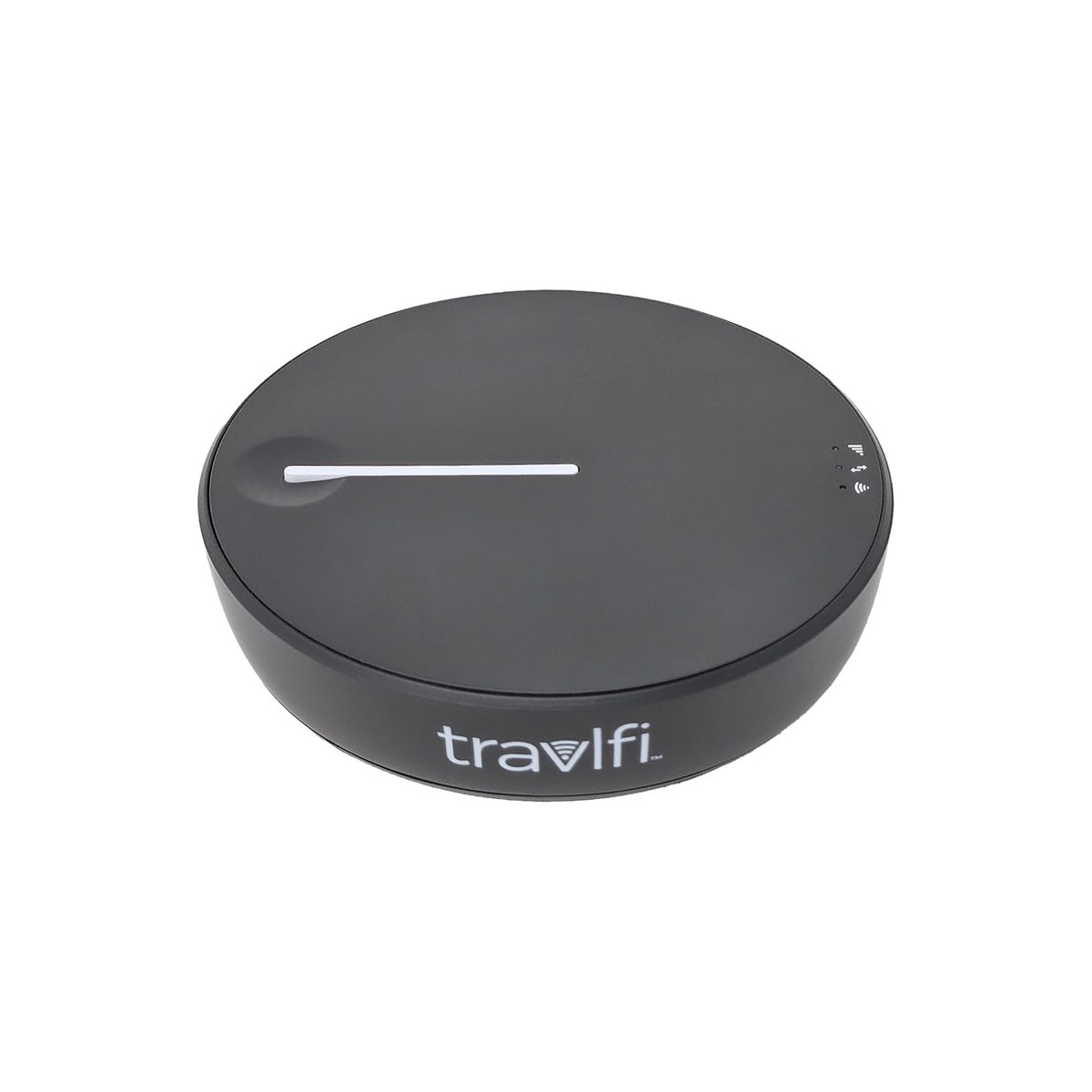
TravlFi JourneyGo LTE RV WiFi Hotspot, Multi-Network Pay-As-You-Go Mobile Internet, No Contract (ASIN B0F2TS9JG4)
The simplest way online for most RVers: device plus data, no contract.
Who it's for: The weekend and part-time RVer who wants internet without managing a carrier account, comparing plans, or learning what a SIM does. The TravlFi JourneyGo is the closest thing to plug-and-play in RV internet: it bundles the hotspot and a no-contract, pay-as-you-go data plan, and it hops across multiple carriers' towers to find the best signal wherever you park.
What we found: It is the best-rated and most RV-specific hotspot in the category, 4.1 stars across 232 reviews at $159, and it is the device Google's first page surfaces for RV internet, real proof in a category where most gear rates lower. The multi-network design is the genuine advantage: instead of betting on one carrier's coverage, it uses whichever network is strongest at your site. The trade-offs are that it is LTE rather than 5G, so peak speeds are modest, and pay-as-you-go data costs more per gigabyte than a carrier unlimited plan if you stream heavily.
Bottom line: Buy the TravlFi JourneyGo if you want the easiest path to RV internet and your travel keeps you within cell coverage, which is most RVers most of the time. Heavy streamers and full-timers will outgrow pay-as-you-go data and want a carrier unlimited plan or the power-user hotspot below. And like any single cellular device, it needs a backup, a booster or Starlink, for the places cell signal does not reach.
- + Turnkey: the device and a pay-as-you-go data plan come together, no separate carrier contract to set up, the simplest way for a non-techy RVer to get online
- + Multi-network: it connects across multiple carriers' towers and picks the best signal, broader coverage than locking to one carrier
- + The best-rated and most RV-specific hotspot we found, 4.1 stars across 232 reviews at $159, and it ranks on Google's first page for RV internet
- × Pay-as-you-go data is convenient but not the cheapest per gigabyte for heavy use, a big streamer is better off on a carrier unlimited plan
- × LTE, not 5G, so top speeds trail a 5G hotspot in a strong-signal area, fine for browsing and video calls, slower for big downloads
- × It is still one cellular device, so it goes dark where there is no cell signal, pair it with Starlink or a booster for the gaps
Runner-up: GL.iNet GL-AXT1800 Slate AX Portable Travel Router, WiFi 6, Built-in VPN, for RV / Van / Cruise (ASIN B0B2J7WSDK).
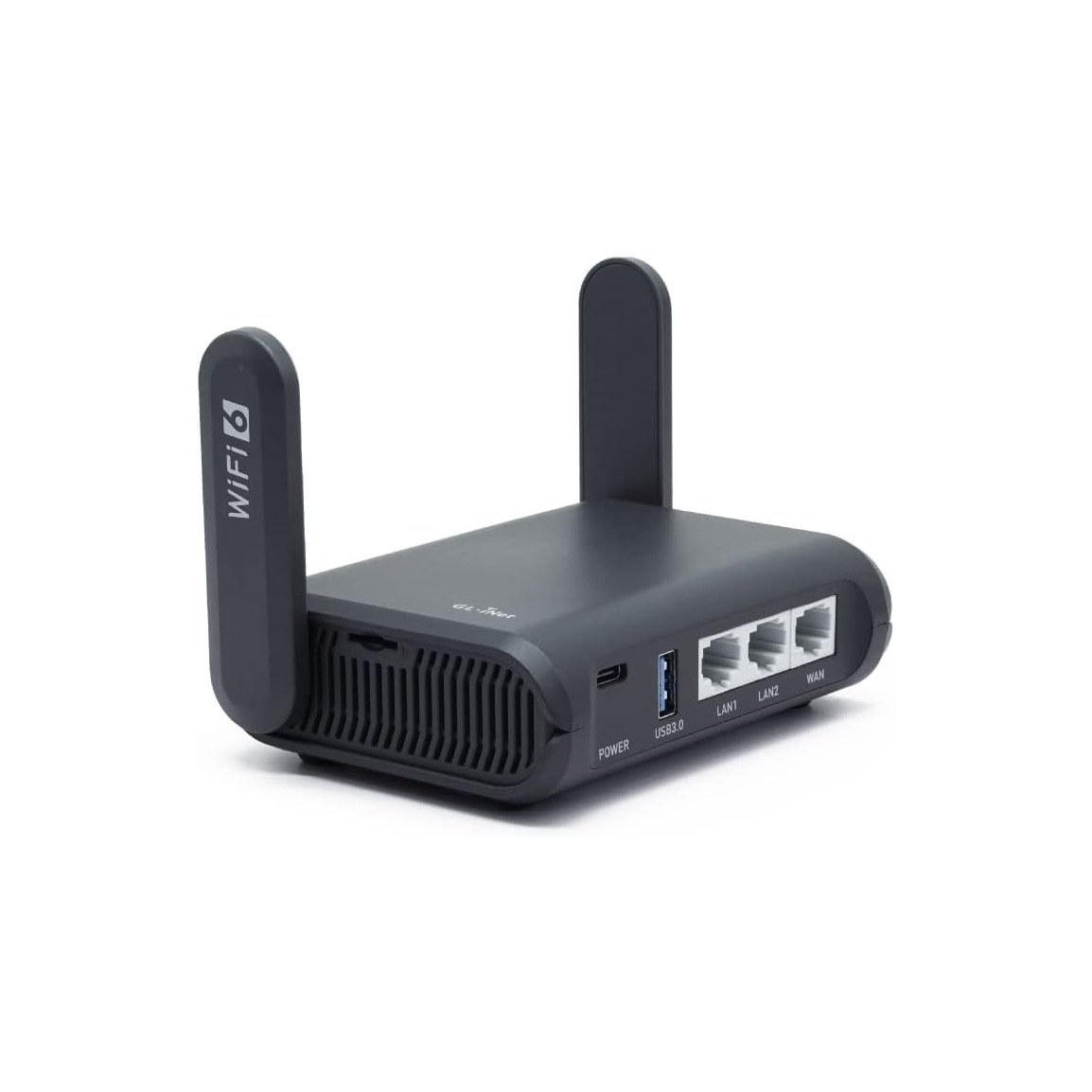
GL.iNet GL-AXT1800 Slate AX Portable Travel Router, WiFi 6, Built-in VPN, for RV / Van / Cruise (ASIN B0B2J7WSDK)
The $120 glue that turns any connection into one secure RV network.
Who it's for: Almost everyone, which is why a router that makes no internet of its own ranks this high. The GL.iNet Slate AX takes whatever source you have, the TravlFi above, your phone's hotspot, a Starlink dish, or the campground's WiFi, and turns it into a single secure WiFi 6 network for the whole rig, with a built-in VPN for the inevitable shared public networks.
What we found: It is the most-loved device in this guide by a wide margin, 4.5 stars across more than 3,700 reviews at $120, in a category where the internet sources themselves struggle to clear 4 stars. It is pocket-sized, runs on USB-C, and its real job is management: it remembers networks, fails over between sources, isolates your devices from a public network, and gives you one stable SSID instead of re-joining a new one at every park. It is not a source, it has no modem, and the deeper features take a little learning.
Bottom line: Buy the Slate AX alongside whatever internet source you choose, it is the single best $120 you can spend on an RV connection, and it is the closest thing to a universal recommendation in this guide. Skip it only if your needs are genuinely a single hotspot and nothing else. Pair it with the TravlFi for a turnkey setup, or put it in front of a Starlink to manage the whole rig's WiFi.
- + 4.5 stars across more than 3,700 reviews, the most-loved and deepest-proven device in this guide by a wide margin, at $120
- + It is the glue: feed it a hotspot, a Starlink, or a campground network and it broadcasts one secure WiFi 6 network with a built-in VPN for the whole rig
- + Pocket-sized, runs on USB-C, and turns flaky public WiFi into a managed connection you control, the one upgrade almost every setup benefits from
- × It is not an internet source, it has no cellular modem, so you still need a hotspot, Starlink, or campground WiFi to feed it
- × The VPN and network-management features carry a learning curve a plug-and-play hotspot does not
- × WiFi 6, not the newer WiFi 7, though that makes little practical difference for RV use
Budget pick: NETGEAR Nighthawk M6 5G Mobile Hotspot Router (MR6150), Unlocked, WiFi 6, SIM Card Slot, 2.5G Ethernet (ASIN B0BGV79FHT).
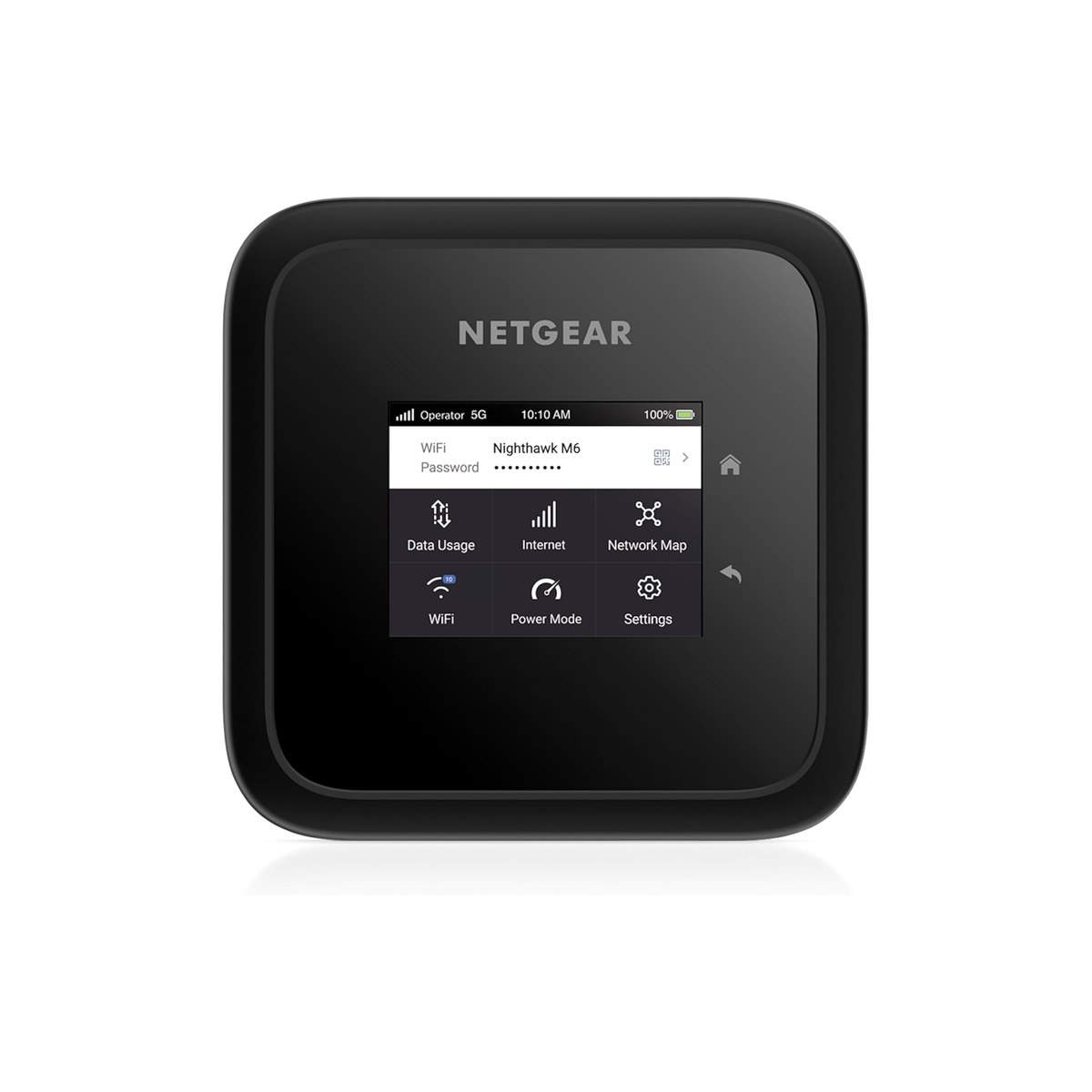
NETGEAR Nighthawk M6 5G Mobile Hotspot Router (MR6150), Unlocked, WiFi 6, SIM Card Slot, 2.5G Ethernet (ASIN B0BGV79FHT)
Bring your own plan and 5G speed, if you want control over simplicity.
Who it's for: The RVer who wants maximum speed and control and is comfortable managing a carrier account. The Netgear Nighthawk M6 is carrier-unlocked with a SIM slot, so you load your own plan, swap carriers when one has better local coverage, and chase the cheapest per-gigabyte data, the opposite philosophy from the turnkey TravlFi. It is the hotspot for the RVer who treats connectivity as a system to tune, not a box to switch on.
What we found: It is the most capable hotspot here, real 5G hardware, a stronger antenna, a 2.5-gigabit Ethernet port to hardwire into a travel router, and support for up to 32 devices. But it is the lowest-rated hotspot in the guide at 3.7 stars across 290 reviews, and the reviews tell a consistent story: firmware quirks, carrier-compatibility headaches, and a setup that rewards someone who enjoys tinkering. At about $310 it is also the priciest cellular device here, before you add a plan.
Bottom line: Buy the Nighthawk M6 if you want 5G speed, the freedom to bring and swap your own carrier plan, and you do not mind the occasional firmware fuss, it is the power user's hotspot. If you want something that just works out of the box, the TravlFi is the better call, and most RVers are happier there. Pair it with the GL.iNet router over Ethernet for the strongest fixed setup.
- + Carrier-unlocked with a SIM slot, so you bring your own plan and can swap carriers, the route to the cheapest per-gigabyte data if you manage it
- + Faster 5G hardware and a stronger antenna than a basic hotspot, a 2.5G Ethernet port to feed a router, and it powers up to 32 devices
- + The capable choice for the RVer who wants speed and control rather than a bundled, simplified plan
- × 3.7 stars across 290 reviews, the lowest-rated hotspot here, owners report firmware quirks and carrier-compatibility headaches, not a set-and-forget device
- × At about $310 it is the priciest cellular device in this guide, and you still pay for a separate carrier plan on top
- × You manage the SIM and the plan yourself, which is the point for power users and the dealbreaker for everyone else
Skip this guide if...
Skip buying any RV internet gear until you have picked your strategy, the plan and the approach decide everything, and the wrong device on the right plan still works while the right device on the wrong plan does not. Skip Starlink entirely if you mostly camp where there is cell coverage, a $159 hotspot plus a $50-to-95 monthly plan covers the large majority of typical RV travel for a fraction of Starlink's real first-year cost. And skip the booster and the extender until you own a primary source and have found a specific gap they fill, they strengthen a connection, they do not create one.
Don't bother with.
- × Skip Believing an 'unlimited' plan is actually unlimitedEvery carrier 'unlimited' plan splits into two pools: unlimited data on the phone itself, and a separate, capped hotspot pool for tethering. Verizon's Unlimited Ultimate gives about 200 GB of full-speed hotspot then throttles to roughly 6 Mbps; T-Mobile caps around 250 GB, AT&T around 100 GB. And on a congested tower at a busy campground, 'unlimited' users are deprioritized to the bottom of the queue and can see 1 to 5 Mbps regardless of the cap. Plan around the hotspot allotment and the deprioritization, not the word 'unlimited.'
- × Skip Expecting T-Mobile AWAY to be a grab-and-go portable planT-Mobile's AWAY RV plan looks ideal, around $110 for 200 GB or $160 for unlimited, but it runs on the same gateway as T-Mobile Home Internet and requires a standard 120-volt AC outlet. It is not a portable, battery-powered device, you must be on shore power or running an inverter to use it. Many RVers sign up expecting plug-and-go and learn this after the box arrives. For true off-grid portability, a 12-volt cellular hotspot or router is the answer.
- × Skip Buying a signal booster to get faster dataBoosters like the weBoost are marketed for speed, but they help most with voice calls and pulling a usable connection out of a marginal one or two bars. For raw data throughput, a roof-mounted MIMO antenna connected to a cellular router generally beats a booster, because it preserves the multiple data streams 4G and 5G rely on; a booster amplifies one path. If data speed is the goal and you run a router, price a MIMO antenna first, and remember a booster does nothing in a true dead zone.
- × Skip Running Starlink under the treesStarlink's failure mode is the opposite of cellular's. Weak cell signal degrades gracefully, video just gets grainy; Starlink under tree cover drops to nothing at all. Dense forest, the Pacific Northwest, Appalachian campgrounds, and many wooded state parks are Starlink dead zones unless you run a long cable and a pole out to a clearing with open sky. If your travel is forested, cellular is the more reliable primary connection and Starlink is the wrong tool for those sites.
- × Skip Treating Starlink's advertised price as the real costStarlink's headline number hides the first-year total. The dish is $199 to $349, but the Unlimited Roam plan runs about $175 a month, roughly $2,100 a year, plus a mount and, critically, a battery-and-solar upgrade to feed its 20-to-100-watt continuous draw off-grid. Real first-year cost lands between $3,000 and $4,850. For weekend and part-time RVers a cellular hotspot covers about 95 percent of needs for under $600 the first year. Starlink earns its cost only for genuine off-grid full-timers.
How we picked.
Sources we read and how we picked
We started from the question the search actually asks, not 'which device' but 'which way.' We mapped the four real approaches to RV internet, pulled current 2026 carrier plan terms and Starlink Roam tiers, and read the people who live this full time: the Mobile Internet Resource Center, satelliteinternet.com, the RV and van forums, and the full-timer blogs. Then we verified every buyable device live on Amazon on June 14, 2026, price, rating, review count, and what it actually is, because this category is thick with carrier marketing and lookalike listings.
Our filter, in order: match the approach to how you travel, then pick the least-frustrating gear for that approach, then be honest about cost and limits. That order is why a $159 turnkey hotspot leads over a $310 power-user hotspot, most RVers want simple and in-coverage, not maximum control, and why the genuinely best-rated device in the guide, the $120 GL.iNet travel router, is a companion rather than the top pick, it makes no internet of its own. We rank on fit, and we state every rating plainly, including the soft ones, because in RV internet the gear is the easy, imperfect part and the plan is the real decision.
The four ways to get RV internet, compared
First, cellular data through a hotspot or router. A device connects to T-Mobile, Verizon, or AT&T towers and broadcasts WiFi inside the rig. It is the right answer for the large majority of RV travel, anywhere within range of a town or a highway, at 10 to 50 Mbps on 4G and 50 to 250 on 5G. A phone hotspot is the free entry point, a dedicated hotspot like the TravlFi or Nighthawk M6 ($150 to $460) is the everyday tool, and a cellular router like a Peplink ($800 to $1,200, sold through specialists like MobileMustHave, not Amazon) is the full-timer's rig with roof-mounted MIMO antennas and dual-carrier failover. Plan cost runs $50 to $110 a month for one carrier.
Second, satellite, which in 2026 means Starlink. A dish talks to low-orbit satellites at 50 to 200 Mbps with low latency, and it is the only option that reaches true off-grid, no-cell-signal country. The Mini is $199 to $249 and the Standard $349, bought direct from Starlink, not Amazon, and Roam plans run $55 (100 GB), $80 (300 GB), or $175 (unlimited) a month. The catch: trees kill it completely, it draws 20 to 100 watts continuously depending on the dish, so it needs real battery and solar, and Roam users sit at the bottom of Starlink's priority stack. Third, campground or public WiFi plus an extender, a cheap fallback that cannot create bandwidth a saturated park does not have. And fourth, the full-timer stack: a cellular router as primary with Starlink as automatic failover, $175 to $280 a month all in, the no-single-point-of-failure setup for people who work from the road.
The data-plan truth: where the real cost and limits hide
The recurring cost and the real constraint is the data plan, not the hardware, and 'unlimited' is a marketing word. Every carrier unlimited plan splits into unlimited phone data and a separate, capped hotspot pool: Verizon's Unlimited Ultimate gives about 200 GB of full-speed hotspot then throttles to roughly 6 Mbps, and T-Mobile caps around 250 GB, AT&T around 100 GB. Worse, on a congested tower at a popular campground, unlimited users are deprioritized, served after higher-paying customers, and drop to 1 to 5 Mbps no matter what the cap says. The honest plan is built around the hotspot allotment and the deprioritization, not the headline.
Two numbers make the rest concrete. Consumption: streaming HD video burns about 3 GB an hour and 4K about 7, a video call 1 to 2; a weekend camper uses 20 to 50 GB a month, a full-timer 150 to 300, and a remote worker on daily calls 200 to 400. And the math most guides skip: two carrier plans often beat one 'unlimited.' Verizon's 200 GB hotspot ($95) plus T-Mobile's 250 GB ($100) is 450 GB across two networks for $195 a month, only about $20 more than Starlink's unlimited plan at $175 but with far more data, geographic redundancy, zero power draw, and better coverage in populated areas. One more trap worth naming: T-Mobile's RV-specific AWAY plan needs a 120-volt AC outlet, so it is not the portable, off-grid answer it appears to be.
Which approach fits how you travel
Weekend and part-time campers who stay near coverage are done with a turnkey hotspot like the TravlFi and a modest plan, $50 to $95 a month, with the $120 GL.iNet router as the one worthwhile upgrade. Add a Starlink Mini on the 100 GB plan only for the occasional off-grid trip, and drop it to the $10 Standby tier between trips. Full-timers who stay in coverage areas can lean on a single unlimited plan, or T-Mobile AWAY if they are always on shore power. Boondockers and remote workers who go beyond cell coverage need the stack: a cellular router, dual carriers, and Starlink as failover, $175 to $280 a month and $1,700 to $2,500 in hardware.
The decision table below maps each traveler type to an approach and a realistic monthly cost. The throughline: buy for where you actually camp, not for the worst-case place you might someday go, because the off-grid setups cost three to five times what an in-coverage RVer needs. Our RV lithium battery, solar, and power-station guides size the electrical system that satellite and always-on routers require.
FAQs.
Q01 How do I get internet in an RV?
+
Q02 Starlink or cellular for an RV?
+
Q03 How much data do I need for an RV?
+
Q04 Is campground WiFi any good?
+
Q05 What is the cheapest way to get RV internet?
+
Q06 Do I need a cellular router or just a hotspot?
+
If you, then this.
- IF you are a weekend or part-time RVer who stays near coverageGET TravlFi JourneyGo LTE (B0F2TS9JG4; turnkey hotspot, pay-as-you-go data, no contract)$159.00 →
- IF you want 5G speed and to bring your own carrier planGET Netgear Nighthawk M6 (B0BGV79FHT; carrier-unlocked, SIM slot, 5G, Ethernet)$309.99 →
- IF you want to secure and manage any connection in one rig networkGET GL.iNet Slate AX (B0B2J7WSDK; travel router, WiFi 6, VPN, the $120 near-universal add-on)$119.99 →
- IF you regularly hit fringe one-bar coverage and own a hotspotGET a cell signal booster, see our RV cell signal booster guide for the current picksvaries →
- IF you mostly use campground WiFi and want it from your rigGET a WiFi extender, see our RV WiFi booster guide for the current picks (and run a VPN)varies →
- IF you boondock off-grid beyond all cell coverageGET Starlink (Mini or Standard, bought direct at starlink.com; $55 to $175/mo, and budget the battery and solar to run it)varies →
- IF you work from the rig and need a connection that never dropsGET the full-timer stack: a cellular router (Peplink) plus dual carriers plus Starlink failover, see the approaches abovevaries →
RV & Van Gear: The Complete Guide
The whole-rig picture →Every system in a van, RV, or camper, organized in one place, with the safety and weight floor and the one guide we trust for each.
- Mobile Internet Resource Center: cellular plans, cellular routers, and Starlink for RV/boat use · Mobile Internet Resource Center
- Best RV Internet Options: Starlink, T-Mobile, and cellular compared · SatelliteInternet.com
- Starlink Roam plan tiers and hardware pricing · Starlink
- Verizon Unlimited Ultimate: 200GB full-speed hotspot then throttling · Verizon
- T-Mobile AWAY RV/camper internet plans (requires AC power) · T-Mobile