Best Van Insulation: 5 Materials That Beat Cold, Heat, and Condensation (2026)
Insulating a van is the difference between a metal box that bakes, freezes, and drips condensation onto your bed, and a cabin you can live and work in. But the choice that matters is not the R-value on the label, it is the material: a breathable Thinsulate that never traps moisture beats an R-6 foam installed wrong, and the cheap Reflectix everyone reaches for does almost nothing glued flat. The leak people forget is the metal ribs, not the cavities you fill. We read the builders who live with their conversions on the DIY van forums and r/vandwellers, then verified every price live on Amazon on June 10, 2026. The honest headline: the best material, sheep wool, is not sold on Amazon, so we name it and say buy direct. And no insulation alone stops condensation, because the cause is cold surfaces below the dew point: it is one leg of a system with ventilation and dry heat.
- 01 3M Thinsulate SM600L (B0DP3NGNGQ) , top pick, the breathable favorite for walls and ceilings, ~$269
- 02 Rockwool AFB Mineral Wool (B006FX8ASA) , best batt, fire-resistant and sound-damping, ~$100
- 03 Reflectix BP48050 (B0002YPIOW) , best for windows, a radiant barrier (not wall fill), ~$136
- 04 Kilmat 80 Mil Sound Deadener (B0751CBXBT) , best sound deadener, the butyl layer you add first, ~$70
- 05 Frost King No-Itch Cotton (B004Y6SX1Y) , best budget, no-itch filler for door panels, ~$10
How they compare.
| Rank | Product | Best for | Price | Our score |
|---|---|---|---|---|
| 01 | 3M Thinsulate SM600L (B0DP3NGNGQ)
Top Pick
| best overall, breathable, thin, non-toxic | $269.00
Buy → | 8.6/10 |
| 02 | Rockwool AFB Mineral Wool (B006FX8ASA) | best batt, fire + sound, walls and door panels | $99.99
Buy → | 8.0/10 |
| 03 | Reflectix BP48050 (B0002YPIOW) | best for windows, radiant barrier, needs an air gap | $136.08
Buy → | 8.3/10 |
| 04 | Kilmat 80 Mil (B0751CBXBT) | best sound deadener, the butyl layer-one pairing | $69.95
Buy → | 8.5/10 |
| 05 | Frost King No-Itch Cotton (B004Y6SX1Y) | best budget, non-itch cavity filler | $9.85
Buy → | 8.1/10 |
Prices are current Amazon prices at time of publication and can change. Scores reflect our editorial evaluation, not vendor input.
Our #1 pick: 3M Thinsulate SM600L Automotive Camper Van Insulation, 60 in x 360 in (5 ft x 30 ft, breathable hydrophobic acoustic, spray-adhesive install, ASIN B0DP3NGNGQ).
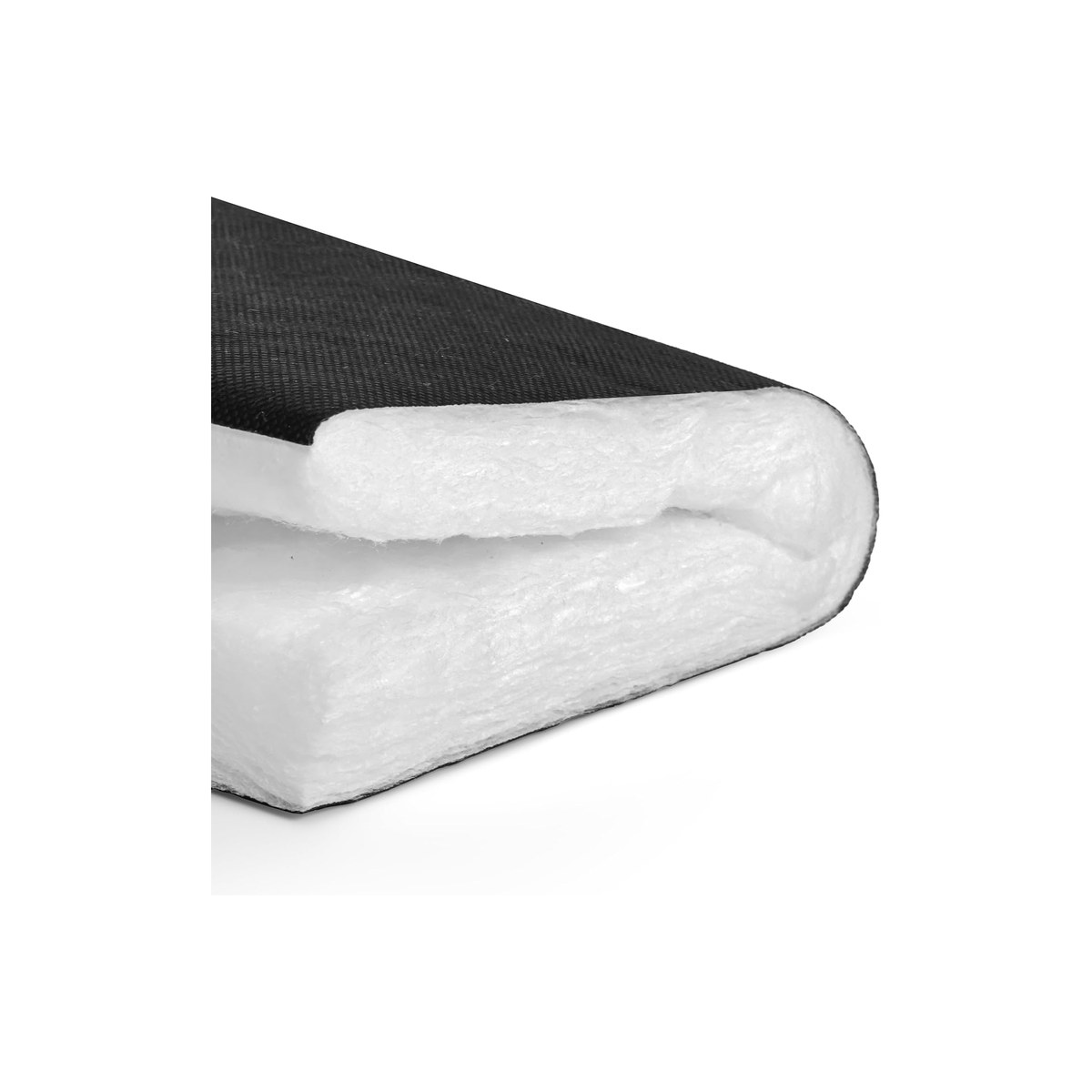
3M Thinsulate SM600L Automotive Camper Van Insulation, 60 in x 360 in (5 ft x 30 ft, breathable hydrophobic acoustic, spray-adhesive install, ASIN B0DP3NGNGQ)
The breathable, easy material most van builds should start with.
Who it's for: The van or camper builder insulating the walls and ceiling who wants the lowest-risk, easiest material. This is the first-time converter who does not want to gamble on trapping condensation behind a wall they have just closed up, values a material they can cut with scissors and press into every curve and rib, and is willing to pay a premium for breathable, non-toxic insulation that is hard to install wrong. It is also the work-from-rig builder who wants the cabin quieter as well as warmer.
What we found: Thinsulate is the default van-build favorite, and the reason is moisture, not warmth. It is hydrophobic and breathable, so it lets humidity pass through instead of trapping it behind the wall, the hidden-condensation failure that rots a van from the inside. It is also the easiest material here: a little spray adhesive and it presses into curves, ribs, and nooks no rigid board can reach, and it quiets the cabin as it insulates. The honest catch is R-value: at about R-3.2 per inch it is lower than foam board or mineral wool and the priciest per unit of R, around four times polyiso. In a van, breathability beats raw R, which is why builders pay for it.
Bottom line: For most van and camper builds, Thinsulate is the right material for the walls and ceiling: the safest bet against condensation, the easiest to install, and quiet as well as warm. Skip it if your budget is tight (the cotton and mineral wool cost far less) or if you only need to insulate windows (that is Reflectix). Buy enough for full coverage, about 50 linear feet for a Sprinter, Transit, or ProMaster, and add a thermal break over the metal ribs so bridging does not undo the work.
- + Breathable and hydrophobic: it lets moisture pass through instead of trapping it behind the wall, the property that makes it the safe default for a van
- + By far the easiest install: spray a little 3M 90 adhesive and press it in; it conforms to curves, ribs, and nooks no rigid board can reach
- + Thin, non-toxic, no off-gassing, and it doubles as acoustic insulation, quieting the cabin as it warms it
- + 60 inches wide; this 360-inch roll does roughly a small van, and about 50 linear feet covers most Sprinter, Transit, or ProMaster builds
- × A lower R-value per inch than the foam boards and mineral wool (about R-3.2), so it is thin warmth, not deep cold-weather R
- × The most expensive per unit of R, around four times polyiso, so a full build runs into real money
- × It does nothing for the metal ribs themselves; add a thermal break over them or the bridging undoes much of the work
Runner-up: ROCKWOOL AFB Mineral Wool Insulation, 2-inch Acoustical Fire Batts (Case of 6, fire-resistant, sound-damping, for walls and door panels, ASIN B006FX8ASA).
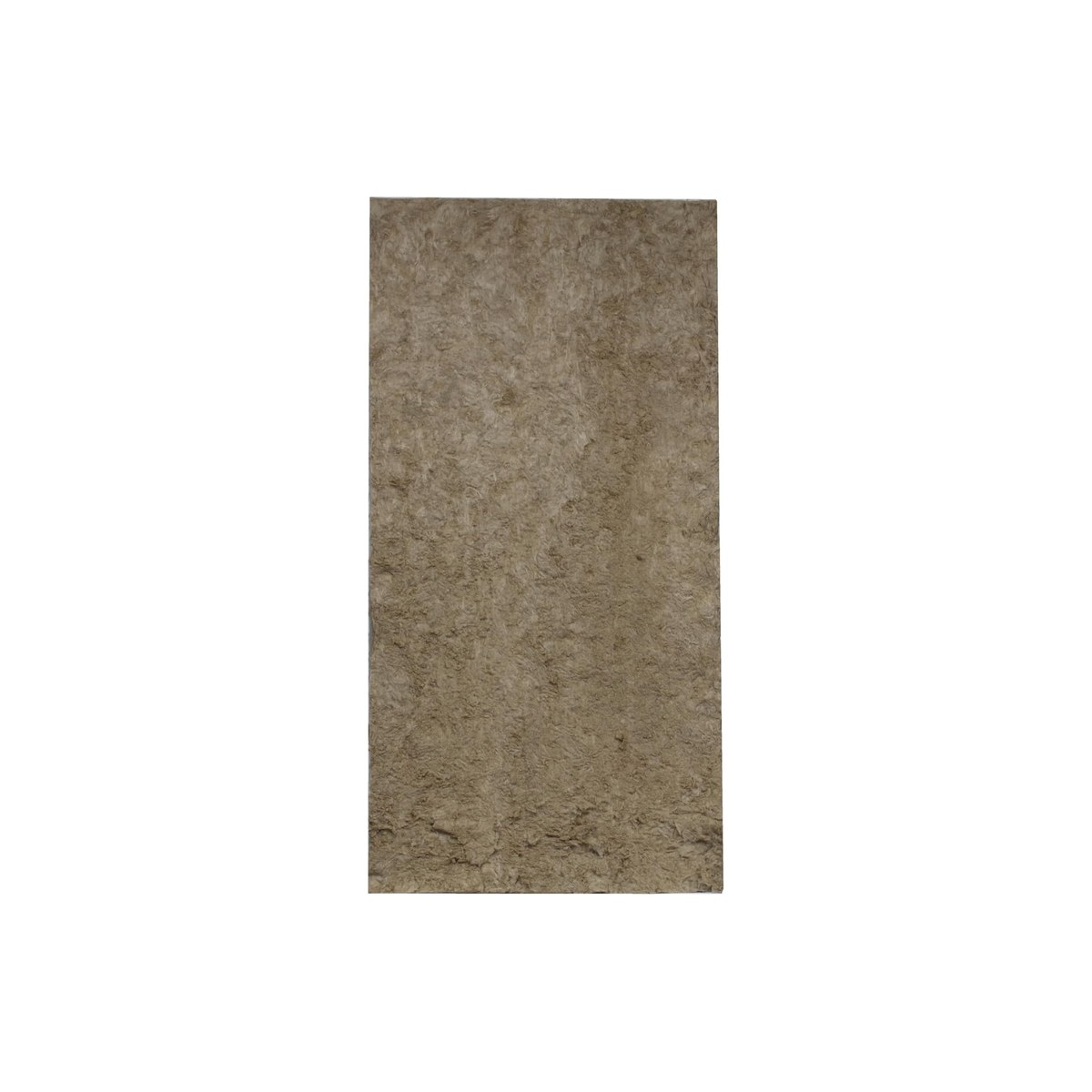
ROCKWOOL AFB Mineral Wool Insulation, 2-inch Acoustical Fire Batts (Case of 6, fire-resistant, sound-damping, for walls and door panels, ASIN B006FX8ASA)
A fire-resistant, sound-damping batt for walls and door panels.
Who it's for: The builder who wants a fire-resistant, sound-deadening batt for the wall cavities and door panels, and who is insulating behind paneling rather than leaving anything exposed. This is the buyer who likes that mineral wool handles moisture far better than the fiberglass it resembles, will not slump or feed mold, and adds real fire safety near a heater or electrical run, and who is comfortable wearing a mask to cut it and keeping it sealed away from the living space.
What we found: Rockwool AFB is dense mineral wool, and it earns its place on two jobs Thinsulate cannot match: fire resistance and sound damping. At about R-4.3 per inch it insulates better per inch than Thinsulate, it will not absorb water and slump the way fiberglass does, and it is the material to put in the walls and door panels near a heater or an electrical run. It is semi-rigid, so it stays in a cavity without adhesive. The honest catches: the fibers are a lung and skin irritant, so you mask up to cut it and keep it sealed behind paneling, never exposed to the air you breathe; and it is heavier and harder to fit around curves.
Bottom line: Use Rockwool where its strengths matter, in the wall cavities and door panels, especially near a heater or wiring, and keep it sealed behind paneling. Skip it as your main wall insulation if you want the simplest, breathable install (that is Thinsulate) or the lightest option. And know the trade you are making on Amazon: the eco builder's favorite, Havelock sheep wool, is not sold here, so if you want natural wool, buy Havelock direct; on Amazon, Rockwool is the buyable batt.
- + Fire-resistant and an excellent sound damper, so it does double duty in the walls and door panels where it sits behind paneling
- + Handles moisture far better than fiberglass and will not slump or rot, at about R-4.3 per inch
- + A dense, semi-rigid batt that stays put in a cavity without adhesive, and a case of six 2-inch batts covers a lot of wall
- × Mineral-wool fibers are an irritant: wear a mask and gloves, and keep it behind sealed paneling, not exposed to the cabin air you breathe
- × Heavier than Thinsulate or wool and fiddly to cut cleanly around curves; better in flat cavities than tight nooks
- × Stock ran thin at the time of writing (only a few left); if it is sold out, the widely stocked Rockwool ProRox case is the equivalent buy
Budget pick: Reflectix BP48050 Reflective Insulation, 48 in x 50 ft (radiant barrier bubble-pack, for window covers and air-gapped cavities, ASIN B0002YPIOW).
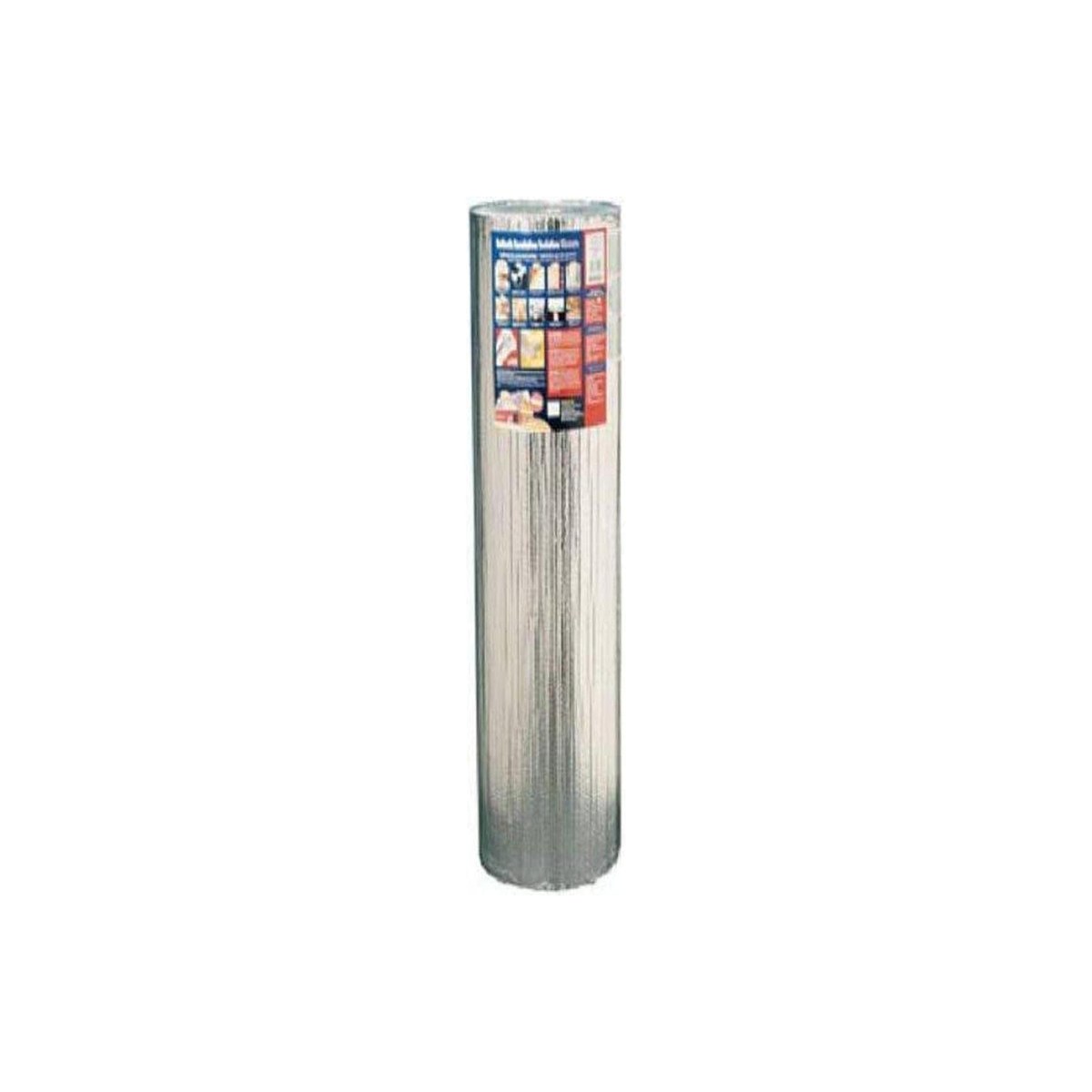
Reflectix BP48050 Reflective Insulation, 48 in x 50 ft (radiant barrier bubble-pack, for window covers and air-gapped cavities, ASIN B0002YPIOW)
A radiant barrier for windows, not the wall insulation people think.
Who it's for: The builder who needs reflective window covers, the single biggest heat path in a van, and a radiant barrier for the spots that have a natural air gap, like behind door panels. This is the buyer who already understands what Reflectix is and is not: not bulk insulation for the walls, but a reflective layer that only works with an air gap. Used for the right job it is excellent and cheap; used as wall fill it is the classic beginner mistake this guide exists to prevent.
What we found: Reflectix is the most misunderstood product, and getting it right is half the value of this guide. It is a radiant barrier, a foil-faced bubble wrap that reflects radiant heat, and it only does that across an air gap. Glued flat against a metal wall it measures about R-1 and does almost nothing, yet that is exactly how most beginners install it. Where it shines is window covers, the biggest single heat path in a van, and cavities that already have a gap; reversible, you face the foil out in summer and in in winter. At 4.7 stars across 385 ratings it is proven for that job. Just do not ask it to be your wall insulation.
Bottom line: Buy Reflectix for window covers and any spot with a real air gap, where it is cheap, light, and genuinely effective. Do not buy it as your wall insulation, glued flat it wastes your money and your wall space, which is the mistake this whole category is famous for. Pair it with Thinsulate or mineral wool in the walls and Reflectix on the glass, and you have the right tool in each place. Face the foil outward in summer to reflect heat, inward in winter to hold it.
- + Unbeatable for reflective window covers, the single biggest heat path in a van, and reversible for summer or winter
- + Cheap, light, easy to cut, and genuinely useful in spots with a built-in air gap, like behind door panels
- + 4.7 stars across 385 ratings; the BP48050 roll is the 48-inch-wide van size
- × It is a radiant barrier, not bulk insulation: glued flat against a wall it is about R-1 and does almost nothing, which is the single most common van-insulation mistake
- × It only works with a three-quarter-inch air gap; if the foil touches anything, it stops reflecting and starts conducting
- × Not a substitute for Thinsulate, wool, or foam in the walls; treat it as a window-and-gap product
Also worth considering.
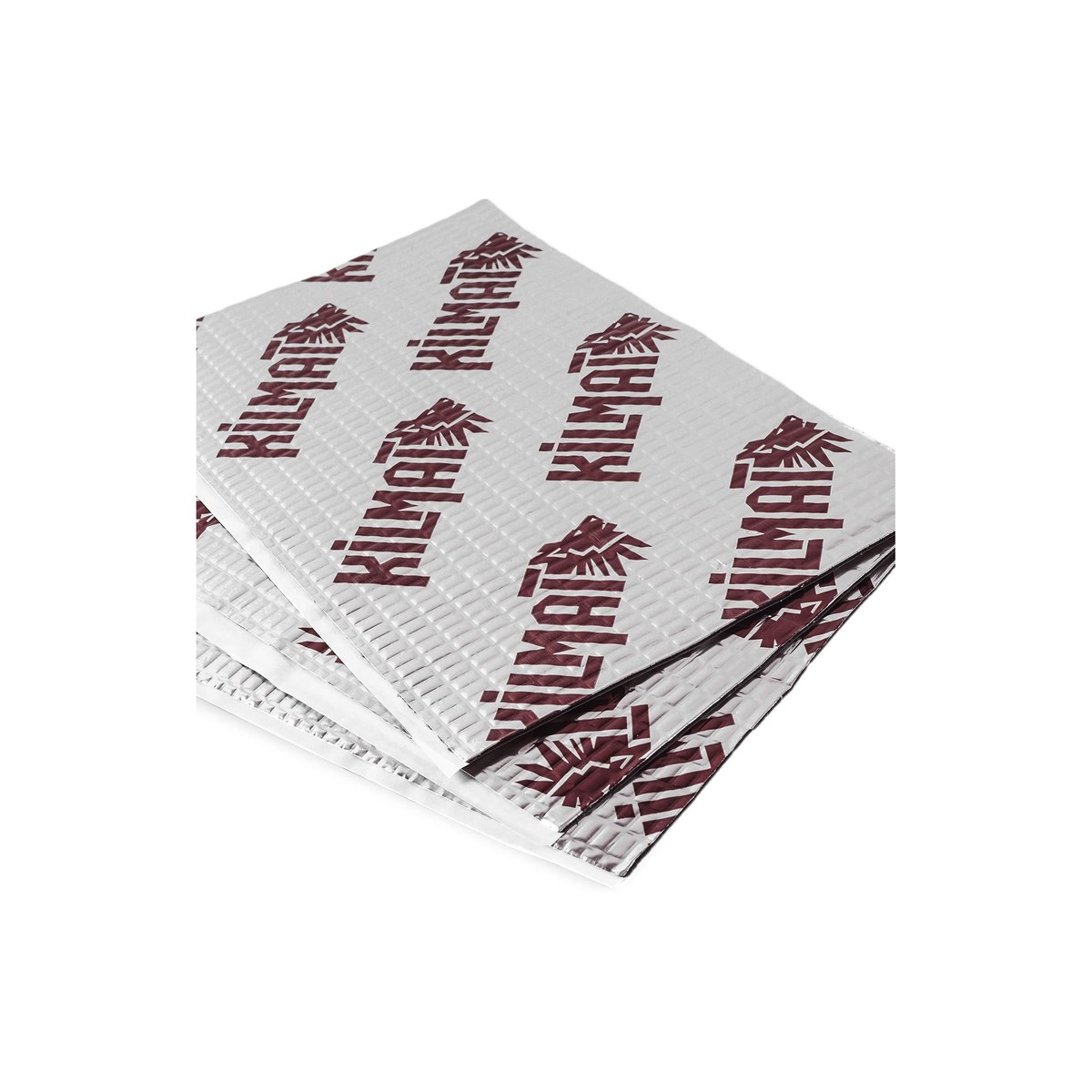
KILMAT 80 Mil Car Sound Deadening Mat, 36 sqft (alubutyl automotive sound deadener, the layer you apply to bare metal first, ASIN B0751CBXBT)
The butyl layer-one that makes a van quiet, not just warm.
Who it's for: The builder who has realized that insulation makes a van warm but not quiet, and wants to kill the road roar, rain drum, and panel resonance that thermal insulation does nothing about. This is the buyer doing the job in the right order: butyl sound deadener on the bare metal first, as layer one, then the thermal insulation on top. It matters most to anyone who sleeps lightly or, especially, works from the rig and needs a cabin quiet enough for focus and clean video calls.
What we found: Kilmat is not thermal insulation at all, it is a butyl sound deadener, and it is here because every serious van build uses both. It is the most-reviewed product in this entire guide by a wide margin, over 26,000 ratings at 4.8 stars, because it works: stuck to bare door, wall, and wheel-well panels it kills the vibration that becomes road and rain noise. You do not cover every inch; about 25 percent coverage on the panel centers, the loud drum spots, gets most of the benefit. It goes on first, directly on the metal, and your Thinsulate or wool layers over it. The result is a cabin that is quiet as well as warm.
Bottom line: Add Kilmat to any build where quiet matters, and do it first, on the bare metal, before the insulation goes in; retrofitting it later means tearing the walls back out. It is cheap insurance against the road and rain noise that thermal insulation ignores, and at over 26,000 reviews it is the proven default. Skip it only if you genuinely do not care about cabin noise. For a work-from-rig build, treat it as part of the insulation job, not an optional extra.
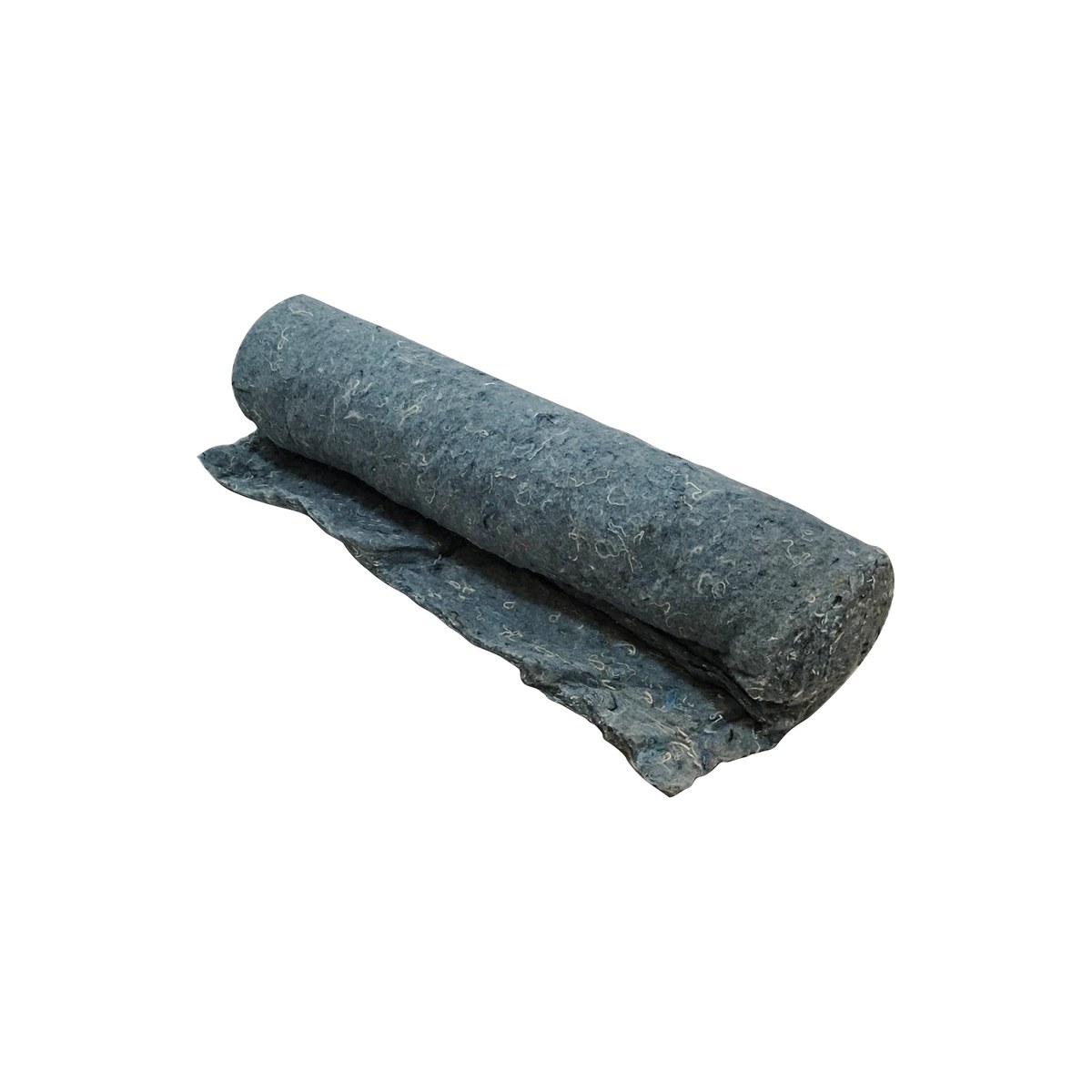
Frost King CF1 No-Itch Natural Cotton Multi-Purpose Insulation, 16 x 1 x 48 in (recycled cotton, non-irritant, for door panels and small cavities, ASIN B004Y6SX1Y)
The cheap, non-itch filler for door panels and cavities.
Who it's for: The budget builder, and anyone filling door panels, pillars, and small cavities, who wants something cheap, safe to handle, and quick to stuff in. This is the buyer who does not want to spend Thinsulate money on a door skin or a wheel-arch void, likes that recycled cotton has none of the itch or lung worry of fiberglass or mineral wool, and understands the one rule that keeps it from causing problems: keep it out of damp, open wall cavities, because cotton soaks up and holds moisture.
What we found: Frost King No-Itch is recycled cotton batting, and its appeal is simple: it is the cheapest material here at about $10, it handles like a blanket with no itch or breathing hazard, and it stuffs easily into door panels, pillars, and the small voids the rigid and flexible materials cannot reach neatly. At 4.4 stars across more than 1,400 ratings it is a proven, low-stakes buy. The honest limit is moisture: cotton absorbs and holds water, so in a damp open wall it can stay wet and feed mold. Keep it to enclosed, dry spots like door skins, where its acoustic and thermal help is real and its weakness never comes into play.
Bottom line: Buy a few rolls of Frost King for door panels, pillars, and the small cavities where a cheap, non-itch filler is all you need, and skip the premium materials for those spots. Do not use it as your main wall insulation, and never in a damp, poorly sealed wall, because it will hold moisture. As the budget leg of a build, paired with Thinsulate on the big surfaces, it covers the awkward gaps for pocket change and keeps the itch and lung worry out of the job.
Skip this guide if...
Skip this guide if you are not doing a real conversion. If you only car-camp a few warm weekends a year, you may not need to insulate at all, just use window covers and a good sleeping bag. If your van is purely a cargo hauler, insulation mostly adds cost and weight you will not feel. If you are chasing maximum R-value for a fixed cabin, a house-style approach with thick rigid foam may suit you more than these van-optimized materials, though watch the thermal bridging. And if your real complaint is condensation, not temperature, do not start with insulation at all: a roof vent fan run year-round removes the humid air at the source and does more than any material on this list. Insulation earns its place when you live in the van through real cold or heat and want a stable, dry, quiet cabin.
Don't bother with.
- × Skip Gluing Reflectix flat to the walls as your insulationThis is the single most common van-insulation mistake, and it wastes both money and wall space. Reflectix is a radiant barrier, not bulk insulation: it works by reflecting radiant heat across an air gap, and the moment the foil is pressed flat against a surface it stops reflecting and becomes a conductor, measuring about R-1. Builders glue it to the metal, panel over it, and wonder why the van is still cold. Use it where it belongs, on window covers and in cavities with a real air gap, and use Thinsulate, wool, or foam in the walls.
- × Skip Spray-foaming the whole van (Froth-Pak)Closed-cell spray foam van insulation has the highest R-value per inch and seals every gap, which sounds perfect until you live with it. It expands and generates heat that can oil-can and distort thin van panels, it can crack or bow panels as the chassis flexes down the road, it is a genuinely messy job that is easy to botch, and it is effectively impossible to remove if you ever need to chase rust or wiring behind it. Owners who do it often say they would not again. Use canned Great Stuff for sealing small gaps, and keep the bulk insulation removable.
- × Skip Maximizing R-value while ignoring the metal ribsBuyers obsess over the R-value of the material between the ribs and forget that the ribs themselves are bare metal bolted to the cold exterior. Those frames are thermal bridges that lose roughly two-and-a-half times more heat per area than an insulated panel, worse at the ceiling, and they carry cold straight past even a thick cavity fill, condensing moisture right on the metal. Bridging is only about a quarter of total heat loss, so it is not worth obsessing over, but the fix is cheap: a thin thermal break, a layer of Thinsulate or foam board over the ribs, not just between them. Coverage and a thermal break matter more than the headline R-number.
- × Skip Fiberglass house battsThe cheap pink batts from the home center are the wrong tool for a vehicle. Fiberglass absorbs and holds moisture, which in a humid, condensing van means it stays wet, loses its R-value, and grows mold against the metal. It also breaks down and settles under constant road vibration, and the loose fibers are an itch-and-lung nuisance. Van builders who use it usually regret it within a season. If you want a batt, use mineral wool, which handles moisture and does not slump; for everything else, use the van-specific materials here.
- × Skip Lizard Skin or ceramic 'insulating' paintSprayed-on ceramic and 'thermal' paints are marketed as a thin miracle insulation, and there is no credible evidence they add meaningful R-value inside a van. A thin film simply cannot do what an inch of insulation does, and any genuine radiant benefit from a reflective coating belongs on the outside of the roof, not the inside wall. Spend the money on real insulation and a thermal break over the ribs. Treat these coatings as paint, not insulation.
How we picked.
Sources we read and how we picked
We did not insulate ten test vans in a lab. What we did was read the builders who live with their conversions: the long material write-ups and condensation threads on the DIY van forums, FarOutRide, gnomadhome, Parked In Paradise, and r/vandwellers, plus the manufacturers' own R-value and moisture data. Then we verified every price, rating, and review count live on Amazon on June 10, 2026.
Our filter was Amazon-buyable materials sorted by the decision builders actually make, which is material type and where it goes, not brand. That filter surfaced a real finding worth stating plainly: van insulation's premium materials are mostly not on Amazon. Sheep wool from Havelock is direct-sale only, rigid foam board is a Home Depot and freight item, and Armaflex sheet is sold direct. So the five scored picks are the strongest Amazon-buyable materials, and we name the off-Amazon favorites honestly rather than pretend they do not exist.
Why the material matters more than the R-value
The instinct is to buy the highest R-value per inch, and in a van that instinct is wrong. The most-loved material, Thinsulate, has a lower R per inch than the foam boards and mineral wool, about R-3.2, and builders pay four times the cost of polyiso for it anyway, because in a thin-walled vehicle that breathes and flexes, three things beat raw R: breathability so moisture does not get trapped behind the wall, full coverage with no gaps, and killing the thermal bridges at the ribs.
So choose by behavior, not by the number on the bag. Breathable materials (Thinsulate, sheep wool) forgive an imperfect vapor situation; rigid foam is its own vapor barrier but only if every seam is sealed and no air pocket is left behind it; cotton and fiberglass absorb water and belong only in dry, enclosed spots. A correctly chosen material at full coverage beats a higher-R material installed wrong, every time. On Amazon that means Rockwool van insulation for the wool-style batt, since the eco favorite Havelock wool van insulation is sold direct, and any wool van insulation forgives an imperfect vapor situation.
Don't forget the metal ribs
Here is the detail most builds miss: the bare metal ribs and frame are thermal bridges that carry cold straight past your insulation. Bolted to the cold outer skin, a wall rib conducts heat roughly two-and-a-half times faster per area than an insulated panel, and a ceiling rib worse still, condensing moisture on the metal inside the wall. Thermal bridging is not the whole game, it is on the order of a quarter of total heat loss, but it is the part people leave bare.
The fix is cheap: a thermal break, a continuous thin layer of insulation over the ribs, not just packed between them. Even a quarter to half inch of Thinsulate or foam board across the frame interrupts the bridge and does more for real-world comfort than adding another inch of R in the cavities. It is not worth obsessing over, but when a thoroughly insulated van still has cold spots and condensation, unbridged ribs are usually why.
Insulation is one leg of beating condensation
A dry van is not the product of insulation alone, and treating it that way is why so many well-insulated vans still drip. Condensation forms when warm, moist cabin air, which you generate constantly by breathing, cooking, and a wet dog, meets a surface colder than its dew point. Insulation helps by keeping interior surfaces warmer, but it cannot remove the moisture you are adding to the air.
So think of it as a four-leg system. Insulation keeps surfaces above the dew point. Ventilation, a roof vent fan run even in winter, is the real workhorse, exhausting humid air at the source. Dry heat, like a vented diesel heater, warms surfaces without adding the water vapor a propane heater does. And a dehumidifier mops up what is left. Build all four; see our diesel heater and RV dehumidifier guides for the other legs.
What to use where, and how much
Learning how to insulate a van comes down to one principle: insulate by location, because each surface has a different job. Floor: a rigid board with compressive strength you can stand and sleep on, which means XPS foam board (this rigid van insulation foam is a Home Depot item, not Amazon). Walls and ceiling: breathable Thinsulate or mineral wool between the ribs and a thermal break over them. Door panels and small cavities: Thinsulate, mineral wool, or cheap no-itch cotton, with Reflectix only where there is an air gap. Windows: reflective Reflectix covers, the single biggest heat path.
On quantity, the rule of thumb for Thinsulate (which covers everything but the floor) is roughly 50 linear feet for a 144-inch Sprinter, a 148-inch Transit, or a 159-inch ProMaster, and about 60 to 70 feet for a 170-inch extended van; one 60-inch-wide linear foot equals five square feet. Budget one can of 3M 90 spray adhesive per twenty linear feet. Sprinter van insulation, Transit van insulation, and ProMaster van insulation are the same job at slightly different footages, and there is no off-the-shelf van insulation kit that fits every layout, so buy by the foot for full coverage rather than gaps and bare ribs.
A cabin you can work in: temperature, quiet, and the house bank
If you work from the rig, insulation does two jobs beyond comfort. First, a well-insulated, thermal-broken cabin holds its temperature, so your heater or air conditioner cycles far less during a workday, which directly extends how long the house bank runs your laptop, monitor, and Starlink before it needs the sun or the alternator. Insulation is, in a real sense, a power upgrade.
Second, the same build that keeps heat in keeps noise out, and for video calls and focus that matters as much as temperature. Thinsulate and wool absorb sound, but the bigger lever is the butyl sound deadener (Kilmat) you put on the bare metal first; doors and wheel wells are the loudest drum panels. The result of doing both is a cabin that is warm, dry, and quiet enough to take a client call from a national forest, which is the whole point.
FAQs.
Q01 What is the best insulation for a van?
+
Q02 How much insulation does a van need?
+
Q03 Does van insulation stop condensation?
+
Q04 Is Reflectix good van insulation?
+
Q05 Thinsulate vs wool vs foam: which is best for a van?
+
Q06 Do I need a vapor barrier in a van?
+
Q07 Do I need sound deadening too?
+
Q08 How do I insulate a van floor?
+
If you, then this.
- IF you want the easiest, safest material for the walls and ceiling of most buildsGET 3M Thinsulate SM600L (B0DP3NGNGQ; breathable, thin, non-toxic, ~50 ft for a Sprinter/Transit/ProMaster)$269.00 →
- IF you want a fire-resistant, sound-damping batt for cavities and door panelsGET Rockwool AFB Mineral Wool (B006FX8ASA; keep it sealed behind paneling; mask up to cut)$99.99 →
- IF you need window covers or a radiant barrier for spots with an air gapGET Reflectix BP48050 (B0002YPIOW; windows and gaps only, never glued flat as wall fill)$136.08 →
- IF you want to kill road and rain noise (do this first, on bare metal)GET Kilmat 80 Mil sound deadener (B0751CBXBT; ~25% coverage on the loud panels, then insulate over)$69.95 →
- IF you want a cheap, non-itch filler for door panels and small dry cavitiesGET Frost King No-Itch Cotton (B004Y6SX1Y; keep it out of damp open walls)$9.85 →
- IF your real problem is condensation, not temperature, or you want natural sheep wool or floor foamGET ventilation + dry heat + a dehumidifier (see our RV dehumidifier guide), Havelock wool direct, and XPS foam board in-storevaries →
RV & Van Gear: The Complete Guide
The whole-rig picture →Every system in a van, RV, or camper, organized in one place, with the safety and weight floor and the one guide we trust for each.
- Seal and Insulate: insulation types, R-value, and air-sealing · ENERGY STAR (US EPA/DOE)
- Van build insulation: materials compared, R-values, and moisture · Gnomad Home