Best RV Roof Vent Fans: 5 We'd Put on a Van or RV Roof (2026)
A roof vent fan is the single most effective upgrade for heat and moisture in a van or RV, and most buyers pick the wrong one by shopping on CFM. Every good RV roof vent fan moves about the same air, roughly 900 CFM. What separates them is whether you can run it in the rain, whether it reverses to pull heat out or push cool in, and how quiet the low speed is at night. We read the van and RV builders who live with these fans, then verified every price live on Amazon on June 11, 2026. The Maxxair Maxxfan Deluxe earns its category-king status on one feature, the built-in rain shield. And off-grid, a good rv vent fan is the highest-leverage single fix for condensation, because it removes humid air at the source: it is the ventilation leg of a system with insulation, dry heat, and a dehumidifier.
- 01 Maxxair MaxxFan Deluxe 7500K (B002OW5JG2) , top pick, the category king, built-in rain shield, ~$420
- 02 Maxxair MaxxFan Plus 04000K (B0050EEO94) , best value, 10 speeds and a thermostat, no rain shield, ~$227
- 03 Dometic Fan-Tastic Vent 1250 (B09VLFH3GD) , the classic alternative, no rain cover, ~$292
- 04 Heng's 14-inch Roof Vent (B077NVFM36) , best budget, established-brand replacement, ~$57
- 05 RVMATE 14x14 Vent Fan (B0BQ6KWB85) , cheap full white-lid unit or second fan, ~$59
How they compare.
| Rank | Product | Best for | Price | Our score |
|---|---|---|---|---|
| 01 | Maxxair MaxxFan Deluxe 7500K (B002OW5JG2)
Top Pick
| best overall, rain shield, 10-speed, thermostat, remote | $419.99
Buy → | 9.2/10 |
| 02 | Maxxair MaxxFan Plus 04000K (B0050EEO94) | best value, 10 speeds + thermostat, no rain shield | $226.94
Buy → | 8.7/10 |
| 03 | Dometic Fan-Tastic Vent 1250 (B09VLFH3GD) | the classic alternative, reversible, no rain cover | $292.27
Buy → | 8.4/10 |
| 04 | Heng's 14-inch Roof Vent (B077NVFM36) | best budget, established-brand crank-vent replacement | $56.95
Buy → | 8.0/10 |
| 05 | RVMATE 14x14 Vent Fan (B0BQ6KWB85) | cheapest full unit, white lid, second fan | $58.99
Buy → | 7.8/10 |
Prices are current Amazon prices at time of publication and can change. Scores reflect our editorial evaluation, not vendor input.
Our #1 pick: Maxxair MaxxFan Deluxe 7500K Vent, Fan and Vent Cover All in One (10-speed reversible, thermostat, built-in rain cover, remote control, electric lift, smoke, ASIN B002OW5JG2).
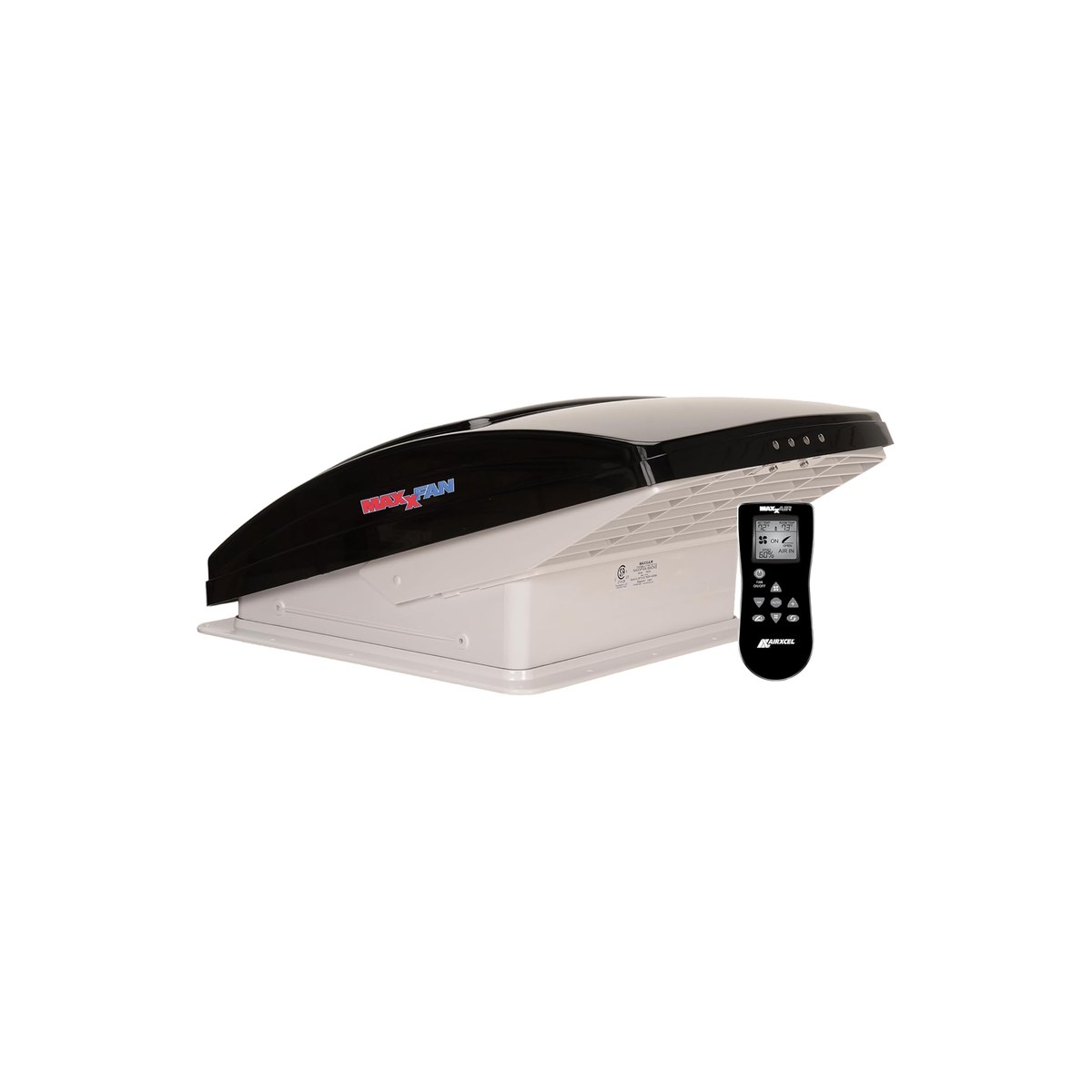
Maxxair MaxxFan Deluxe 7500K Vent, Fan and Vent Cover All in One (10-speed reversible, thermostat, built-in rain cover, remote control, electric lift, smoke, ASIN B002OW5JG2)
The fan that runs through a downpour, and the one to buy.
Who it's for: The van or RV builder who wants the best roof vent fan and is willing to pay for it, the full-timer who lives through every kind of weather, the digital nomad who needs a quiet cabin to work in, and anyone who has been kept awake by a hot, stuffy rig. If you only buy one fan and want zero compromises on rain, airflow, and quiet, this is it. It is the maxxair fan the whole category is measured against.
What we found: The MaxxFan Deluxe is the category king for one reason buyers underrate: the built-in rain shield. Every good fan moves about the same air, roughly 900 CFM, but the Maxxfan's oversized cover lets you run it wide open in a downpour or at highway speed, exactly when a hot, humid cabin needs air the most. The 7500K trim adds an electric lift, a remote, and a thermostat that cycles the fan to hold a temperature. Ten reversible speeds mean a near-silent low for sleeping or a video call, and full intake or exhaust. At about $420 it is the priciest here, and that is the only real knock.
Bottom line: If you buy one roof vent fan for a van or RV, buy the Maxxair MaxxFan Deluxe 7500K. The rain shield alone justifies it, you can ventilate in weather that forces every other fan shut, and the thermostat plus granular low speeds make it the best choice for working or sleeping in the rig. Skip it only if the price stings, in which case the MaxxFan Plus below gives you ten speeds and a thermostat for about $190 less, trading the rain shield for a rain sensor.
- + The built-in rain shield is the category's defining feature: run it wide open in a downpour or at highway speed, exactly when a hot, humid cabin needs air most
- + 10 reversible speeds with a genuinely near-silent low setting (about 0.2 amps), so it is quiet enough to sleep beside or run on a video call
- + Electric lift, a remote, and a thermostat that cycles the fan to hold a temperature; full intake or exhaust, and over 1,600 ratings at 4.6 stars
- + Drops into the universal 14x14 RV roof cutout, and its low amp draw lets you leave it running all day off the house bank
- × At about $420 it is the priciest fan here, and that is the only real knock against it
- × Loud on the top speeds, like every fan; you live on the quiet low-to-mid range
- × On remote models the control board can fail on a high-voltage solar setup, though a $15 voltage regulator prevents it and the board is user-replaceable (about $40 aftermarket, $150 OEM)
Runner-up: Maxxair MaxxFan Plus 04000K High Powered 10-Speed RV Intake and Exhaust Fan (10-speed reversible, thermostat, rain sensor with auto lid closure, no built-in rain shield, white, ASIN B0050EEO94).
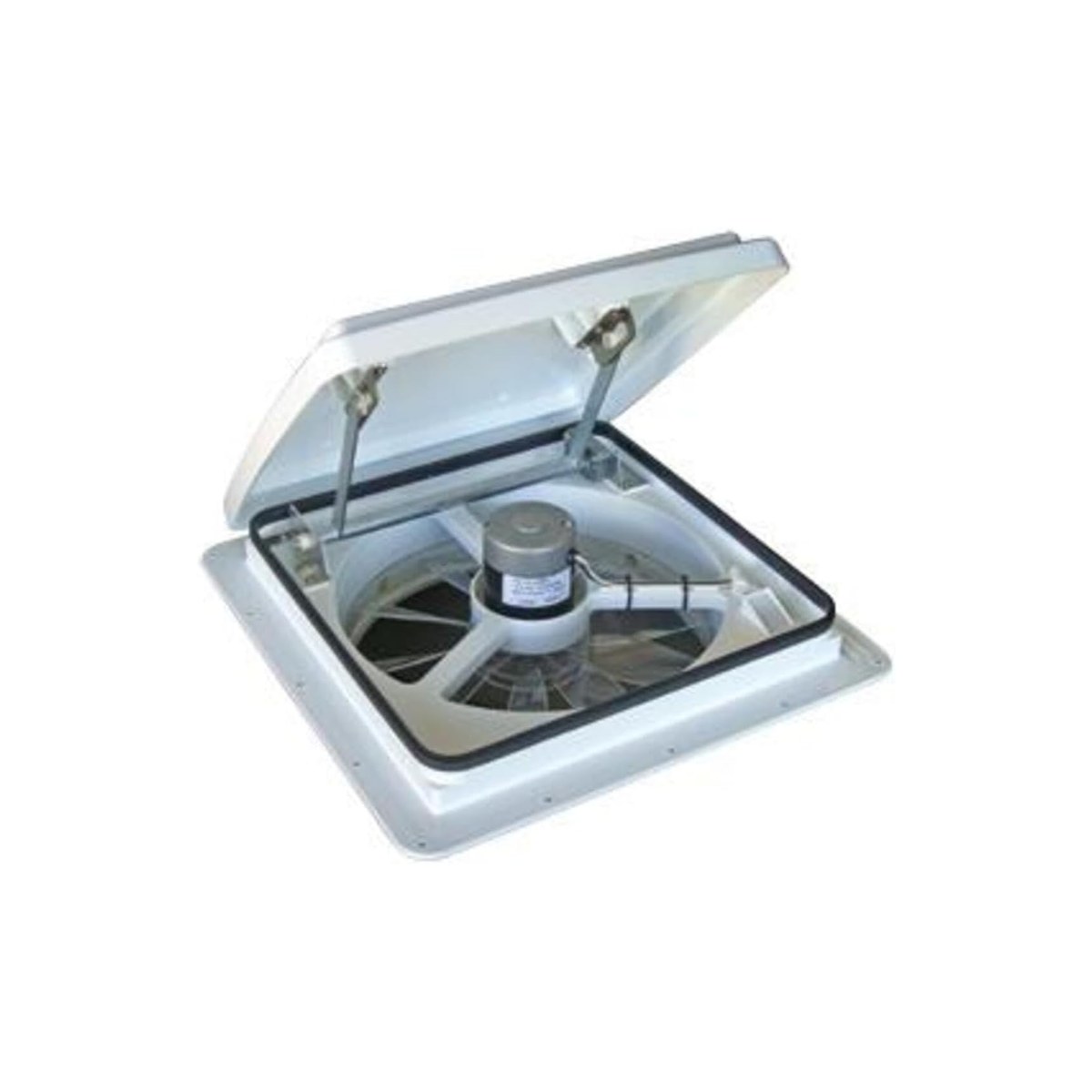
Maxxair MaxxFan Plus 04000K High Powered 10-Speed RV Intake and Exhaust Fan (10-speed reversible, thermostat, rain sensor with auto lid closure, no built-in rain shield, white, ASIN B0050EEO94)
Ten speeds and a thermostat for about half the Deluxe's price.
Who it's for: The builder who wants the Maxxfan's ten reversible speeds and its thermostat, but not the flagship's price, and who is willing to close the vent before a storm rather than ventilate through it. This is the buyer who decides the run-in-the-rain shield is not worth the extra $190, would rather put that toward solar or a battery, and is happy to let the Plus's rain sensor close the lid for them if a shower catches them out.
What we found: The Maxxfan Plus is the value way into the Maxxair lineup, and it keeps most of what makes a Maxxfan good. You get ten reversible speeds, a quiet low setting, and a thermostat that cycles the fan to hold a temperature, for about $190 less than the 7500K. The one real sacrifice is the Deluxe's built-in rain shield: the Plus uses a rain sensor that closes the lid and stops the fan when it rains, the opposite of running open through a storm. It also skips the premium remote and electric lift. At about $227 with 4.4 stars across more than 1,100 ratings, it is the smart-money pick if you will close up in the rain.
Bottom line: Buy the Maxxfan Plus if you want the ten speeds, the quiet low end, and the thermostat that make a Maxxfan worth owning, and the roughly $190 saving matters more to you than ventilating through rain. Just go in clear-eyed: this is the model without the rain shield, so when a storm rolls in you close it up. If running the fan open in the rain matters, step up to the Deluxe; if not, this is the value of the lineup.
- + Ten reversible speeds with a genuinely quiet low setting and a thermostat, the same airflow and controls as the Deluxe, for about $190 less
- + A rain sensor automatically closes the lid if it starts raining while you are away, so you will not come back to a wet bed
- + 4.4 stars across more than 1,100 ratings, and the same drop-in 14x14 fit
- × No built-in rain shield: the rain sensor closes the lid and stops the fan when it rains, so you cannot ventilate through a storm the way the Deluxe can
- × Simpler lift and no premium remote depending on the variant; the Deluxe is the one with the electric lift and full remote
- × Still a real spend at about $227; the budget units below cost a quarter as much
Budget pick: Heng's Industries 14-inch RV Camper Trailer Universal Roof Vent with 12-Volt Fan, Smoke Lid (74112-C, drops into the standard 14x14 cutout, ASIN B077NVFM36).
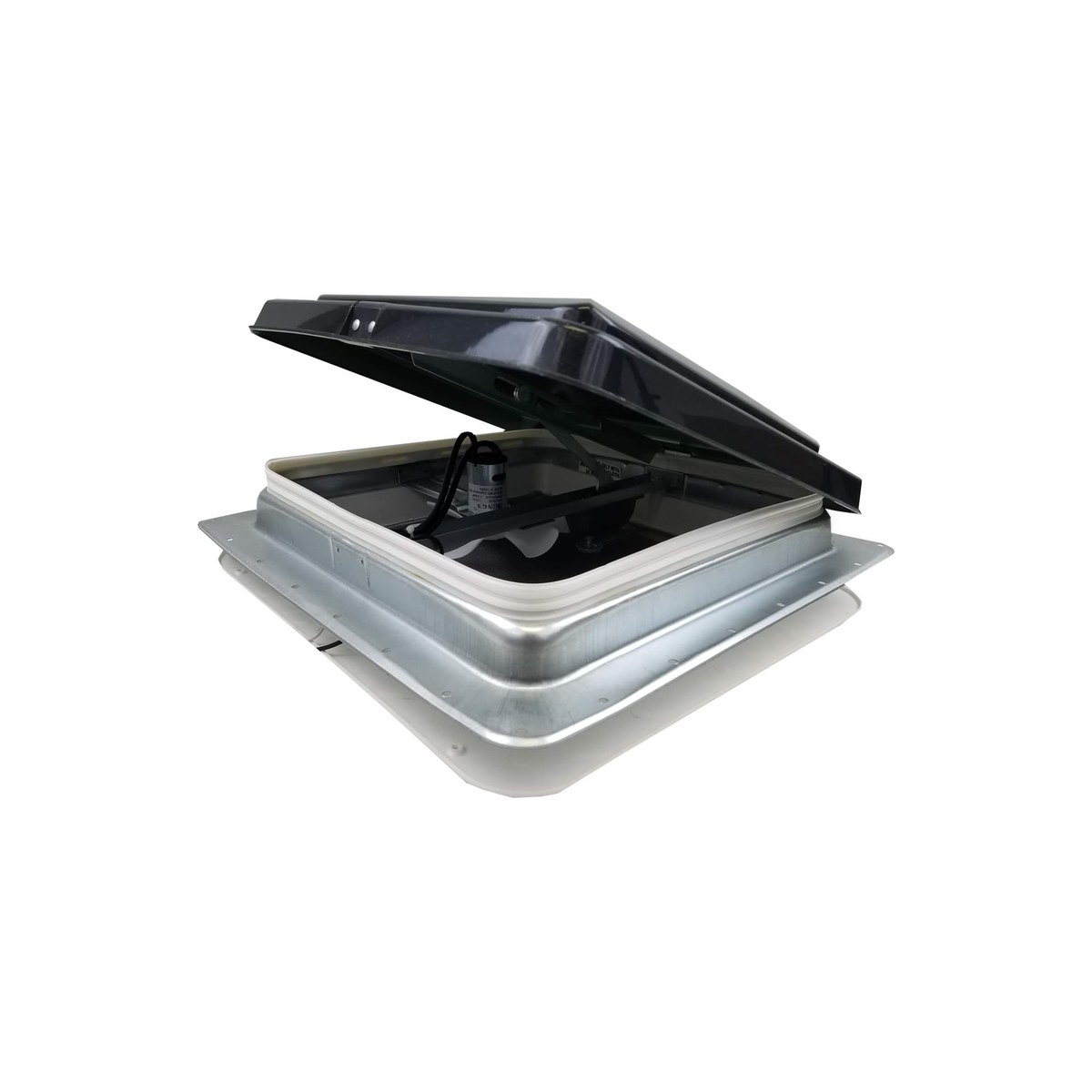
Heng's Industries 14-inch RV Camper Trailer Universal Roof Vent with 12-Volt Fan, Smoke Lid (74112-C, drops into the standard 14x14 cutout, ASIN B077NVFM36)
The cheap, established-brand way to replace a tired crank vent.
Who it's for: The budget builder, the RV owner replacing a dead factory vent, and anyone who wants a powered roof vent for the price of a tank of gas. This is the buyer swapping a tired crank-open vent for one that actually moves air, who wants an established RV brand that dealers stock rather than a no-name listing, and who is fine without the rain shield and ten speeds because they will close the lid when the weather turns.
What we found: The Heng's 14-inch is the established-brand budget pick, the unit RV dealers have stocked for years, and at about $57 it is the cheapest sensible way to put a real powered fan in a 14x14 roof opening. It is a complete vent with a 12-volt fan and a smoke-tinted lid, it drops into the universal cutout, and at 4.6 stars across 345 ratings it is a proven buy, not a gamble. What you do not get is the Maxxfan's rain shield, its ten speeds, or a thermostat: it is a straightforward exhaust fan you open in fair weather and close when it rains. For a replacement or a tight budget, that is often all you need.
Bottom line: Buy the Heng's 14-inch if you are on a budget or replacing a dead vent and do not need the Maxxfan's rain-shield tricks. It is a cheap, established-brand powered vent that drops into the standard 14x14 hole and moves real air. Skip it if you want to ventilate in the rain or run the fan all night at a whisper, which are the things you pay Maxxfan money for. As a first fan or a straight replacement, it is the value of the lineup.
- + About $57 for a complete powered 14x14 roof vent, the cheapest sensible way to put real airflow in the roof
- + An established RV brand dealers have stocked for years, with a smoke-tinted lid, at 4.6 stars across 345 ratings
- + Drops straight into the universal 14x14 cutout, so it is an easy swap for a tired crank-open vent
- × No built-in rain shield, so you must close it when it rains
- × A single-speed, exhaust-only fan with no thermostat or remote
- × Not as quiet for night-long running as a ten-speed Maxxfan on its low setting
Also worth considering.
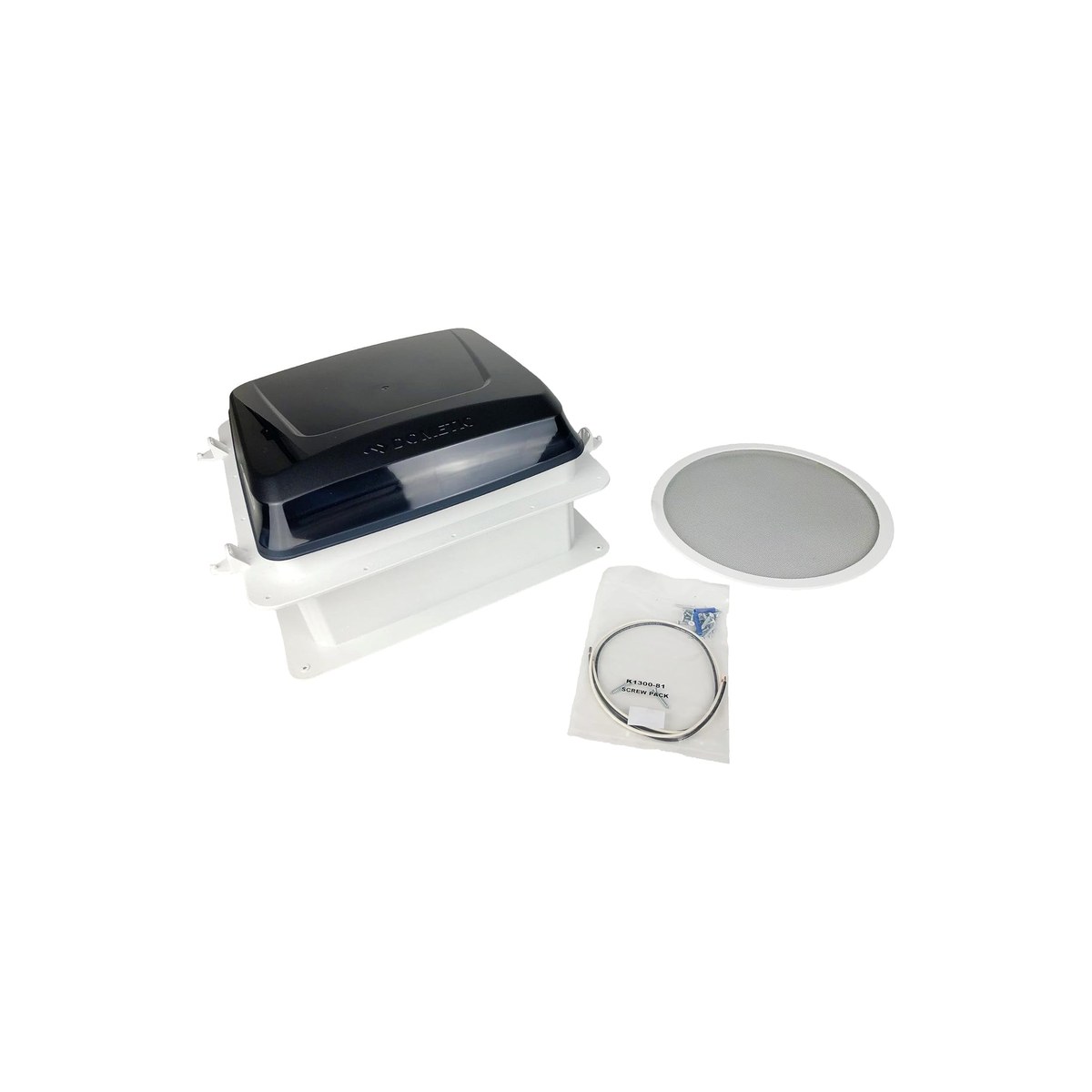
Dometic Fan-Tastic Vent 1200 Series (1250, white, reversible 3-speed, manual lid, no rain cover, ASIN B09VLFH3GD)
The classic alternative, if you can live without a rain cover.
Who it's for: The RVer or van builder who wants the original, proven alternative to the Maxxfan and parks mostly in fair weather. The Fantastic Fan has a huge installed base and a loyal following, so this is the person who values a simple, classic three-speed fan from the brand that defined the category, and who is willing to close the lid by hand when it rains, because this base 1250 has no built-in rain cover.
What we found: The Dometic Fan-Tastic Vent is the classic that defined this category, and the maxxfan vs fantastic fan debate is the most common question in van forums. The 1250 is the base trim: a reversible three-speed fan with a manual lid, about $292, with the smooth airflow the line is known for. What it lacks is the Maxxfan's built-in rain shield, so you must close it when it rains, and with only three speeds it has no whisper-quiet low setting; the Maxxfan is quieter on its lowest speed. At 4.2 stars across 496 ratings it is proven but no-frills. The higher trims add a thermostat and an auto rain sensor, but that sensor is the most-complained-about part.
Bottom line: Choose the Fan-Tastic Vent 1250 if you want the original, simplest version of this fan from the brand that started it, and you camp mostly in dry weather. Just know the trade: no rain cover means you close it when the weather turns, and three speeds means no ultra-quiet low setting for working or sleeping. If you want to run a fan in the rain or at a true whisper, the Maxxfan is worth the extra. For a simple, fair-weather rig, this is a solid, proven pick.
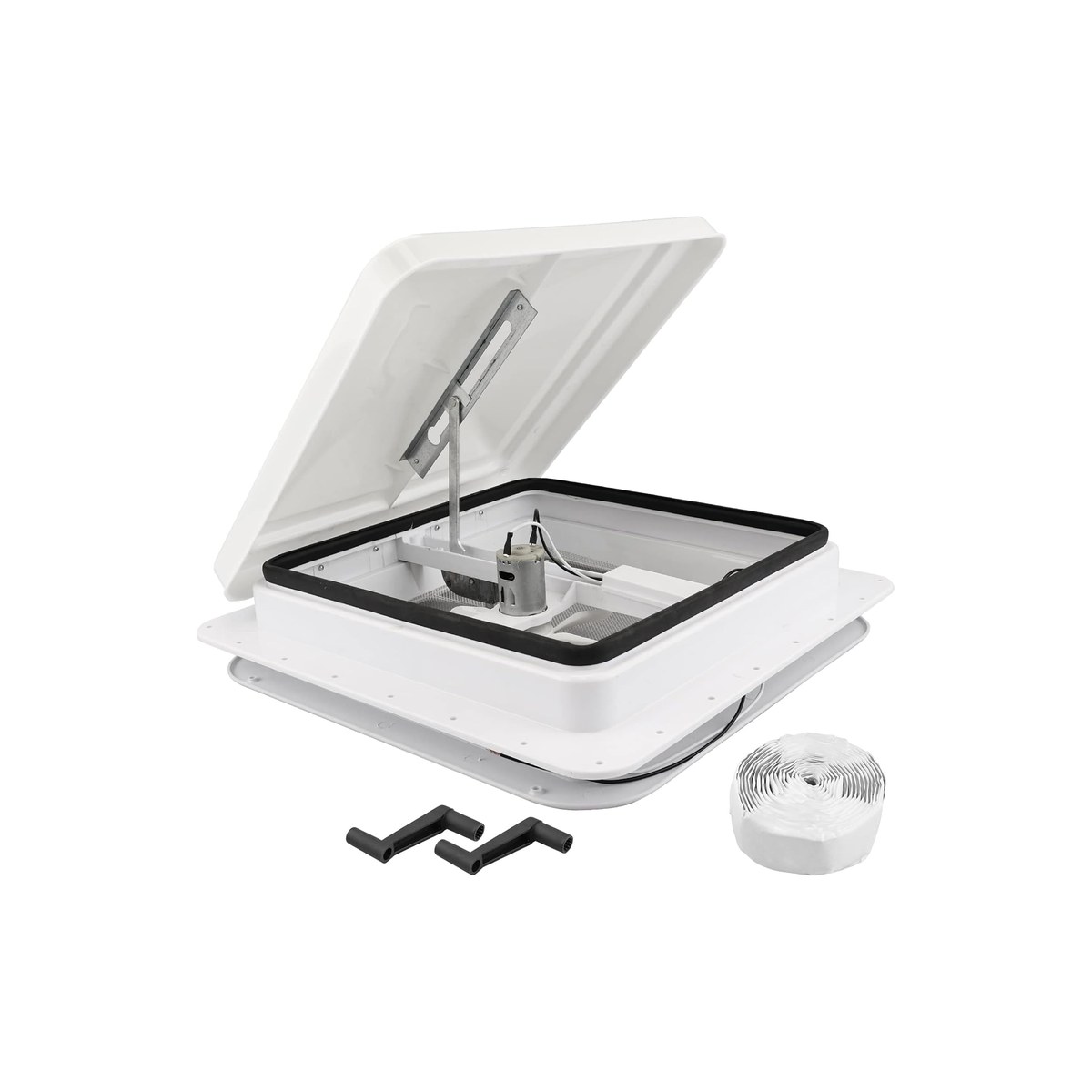
RVMATE 14x14 Universal RV Roof Vent Fan, White with 6-inch Blades (complete 12V unit, drops into the standard cutout, ASIN B0BQ6KWB85)
A complete white 14-inch vent for the price of a fill-up.
Who it's for: The first-time or rock-bottom-budget builder who needs a complete powered roof vent and a white lid to match a white roof. This is the buyer outfitting a cargo trailer, a starter van, or a second opening for cross-ventilation, who wants a full 14x14 unit, not a parts kit, and is happy with a no-frills fan from a newer brand as long as the reviews back it up. It is also the obvious second fan when one is not enough.
What we found: The RVMATE 14x14 is the other end of the price ladder from the Maxxfan, a complete universal RV roof vent fan with 6-inch blades and a white lid for about $59. It is a genuine full unit that drops into the standard 14x14 cutout, not a motor-only kit, and at 4.3 stars across 206 ratings it is a credible budget buy. Like the Heng's, it is a simple single-speed exhaust fan with no rain shield or thermostat. Its niche is the white lid and the low price, which make it an easy call for a budget build or a second fan for makeup air.
Bottom line: Pick the RVMATE if you want the cheapest complete vent with a white lid, or a cheap second fan for cross-ventilation. It does the basic job, moving air on a fair day, for about $59, but expect no rain-running, whisper-quiet nights, or thermostat at this price. Between the two budget units: the white RVMATE to match a white roof or as a second fan, the smoke-lid Heng's to block daylight over a bed.
Skip this guide if...
Skip this guide if your rig already breathes well or you barely use it. If you only car-camp a few mild weekends a year with the windows down, a cheap clip-on fan and cracked windows may be all you need. If your RV already has a working powered roof vent you are happy with, there is no reason to upgrade for its own sake. And if your real problem is winter condensation rather than summer heat, know that a vent fan is the highest-leverage single fix, but it works as part of a system: pair it with insulation, dry heat, and a dehumidifier. A roof vent fan earns its place the moment you spend hot days or humid nights in the rig and want it cool, dry, and quiet.
Don't bother with.
- × Skip Shopping on CFM instead of the rain shieldBuyers compare fans on CFM and pick the highest number, but every quality rv vent fan moves about the same air, roughly 900 CFM, so the spec barely separates them. What actually changes how you live with the fan is the built-in rain shield: it is the difference between ventilating through a summer thunderstorm and scrambling to close the lid before the bed gets wet. Compare on the rain cover, the number of speeds (a quiet low setting matters most), and reversibility, not on a CFM figure that is nearly identical across the good ones.
- × Skip Running one fan with the rig sealed upA roof vent fan creates a vacuum, and if there is no second opening for makeup air it chokes its own airflow and barely works. The single most common ventilation mistake is installing one powerful fan and running it with every window shut. The fix costs nothing: crack a window or a second vent on the opposite side so the fan has air to pull through. Think of it as a system, fan at one end, opening at the other; one fan alone is rarely enough, which is why a cheap second vent like the RVMATE is a smart buy.
- × Skip Paying extra for an automatic rain sensorThe top Fan-Tastic trims and some others add an automatic rain sensor that closes the lid when it gets wet, and it is the most-complained-about feature in the category. Owners report it closing in light mist then refusing to reopen, or failing to close in time. A built-in rain shield, the Maxxfan approach, solves the same problem mechanically with nothing to fail, by letting you run open in the rain in the first place. Do not pay extra for a rain sensor; pay for a rain shield, or just close a simple fan by hand.
- × Skip Clip-on or personal fans as your only ventilationPersonal 12-volt clip-on fans are great for moving air across your face on a hot night, but they are not ventilation, they just stir the same humid air around the cabin. They do not exhaust heat, moisture, or cooking fumes, so they do nothing for condensation or a stuffy rig. Use one as a comfort add-on if you like, but a roof vent fan is what actually moves air in and out. Do not let a cheap clip fan stand in for a real powered roof vent.
- × Skip Buying the fan and skipping the install sealantThe fan is only as good as the install, and most roof-vent leaks are install errors, not product faults. People bolt the flange straight to the roof, skip the butyl tape and self-leveling lap sealant, and then blame the fan when water finds a way in. Budget for butyl tape under the flange and a tube of Dicor self-leveling lap sealant (or Eternabond) over the screws, and scrape the old sealant first. A clean 14x14 install stays dry for years; skimping on a $15 tube to protect a $400 fan makes no sense.
How we picked.
Sources we read and how we picked
We did not bolt ten fans to ten roofs in a lab. We read the people who live with these fans: the long install and review threads on FarOutRide, Parked In Paradise, Gnomad Home, and r/vandwellers, plus the manufacturers' own specs. Then we verified every price, rating, and review count live on Amazon on June 11, 2026.
Our filter was Amazon-buyable 14x14 roof vent fans sorted by the decisions builders actually make, run-it-in-the-rain, reversibility, quiet, and price, not by CFM. That is why the lineup is two Maxxair models, the category king and its value sibling, plus the Dometic Fan-Tastic classic and two genuinely cheap full units. Unlike some categories, the best products here are all on Amazon as complete units, so there is no off-platform asterisk.
Why the rain shield, not CFM, is what matters
The number every listing shouts is CFM, and it is the least useful spec. A Maxxfan moves about 900 CFM, and the better fans cluster in the same range. Airflow is not what separates them. The feature that changes daily life is the built-in rain shield, an oversized cover that extends past the opening so the fan runs wide open in a downpour or at highway speed.
That one feature is why the Maxxfan dominates the full-time market. The worst condensation and the stuffiest heat come exactly when it is warm, humid, and raining, the moment a fan without a shield has to close. A shielded fan keeps pulling humid air out through the storm. When you compare a maxxair fan against the alternatives, weigh the rain shield, the number of speeds, and reversibility; treat CFM as a tie.
Intake vs exhaust, and why you need a second opening
A good roof vent fan reverses, and using that deliberately is most of the skill. In exhaust mode it pulls air out of the cabin, dragging hot ceiling air, cooking steam, and moisture out with it; this is the default and the right mode for dumping heat and humidity. In intake mode it pushes outside air in, pressurizing the cabin.
The play is simple. When the outside air is cooler than the cabin, run intake to push that cool air across your bed or desk. When the cabin is hotter than outside, run exhaust at the roof to dump the hot layer, with a low window cracked on the shady side for makeup air. Either way you need that second opening: a single fan in a sealed van just fights its own vacuum, which is the mistake most first-timers make.
The vent fan is your highest-leverage condensation tool
Off-grid, a roof vent fan is usually the highest-leverage single thing you can do about moisture, ahead of insulation and more practical than a dehumidifier when you are not plugged in. Two people breathing, a pot of pasta, and a wet dog put liters of water vapor into the air every day. Insulation only slows where that vapor condenses; a dehumidifier chases it after the fact and costs power and space. A fan physically removes the humid air at the source, before it can condense on cold metal.
But it is still one leg of a system. Think of four: ventilation (this fan, the workhorse) plus insulation to keep surfaces above the dew point, dry heat from a vented diesel heater that adds no water vapor, and a dehumidifier to mop up the rest. Run the fan even in winter, cracked low. See our van insulation, diesel heater, and RV dehumidifier guides for the other three legs.
Fit, install, and power draw on the house bank
Almost every powered fan here fits the universal 14x14 inch RV roof cutout, which is what makes a Maxxfan or a Heng's a drop-in replacement for an existing crank vent. Confirm your roof opening is the standard 14x14 and check the fan's rated ceiling thickness against your roof, thin van sheet metal and thick RV roofs both have limits. Beyond that, install is the same job: butyl tape under the flange, screws, then self-leveling lap sealant over the top.
On power, these are 12-volt fans and they sip current. A Maxxfan draws about 0.2 amps on its lowest speed and up to about 4.4 amps wide open, so running it low all night barely touches the house bank, far less than the laptop and Starlink you may be powering. That low draw is the argument for buying the efficient fan: you can leave it running. Most leaks, by the way, are install errors, not the fan, so do not skip the sealant.
A cabin you can work in: heat and quiet
If you work from the rig, the vent fan is your cheapest climate control. A closed van in the sun passes 110 degrees fast, and laptops throttle or shut down above about 95, so the fan is the first tool you reach for before air conditioning. Run exhaust to dump the hot ceiling layer while you make lunch, or intake to push cooler morning air straight across the desk.
The other half is noise. A fan you can run during a video call has to be quiet on low, and this is where ten speeds beats three: the Maxxfan's lowest setting is a near-silent whisper, while a three-speed fan's floor is noticeably louder. For a workday in the rig, a granular low end matters more than the best-case quiet number. The result is a cabin you can keep cool and quiet enough to take a client call from a trailhead.
FAQs.
Q01 What is the best RV roof vent fan?
+
Q02 Maxxfan vs Fan-Tastic: which should I buy?
+
Q03 Can you run a roof vent fan in the rain?
+
Q04 How many CFM does an RV vent fan need, and is one enough?
+
Q05 Should I run the fan on intake or exhaust?
+
Q06 How much power does a roof vent fan draw?
+
Q07 Do roof vent fans help with condensation?
+
Q08 Will a 14x14 fan fit my RV, and is it hard to install?
+
If you, then this.
- IF you want the best roof vent fan for a van or RV and will pay for itGET Maxxair MaxxFan Deluxe 7500K (B002OW5JG2; rain shield, 10-speed, thermostat, remote)$419.99 →
- IF you want ten speeds and a thermostat for far less and will close up before rainGET Maxxair MaxxFan Plus 04000K (B0050EEO94; 10 speeds + thermostat, no rain shield, ~$190 less)$226.94 →
- IF you want the quietest classic and camp mostly in fair weatherGET Dometic Fan-Tastic Vent 1250 (B09VLFH3GD; reversible 3-speed, no rain cover)$292.27 →
- IF you are on a budget or replacing a dead factory crank ventGET Heng's 14-inch Roof Vent (B077NVFM36; established brand, smoke lid, drops into 14x14)$56.95 →
- IF you want the cheapest complete white-lid vent or a second fan for cross-ventilationGET RVMATE 14x14 (B0BQ6KWB85; full unit, white lid, 6-inch blades)$58.99 →
- IF your real problem is condensation, not just heatGET ventilation plus the other three legs: insulation, dry heat, and a dehumidifier (see our guides)varies →
RV & Van Gear: The Complete Guide
The whole-rig picture →Every system in a van, RV, or camper, organized in one place, with the safety and weight floor and the one guide we trust for each.
- Best roof vent fans and how van ventilation works · Parked In Paradise
- MaxxFan ventilation fans: rain shield, speeds, and specs · Maxxair