Best RV Dehumidifiers: 5 That Actually Beat Cabin Condensation (2026)
A dehumidifier is how you stop the condensation that fogs your windows, soaks the walls, and grows mold in a small sealed rig. But here is what no listing tells you: a dehumidifier alone does not fix it, because the root cause is cold surfaces below the dew point. The real fix is a system, and the right dehumidifier depends entirely on technology: a quiet electric Peltier for a small van, a no-power desiccant for boondocking, a heated-rotor desiccant for winter, a compressor for a big humid rig. We read the owners who actually fight cabin moisture on the iRV2 and Forest River forums, then verified every price and rating live on Amazon on June 10, 2026. The counter-intuitive headline: the cheap quiet Peltier everyone buys, the most-reviewed unit in the category at over 15,000 ratings, stops working below about 65 degrees, exactly when winter condensation is worst. So the pick depends on your climate and your power.
- 01 Pro Breeze Electric Mini Dehumidifier (B01HXVUT7C) , top pick, the quiet, most-reviewed dehumidifier for most rigs, ~$43
- 02 Eva-Dry E-500 Renewable Desiccant 2-Pack (B09Y2B68MY) , best no-power, silent renewable desiccant for boondocking, ~$70
- 03 Ivation 13-Pint Desiccant Dehumidifier (B07B8SCPZ4) , best for winter, keeps working in the cold, ~$290
- 04 Midea Cube 20-Pint Dehumidifier (B08ZMY8BC8) , best high-capacity, for a big rig in a humid climate, ~$184
- 05 DampRid Hi-Capacity Moisture Absorber (B0029EGUNG) , best no-power absorber for sealed storage, ~$30
How they compare.
| Rank | Product | Best for | Price | Our score |
|---|---|---|---|---|
| 01 | Pro Breeze Electric Mini (B01HXVUT7C)
Top Pick
| best overall, quiet Peltier, the work-from-rig pick | $42.99
Buy → | 8.7/10 |
| 02 | Eva-Dry E-500 2-Pack (B09Y2B68MY) | best no-power, silent + freeze-proof renewable desiccant | $69.95
Buy → | 8.0/10 |
| 03 | Ivation 13-Pint Desiccant (B07B8SCPZ4) | best for winter, keeps working below 60°F | $289.99
Buy → | 8.5/10 |
| 04 | Midea Cube 20-Pint (B08ZMY8BC8) | best high-capacity, compressor + continuous drain hose | $184.00
Buy → | 8.4/10 |
| 05 | DampRid Hi-Capacity Bucket (B0029EGUNG) | best disposable absorber, storage and closets | $29.99
Buy → | 8.2/10 |
Prices are current Amazon prices at time of publication and can change. Scores reflect our editorial evaluation, not vendor input.
Our #1 pick: Pro Breeze Electric Mini Dehumidifier (thermo-electric / Peltier, ~250 sq ft, near-silent, low draw, 52 oz tank, auto shut-off, ASIN B01HXVUT7C).
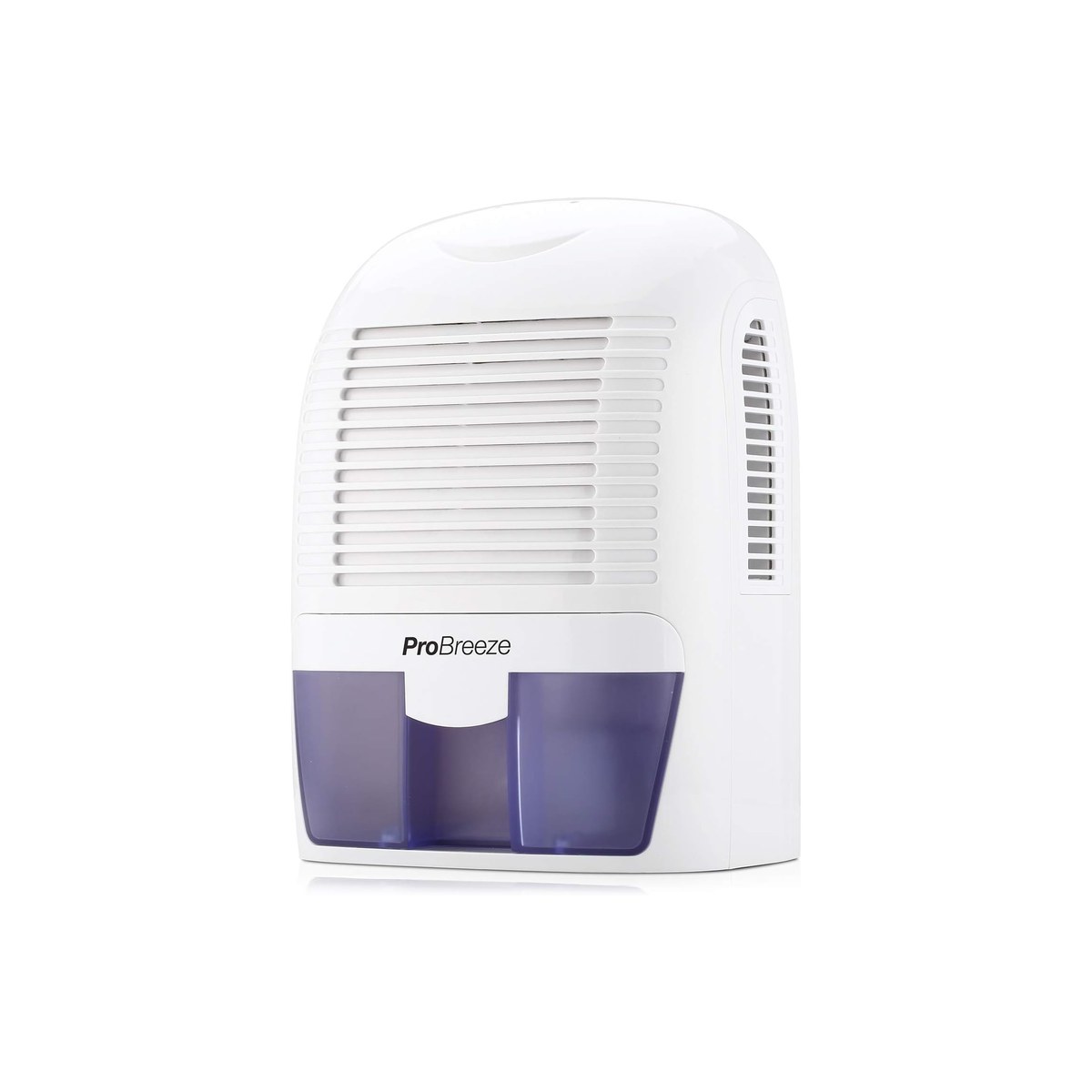
Pro Breeze Electric Mini Dehumidifier (thermo-electric / Peltier, ~250 sq ft, near-silent, low draw, 52 oz tank, auto shut-off, ASIN B01HXVUT7C)
The quiet, cheap, proven dehumidifier most rigs should buy first.
Who it's for: The van or small-RV owner in a mild-to-warm climate who wants a quiet, inexpensive dehumidifier they can leave running overnight or during a workday. This is the buyer dealing with everyday condensation, the foggy windows and damp corners from breathing and cooking in a small space, not a flooded cabin or a sub-freezing one, and who values near-silence and low power draw over raw water-removal capacity. It is also the work-from-rig buyer who needs the desk corner and their electronics kept dry without noise.
What we found: This is the most-reviewed dehumidifier in the whole category, over 15,000 ratings at 4.0 stars, which is the point: it is the proven default. It is a thermo-electric (Peltier) unit, which means near-silent operation and a low power draw, quiet and frugal enough to run during a workday or overnight off the house bank. It covers about 250 square feet and shuts off when its 52-ounce tank fills (it removes up to 18 ounces a day). The honest limit is physics: Peltier units need a temperature difference to work, so below about 65 degrees they fade, and the tank and pull rate suit moderate humidity, not a soaked cabin. Within those limits, nothing here is better value.
Bottom line: For most van and small-RV owners in a mild or warm climate, this is the right first dehumidifier: quiet, cheap, proven, and easy to live with. Buy something else if you camp in real cold (the Ivation desiccant), run a big rig in the humid Southeast (the Midea compressor), or boondock with no power (the Eva-Dry). Stock was thin at writing, so confirm it is available, and remember it is one leg of condensation control, not the whole fix.
- + The most-reviewed dehumidifier in the category by a wide margin: over 15,000 Amazon ratings at 4.0 stars, far more real-world proof than any other pick here
- + Near-silent thermo-electric operation at a low draw of roughly 20 to 40 watts, so it runs through a video call or overnight and sips from the house bank
- + About $43, compact, and covers roughly 250 square feet, the right size for most vans and small RVs
- + Auto shut-off when the tank fills, so it will not overflow while you are out
- × Peltier units weaken below about 65 degrees and effectively stop near 41 degrees, so it underperforms in winter exactly when condensation is worst (see the Ivation pick for cold)
- × Small tank and modest pull rate: it manages moderate humidity, not a soaked cabin in the humid Southeast (see the Midea)
- × Stock ran thin at the time of writing (only a few left), so confirm availability; another well-reviewed Pro Breeze or Eva-Dry Peltier mini is the backup
- × It is a single-room-sized unit; a big Class A needs more capacity
Runner-up: Eva-Dry E-500 Renewable Silica Gel Dehumidifier, 2-Pack (cordless, no power to run, plug in to renew, ~500 cu ft each, ASIN B09Y2B68MY).
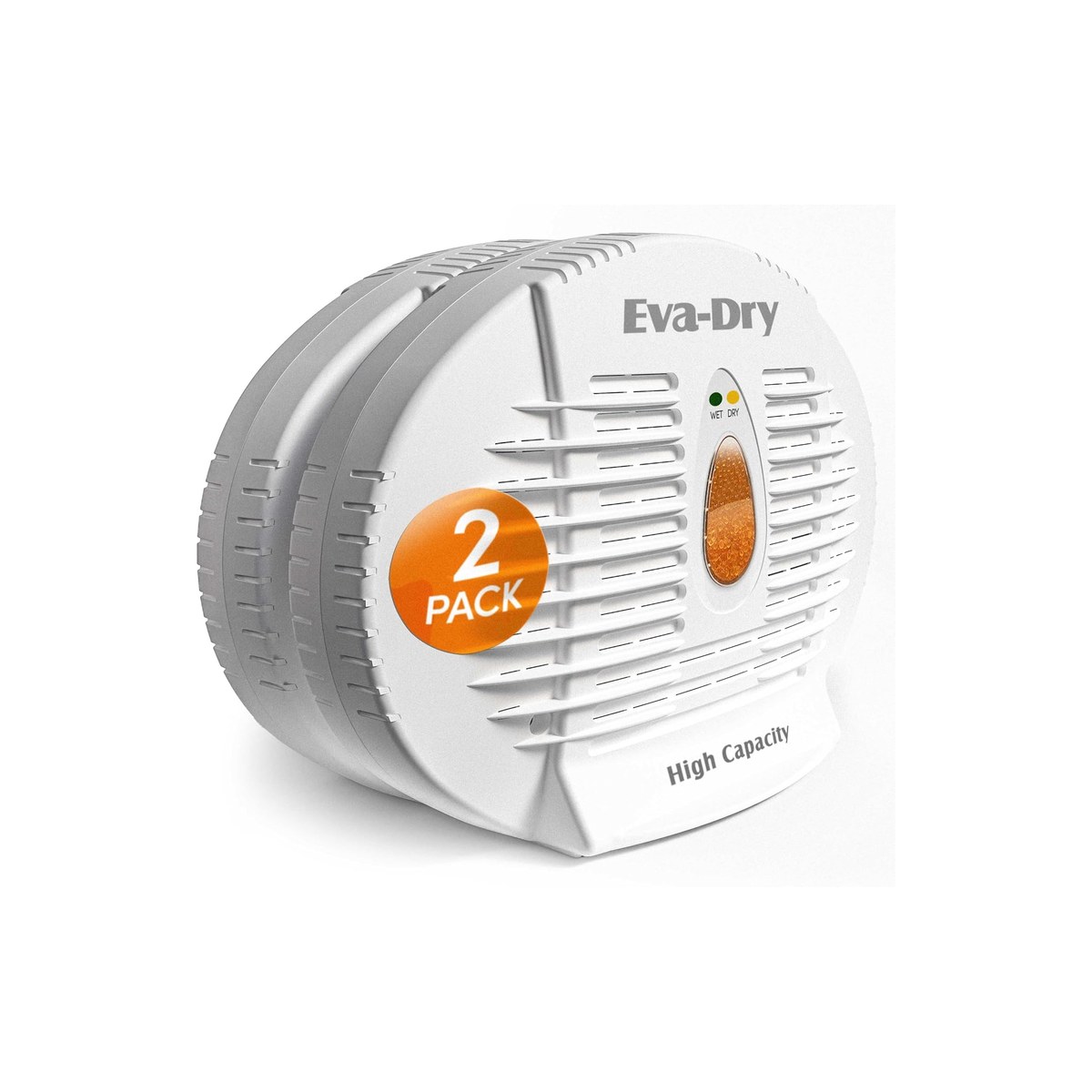
Eva-Dry E-500 Renewable Silica Gel Dehumidifier, 2-Pack (cordless, no power to run, plug in to renew, ~500 cu ft each, ASIN B09Y2B68MY)
Silent, no-power moisture control for closets, bays, and boondocking.
Who it's for: The boondocker or off-grid owner who wants to control moisture with no electricity and no noise, and the buyer protecting specific small spaces: closets, cabinets, gun safes, under-bed bays, and the storage compartments where damp does its quiet damage. This is someone who already understands that a renewable desiccant is a supplement for enclosed pockets of a rig, not a whole-cabin solution, and who values silence, zero power draw, and freeze-proof operation over raw water-removal capacity.
What we found: The E-500 is the rare moisture product that needs no power, no batteries, and makes no sound: silica gel absorbs water, and when the indicator turns, you plug the unit into a wall for a few hours to drive the moisture back out, then reuse it, rated up to 10 years. At 4.4 stars across 652 ratings it is the highest-rated pick here. The honest catch is capacity: owners who weighed saturated units found only a few ounces of water, nowhere near what a damp open cabin produces, so it shines in closets, bays, and gun safes, not as your only defense. In a wet rig you will be renewing the pair every couple of weeks.
Bottom line: Buy the Eva-Dry to protect enclosed spaces and to keep moisture down off-grid where running an electric unit is impractical, and pair it with one of the powered picks for the open cabin. Do not buy it expecting it to dry a humid living space on its own, that is the most common disappointment in the reviews. For winterizing and sealed storage where DampRid would also work, the Eva-Dry is the reusable, no-waste version that pays for itself over years.
- + Runs on no power at all: silent, freeze-proof, nothing to plug in until you renew the silica gel by plugging it into a wall for a few hours
- + Two units cover small enclosed spaces well, the indicator tells you when to renew, and it is rated to last up to 10 years
- + 4.4 stars across 652 ratings, the highest-rated pick here, and ideal for storage, closets, and bays where electric units are overkill
- × Tiny real capacity: owners measured only a few ounces of water from saturated units, so it is a supplement, not a primary dehumidifier for a humid open cabin
- × Needs renewing every few weeks in a wet rig, which means plugging each unit in for hours
- × Works by passive absorption, so it needs a small, fairly enclosed space to do anything
Budget pick: Ivation 13-Pint Small-Area Desiccant Dehumidifier (heated-rotor desiccant, works in the cold, continuous drain hose, up to 270 sq ft, ASIN B07B8SCPZ4).
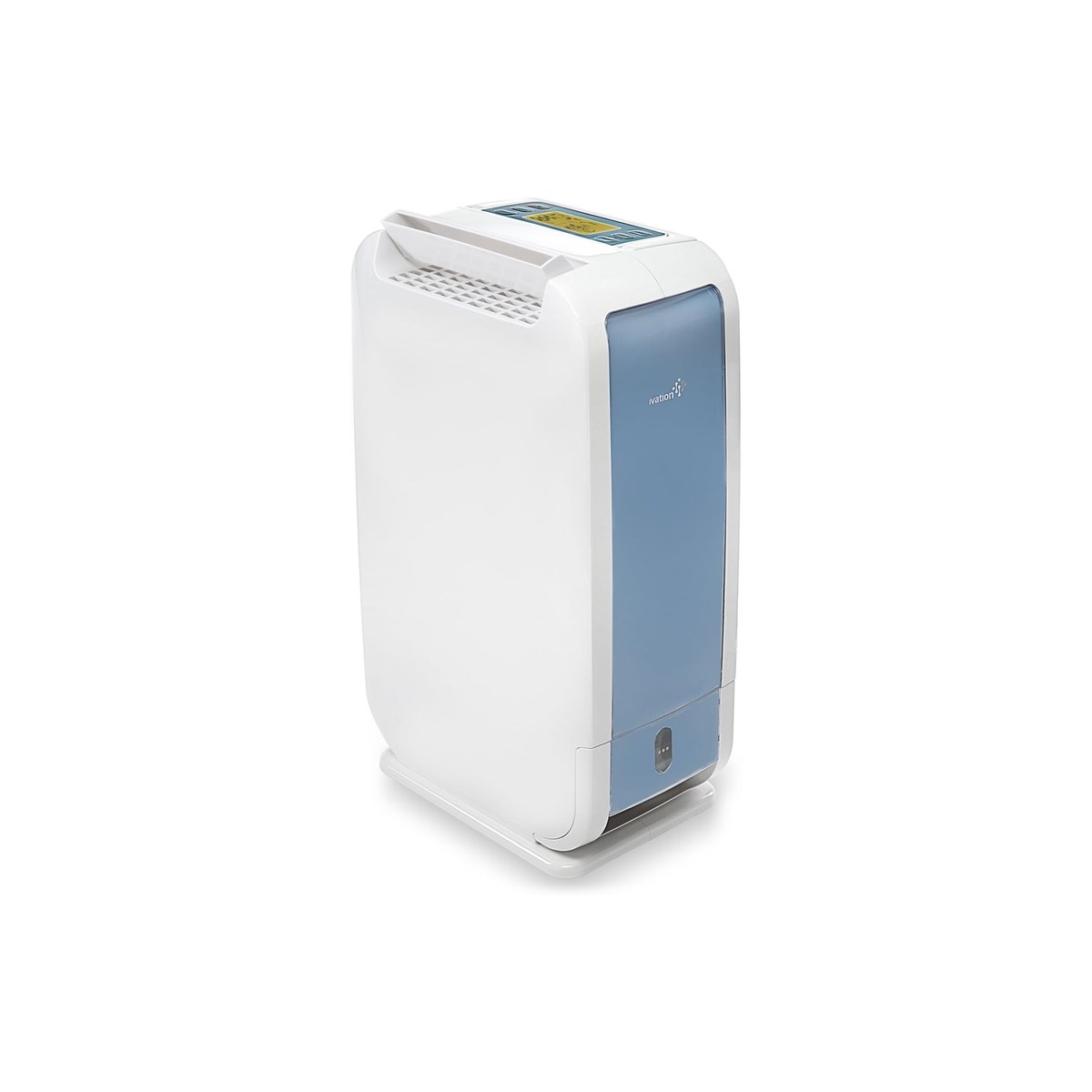
Ivation 13-Pint Small-Area Desiccant Dehumidifier (heated-rotor desiccant, works in the cold, continuous drain hose, up to 270 sq ft, ASIN B07B8SCPZ4)
The one dehumidifier that keeps working when winter hits.
Who it's for: The cold-weather and winter RVer, the ski-season van-lifer, and the full-timer parked in a damp northern climate, who has learned the hard way that the cheap Peltier dies in the cold. This is the buyer who needs a powered dehumidifier that actually keeps pulling water below 60 degrees, has shore power or a big enough battery bank to feed it, and is willing to pay a real premium for the one technology that does not quit when the temperature drops and condensation peaks.
What we found: This is the pick that most RV roundups miss, because it is a different technology: a heated-rotor desiccant, which uses a silica wheel and gentle heat instead of a cold coil or a Peltier plate. That is why it keeps removing moisture down to around freezing, exactly where the Peltier in our top pick fades and a compressor frosts over and shuts off. It is near-silent, covers up to 270 square feet, offers a continuous drain hose so you never empty a tank, and even returns slightly warmed air. At 4.2 stars across 606 ratings it is well-proven. The cost is the catch: about $290, and it draws more power than a Peltier.
Bottom line: If you actually use your rig in the cold, this is the dehumidifier to buy, because it is the only powered type that keeps working when winter condensation is at its worst. If you never camp below about 60 degrees, skip it and save the money: the Pro Breeze does the job for a seventh of the price in mild weather. Feed it from shore power or a healthy battery bank, run the drain hose, and it will handle a damp northern winter that defeats every cheaper unit.
- + Heated-rotor desiccant technology keeps removing moisture down to around freezing, where Peltier units fade and compressors frost over and shut down
- + Near-silent, lightweight, with a continuous drain hose option so you never empty a tank, and it gently warms the air it returns
- + Covers up to 270 square feet, enough for most RVs, at 4.2 stars across 606 ratings
- × About $290, by far the most expensive pick here, and overkill if you never camp in the cold
- × Draws more power than a Peltier, so it is a shore-power or large-bank unit, not a frugal off-grid one
- × Capacity is sized for living spaces up to 270 square feet, not a huge Class A in tropical humidity
- × Some owners report it getting louder or quitting after extended use, so register the warranty and keep the receipt
Also worth considering.
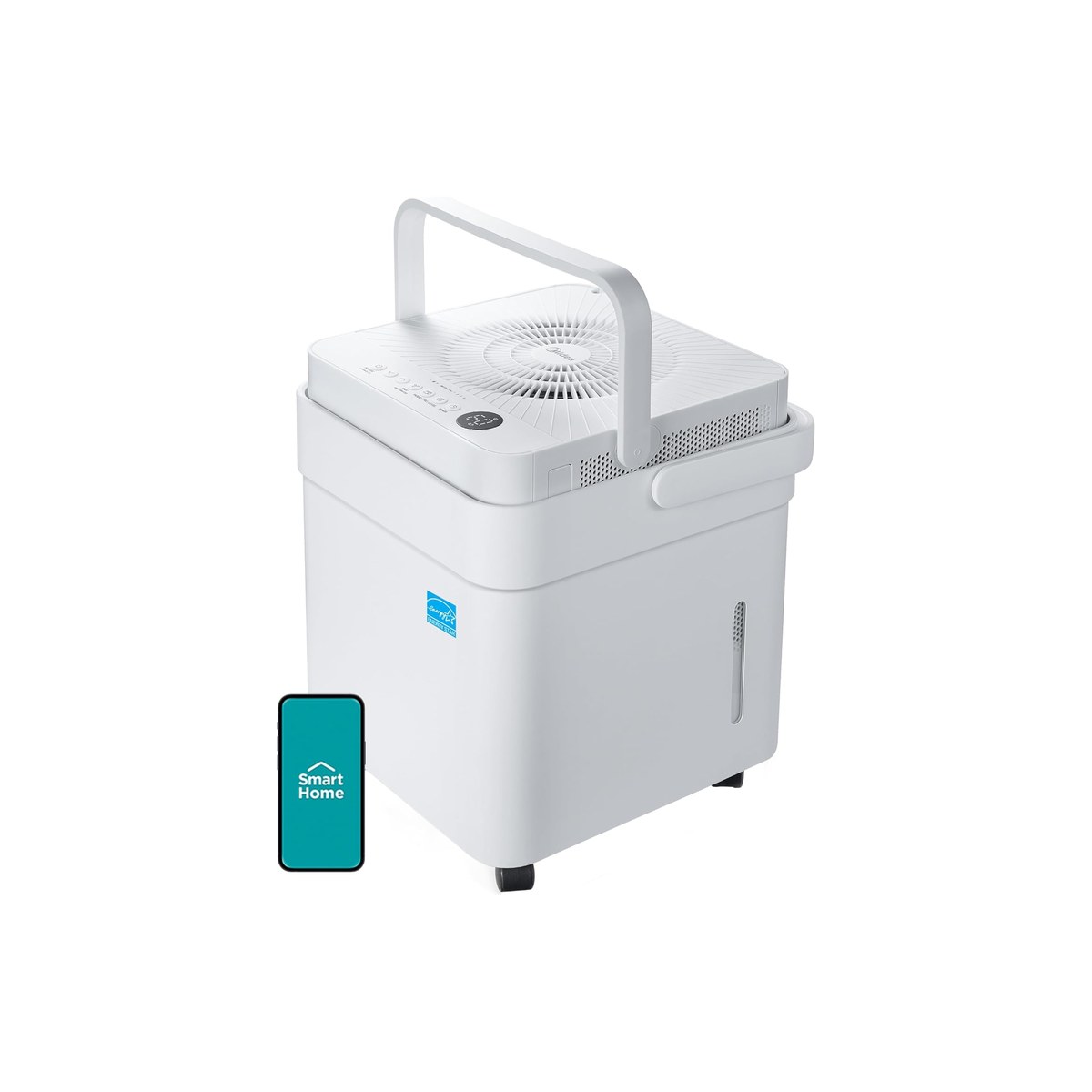
Midea Cube 20-Pint Dehumidifier (compressor, up to 1,500 sq ft, continuous drain hose, Energy Star, app and Alexa control, ASIN B08ZMY8BC8)
Real capacity and a drain hose for a big, humid rig.
Who it's for: The big-rig owner, the Class A motorhome or fifth-wheel full-timer parked somewhere genuinely humid like the Gulf Coast or the Southeast, who has shore power and a real moisture problem that a little Peltier cannot touch. This is the buyer who wants serious water-removal capacity, a continuous drain hose so they never carry a sloshing tank to the dump, and modern conveniences like a humidistat, app control, and Energy Star efficiency, and who has the space and the outlet to run a full compressor unit.
What we found: When the humidity is real and the rig is big, you need a compressor, and the Midea Cube is the most-proven mid-size one on Amazon at 2,256 ratings and 4.2 stars. It pulls 20 pints a day, covers more than any RV needs, and its best feature for RV life is the continuous drain hose: set it over a drain or out a bay and you never empty a tank. It adds a humidistat, app and Alexa control, and Energy Star efficiency. The catches are the compressor catches: it draws real power (around 300 watts running), is audible, and like all compressors it frosts and quits below about 60 degrees.
Bottom line: For a big rig in a humid climate with shore power, this is the right tool: the capacity and the drain hose solve the problem a Peltier only nibbles at. Skip it for a small van, for off-grid use where its draw is impractical, or for cold-weather camping where it will frost up. Run the hose to a drain, set the humidistat around 45 percent, and a Class A stays dry through a Southeast summer.
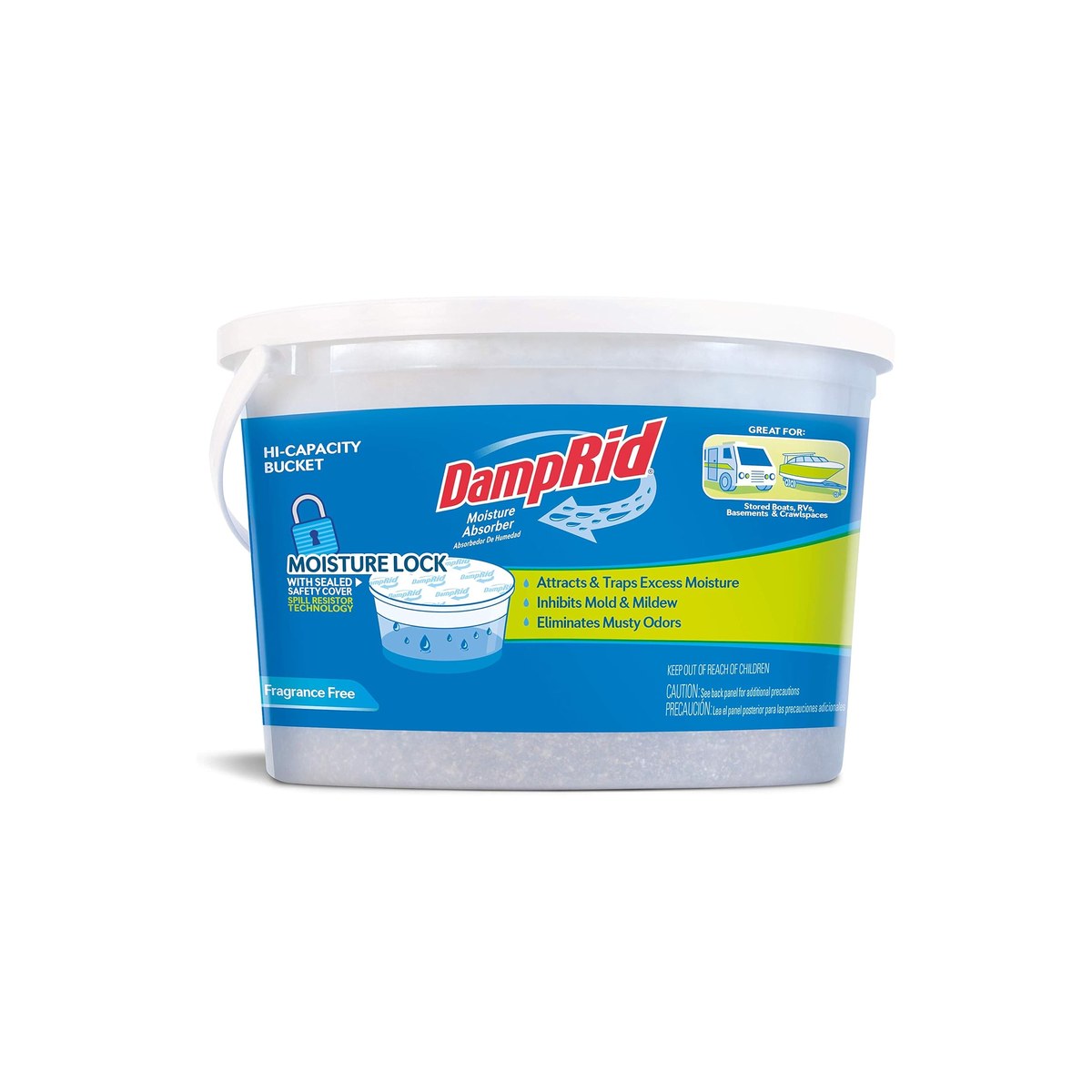
DampRid Hi-Capacity Moisture Absorber Bucket, 4 lb capacity (disposable calcium-chloride absorber, up to 1,000 sq ft, no power, lasts up to 6 months, ASIN B0029EGUNG)
The cheap, no-power way to keep stored rigs dry.
Who it's for: The owner winterizing or storing a rig for the off-season, and anyone fighting damp in a specific closed-off spot, a closet, a bay, a cabinet, who wants the simplest, cheapest moisture control that exists. This is the buyer who does not want to run power or empty a tank, accepts that a passive calcium-chloride absorber only works in an enclosed space, and is fine replacing it every few months rather than maintaining a machine. It is the set-it-and-forget-it option for a parked or stored RV.
What we found: DampRid is not a dehumidifier, it is a tub of calcium-chloride crystals that pull moisture from the air and drip the brine into the bucket below, and for the right job it is unbeatable on price and simplicity at about $30 for a unit that lasts up to six months. At 4.5 stars across 4,738 ratings it is the proven default for storage. The honest limits: it only works in a fairly sealed space (it cannot keep up with an open, lived-in cabin), and the collected brine is corrosive, so never set it where a spill could reach electronics, upholstery, or a finished floor. It is a supplement and a storage tool, not a primary.
Bottom line: Keep a DampRid or two in any rig for storage, winterizing, and damp closets, it is the cheapest moisture insurance you can buy and needs nothing but occasional replacement. Do not rely on it to dry a cabin you are actually living in, that is the Pro Breeze or Midea's job, and keep the corrosive bucket somewhere a tip-over will not ruin anything. For a stored or seasonal rig, a few of these beat an unplugged, mold-growing trailer every time.
Skip this guide if...
Skip this guide if moisture is not really your problem, or if a dehumidifier is the wrong tool for it. If your rig only sees dry, warm weather, you may never need more than a $10 box of moisture absorber in the closet. If your condensation is bad but you have no ventilation, fix that first: a roof vent fan run in all seasons does more than any dehumidifier, because it removes the humid air at the source. If your windows fog because the rig is uninsulated, insulation that keeps interior surfaces above the dew point is the real cure. And if you only store the rig for the winter, you do not need a powered unit at all, just DampRid or a renewable desiccant in a sealed cabin. A dehumidifier earns its place when you are living in the rig in humid or cold conditions and ventilation and insulation are not enough on their own.
Don't bother with.
- × Skip An oversized whole-home dehumidifier in a small vanA 50-pint basement unit will absolutely dry a van, and it is the wrong tool: it is bulky, it draws hundreds of watts you cannot spare off-grid, and it is built to dehumidify a 2,000-square-foot house, not a 100-square-foot cabin. You will run it in short bursts, trip breakers on a 15-amp pedestal, and store a machine that does not fit. Size to the rig: a 250-square-foot Peltier for a van, a 20-pint compressor only when a big Class A in real humidity genuinely needs it.
- × Skip Expecting a Peltier mini to work in winterThis is the single most common dehumidifier disappointment in RV forums. Thermo-electric (Peltier) units like our top pick rely on a temperature difference across a cold plate, and below about 65 degrees that difference collapses and near 41 degrees the unit effectively stops, so it pulls almost nothing, exactly when cold-surface condensation is at its worst. People buy the $43 mini for winter van life, find their windows still streaming, and assume it is broken. It is not; it is the wrong technology for the cold. For winter you need a heated-rotor desiccant like the Ivation.
- × Skip A renewable desiccant or DampRid as your only unit in a lived-in cabinRenewable desiccants and a calcium-chloride moisture absorber for a camper are excellent for closets, bays, gun safes, and storage, where the air is still and the space is small. They cannot keep up with an open cabin you are breathing, cooking, and showering in, because that produces pints of moisture a day and these products capture ounces. Owners who weighed saturated Eva-Dry units found only a few ounces inside. Use them as supplements and storage tools, and run a powered unit for the living space.
- × Skip Treating a dehumidifier as the whole fix for condensationCondensation forms because warm, moist cabin air hits a surface colder than its dew point, usually a single-pane window or an uninsulated wall. A dehumidifier lowers the moisture, which helps, but it does not warm the cold surface, so on a cold morning you can run one all night and still wake to wet windows. The durable fix is a system: ventilation to exhaust humid air at the source, insulation to keep surfaces above the dew point, dry heat to warm them, and a dehumidifier to mop up the rest. Buy the dehumidifier as one leg, not the whole answer.
- × Skip The cheapest no-name 'mini dehumidifier' with a handful of reviewsThe sub-$25 white-label minis that flood the category are mostly the same low-grade Peltier guts with no track record. The picks here carry hundreds to thousands of reviews (the Pro Breeze alone has over 15,000), which is how you know the real failure rate and can get a replacement. Saving ten dollars on a no-name unit with fifty reviews buys you an unknown, and in a product whose whole job is preventing mold damage, the proven option is worth the difference.
How we picked.
Sources we read and how we picked
We did not run ten dehumidifiers in a humidity chamber, and most sites that claim to have are reworking spec sheets. What we did was read the owners who actually fight cabin moisture: dehumidifier threads and condensation reports on the iRV2, Forest River, and Airstream forums and r/GoRVing, plus long-term van-build write-ups and the rare honest comparison. Then we verified every price, rating, and review count live on Amazon on June 10, 2026.
Our filter was Amazon-buyable units sorted by the thing that actually decides the purchase: technology. That is why the five picks are five different technologies rather than five compressors, because the right choice for a boondocking van in summer is not the right choice for a Class A in the humid Southeast or a van-lifer parked in a freezing December. Where a category had a clear proof leader, like the 15,000-review Pro Breeze, we named it; where the honest answer is a supplement rather than a primary, like the desiccants, we said so plainly.
Why a dehumidifier alone will not fix condensation
Start with the physics, because it changes what you should buy. Condensation forms when warm, moist cabin air touches a surface colder than its dew point, almost always a single-pane window or a thin, uninsulated wall. The moisture you are generating is real: breathing, cooking, showering, a wet dog, and propane combustion can add multiple pints of water to the air every day in a small sealed rig. A dehumidifier lowers how much moisture the air holds, which genuinely helps, but it does nothing to warm that cold surface.
So the durable fix is a system with four legs, and the dehumidifier is only one. Ventilation, a roof vent fan run in all seasons, exhausts humid air at the source before it can condense. Insulation keeps interior surfaces above the dew point so moisture has nowhere cold to land. Dry heat, like a vented diesel heater, warms those surfaces without adding moisture the way propane does. And a dehumidifier mops up what is left. Buy whichever legs you are missing; if you have none, start with ventilation, not a dehumidifier.
The five technologies, and which is right for you
Thermo-electric (Peltier) units like our top pick use a cold plate to condense water: near-silent, cheap, low-draw, and perfect for a van in mild or warm weather, but they fade below about 65 degrees. Compressors like the Midea use a refrigeration coil: high capacity for a big or humid rig, but louder, power-hungry, and they frost and quit in the cold too. Both struggle exactly when winter condensation is worst.
That is where desiccants come in, and there are two kinds people confuse. Renewable desiccants like the Eva-Dry are passive silica gel: no power, silent, freeze-proof, but tiny capacity, so they are supplements for closets and storage. A heated-rotor desiccant like the Ivation is a powered machine that uses a silica wheel and gentle heat, which is the only technology that keeps pulling water down to around freezing. Finally, disposable calcium-chloride absorbers like DampRid are the cheapest no-power option for sealed storage. Match the technology to your climate and power, not the biggest pint number.
Sizing: pints, square feet, and your climate
Ignore the headline pint rating first and match coverage to your interior. The right dehumidifier for a camper is sized to its cabin, and the same holds for a dehumidifier for a motorhome or a dehumidifier for a travel trailer: match the square footage, not the pint number. A Class B van or small trailer is usually under 200 square feet, a Class C is roughly 150 to 250, and a big Class A or fifth wheel is 300 or more, so a 250-square-foot Peltier covers most vans while a big motorhome needs the higher-capacity Midea. The pint-per-day number is measured at warm, very humid lab conditions you will rarely see, so treat it as a ceiling, not a promise.
Then let climate decide the technology, because it matters more than size. In warm, humid regions like the Southeast, a compressor with a drain hose earns its keep; in cold or winter use, only a heated-rotor desiccant keeps working; off-grid, a renewable desiccant or DampRid is the realistic answer because a compressor will out-draw your solar. Aim to hold the cabin around 30 to 50 percent relative humidity, the range that stops mold without over-drying, and remember insulation and ventilation do more than buying a bigger machine.
Running it parked: power, quiet, and protecting electronics
Power draw is the dividing line for off-grid and work-from-rig use. A renewable desiccant or DampRid draws nothing. A Peltier like the Pro Breeze sips very little power and is near-silent, so you can run it on a timer through a workday or a video call and barely dent the house bank. A heated-rotor desiccant draws more but works in the cold. A compressor pulls a few hundred watts with a startup surge, enough that running one continuously can out-draw a typical solar array in a day, which is why it is a shore-power tool, not a boondocking one.
If you work from the rig, the real threat to your gear is not the humidity number, it is the dew point: when a cold morning drops a surface below it, moisture condenses on cool electronics too, and condensation is what shorts laptops and corrodes battery terminals, not ambient humidity alone. The practical setup is a quiet Peltier near the desk on a timer, the diesel heater running for dry warmth so surfaces stay above the dew point, and a few silica packs in your laptop and camera bags. Keep the cabin at 30 to 50 percent and your electronics ride out the wet mornings.
FAQs.
Q01 Do I really need a dehumidifier in my RV?
+
Q02 What size dehumidifier do I need for an RV or van?
+
Q03 Does a dehumidifier work in cold weather or winter?
+
Q04 DampRid vs a dehumidifier: which is better for an RV?
+
Q05 Can I run a dehumidifier off-grid on solar or battery?
+
Q06 Can I run a dehumidifier while working or sleeping? Is it quiet?
+
Q07 Will a dehumidifier prevent mold in my RV?
+
Q08 How do I stop condensation in my RV or van?
+
If you, then this.
- IF you want a quiet, cheap dehumidifier for a van or small RV in a mild or warm climateGET Pro Breeze Electric Mini (B01HXVUT7C; near-silent Peltier, ~50W, the work-from-rig pick)$42.99 →
- IF you boondock with no power, or want to protect closets, bays, and storageGET Eva-Dry E-500 2-Pack (B09Y2B68MY; renewable desiccant, silent, freeze-proof, a supplement)$69.95 →
- IF you camp or live in the rig in real cold or through winterGET Ivation 13-Pint Desiccant (B07B8SCPZ4; heated-rotor, keeps working below 60°F, hose drain)$289.99 →
- IF you have a big rig in a humid climate with shore power and real moistureGET Midea Cube 20-Pint (B08ZMY8BC8; compressor, 1,500 sq ft, continuous drain hose, Energy Star)$184.00 →
- IF you are winterizing or storing the rig, or want the cheapest no-power optionGET DampRid Hi-Capacity Bucket (B0029EGUNG; disposable absorber, lasts up to 6 months, sealed spaces)$29.99 →
- IF your condensation is bad but you have no ventilation, insulation, or dry heat yetGET fix the system first, starting with a vent fan and dry heat (see our diesel heater guide), not just a dehumidifiervaries →
RV & Van Gear: The Complete Guide
The whole-rig picture →Every system in a van, RV, or camper, organized in one place, with the safety and weight floor and the one guide we trust for each.