Best RV TV Antennas: 5 Picks for Free Over-the-Air TV (2026)
A rooftop TV antenna pulls free over-the-air channels, local news, weather, network shows, into your rig with no subscription. The catch every buyer needs first: an antenna only receives stations that are actually broadcasting nearby, usually within 30 to 70 miles, so it shines near towns and gives you nothing 80 miles out in the desert. No antenna creates channels that are not on the air. We verified every pick live on Amazon on June 16, 2026, and read the RV-antenna authorities. Two things surprised us: KING, the other big antenna brand, went out of business in 2025, leaving Winegard as effectively the only company still making them, and the most common reception complaint is too much signal, not too little, an amplifier that overloads the tuner near a city. The right antenna depends on whether you will aim it and how far from broadcasters you camp.
- 01 Winegard RayZar z1 (B01B9K5SII) , top pick, the crank-free low-profile directional, 4K/ATSC 3.0 + LTE filter, 4.5/1,056, ~$149
- 02 Winegard Sensar IV (B003VAZ6OG) , best reception: the classic crank-up batwing, strong VHF, highest-rated here, 4.6/1,087, ~$181
- 03 Winegard Wingman (B001U2DPUE) , the $55 snap-on UHF booster for an existing Sensar II/III batwing, most-reviewed here, 4.2/1,703
- 04 Winegard Air 360 (B07NBWDRT6) , best omnidirectional: no aiming, receives while driving, shorter range, 4.5/257, ~$111
- 05 Winegard RayZar Automatic (B00T36ODKK) , best automatic: push-button scan-and-aim, pricey and lowest-rated here, 4.1/220, ~$400
How they compare.
| Rank | Product | Best for | Price | Our score |
|---|---|---|---|---|
| 01 | Winegard RayZar z1 (B01B9K5SII)
Top Pick
| best overall: a modern crank-free directional that replaces the batwing, low-profile for solar, 4K and ATSC 3.0 ready, you still aim it | $149.33
Buy → | 8.7/10 |
| 02 | Winegard Sensar IV (B003VAZ6OG) | best reception: the classic crank-up batwing pulls the most channels, especially VHF, if you will crank and aim | $180.87
Buy → | 8.4/10 |
| 03 | Winegard Air 360 (B07NBWDRT6) | best omnidirectional: no aiming, no cranking, receives while driving, shorter range and fewer channels | $110.97
Buy → | 8.2/10 |
| 04 | Winegard Wingman (B001U2DPUE) | cheapest upgrade: a $55 snap-on UHF booster, but only for an existing Sensar II/III batwing, not a standalone antenna | $54.88
Buy → | 8.0/10 |
| 05 | Winegard RayZar Automatic (B00T36ODKK) | best automatic: push-button scan-and-aim, but $400 and the lowest-rated here, a luxury-convenience buy | $399.99
Buy → | 7.4/10 |
Prices are current Amazon prices at time of publication and can change. Scores reflect our editorial evaluation, not vendor input.
Our #1 pick: Winegard RZ-6000 RayZar z1 RV TV Antenna, Crank-Free Directional, HD/4K/ATSC 3.0 Ready, LTE Filter (ASIN B01B9K5SII).
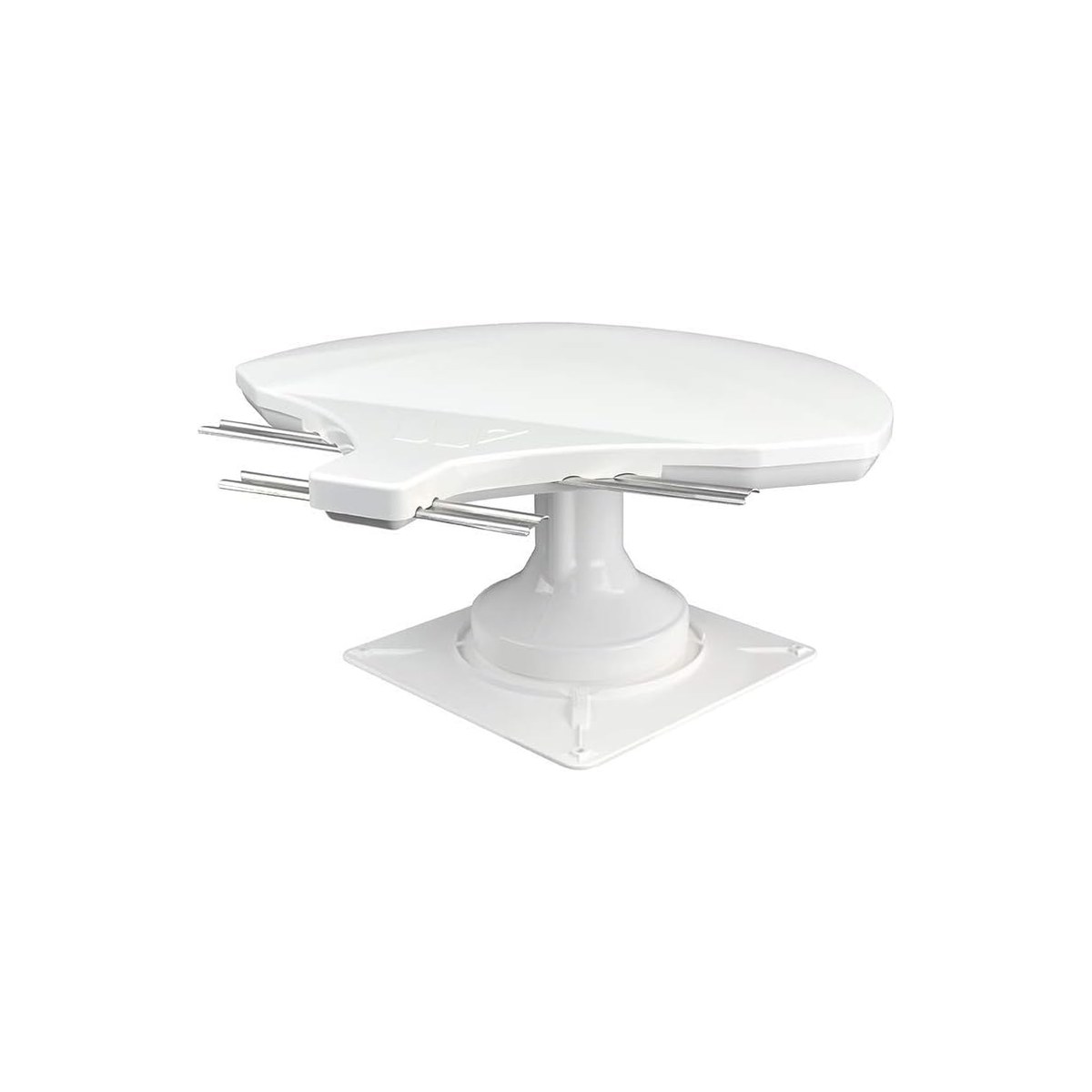
Winegard RZ-6000 RayZar z1 RV TV Antenna, Crank-Free Directional, HD/4K/ATSC 3.0 Ready, LTE Filter (ASIN B01B9K5SII)
The crank-free directional that replaces the old batwing for most.
Who it's for: The RVer replacing an aging crank-up batwing, or buying their first antenna, who wants modern reception without the hassle, no hand crank, no climbing on the roof to aim. The Winegard RayZar z1 is the standalone replacement most people should buy: a low-profile directional antenna you rotate from a small interior handle, 4K and ATSC 3.0 ready, with an LTE filter that blocks cell-tower interference, and a flush shape that does not shade rooftop solar.
What we found: At 4.5 stars across more than 1,000 reviews and about $149 it is the sweet spot of the category, modern, capable, and proven. It is directional, so you still rotate it toward the towers with the interior handle, but there is no crank and no raising and lowering before you drive. The honest limit is range: it is rated around 50 miles and forum users find it a touch shorter than the big old batwing, so deep-fringe channel-chasers lose a little reach for the convenience and the low profile. It does not receive while moving.
Bottom line: Buy the RayZar z1 if you want one modern antenna that covers most situations, it is the easiest recommendation here for replacing a batwing or starting fresh. If you chase the absolute most channels and will crank and aim, the Sensar IV below edges it; if you never want to aim at all, the omnidirectional Air 360 is the trade. And if you already own a working batwing, try the $55 Wingman before you replace anything.
- + Crank-free low-profile directional, 4.5 stars across more than 1,000 reviews at about $149, the sweet spot of the category
- + 4K and ATSC 3.0 ready with a built-in LTE filter that blocks cell-tower interference, and a flush shape that does not shade rooftop solar
- + Rotates from a small interior handle, no climbing on the roof, no raising and lowering before you drive
- × Still directional, so you do have to rotate it toward the towers, it is not automatic
- × Range runs around 50 miles, a touch shorter than the big old batwing, so deep-fringe channel-chasers lose a little reach
- × Does not receive while moving, you aim it at each stationary site
Runner-up: Winegard RVW-395 Sensar IV Amplified RV TV Antenna, Crank-Up Batwing, VHF/UHF HD, 65-Mile Range (ASIN B003VAZ6OG).
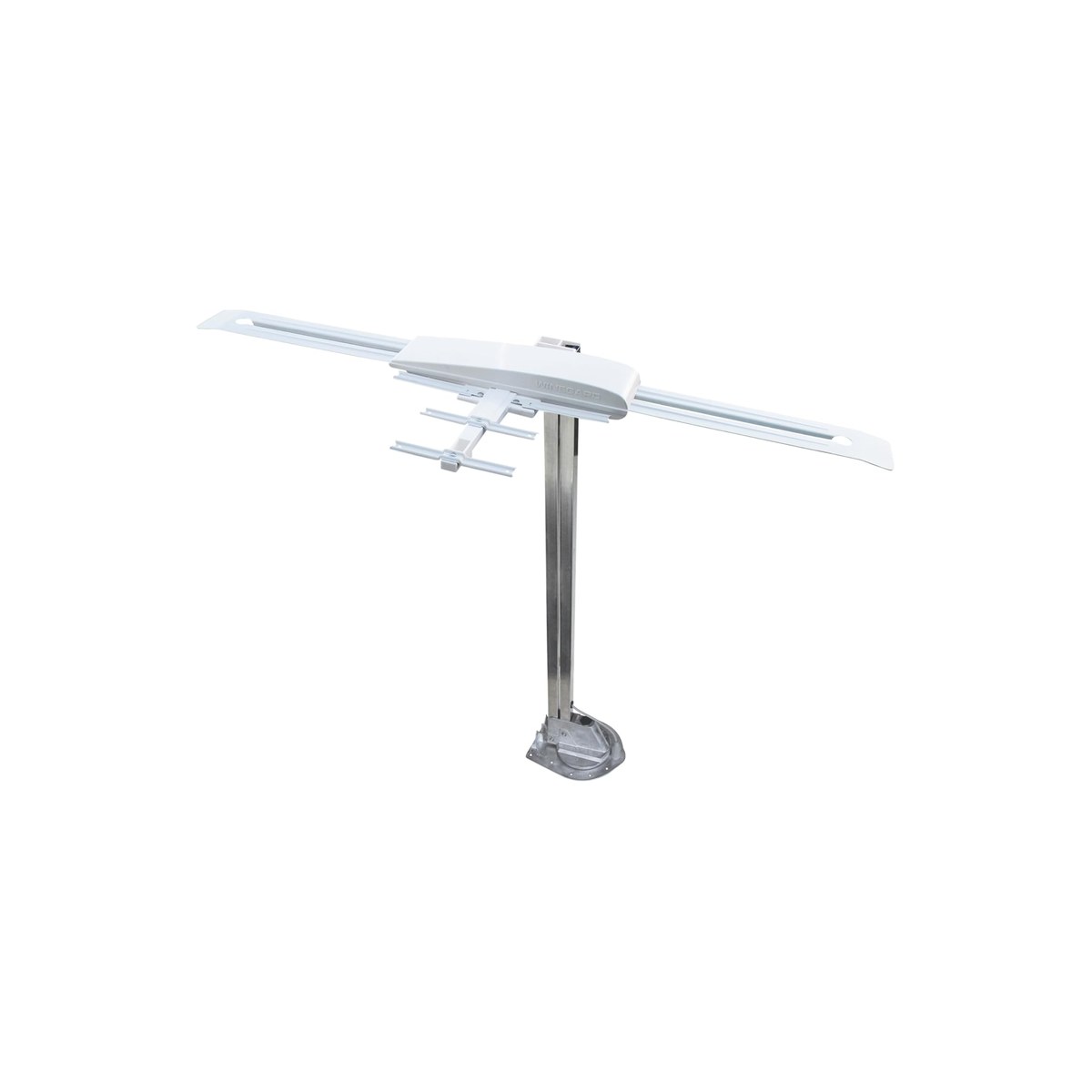
Winegard RVW-395 Sensar IV Amplified RV TV Antenna, Crank-Up Batwing, VHF/UHF HD, 65-Mile Range (ASIN B003VAZ6OG)
The classic crank-up batwing, still the channel-pulling champion here.
Who it's for: The RVer who wants the most channels possible and does not mind the ritual, crank it up at camp, rotate to aim, crank it down before driving. The Winegard Sensar IV is the current version of the wide batwing that came on millions of RVs, a big directional antenna whose larger element area pulls in weak and distant stations, particularly on the VHF band, better than the compact low-profile units can.
What we found: It is the highest-rated antenna here, 4.6 stars across more than 1,000 reviews at about $181, and forum users consistently report it holding VHF stations the smaller KING and RayZar units drop. The trade is the batwing ritual and the bulk: you must remember to crank it down before driving, the raised wingspan can shade rooftop solar, and the plastic gears and arms are the parts that fail over years. It is the most reception for the money if you will work the crank.
Bottom line: Buy the Sensar IV if maximum channels matter more than convenience and you will crank and aim, it is the proven performer, especially for VHF markets. If the crank-and-remember routine sounds like a chore, the RayZar z1 above gives up a little range to lose the crank. And if you already have an older Sensar batwing, the $55 Wingman or a replacement head may get you there for far less.
- + The highest-rated antenna here, 4.6 stars across more than 1,000 reviews, the proven channel-puller
- + Large batwing element area pulls weak and distant stations, especially on VHF, better than the compact low-profile units
- + The current version of the wide batwing that came on millions of RVs, a direct like-for-like replacement
- × You must remember to crank it down before driving, a raised batwing hits low clearances and damages itself
- × Bulky raised wingspan can shade rooftop solar, and the plastic gears and arms are the parts that fail over years
- × More mechanically complex than the low-profile units, and the heaviest antenna here
Budget pick: Winegard RV-WING Wingman UHF Booster, Snap-On Add-On for Existing Sensar II/III Batwing Antenna (ASIN B001U2DPUE).
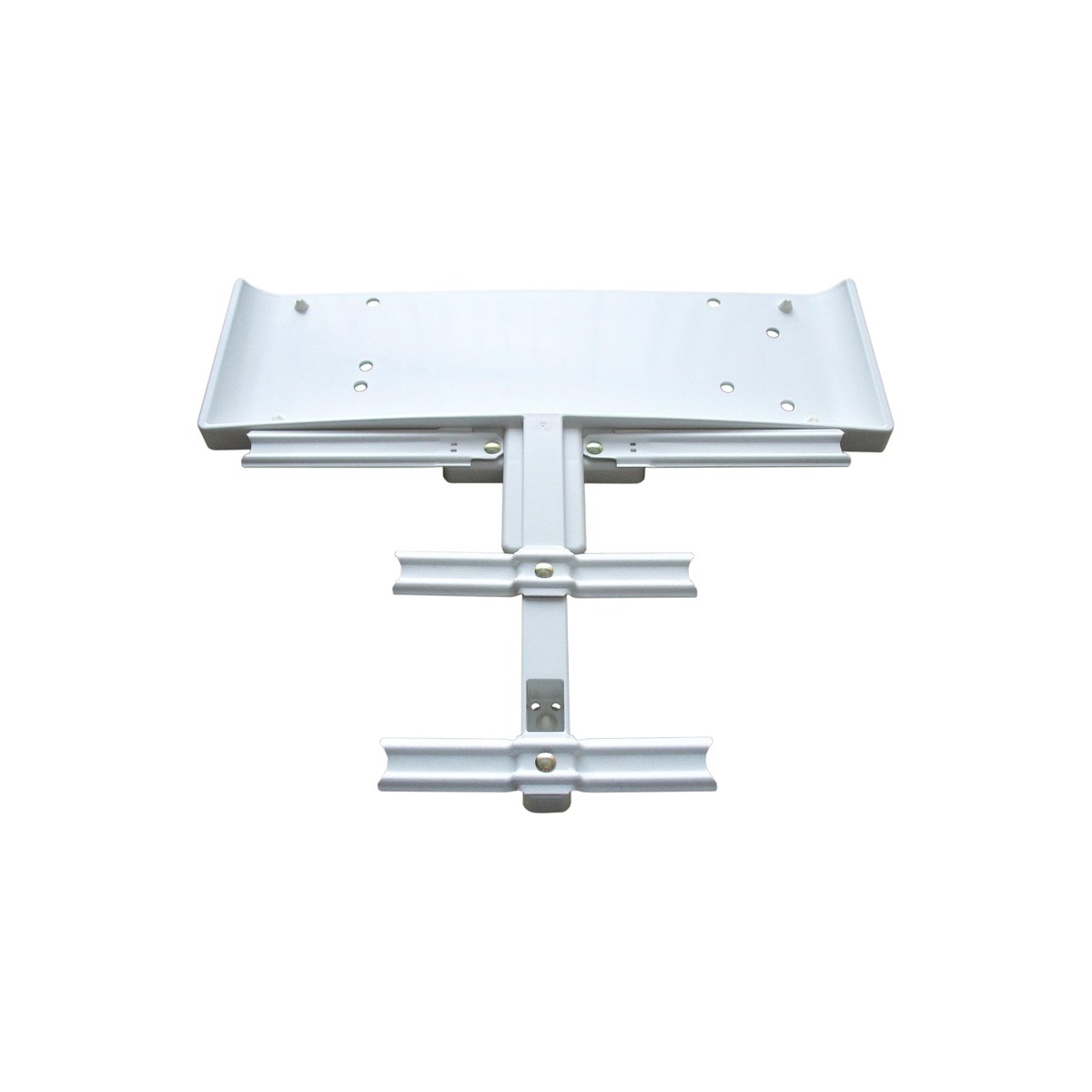
Winegard RV-WING Wingman UHF Booster, Snap-On Add-On for Existing Sensar II/III Batwing Antenna (ASIN B001U2DPUE)
The $55 snap-on that wakes up an existing Sensar batwing.
Who it's for: The RVer who already has an older Winegard Sensar II or III batwing and just wants more channels for the least money. The Winegard Wingman is not a standalone antenna, it is a small UHF booster that clips onto the existing batwing head with a couple of screws, adding the dedicated UHF element those older units lacked. If you have a batwing already, this is the first thing to try before spending on a replacement.
What we found: It is the most-reviewed product in the whole category, more than 1,700 ratings at 4.2 stars and about $55, because it solves a real problem cheaply: older Sensar batwings were built for analog VHF and miss modern UHF digital channels, and the Wingman adds them back. It is passive, so it does not help VHF or boost an already-strong signal, and it only fits Sensar II and III heads, not the Sensar IV, which already has it built in. For the batwing installed base it is the obvious cheap win.
Bottom line: Buy the Wingman if you own an older Sensar batwing and want more channels for the price of a tank of gas, it is the highest-value upgrade on this page. It does nothing for you if you do not already have a Sensar II or III batwing to clip it onto, in which case buy the RayZar z1 or Sensar IV instead. Confirm your batwing generation before ordering.
- + The most-reviewed product in the category, more than 1,700 ratings at 4.2 stars and about $55
- + Snaps onto an existing Sensar II/III batwing head with a couple of screws, adding the UHF element those older units lacked
- + No new wiring, no new power supply, no new mount, the cheapest way to pull more digital channels from a batwing
- × Not a standalone antenna, it does nothing unless you already own a Sensar II or III batwing to clip it onto
- × Passive, so it does not improve VHF or boost an already-strong signal
- × Does not fit the Sensar IV, which already has the Wingman element built in
Also worth considering.
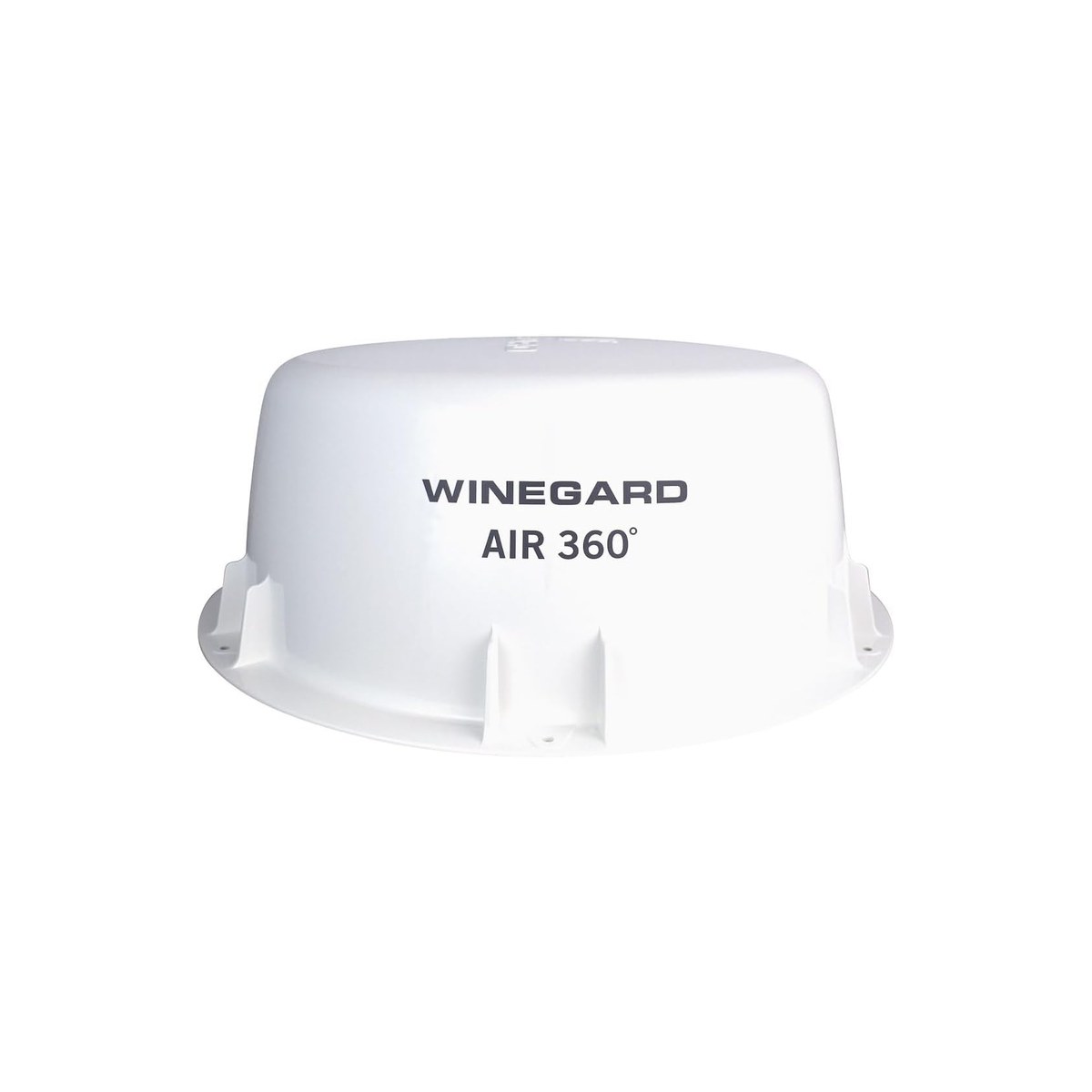
Winegard A3-2000 Air 360 Omnidirectional RV TV Antenna, VHF/UHF/FM, No Aiming, Receives While Driving (ASIN B07NBWDRT6)
No aiming, no cranking, and it works while you drive.
Who it's for: The RVer who moves often and refuses to fuss with aiming a directional antenna. The Winegard Air 360 is an omnidirectional dome that receives from all directions at once, so there is nothing to rotate, nothing to crank, and it can even pull channels while you drive. It stays flush on the roof permanently, which also keeps it clear of solar panels.
What we found: At 4.5 stars across 257 reviews and about $111 it is the best-regarded omni for RVs, genuinely set-and-forget. The honest trade is range: an omnidirectional spreads its reception across 360 degrees instead of focusing it, so it pulls fewer channels than a directional aimed at the towers, real-world more like 30 to 55 miles. In a campground, neighbors with aimed batwings may get noticeably more stations. For populated areas and frequent movers the convenience is worth it; for fringe reception it is not the tool.
Bottom line: Buy the Air 360 if you value never touching the antenna over squeezing out every channel, and you mostly camp where signal is decent. If you park near small towns and want the most stations, a directional like the RayZar z1 or Sensar IV will out-pull it. It is the right answer for the move-every-day RVer and the wrong one for the deep-fringe boondocker.
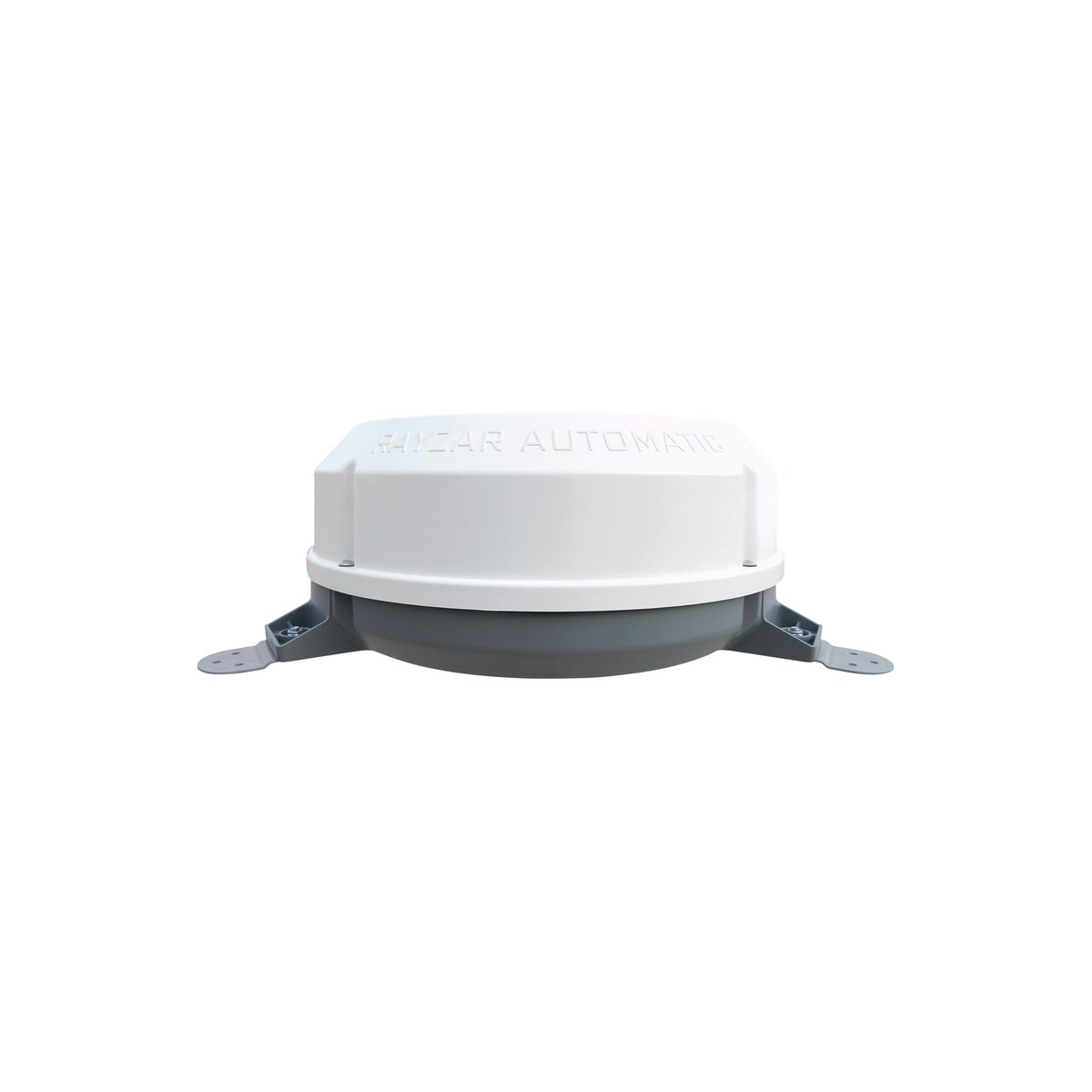
Winegard RZ-8500 RayZar Automatic RV TV Antenna, Fully Automatic Scan-and-Aim, HD VHF/UHF (ASIN B00T36ODKK)
Push a button and it scans and aims itself, for a price.
Who it's for: The full-timer or motorhome owner who never wants to think about aiming and will pay for it. The Winegard RayZar Automatic is the only truly automatic option here, push a button and it scans sixteen directions in about two minutes, then locks onto the heading with the most channels. No crank, no manual rotation, no climbing on the roof, just press and watch.
What we found: It works as advertised, the automatic aiming is genuinely hands-off, but it is a hard sell on value at about $400, more than double the RayZar z1, for what amounts to skipping a one-minute aiming step. At 4.1 stars across 220 reviews it is also the lowest-rated pick here, and the reviews carry a real thread of control-panel failures after a few years. It is the most you can spend on an RV TV antenna and the least reliable per the owner reports, a luxury-convenience buy.
Bottom line: Buy the RayZar Automatic only if push-button automation is worth $400 to you and the reliability reports do not scare you off, it delivers the convenience it promises. For almost everyone, the RayZar z1 gives the same reception for $250 less and a quick manual aim, or the Air 360 removes aiming entirely for a third of the price. This is the splurge-for-convenience pick, not the value one.
Skip this guide if...
Skip an RV TV antenna entirely if you camp far from any broadcast market, beyond about 70 miles from a city there are simply no over-the-air stations to receive and no antenna changes that, check the FCC DTV map for where you actually camp before buying. Skip the pricier units if you already own a working Winegard Sensar II or III batwing, the $55 Wingman or a replacement head likely gets you there for far less. And if you stream everything over Starlink or cellular and never watch local channels, you may not need an antenna at all.
Don't bother with.
- × Skip Antennas that claim a 150-mile rangeThe cheap omnidirectional boxes that promise 150 or 200 miles are selling a number that does not exist. Over-the-air signals are line-of-sight and the Earth curves, so a rooftop RV antenna realistically pulls 30 to 70 miles in good terrain, less in hills and trees, no matter what the box says. Independent testers peg these 150-mile units at about 40 miles in practice. Buy a known RV brand with an honest range spec and check the FCC tower map, do not chase a fantasy number on a no-name listing.
- × Skip Replacing a working batwing before trying the cheap fixesIf your rig already has a Winegard Sensar batwing and it just is not pulling many channels, do not jump straight to a $150 to $400 replacement. Older Sensar II and III heads miss modern UHF digital, and the $55 Wingman clip-on adds it back; a damaged Sensar IV head can be swapped on its own while keeping the mast. Most batwing owners can fix their reception for well under a hundred dollars. Replace the whole unit only if the mast or crank itself is shot, or you want the low profile for solar.
- × Skip Leaving the amplifier on when you park near a cityThis is the most misdiagnosed reception problem in RVing. Every modern RV antenna has a preamp to lift weak distant signals, but when you park within a few miles of a city's broadcast towers the signal is already strong, and the amplifier overloads the tuner and makes channels drop out or pixelate, the opposite of what you would expect. Before you blame the antenna, flip the amplifier switch off at the interior power injector. If channels come back, that was it.
- × Skip Expecting an antenna to find channels in the backcountryAn antenna is a receiver, not a transmitter, so it can only pull stations that are actually on the air nearby. Camped 80 miles out in open desert or deep in a mountain valley, there are no broadcast towers in range and no antenna, at any price, will produce channels. This is physics, not a product flaw. If you boondock far from towns and want TV, the honest answer is satellite TV or streaming over Starlink or cellular, not a better antenna, see our RV internet guide.
- × Skip Buying a TV antenna when you meant a cell or WiFi antennaSearching 'RV antenna' pulls both TV antennas and cellular or WiFi gear, and they are not interchangeable, they work on completely different frequencies, so a TV antenna does nothing for your phone signal and a cell booster does nothing for broadcast TV. If your goal is free local channels, you are in the right place. If your goal is internet or phone bars, you want a cell signal booster or a Starlink, covered in our RV connectivity guides.
How we picked.
Sources we read and how we picked
We treated this as a reception problem, not a spec-sheet contest, because in over-the-air TV the antenna is only half the story and the broadcast map is the other half. We read the FCC's DTV guidance and reception maps, the RV-antenna authorities and gear guides, and the owner forums where people report what actually pulled channels at real campgrounds, then we verified every antenna live on Amazon on June 16, 2026, for price, rating, and stock.
Our filter, in order: match the antenna to how you camp and whether you will aim it, weigh real-world range over marketing range, and favor the honest, proven RV brands over no-name boxes with fantasy numbers. One finding shaped the list: KING, the other major RV-antenna brand, shut down in 2025, so its KING Jack gear is now orphaned dead-stock with no warranty or support and the full unit is unavailable on Amazon. That leaves Winegard as effectively the only brand still making and backing RV TV antennas, the RayZar, Sensar, and Air 360 lines, which is why every scored pick here is a Winegard.
Directional vs omnidirectional: the choice that picks your antenna
The first decision is whether you will aim the antenna. Directional antennas, the RayZar z1 and the Sensar batwing, focus their reception in one direction, which roughly doubles their range, but you have to rotate them toward the broadcast towers, with an interior handle on the RayZar or a crank on the batwing. They are the choice for pulling the most channels and for camping near smaller towns where the towers are farther off. The cost is the five-minute aiming ritual at each new site.
Omnidirectional antennas, the Air 360, receive from all 360 degrees at once, so there is nothing to aim, nothing to crank, and they even work while you drive, but spreading reception in every direction means shorter range and fewer channels than an aimed directional. The rule of thumb from the forums: a directional reaches meaningfully farther than an omni, often half again or more. Movers who change sites constantly and camp in populated areas are happiest with an omni; channel-chasers and fringe campers want a directional they aim. The KING Jack design was a popular low-profile directional too, but KING shut down in 2025, so its gear is orphaned and the full unit is unavailable, and the RayZar z1 is the supported standalone to buy instead.
Range, amplifiers, and the over-amplification trap
Realistic rooftop range is 30 to 70 miles for a good directional in flat terrain, less in hills and trees, and 30 to 55 for an omni, not the 150 miles a budget box claims, because broadcast signals are line-of-sight. The single best thing you can do before buying any antenna is look up where you camp on the FCC's DTV reception map, or Antennas Direct's transmitter locator, which show how many towers are in range and how strong. If the map shows nothing, no antenna will help, and that is worth knowing before you spend.
Almost every RV antenna includes a preamp to lift weak signals on the long coax run, and most of the time you want it on. The trap, and the most misdiagnosed reception problem in RVing, is parking close to a city: the signal is already strong, the amplifier overloads the tuner, and channels drop out despite a full-strength signal. The fix is to switch the amplifier off at the interior injector, or add a cheap inline attenuator. When you suddenly lose channels after moving toward a city, suspect too much signal, not too little. One more note: ATSC 3.0 NextGen TV needs a new tuner or TV, not a new antenna, your existing antenna already receives it.
Antenna, satellite, or streaming: how RVers watch TV now
An over-the-air antenna is no longer most RVers' main TV source, and that is the honest frame for buying one. In the streaming era an antenna earns its keep as the free, no-data way to get local news, weather, and network shows, especially when you are boondocking with limited cellular or want to save data. It costs nothing to run once installed and needs no subscription, which is exactly why it pairs well with a cellular or Starlink setup rather than replacing it.
Where an antenna cannot reach, two alternatives can. Satellite TV, a DISH Tailgater or a Winegard dome, works almost anywhere with a clear southern sky and a subscription, the better choice for open-terrain boondockers far from any broadcast market, though trees and canyon walls block it. Streaming over Starlink or a cellular hotspot brings any channel via an app, the full-timer's answer if the budget and the data are there, with the catch that local-channel streaming varies by location. Our RV internet guide covers the cellular and Starlink side; this guide is the free-TV layer.
FAQs.
Q01 Do RV TV antennas actually work?
+
Q02 What is the difference between a directional and an omnidirectional RV antenna?
+
Q03 Should I upgrade my Winegard batwing or replace it?
+
Q04 Why did my RV lose TV channels when I got closer to a city?
+
Q05 KING Jack or Winegard RayZar, which is better?
+
Q06 Can I get TV in my RV while boondocking off-grid?
+
If you, then this.
- IF you are replacing a batwing or buying your first antenna and want modern, no crankGET Winegard RayZar z1 (B01B9K5SII; crank-free directional, 4K/ATSC 3.0, LTE filter)$149.33 →
- IF you want the most channels and will crank and aimGET Winegard Sensar IV (B003VAZ6OG; classic crank-up batwing, strong VHF)$180.87 →
- IF you already have a Sensar II/III batwing and want more channels cheapGET Winegard Wingman (B001U2DPUE; $55 snap-on UHF booster, batwing only)$54.88 →
- IF you never want to aim and you move a lotGET Winegard Air 360 (B07NBWDRT6; omnidirectional, receives while driving)$110.97 →
- IF you want push-button automatic aiming and have the budgetGET Winegard RayZar Automatic (B00T36ODKK; scans and aims itself, the splurge pick)$399.99 →
- IF you boondock far from any broadcast marketGET not an antenna: satellite TV or streaming over Starlink or cellular, see our RV internet guidevaries →
RV & Van Gear: The Complete Guide
The whole-rig picture →Every system in a van, RV, or camper, organized in one place, with the safety and weight floor and the one guide we trust for each.
- DTV reception maps: how many broadcast towers are in range of any address · FCC
- RV over-the-air TV antennas: the RayZar, Sensar, and Air 360 lines and specs · Winegard
- RV Antenna Guide: best types, installation, and realistic reception · RVshare
- Directional vs omnidirectional and the amplifier-overload problem (owner discussion) · iRV2 Forums
- RV antenna shopping guide: directional, omni, and automatic compared · J.D. Power