Best 12V RV Refrigerators: 5 Picks Sized to Your Battery (2026)
A 12V refrigerator is a DC compressor fridge that runs straight off your battery, cools in an hour instead of overnight, and does not care whether the rig is level, the three things absorption propane fridges never managed. The buying decision is really a power decision: a chest fridge sips around 24 amp-hours a day, an upright 10 cubic foot unit drinks 50 to 90, and your battery bank, not the brand, decides which one you can actually run. We pulled the manufacturers' consumption specs with their test conditions, ran the battery math at the temperatures people actually camp in, and verified every listing live on Amazon on June 13, 2026. The honest headlines: the famous one-amp-hour-per-hour figure is a sealed-and-stabilized number that doubles in summer, the upright lane costs three to five times the chest lane, and part of why the industry left absorption is a paper trail of fire recalls.
- 01 BougeRV 42-Quart 12V Fridge Freezer (B08JJ47V19) , top pick, the value chest default, 1,800-plus ratings, ~$290
- 02 ARB Zero 47QT Single Zone (B084Z8Z55B) , the overlander's chest, steel build, app control, ~$1,136
- 03 BODEGACOOLER 42QT Dual Zone (B0CFF9J47K) , best dual-zone value, fridge and freezer at once, ~$310
- 04 RecPro 10 Cu Ft 12V Upright (B086T657RR) , the absorption replacement, drops into the cabinet, ~$1,300
- 05 Norcold Polar N10DC (B07YYX4TZG) , the full-timer's upright, battery-saving night mode, ~$1,488
How they compare.
| Rank | Product | Best for | Price | Our score |
|---|---|---|---|---|
| 01 | BougeRV 42-Quart 12V Fridge Freezer (B08JJ47V19)
Top Pick
| best overall, the value chest default with the deepest review base here | $289.99
Buy → | 9.0/10 |
| 02 | ARB Zero 47QT Single Zone (B084Z8Z55B) | the overlander's chest, steel build and variable-speed compressor | $1,136.00
Buy → | 8.7/10 |
| 03 | BODEGACOOLER 42QT Dual Zone (B0CFF9J47K) | best dual-zone value, run fridge and freezer at the same time | $309.99
Buy → | 8.5/10 |
| 04 | RecPro 10 Cu Ft 12V Upright (B086T657RR) | the absorption swap, standard cutout, best-reviewed upright here | $1,299.95
Buy → | 8.4/10 |
| 05 | Norcold Polar N10DC (B07YYX4TZG) | the full-timer's upright, night mode cuts overnight battery draw | $1,488.13
Buy → | 8.1/10 |
Prices are current Amazon prices at time of publication and can change. Scores reflect our editorial evaluation, not vendor input.
Our #1 pick: BougeRV 42-Quart 12V Portable Refrigerator Freezer, DC Compressor Chest Fridge, 12/24V DC and 110-240V AC (ASIN B08JJ47V19).
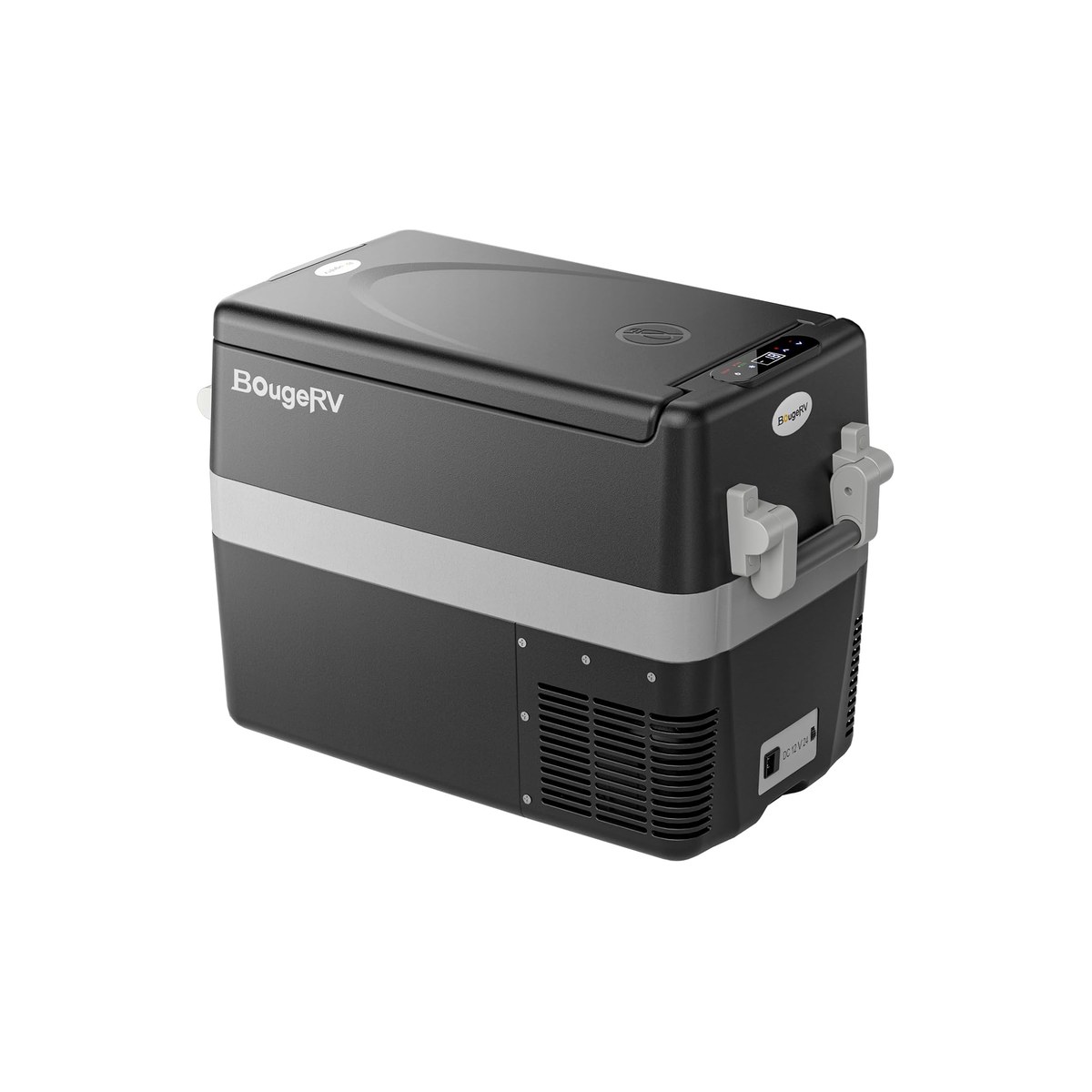
BougeRV 42-Quart 12V Portable Refrigerator Freezer, DC Compressor Chest Fridge, 12/24V DC and 110-240V AC (ASIN B08JJ47V19)
The value chest default, and the one most RVers should buy.
Who it's for: The camper who wants a real fridge that runs off the battery, not a cooler full of melting ice, and does not want to spend four figures to get it. The BougeRV 42-quart is the chest compressor fridge the Amazon market has settled on, the most-reviewed unit in the category, priced where a weekend van builder or a tailgater actually shops.
What we found: The power math is the whole story. At roughly 1 amp-hour per hour in moderate conditions, about 24 amp-hours a day for a chest fridge this size, it runs about three days on a single 100Ah lithium battery (90 usable) with no charging at all, and indefinitely with 100 to 200 watts of solar. The compromise is the compressor: BougeRV uses Wancool, not the Danish SECOP found in the four-figure units, which is why it is about a quarter of an ARB's price and carries a shorter warranty. At $289.99 with 4.5 stars across more than 1,800 ratings, nothing else in the category matches the proof at the price.
Bottom line: Buy the BougeRV as the default it is, size a 100Ah lithium battery and a little solar to feed it, and wire it to the battery on heavy gauge, not a cigarette socket. Pre-cool it the night before a trip on shore power so it starts cold, expect the summer draw to climb toward 2 amp-hours per hour with the lid opening, and skip the inverter entirely, it runs on native DC.
- + The deepest review base in the category, 4.5 stars across more than 1,800 ratings, at the price most buyers actually want to pay
- + Draws roughly 24 amp-hours a day in moderate weather, about three days on a single 100Ah lithium battery with no charging
- + Runs on native 12 or 24V DC straight off the battery and on 110V AC at hookups, cools to freezer temperatures, and chills in an hour
- × A budget-tier brand: Wancool compressor not the top-tier SECOP, shorter warranty, and like the BODEGACOOLER its chassis is widely reported to share the white-label factory pool, so shop near-identical units on price not badge
- × Single zone: it is a fridge or a freezer at one temperature, not both at once, the BODEGACOOLER dual-zone solves that for $20 more
- × Top-load chest format means organizing with bins, and the published draw assumes moderate ambient, plan for more in summer heat
Runner-up: ARB Zero 47QT Single Zone Portable Refrigerator Freezer, Variable-Speed Compressor, App Control, 12/24V DC and 110V AC (ASIN B084Z8Z55B).
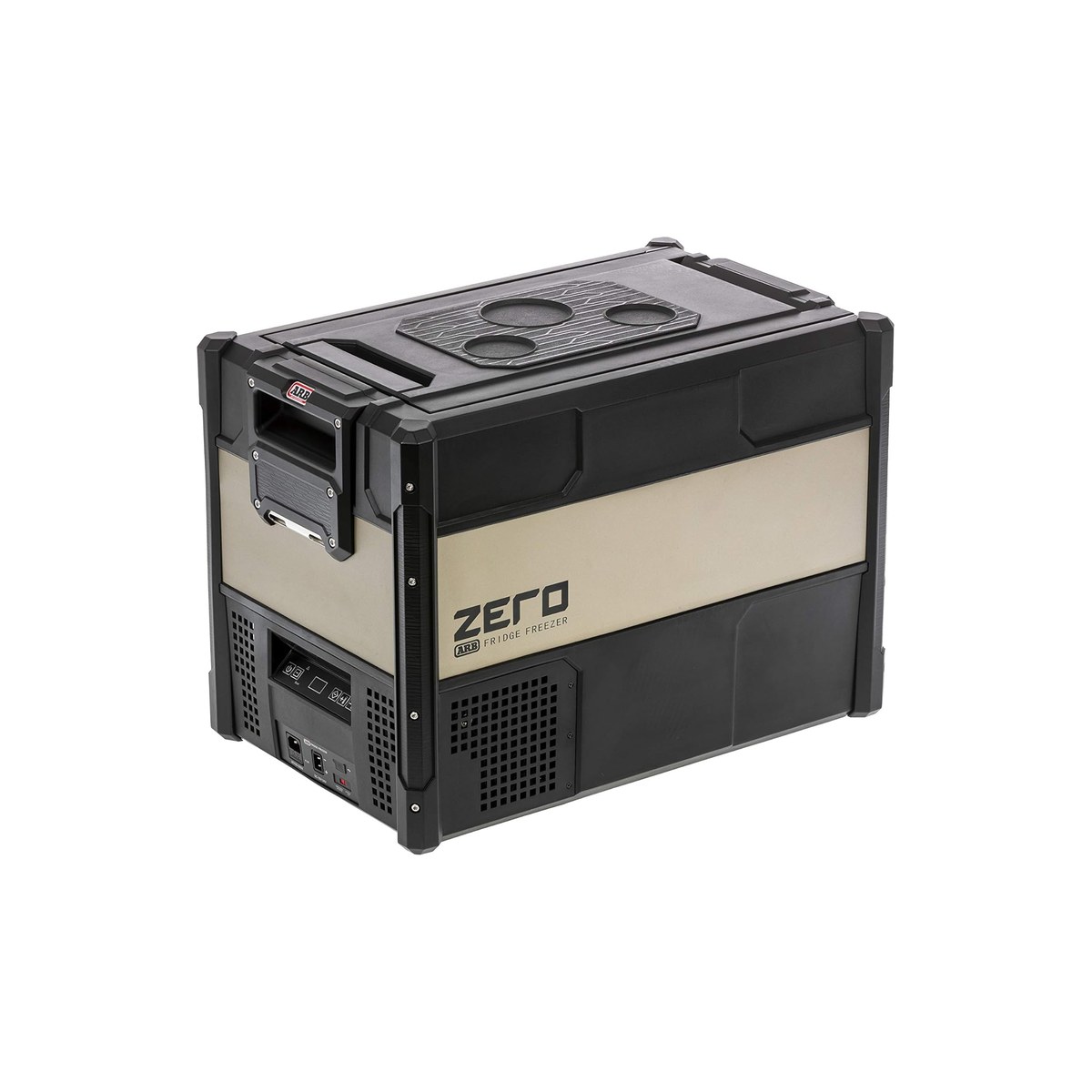
ARB Zero 47QT Single Zone Portable Refrigerator Freezer, Variable-Speed Compressor, App Control, 12/24V DC and 110V AC (ASIN B084Z8Z55B)
Expedition-grade build, at four times the value-pick price.
Who it's for: The overlander who drives where the road ends and treats the fridge as equipment that has to survive it. The ARB Zero is the Australian-built top-shelf chest unit, steel-bodied, variable-speed, app-controlled, the one you see in expedition rigs, and it is here for the buyer who has already decided that build quality is worth a four-figure price.
What we found: The hardware case is real, steel construction, a variable-speed compressor, and Bluetooth app monitoring that earns its keep when the fridge rides in the tow vehicle out of reach. ARB's lineage is Danfoss SECOP, the benchmark compressor, though the company does not name the Zero series unit the way it named the older Classic, so we treat the SECOP claim as heritage, not a current spec. The catch is price and stock: $1,136 is nearly four times the BougeRV for comparable capacity, and our check showed only two units left through a third-party seller, so verify the live listing before committing.
Bottom line: Buy the ARB Zero when the rig leaves pavement and the fridge has to take a beating that would rattle a budget unit apart, and accept that you are buying build and brand, not extra cold. Confirm the seller and stock on the listing first. If the price stings but you want a verifiable SECOP compressor, an ICECO VL-series chest or the older ARB Classic are the alternatives to price out.
- + Steel construction and a variable-speed compressor built for abuse, the overlanding standard with a 4.4 rating across 140-plus ratings
- + App control over Bluetooth for temperature and battery monitoring, genuinely useful when the fridge rides in the tow vehicle
- + ARB's Classic series ran Danfoss SECOP, the benchmark compressor, but ARB does not name the Zero's unit, so the SECOP pedigree is brand heritage, not a verified current spec
- × At $1,136 it costs nearly four BougeRVs for similar capacity, you are paying for the build and the brand, not more cold
- × Stock read only two units through a third-party seller at our check, confirm the seller and price on the live listing before buying
- × ARB does not name the Zero series compressor as SECOP the way the older Classic series did, the variable-speed claim is unverified at the brand level
Budget pick: BODEGACOOLER 42-Quart Dual Zone 12V Portable Refrigerator, App Control, -4 to 68F, 12/24V DC and 100-240V AC (ASIN B0CFF9J47K).
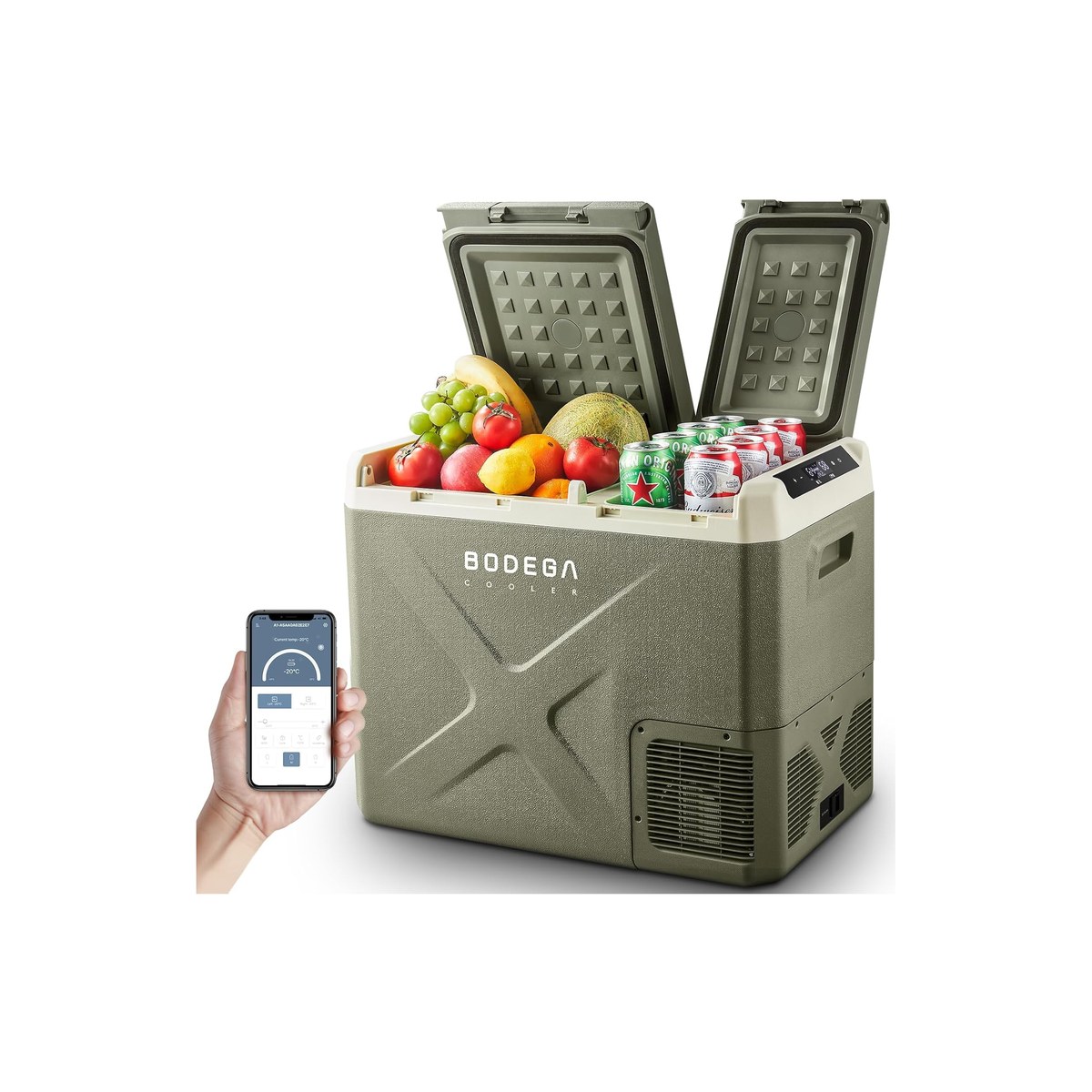
BODEGACOOLER 42-Quart Dual Zone 12V Portable Refrigerator, App Control, -4 to 68F, 12/24V DC and 100-240V AC (ASIN B0CFF9J47K)
Fridge and freezer at once, for the price of one zone.
Who it's for: The traveler who is tired of choosing between cold drinks and frozen food. The BODEGACOOLER 42-quart runs as a true dual zone, a fridge compartment and a freezer compartment at independent temperatures, and it does it at $310, roughly what single-zone units cost. For a couple or family that wants both functions from one box, it is the value answer.
What we found: The dual-zone split is the feature, and it works the way a home fridge-freezer does, two compartments you set separately, down to minus 4 Fahrenheit on the freezer side. At 4.4 stars across more than 700 ratings with app control and a five-year compressor lifespan claim, it is proven at the price. The honest context: BODEGACOOLER is one badge on an Alpicool-built chassis that also sells as Bodega, VEVOR, and others, so the brand is not the point, the price is. The compressor is a budget unit like the BougeRV's, which is correct at $310 and wrong for an expedition.
Bottom line: Buy the BODEGACOOLER when you want fridge and freezer at once without paying the dual-zone upcharge the name brands add, and shop the identical Alpicool chassis on price since the badge does not change the box. Remember the split means smaller compartments than a single-zone 42-quart, so if you only need one function, the BougeRV's undivided space is the better use of the amp-hours.
- + Dual zone for $310: run one side as a fridge and the other as a freezer at the same time, independent temperatures
- + 4.4 stars across more than 700 ratings, with app control and a stated five-year compressor lifespan claim
- + Same chest efficiency as the top pick, runs native 12/24V DC plus 110V AC at hookups
- × A budget-tier white-label: near-identical chassis sell under several names (the OEM is widely reported but unconfirmed), so shop on price not badge
- × Dual zone splits the interior, so each compartment is smaller than a single-zone 42-quart, plan your packing
- × Like the BougeRV, the compressor is a budget unit, not SECOP, fine at this price but not expedition-grade
Also worth considering.
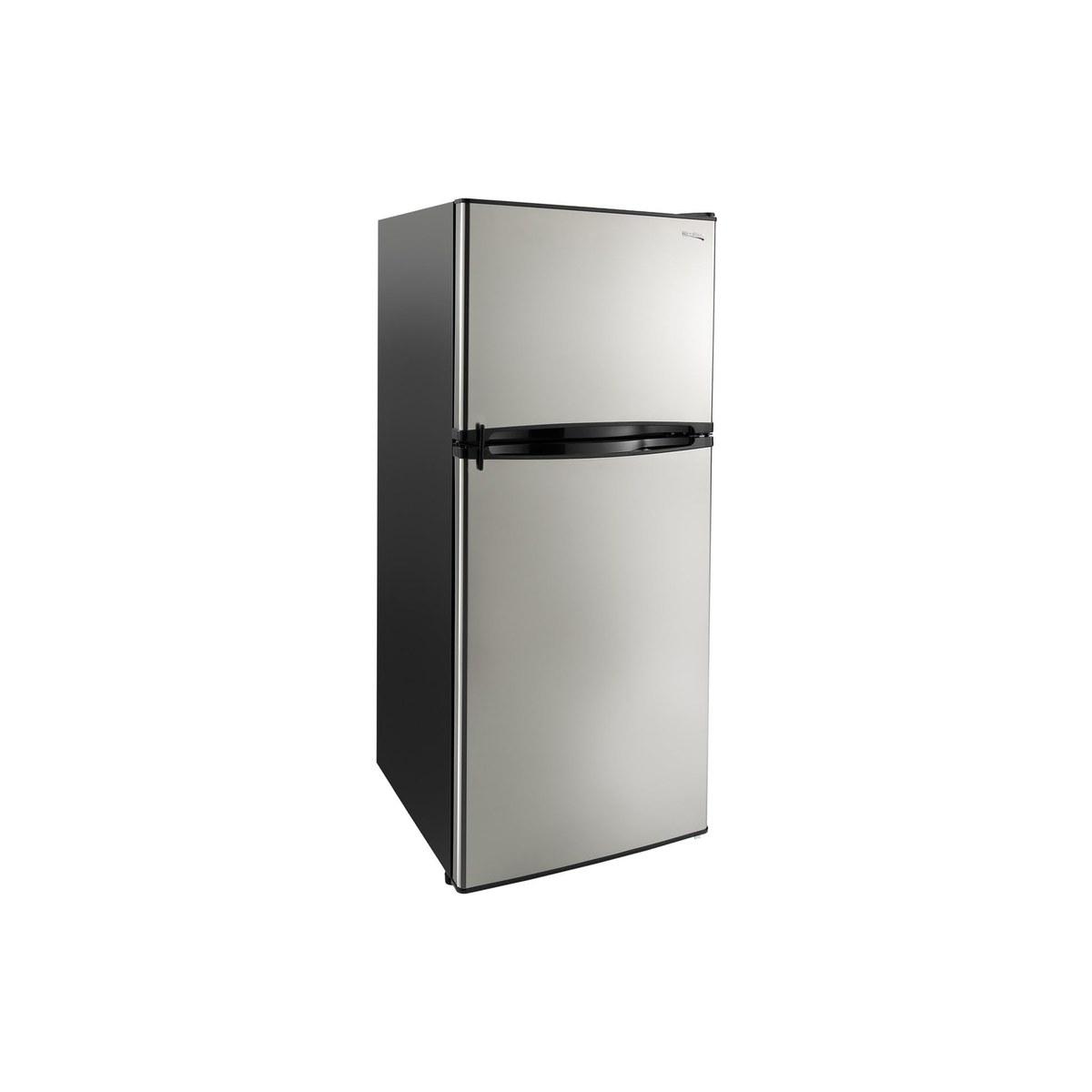
RecPro 10 Cu Ft 12V RV Refrigerator, Frost-Free Upright, Double Door, Reversible, Built-In Lock, Standard RV Cutout (ASIN B086T657RR)
The drop-in upright for the absorption swap.
Who it's for: The RVer whose built-in absorption fridge died and who wants to replace it with a 12V compressor unit in the same cabinet, not live out of a chest cooler. The RecPro 10 cubic foot is the buyable upright swap, frost-free, double-door, with a reversible door and a built-in travel lock, sized to the standard 23.5-inch RV cutout.
What we found: It is the best-reviewed upright in the lane, 4.2 stars across nearly 300 ratings, which for a four-figure RV appliance is meaningful proof. The power reality is the part buyers underestimate: an upright this size draws roughly 50 to 60 amp-hours a day in moderate weather, two to three times a chest fridge, because front-loading dumps cold air every time the door opens. That means a 200Ah-plus lithium bank and 300 to 400 watts of solar for real boondocking, not the 100Ah a chest unit needs. The swap itself means sealing the old exterior vents and upgrading the fridge wiring to 10 gauge.
Bottom line: Buy the RecPro when you want the convenience and capacity of a cabinet upright and your power system can feed it, and read our battery and solar guides before you do, because an upright on a single factory battery is a dead battery by morning. Budget the install: vent sealing, heavy-gauge wiring, and a two-person lift for a 110-pound box.
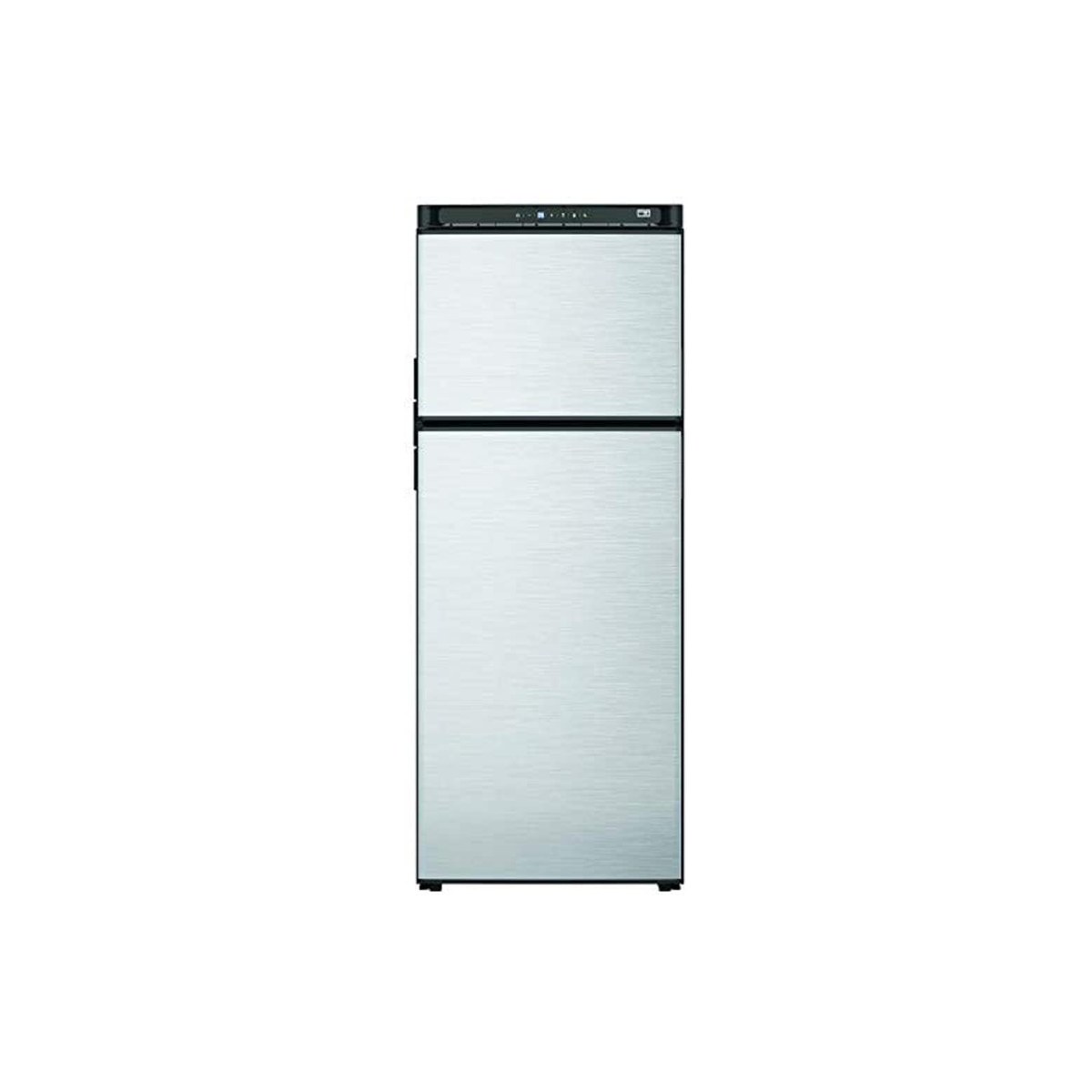
Norcold Polar N10DCSSR 10 Cu Ft 12V DC Compressor RV Refrigerator, Stainless Doors, Battery-Saving Night Mode (ASIN B07YYX4TZG)
Genuine Norcold, with a battery-saving night mode.
Who it's for: The full-timer, often replacing a dead Norcold absorption fridge, who wants the genuine brand in the cabinet and cares about how much the fridge pulls from the bank overnight. The Polar N10DC is Norcold's 12V compressor line, a clean break from the absorption legacy that built the brand, with stainless doors and a feature none of the other uprights here offer: a true battery-saving night mode.
What we found: Night mode is the standout, the compressor and fan throttle down overnight, dropping draw from 5.7 to 3.7 amps and noise from 39 to 34 decibels, which for a couple sleeping ten feet from the fridge on a battery budget is a real feature, not marketing. The honest caveat is the rating: 3.9 stars across 75 reviews is the softest in our lineup, and at $1,488 it is also the priciest, sold through a third-party seller. It earns its place for the night mode and for the Norcold owner who wants the brand, not on its review record.
Bottom line: Buy the Polar when you are a full-timer who runs the fridge on batteries overnight and the night mode's lower draw matters, or when you are swapping a Norcold absorption unit and want to stay in the brand. Go in eyes open on the 3.9 rating and the price, and if neither the night mode nor the badge moves you, the RecPro is the better-reviewed upright for about $188 less.
Skip this guide if...
Skip this guide if your rig lives on full hookups and your absorption fridge still works: a propane fridge that holds temperature on a level site with shore power is not costing you anything a 12V swap would fix, and the swap is real money and real install work. Skip the upright lane entirely if your power system is a single factory battery, an upright's 50-to-90 amp-hour daily draw will flatten it overnight, and no fridge is worth a dead battery and spoiled food. And skip the four-figure chest units if you camp a few weekends a year, the $290 BougeRV does the same job the $1,136 ARB does, just without the steel and the expedition pedigree.
Don't bother with.
- × Skip Buying a new absorption (propane) fridgeAbsorption is the technology the industry is leaving, and one part of the reason is a paper trail. Both major brands ran fire-risk recalls on absorption cooling units, for different failure modes: Dometic's recalls, NHTSA campaigns 06E076 and 08E032 covering hundreds of thousands of units, were for a boiler-tube crack that could release pressurized coolant near the gas flame, while Norcold's, NHTSA campaign 11V074, was for a high-temperature cutoff that could respond too slowly to stop an overheating cooling unit before ignition. Beyond the recall history, the gas and electric absorption fridge must be level to work, takes eight to twelve hours to cool, struggles above 90 degrees, and needs exterior venting. A 12V compressor fridge cools in an hour, works off-level, and has no flame. The one thing absorption still wins is multi-week off-grid endurance on propane with no battery draw, which is why a few remote boondockers keep it. For everyone else, the compressor is the upgrade.
- × Skip Consumption claims with no test conditionsEvery chest fridge advertises something like one amp-hour per hour, and the number is meaningless without conditions. The best-documented figure, 0.95 amp-hours per hour on a Dometic CFX, was measured sealed and stabilized at 50 percent fill, a 34-degree set point, over 48 hours. Open the lid through a hot afternoon and the same fridge climbs toward 2 amp-hours per hour, double the draw. A listing that prints a consumption number without stating ambient temperature, set point, and duty cycle is quoting a best-case lab figure, not what your battery will see in July. Plan your battery bank on the high end, not the headline.
- × Skip Running a 12V fridge through an inverterCompressor fridges run on native 12 or 24V DC, straight off the battery, and that is the efficient way to power them. The dual-voltage units that also accept 110V AC do so for campground hookups, not so you can run them off an inverter while boondocking. Pushing DC battery power through an inverter to make AC, then back to DC inside the fridge, wastes 15 to 30 percent of the energy to the double conversion for no benefit, more the bigger the inverter. If a salesman or a forum tells you to run your 12V fridge off the inverter off-grid, ignore it, wire the DC input to the battery directly.
- × Skip Undersized wiring on a cigarette-lighter socketThe most common 'my 12V fridge stopped cooling' complaint is not a broken fridge, it is voltage drop. A compressor draws a surge of current at startup, and thin wire on a long run, the 16-gauge feeding a typical cigarette-lighter socket, drops the voltage enough that the fridge reads 10 volts at the compressor even when the battery shows 12.6. The fridge then refuses to start or trips its low-voltage cutoff. Measure voltage at the fridge, not the battery. The fix is heavy wire, 10 gauge minimum, on a direct battery connection, especially for an upright pulling 11 amps at startup. The cigarette-lighter socket is the wrong feed twice over: thin wire and a low-amp fuse, often 10 to 15 amps, so it will not reliably start even a chest fridge and cannot start an upright at all.
How we picked.
Sources we read and how we picked
We started from the manufacturers' consumption specs and recorded the test conditions behind every amp-hour figure, because a draw number without an ambient temperature and a set point is marketing, not data. We layered independent power tests over the spec sheets, the recall record from the official NHTSA campaign numbers, and the owner-forum reports of real-world draw, then verified every listing live on Amazon on June 13, 2026: price, rating, stock, and what the listing actually is.
Our filter, in order: honest power draw a real battery bank can carry, then build and compressor quality, then review depth on a buyable listing. That order is why the $290 BougeRV outranks the $1,136 ARB, the default job, refrigeration a single lithium battery can run, is most buyers' whole job, and 1,800 ratings is proof at that job. Within the chest lane the ARB ranks above the BODEGACOOLER on build quality and a distinct overlanding use case, not because it is the better value, a buyer who does not need steel construction is better served by the BODEGACOOLER at a quarter of the price. The Amazon reality reshaped the lineup: the most-cited chest fridge, Dometic's CFX, sells only through a merged listing that pools reviews across the full CFX5 and CFX3 range, so we name it in the editorial below rather than ranking a listing we cannot link cleanly.
The power math: amp-hours, batteries, and honest days
One calculation sizes this whole category: a fridge's daily amp-hour draw divided by your battery bank's usable amp-hours equals days of runtime with no charging. A chest compressor fridge draws about 24 amp-hours a day in moderate weather. A 100Ah lithium battery gives about 90 usable amp-hours at 90 percent depth of discharge. That is 90 divided by 24, roughly 3.75 days on a single battery for the fridge alone with no solar at all; add lights, a pump, and device charging on the same bank and it is realistically two days between charges, and indefinite runtime once you add 100 to 200 watts of panel. This is the number competitors bury, and it is the only spec that travels with you.
Two things move the draw hard. Ambient temperature: a compressor that runs 30 to 40 percent of the time at 70 degrees runs 60 to 70 percent at 90, nearly doubling the daily amp-hours, which is why summer desert camping needs more battery than the spec sheet implies. And form factor: an upright 10 cubic foot fridge draws 50 to 90 amp-hours a day, two to three times a chest unit, because front-loading spills cold air every time the door opens. That is the real reason the upright lane needs a 200Ah-plus bank and 300 to 400 watts of solar, and why an upright on a single factory battery is the first thing people get wrong when they buy one. Our RV lithium battery and solar guides size the whole system to match.
Chest vs upright, and which lane is yours
Chest fridges are top-loading, portable, and efficient: cold air sinks and stays put when you open the lid, so they sip power, and they go anywhere, a van floor, a truck bed, a storage bay, a dinette. They run $250 to $1,100 and suit weekenders, van builds, overlanders, and anyone supplementing a main fridge. The cost is access, you organize with bins and dig for the thing at the bottom. Uprights are front-loading built-in units that replace a cabinet absorption fridge, with home-style shelves and door bins, 8 to 20 cubic feet, $600 to $1,500. They suit full-timers who want a real kitchen and have the power system to run one.
The honest split: if you are adding refrigeration to a van or supplementing on weekends, buy a chest fridge, the efficiency and the price both favor it. If you are replacing a dead built-in absorption unit and you camp enough to justify the install and the battery bank, buy an upright. The mistake is buying an upright for the home-fridge convenience without the power system to feed it, which is how a $1,300 fridge becomes a $1,300 reason your battery dies overnight. One more axis the spec sheets skip: noise. Both types run a compressor that cycles on and off through the night, typically 40 to 50 decibels when running and silent when off, which is why the Norcold Polar's 34-decibel night mode is a real feature for anyone sleeping ten feet from the fridge. Decide the lane on how you camp and what your batteries can carry, not on which looks more like the fridge at home.
Low-voltage cutoff: the H, M, L setting that strands food or batteries
Every 12V fridge has a low-voltage cutoff that shuts the compressor off when battery voltage drops, and the H, M, L switch sets the threshold. It exists to stop the fridge from draining a battery so far it cannot start the engine, but the wrong setting either spoils your food or flattens your battery. The trap catches people who never read the manual, then blame the fridge.
The logic, with the confirmed thresholds from the budget chest units: H mode turns the fridge off at about 11.1 volts and back on at 12.4, the setting for a fridge wired to a starter battery or a vehicle that must crank, it protects the engine start at the cost of cutting the fridge off early. L mode lets voltage fall further, roughly 10 to 11 volts depending on the brand, the setting for a dedicated lithium house bank where deep discharge is safe and you want maximum runtime. M sits between them for lead-acid house batteries. The exact M and L thresholds vary by manufacturer and are often unpublished, so check your unit's manual for the precise numbers. The classic mistake is leaving it on H with a dedicated lithium bank, the fridge shuts off at 11.1 volts with 15 to 20 percent of the battery still available, and your food warms up while power sits unused. For most RV boondockers on a separate lithium house bank, L is correct, and a DC-DC charger keeps the starter battery isolated and protected.
Replacing an absorption fridge with 12V
The most common reason people land here is a dead or dying absorption fridge, and the swap to a 12V upright is doable but not trivial. The standard absorption cutout is roughly 23.5 inches wide, and the buyable uprights, the RecPro, Everchill, Furrion, and Norcold Polar, all target that opening as a drop-in, so the cabinet usually fits. Three jobs follow. The old exterior vents, the upper and lower wall openings absorption needs for its flue, must be sealed and insulated, a compressor fridge does not vent to the outside. The fridge wiring almost always needs upgrading: many rigs ran 14 or 16 gauge to the absorption bay, and a compressor pulling 11 amps at startup needs 10 gauge on a direct run or it will not start. And the unit weighs 110 to 130 pounds, a two-person lift.
The payoff is worth the work for most: no propane flame in the wall, no leveling anxiety, cooling in an hour instead of overnight, and performance that holds in heat that makes an absorption fridge quit. The price is the battery dependency the swap creates, an absorption fridge on propane draws nothing from the bank, while the new compressor unit draws 50 to 90 amp-hours a day, so the swap is really a fridge purchase plus, often, a battery and solar upgrade. Plan all three together, not the fridge alone.
FAQs.
Q01 What is the best 12V RV refrigerator?
+
Q02 How many amp-hours does a 12V fridge use per day?
+
Q03 Will a 12V fridge kill my battery overnight?
+
Q04 Why is my 12V fridge not cooling?
+
Q05 Can I run a 12V fridge while driving?
+
Q06 Should I replace my absorption fridge with a 12V compressor fridge?
+
Q07 Do I need an inverter to run a 12V refrigerator?
+
Q08 What do the H, M, and L battery settings mean?
+
If you, then this.
- IF you want real refrigeration off a battery without spending four figuresGET BougeRV 42-Quart 12V Fridge Freezer (B08JJ47V19; ~24 Ah/day, runs on a 100Ah lithium)$289.99 →
- IF you overland off pavement and need expedition-grade buildGET ARB Zero 47QT (B084Z8Z55B; steel build, verify the seller and low stock first)$1,136.00 →
- IF you want a fridge and a freezer running at the same timeGET BODEGACOOLER 42QT Dual Zone (B0CFF9J47K; shop the identical Alpicool chassis on price)$309.99 →
- IF you are replacing a dead absorption fridge in the cabinetGET RecPro 10 Cu Ft Upright (B086T657RR; needs a 200Ah-plus bank, seal the old vents)$1,299.95 →
- IF you are full-timing and overnight battery draw mattersGET Norcold Polar N10DC (B07YYX4TZG; night mode, eyes open on the 3.9 rating)$1,488.13 →
- IF you are not sure your battery bank can run the fridge you wantGET Size the bank first: our RV lithium battery guide does the amp-hour math for the whole system$0 →
- IF you want the fridge to cool while you drive without killing the starter batteryGET A DC-DC charger does it safely, our DC-DC charger guide sizes it$0 →
RV & Van Gear: The Complete Guide
The whole-rig picture →Every system in a van, RV, or camper, organized in one place, with the safety and weight floor and the one guide we trust for each.
- Dometic CFX power-consumption test data and product specifications · Dometic
- 12V RV refrigerator field power measurements and absorption comparison · TheRVgeeks
- NHTSA safety recall database (absorption cooling-unit fire recalls 11V074, 06E076, 08E032) · NHTSA
- BougeRV 12V compressor refrigerator specifications · BougeRV